
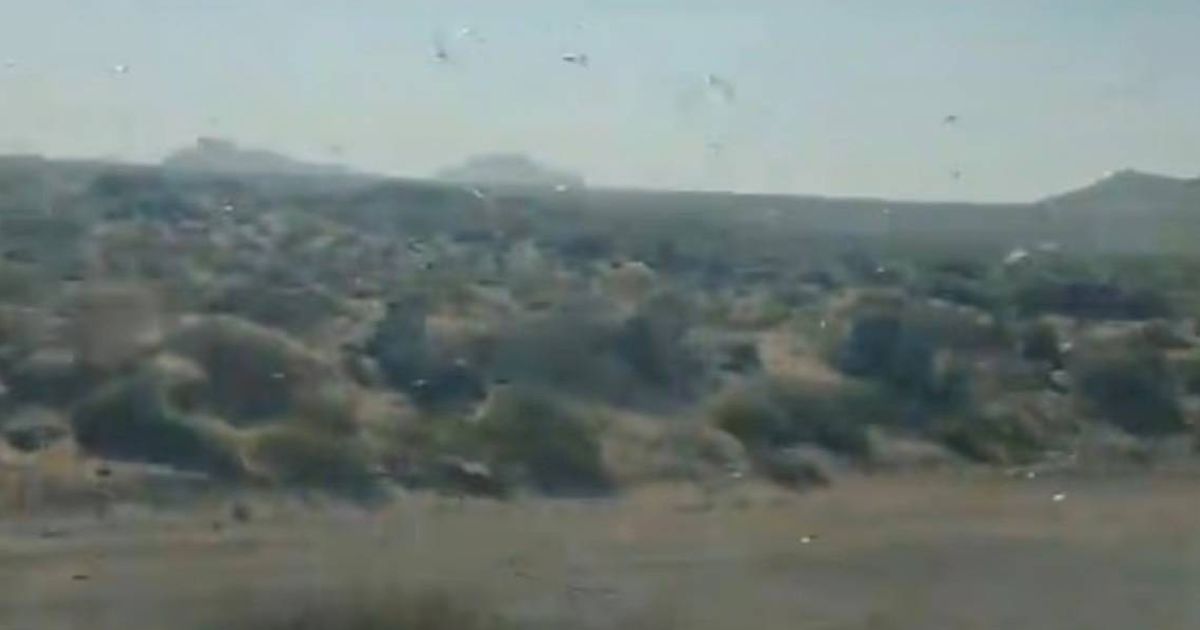
An alert has been issued by authorities in the Canary Islands after top holiday destination Lanzarote was hit by a swarm of locusts that could cause potential harm to vegetation
Christopher Sharp Trendswatch Reporter and Maria Ortega
09:43, 26 Feb 2026
Swarm of locusts hits Spanish holiday Islands
A major alert has been issued in the Canary Islands after a holiday hotspot popular with tourists had to raise an alert for locusts.
A video posted on X (formerly Twitter) shows a swarm of locusts sweeping across a section of Lanzarote with the Lanzarote Emergency Consortium releasing a video showing some extent of the problem.
Officials from across Lanzarote and other Canary Islands such as Tenerife, Gran Canaria, and Fuerteventura have reassured that the insects don’t pose any threat to the public.
However, they’ve warned the locusts could be a problem for local agriculture, and concerns about a potential infestation are increasing.
In a statement, the Lanzarote Government’s Head of Environment Francisco Fabelo, said: “The next two days are going to be key. If they are adult specimens that have arrived exhausted, they will die and nothing will happen. If we see copulations, that would mean that they are reproducing.
“We would have to see it between this afternoon and tomorrow. We already experienced this in 2004 and at the end of the eighties there was another similar episode.”
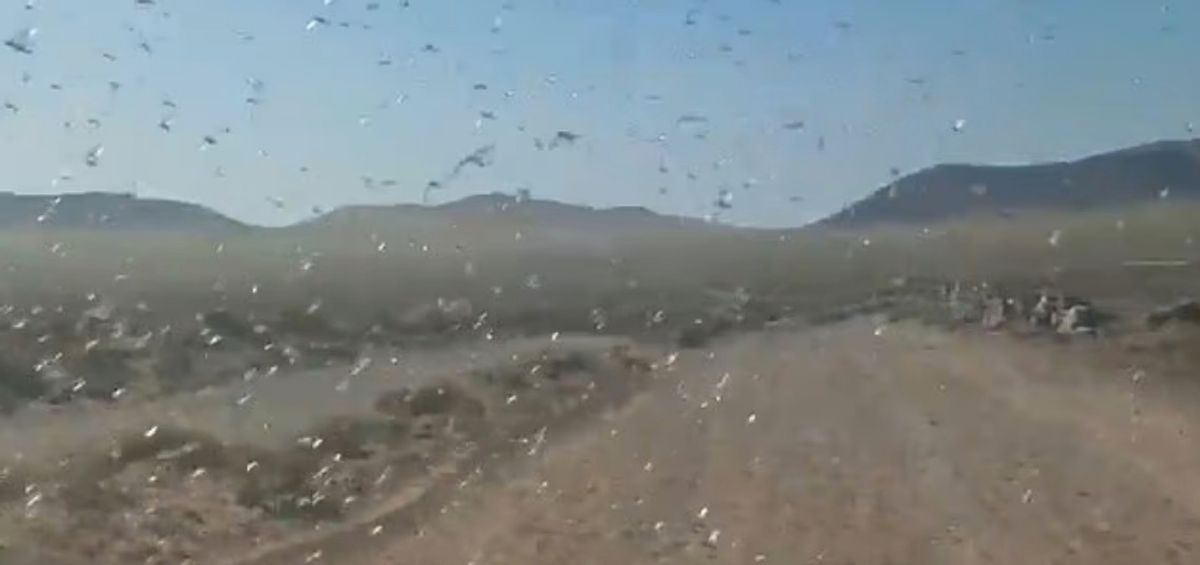
A swarm of locusts striking Lanzarote(Image: @rtvenoticias/X)
Similarly, the Secretary General of the Association of Farmers and Ranchers of the Canary Islands Theo Hernando, has tried to reassure farmers, reports the Express.
He stated: “It is common for episodes of winds from Africa, such as those brought by the haze, to have locust specimens.
“They are blown by the wind and as long as they are isolated cases there is not problem. They arrive very weakened, they are not in a position to settle or reproduce. Nature itself takes its course and many times they end up being preyed upon by birds.”
The locust warnings come just a few days after the UK’s Foreign Office updated travel advice for Spain with the guidance arriving as the European Union‘s new Entry/Exit System (EES) is gradually rolled out. Full operation of the new system is expected to be complete from around April 10 this year.

Tourists in Lanzarote(Image: ean-François FORT / Hans Lucas / AFP via Getty Images)
Spain is one the European countries in the process of gradually implementing the new system. In a statement on the matter, the Foreign Office said: “EES may take each passenger a few minutes extra to complete so be prepared to wait longer than usual at the border.
“Until EES is fully rolled out your passport will continue to be stamped, even if you’ve already been registered for EES.
“Once EES is fully rolled out, it will replace the current system of manually stamping passports when visitors arrive in the Schengen area for short stays and you will input biometric details every time you enter or exit.”