
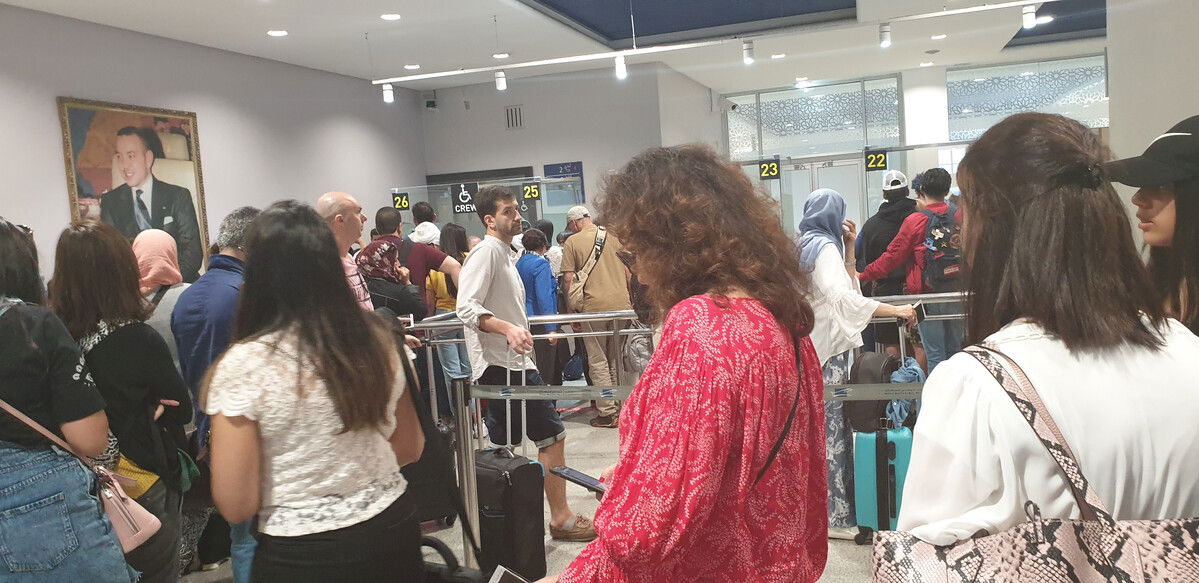
Long passport control queues reportedly left nearly 90 Ryanair passengers stranded at Lanzarote Airport, highlighting ongoing border delays affecting travellers in Spain.
Credit: Shutterstock/Loubna Fouzar
Holidaymakers flying into the Canary Islands faced unexpected disruption this week after a passport control bottleneck reportedly left nearly 90 Ryanair passengers stranded at Lanzarote Airport. The incident has reignited concerns about staffing levels at Spanish border checkpoints, especially as travel demand continues to surge ahead of the summer season.
According to mobility reports published on 28 February, around 89 passengers were unable to clear passport control due to long queues and processing delays at the airport. While individual disruptions are not uncommon at peak times, the episode has drawn attention because it highlights a recurring issue affecting non-Schengen travellers arriving in Spain.
Why passport queues keep returning
The delays appear to stem from congestion at border control desks rather than airline issues. Airports in tourist hotspots such as the Canary Islands rely heavily on manual passport processing for non-EU arrivals, a category that now includes UK travellers following Brexit.
Most Read on Euro Weekly News
Unlike EU citizens, who can pass through eGates in many airports, British passport holders must often undergo manual checks and passport stamping. This creates longer queues when multiple flights land within a short window, particularly at smaller airports with limited staffing flexibility.
Lanzarote is especially exposed to this dynamic. The island receives a high volume of UK visitors year round, meaning that even short staffing gaps can translate into visible delays during busy arrival waves.
A familiar pattern across Spain
The situation is not unique to Lanzarote. Similar complaints have surfaced periodically across Spanish tourist hubs including Alicante, Palma and Tenerife, where seasonal traffic spikes can overwhelm border infrastructure.
Spanish airport operator Aena has previously acknowledged that passenger flows are heavily influenced by staffing at police-run passport control desks. While airport capacity itself has expanded in many regions, border processing still depends on Policía Nacional deployment levels, which can vary depending on national resource planning.
Brexit still shaping airport experiences
For British travellers, the issue reflects a post-Brexit reality. Since the UK left the EU, British passport holders have been treated as third-country nationals when entering the Schengen zone. That means additional entry checks, passport stamps and compliance with the 90-day rule.
These procedures add friction to arrivals, particularly in leisure destinations where UK tourism remains dominant. In places like the Canaries and Balearics, airports must process large numbers of third-country passengers despite infrastructure that was originally designed around EU free movement.
Pressure ahead of future border changes
The timing is also notable given ongoing discussions around Europe’s upcoming biometric Entry/Exit System, which will introduce digital border tracking across the Schengen area. Although the rollout has been delayed several times, officials have warned that airports will need to adapt to new processing requirements once the system goes live.
Travel industry observers say incidents like the Lanzarote bottleneck raise questions about how smaller airports will cope with additional administrative layers if staffing levels are not expanded.