
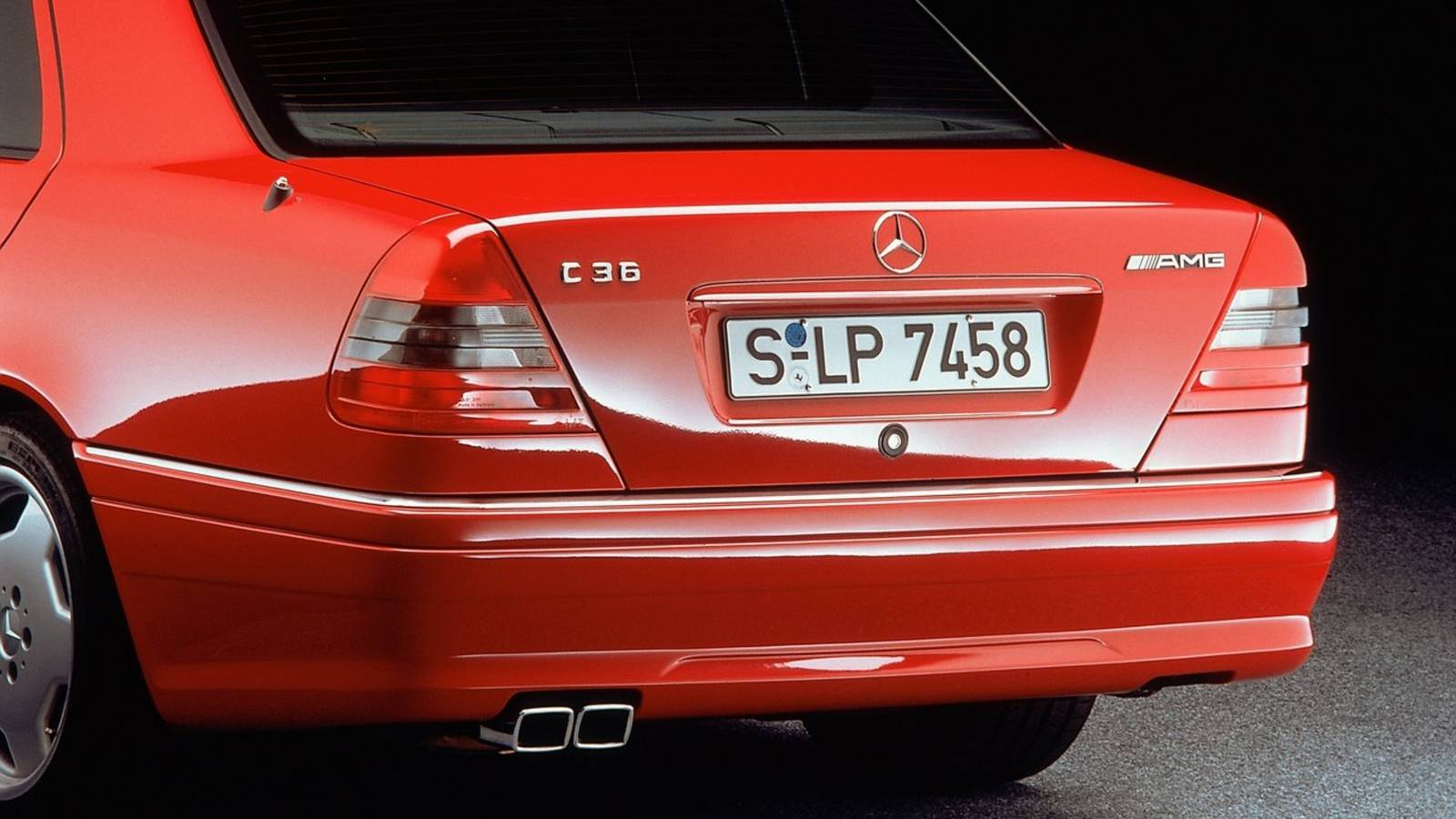
AMG has been churning out fast versions of the Mercedes-Benz C-Class for pretty much as long as the nameplate has existed, and that lineage has spawned some legendary performance cars. Naturally, everyone gravitates towards the V8-powered ones, particularly the first two generations of C63, with the almighty 6.2-liter M159 V8 and later the equally potent 4.0-liter twin-turbo unit that succeeded it.
There have been plenty of other forms of AMG C-Class over the years, though, from the supercharged V6 for the C32 from the early 2000s to the unloved, current-generation with a plug-in hybrid four-cylinder C63. Heck, there was even a diesel AMG C-Class, the Europe-only C30 CDI AMG, complete with a five-cylinder powerplant making 398 pound-feet. Perhaps the oddest C-Class to wear AMG badges, though, was the very first: the 1995-1997 C36 AMG from the W202 generation.

Available Models
Select Available Models
AMG CLE 53 Coupe
AMG CLE 63 Convertible
AMG CLE 63 Coupe
CLE Convertible
CLE Coupe
ONE
AMG GT 55 Coupe
AMG GT Black Series
AMG GT 63 Coupe
AMG GT R
AMG GT Roadster
AMG GT R Roadster
AMG GT 63 S E Performance
AMG GT 43
AMG GT 53
AMG GT 63
A-Class Sedan
AMG A35
C-Class Sedan
C-Class Coupe
C-Class Convertible
C-Class Plug-in Hybrid
AMG C43 Sedan
AMG C43 Coupe
AMG C43 Convertible
AMG C63 Sedan
AMG C63 Coupe
AMG C63 Convertible
CLA-Class
AMG CLA 35
AMG CLA 45
CLS-Class
AMG CLS 53
AMG CLS 63
E-Class All-Terrain
E-Class Sedan
E-Class Coupe
E-Class Convertible
E-Class Wagon
E-Class Hybrid
AMG E43 Sedan
AMG E53 Sedan
AMG E53 Coupe
AMG E53 Convertible
AMG E63 Sedan
AMG E63 Wagon
S-Class Sedan
S-Class Coupe
S-Class Convertible
S-Class Hybrid
Maybach S
AMG S63 Sedan
AMG S63 Coupe
AMG S63 Convertible
AMG S65 Sedan
AMG S65 Coupe
AMG S65 Convertible
SLC-Class
AMG SLC 43
AMG SL43
AMG SL55
AMG SL63 S E Performance
SL-Class
AMG SL63
AMG SL 65
AMG G63 4×4 Squared
G-Class
G550 4×4 Squared
AMG G55
AMG G63
AMG G65
GLA-Class SUV
AMG GLA 35
AMG GLA 45
GLB-Class
AMG GLB 35
GLC-Class Coupe
GLC-Class SUV
GLC-Class Plug-in Hybrid
AMG GLC 43 Coupe
AMG GLC 43 SUV
AMG GLC 63 Coupe
AMG GLC 63 SUV
AMG GLE 53 Coupe
AMG GLE 53 Hybrid Coupe
AMG GLE 53 Hybrid SUV
GLE-Class Coupe
GLE-Class SUV
GLE-Class Plug-in Hybrid
AMG GLE 43 Coupe
AMG GLE 43 SUV
AMG GLE 53 SUV
AMG GLE 63 Coupe
AMG GLE 63 SUV
GLS-Class SUV
AMG GLS 63
Maybach GLS
EQB SUV
AMG EQE
AMG EQE SUV
EQE Sedan
EQE SUV
EQG
AMG EQS
EQS Sedan
EQS SUV
Maybach EQS SUV
Metris Cargo Van
Metris Passenger Van
eSprinter Cargo Van
Sprinter Passenger Van
Sprinter Cargo Van
Sprinter Crew Van
B-Class
AMG CL 63
AMG CL 65
CL-Class
CLK-Class Convertible
CLK-Class Coupe
AMG GL 63
GL-Class
GLK-Class
M-Class Hybrid
M-Class
AMG ML 63
R-Class
AMG SLK 55
SLK-Class
SLR McLaren Roadster
SLS AMG Black Series
SLS AMG Coupe
SLS AMG Roadster
The beginnings of modern AMG
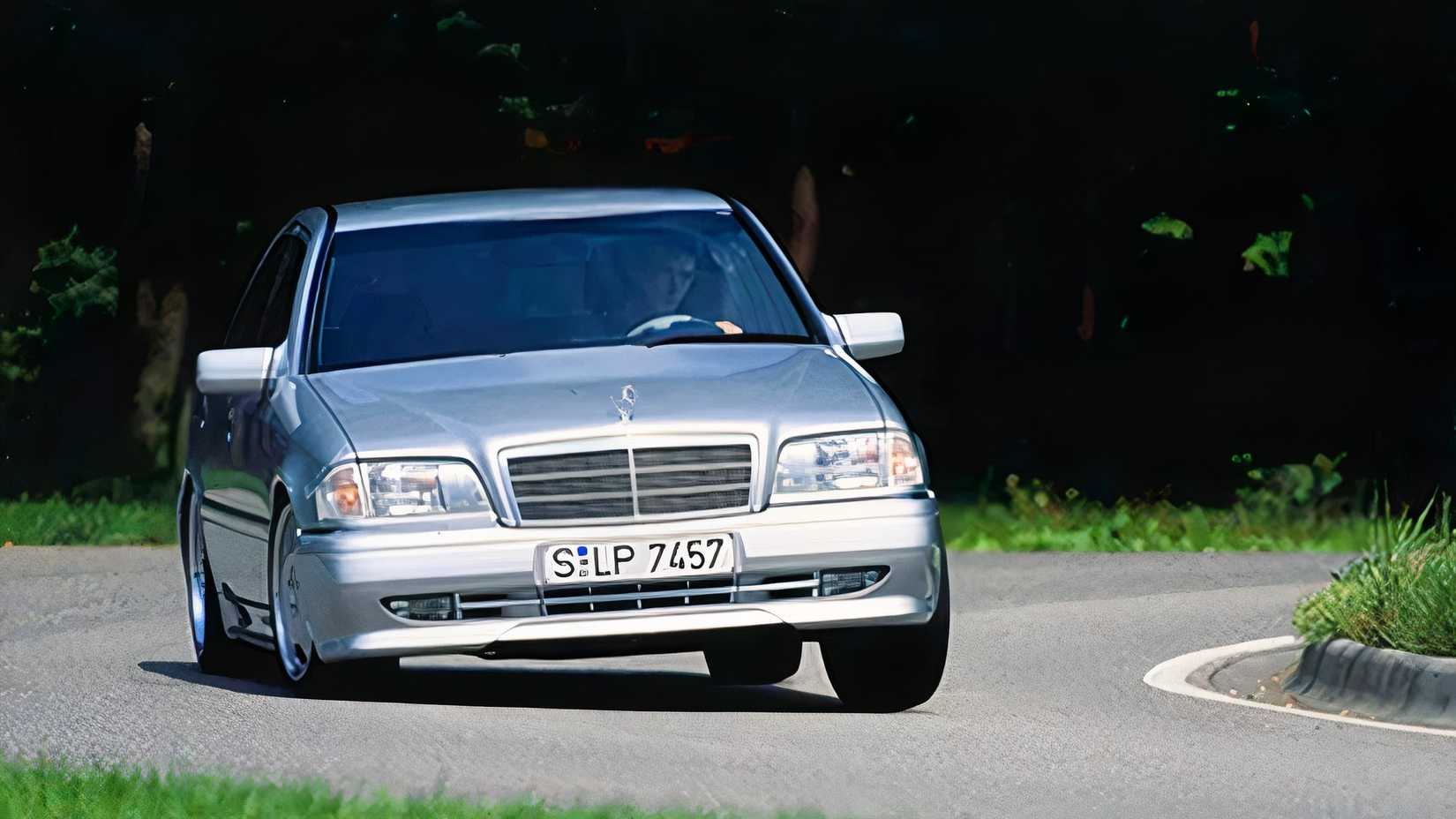
Silver 1995 Mercedes-Benz C36 AMG frontMercedes-Benz
Since its founding in 1967 by a pair of former Mercedes engineers, tuning firm AMG had long enjoyed a close relationship with Mercedes itself, but it had always been an independent entity. In 1990, though, that changed when Mercedes and AMG signed a co-operation agreement that, at first, allowed the sale of AMG-tuned cars in Mercedes dealerships. Going forward, the two outfits worked together to develop performance models.
Related
Here’s What Makes Every Generation Of BMW M3 Special
If you were to create a single M3 with the best traits from every generation that’s ever existed, what would it look like?
Around the same time, Mercedes was getting ready to replace its long-running 190 compact executive sedan. The successor would be the first car to adopt the company’s new naming strategy, with every variant grouped under the C-Class banner. The model was poised to take on the segment’s leader, the recently launched 1992-1999 BMW 3 Series, internally known as the E36. The 3 Series’ performance version, the M3, morphed from a low-volume, four-cylinder homologation special from the earlier generation into a six-cylinder flagship of the range for the E36. Mercedes needed a range-topping fast C-Class to compete with it, and that was to be the first car co-developed by it and AMG under the new agreement.
What made the C36 strange?
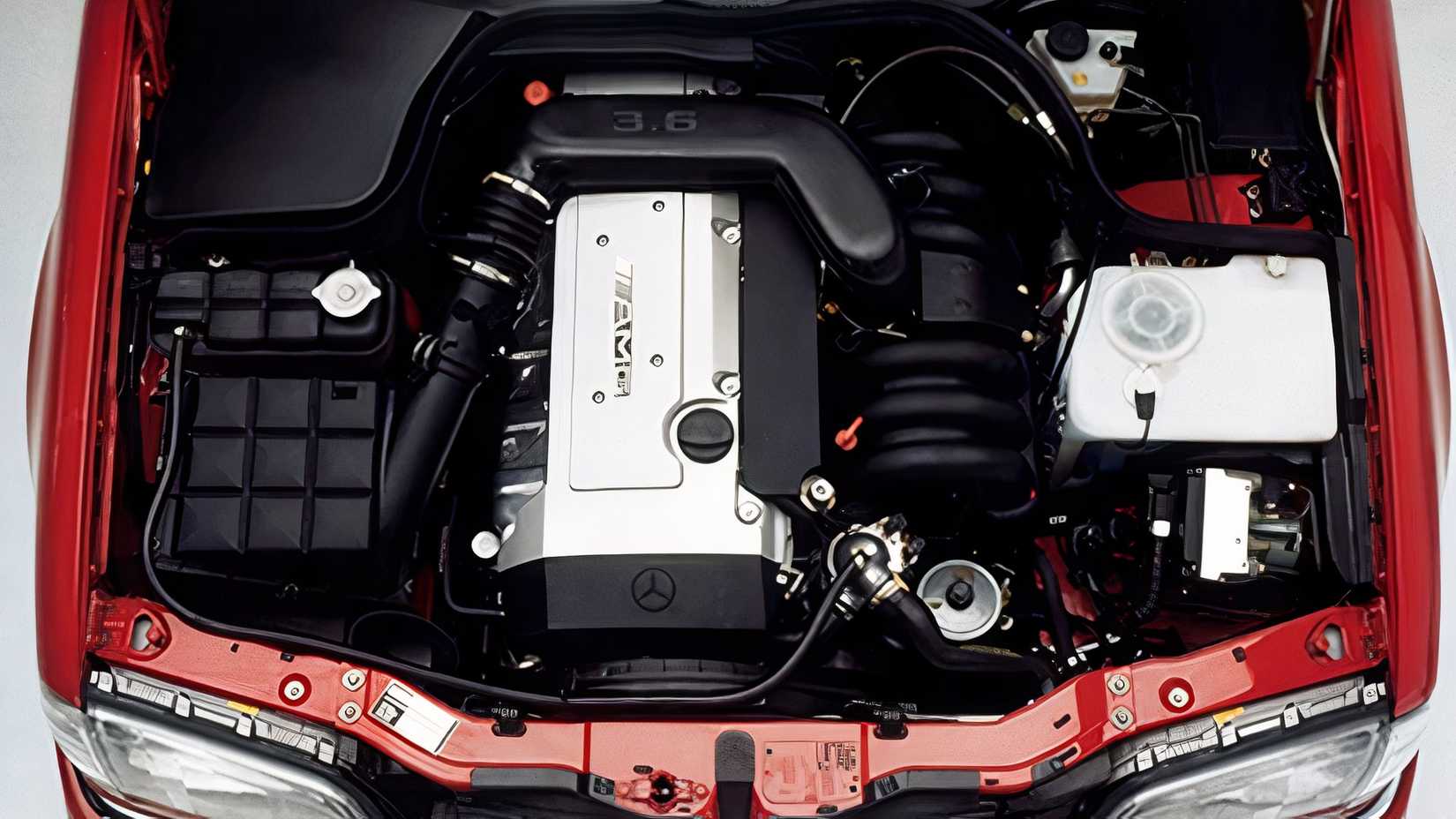
1995 Mercedes-Benz C36 AMG I6 engine viewMercedes-Benz
The result, the C36 AMG, debuted at the 1993 Frankfurt Motor Show. Under the hood was a version of the M104 inline-six engine from the fastest non-AMG version of the C-Class: the C280. AMG had thoroughly overhauled it, though. The displacement was up from 2.8 to 3.6 liters, with a crankshaft borrowed from Mercedes’ 3.5-liter diesel inline-six to help achieve the enlarged stroke. It also gained forged aluminum pistons, a larger air intake, and a higher compression ratio. The result was an engine that, in US-market guise, produced 267 hp and 280 lb-ft of torque (276 hp and 284 lb-ft for the rest of the world).
Naturally, some chassis upgrades were needed to cope with this newfound power. The work included raiding the Mercedes parts bin for the front brakes from the V12-powered SL600 and the rear stoppers from the V8-equipped E420. The anti-roll bars were stiffened up, and the shocks got an AMG-specific tune.
It was a promising recipe, but one that was curiously finished off with the sole transmission option of a four-speed automatic, rather than the manual plenty of buyers of a compact, high-performance sedan would have wanted at the time. Things were improved for the final model year, 1997, when the transmission gained a fifth gear, and US cars received the same 276 hp engine the rest of the world had been getting since launch. A manual was still conspicuous by its absence, though, at a time when three pedals were still the norm in performance cars.
How did it compare to the E36 M3?
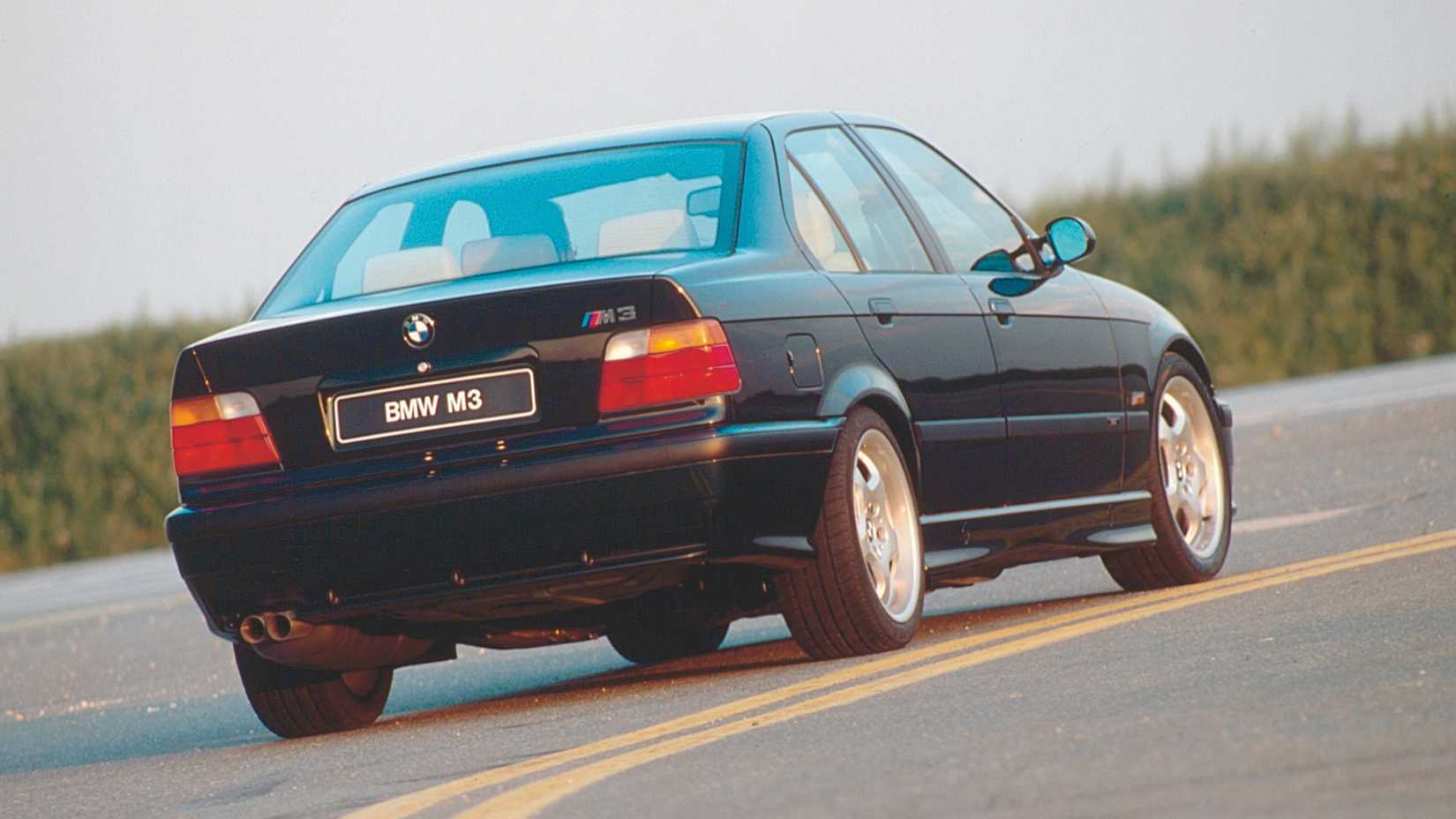
E36 BMW M3 SedanBMW
Mercedes-Benz C36 AMG
BMW M3 E36 Sedan (US spec)
Model years
1995-1997
1996-1999
Engine
3.6-liter inline-six
3.2-liter inline-six
Transmission
4-speed automatic (5-speed automatic for 1997)
5-speed manual or 5-speed automatic
Drivetrain
RWD
RWD
Power
267 hp (276 hp for 1997)
240 hp
Torque
280 lb-ft (284 lb-ft for 1997)
236 lb-ft
0-60 mph est.
5.9 seconds
5.5 seconds
Top speed
155 mph (limited)
137 mph (limited)
Weight
3,550 lbs
3,175 lbs
On paper, the E36 BMW M3 was immediately at a disadvantage compared to the C36, at least in US guise. For one, it was initially only available as a coupe or convertible. The sedan only joined the lineup in 1996, by which point the sedan-only C36 had already been on sale for a couple of years. More pertinently, though, emissions regulations meant the M3 sold in the US came with an entirely different engine to the one offered in the rest of the world, in both its pre- and post-facelift guises. When the rest of the world gained a ferocious 3.2-liter, 316-hp engine, fully developed by the M division, the updated US version, which coincided with the arrival of the sedan, had a different engine, closely related to the one from the lower-rung 328i and making just 240 hp.
However, things weren’t entirely rosy for the Mercedes, itself slightly strangled for the US market compared to other countries. The C36 was also heavier than the BMW at 3,550 lbs compared to 3,175 lbs. Factor in the C36’s automatic gearbox versus the M3’s standard manual, and a 1997 MotorTrend twin test between the two cars clocked the BMW hitting 60 mph in 5.5 seconds and the Mercedes in 5.9 seconds, even with that particular C36 benefiting from the 1997 updates. The Mercedes, though, easily had the legs in terms of top speed because US-spec M3s were limited to 137 mph, while the C36 wasn’t reined in until it hit 155 mph.
Related
This Is A Bargain German Alternative To The E46 M3
While the BMW E46 M3 is generally referred to as the king of the early 2000s sports sedans, one of its German rivals offers tempting value in 2024.
As ever, though, numbers don’t tell the whole story. The same MotorTrend test said the Mercedes was the more refined of the two cars. Still, it declared the BMW the winner because of the superior handling, but also due to it starting at $39,280, which was vastly more affordable than the $51,290 Mercedes was asking for the C36.
Combine that with the M3’s much bigger production numbers at around 70,000 units across the sedan, coupe and convertible bodies versus roughly 5,000 C36s, which were all sedans. It’s no surprise that the BMW remains a fondly remembered performance icon of the ’90s, while the Mercedes is something of a forgotten oddity from those early days when AMG was still finding its feet as part of the Mercedes-Benz mothership.
The AMG C-Class goes full circle
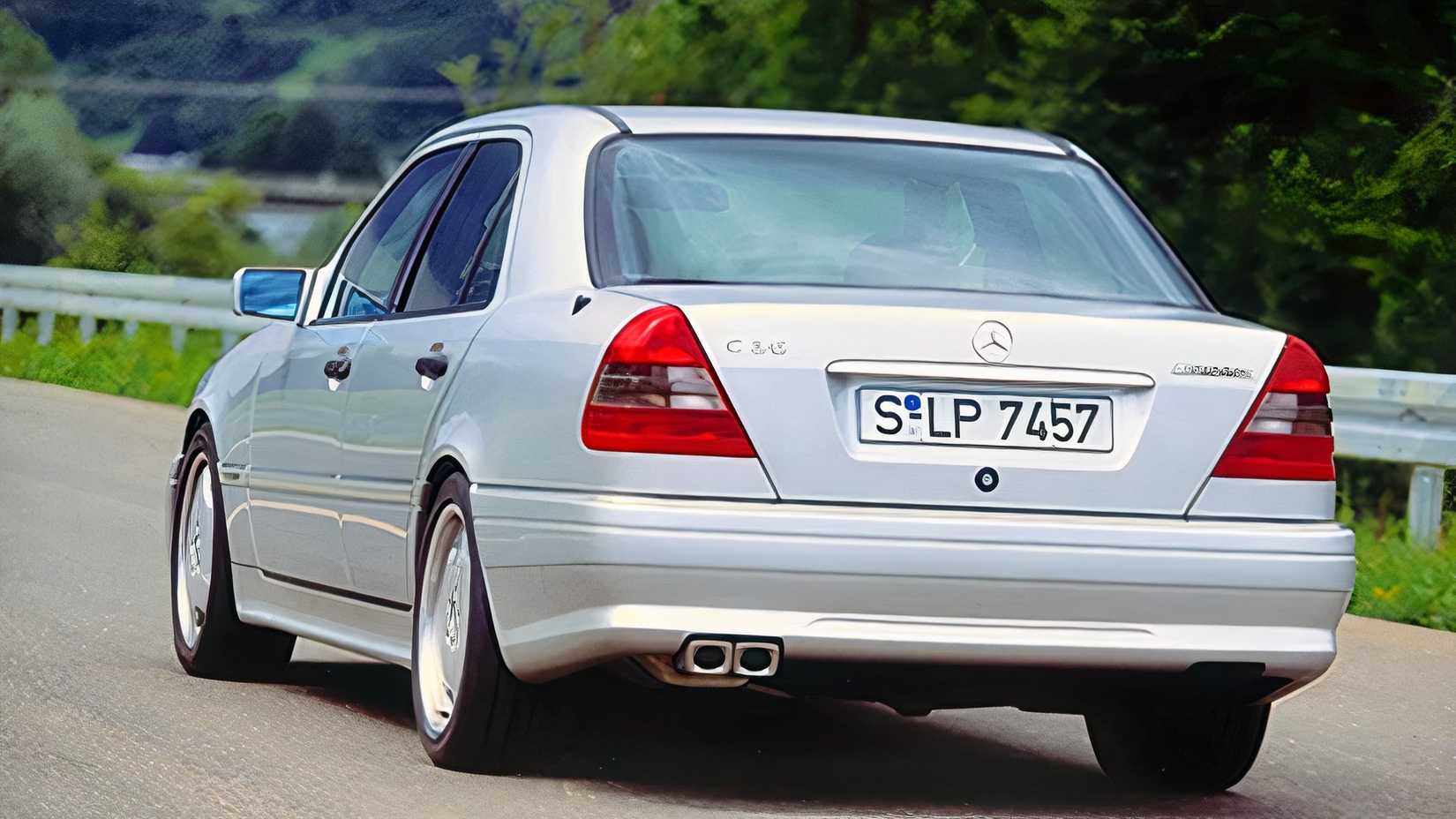
Silver 1995 Mercedes-Benz C36 AMG rear endMercedes-Benz
The C36 AMG was a relatively short-lived model, lasting only from the 1995 to 1997 model years in the US. It was replaced by the 1998 C43 AMG, packing a 4.3-liter, 306 hp V8 that not only helped it compete better with the full-fat Euro-spec M3, but kicked off the dynasty of small Mercedes sedans powered by big V8 engines.
The idea of a six-cylinder AMG C-Class was briefly revisited in 2001 with the W203 C32 AMG, powered by a 349-hp, 3.2-liter supercharged V6, but it lasted just three model years and was replaced by the 5.4-liter V8 C55 AMG. Then began the era of the C63, spawning two generations of V8s, followed by the controversial four-cylinder plug-in hybrid C63 S E Performance launched in 2023. However, after a few short years, that car is about to die because the engine it uses is about to fall foul of European emissions regulations.
Related
The Mercedes-AMG Sports Sedan Destined To Become A Classic
The Mercedes-Benz W204 C63 AMG is one of the coolest models in AMG’s history and will become a collectors’ item in the next decade.
Replacing it will be an AMG C53, powered by a straight-six engine, meaning the AMG C-Class is about to go full circle. The new engine, which has already debuted in the GLC 53 crossover, is very different from the one found in the C36 all those years ago. While the original used its big 3.6-liter displacement to achieve the 276 hp output, the more compact modern 3.0-liter unit uses both a traditional turbocharger and an electric compressor to help attain 443 hp and up to 472 lb-ft in overboost mode. It’s likely to drive all four wheels this time, too, and while the model will still use an automatic gearbox, the unit will have nine speeds – over twice the number of ratios found in the original.
Despite the differences, though, the legacy of that first in-house AMG model is arguably now more relevant than ever, so perhaps the C36 AMG is finally about to have its moment in the sun.
What’s a C36 worth today?
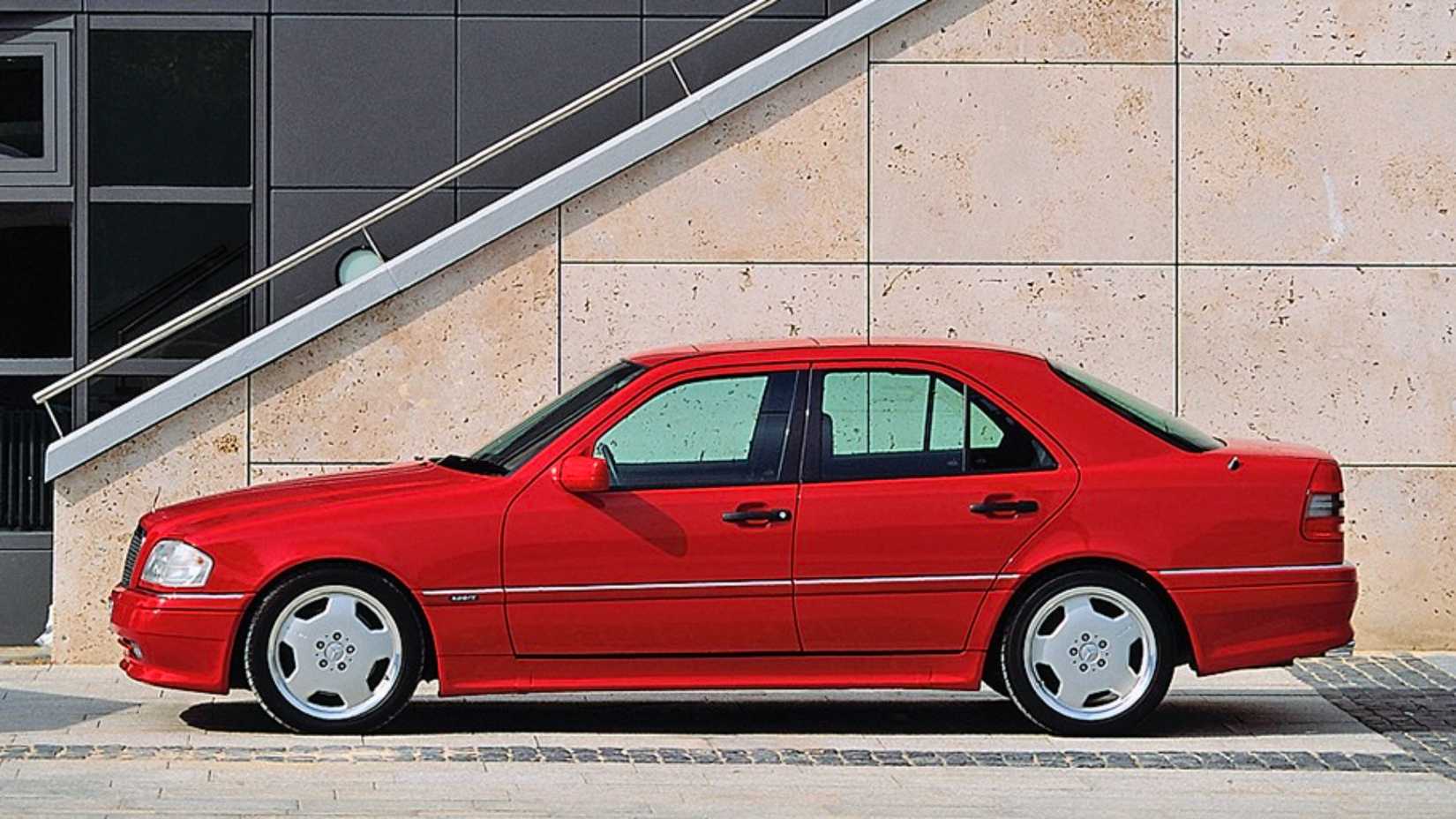
Mercedes-Benz C36 AMG sideMercedes-Benz C36 AMG
The relative rarity of the C36 AMG means finding one for sale isn’t always an easy task in 2026. At the time of writing, a Los Angeles-based dealer is listing a 1995 example with an indicated 51,234 miles and one previous owner, priced at $23,900. This seems to be towards the upper end of the market, as previous examples sold at auction over the last couple of years have tended to hover around the teens, with higher-mileage cars regularly dipping under $10,000.
That’s a sharp contrast to the E36 M3, where even high-mileage cars can go for over $20,000 these days. Those values are likely to keep rising now that the more desirable non-US cars are eligible for import. Factor in the general uptick in value for 1990s performance cars, and the lower prices C36s still seem to be trading at arguably makes the model a bit of an underrated bargain of its era. You’ll just have to live with that slushy automatic transmission and actually put in the effort to find one in the first place.
Sources: Mercedes Heritage, Mercedes-Benz, Mercedes-Benz Archive, BMW Group Classic, BMW Group Archive, MotorTrend