
Williams. For some fans new to Formula 1, this British independent is ‘just’ a perennial back marker and occasional podium finisher. For many though, Sir Frank Williams’ eponymous team was, for much of the 1980s and the mid-late 1990s, the benchmark in Formula 1. Indeed, in F1’s 76-year history, only two teams – the vaunted Ferrari, and current hypercar heavyweight/reigning World Champion McLaren – have won more Constructors’ Championships than independent Williams.
Jatco CVTJatco
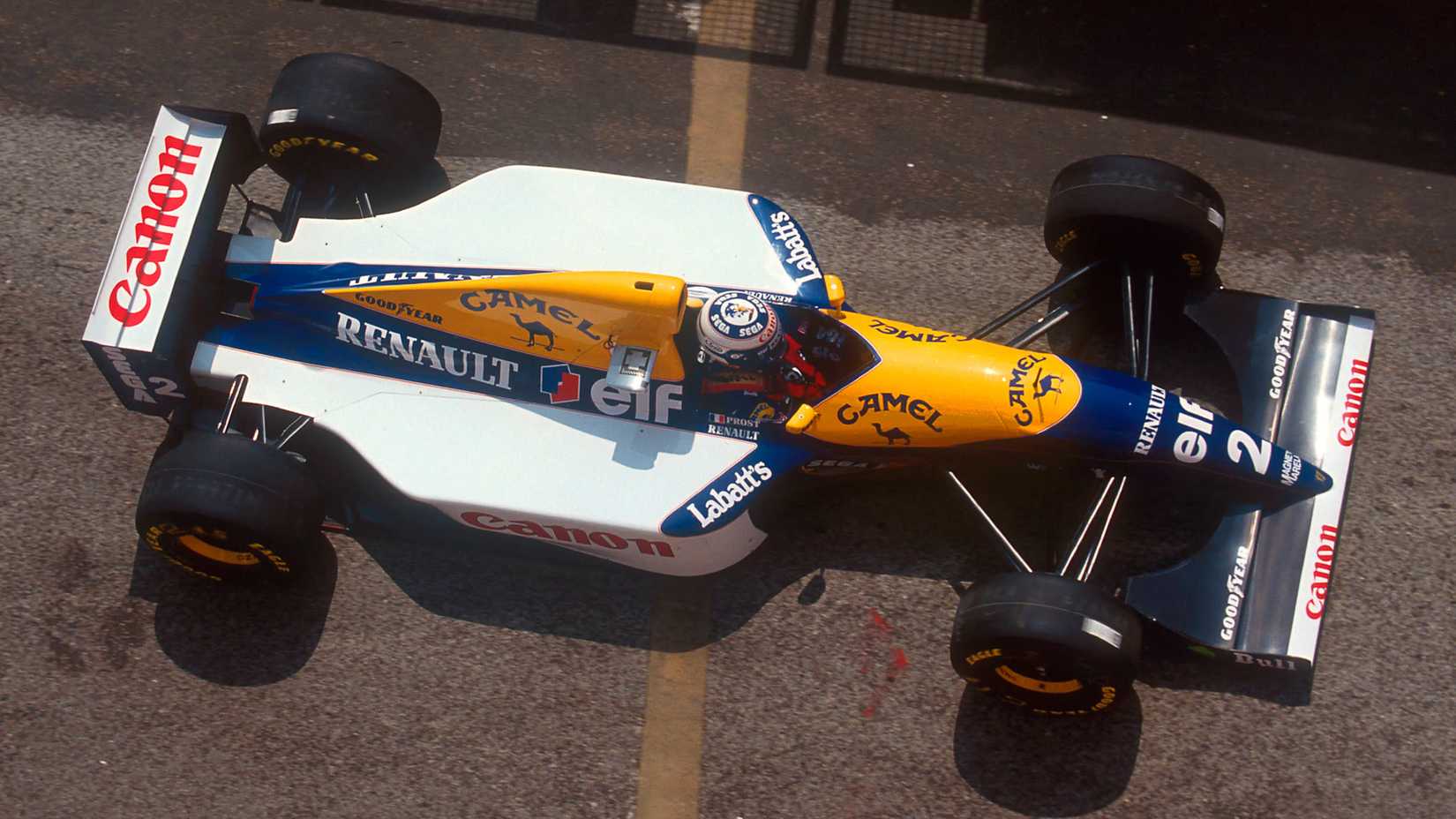
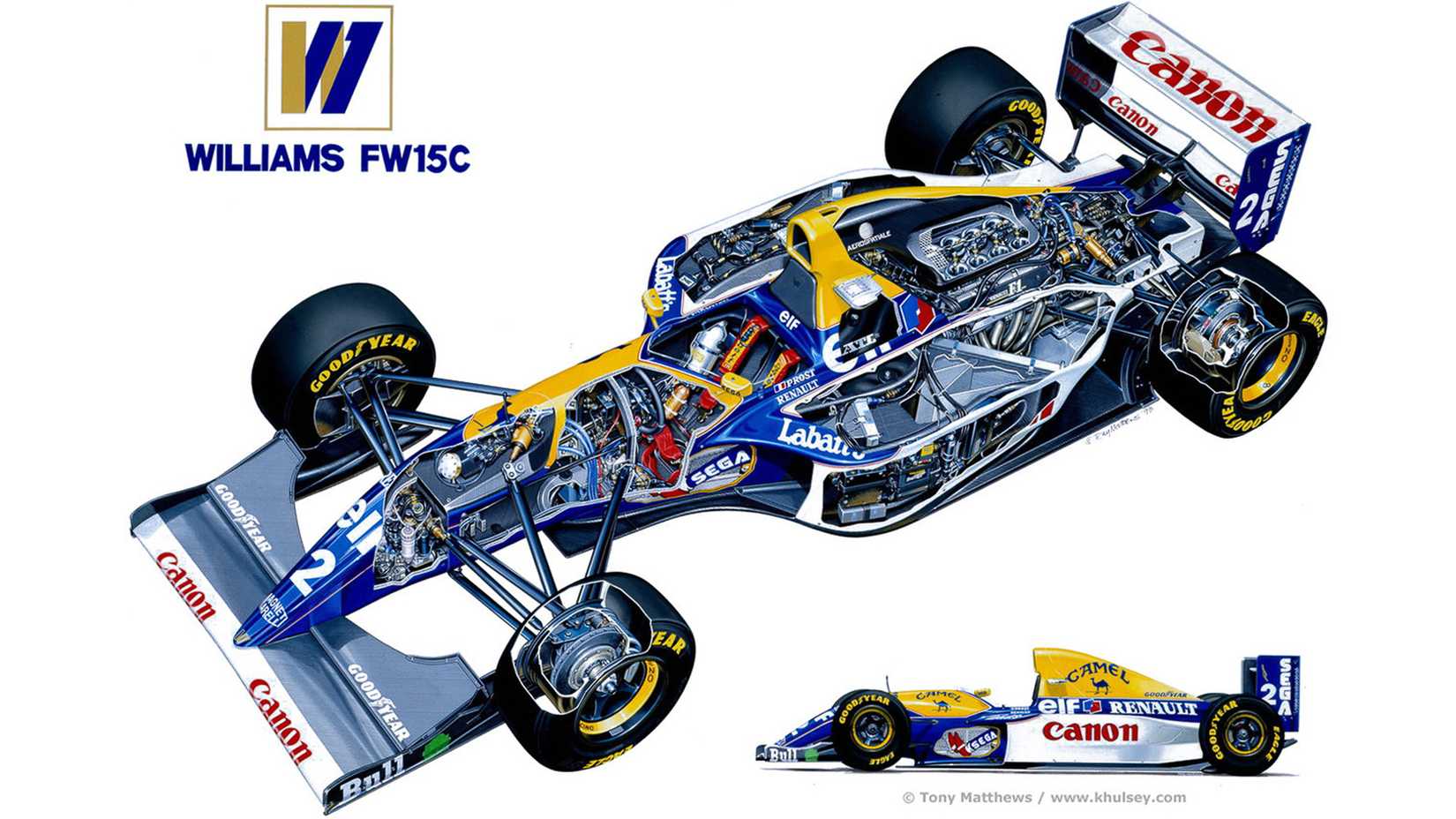
Few of those championship-winning cars, however, were as technologically sophisticated as the 1993 Williams FW15C, oft-considered the most technologically advanced Grand Prix car of all time. It had everything, bar heated seats, cupholders, and spinner hubcaps. Active suspension. Active ride height. Anti-lock brakes. Traction control. A growling, thumpingly powerful Renault V10. And, though it never turned a wheel in competitive anger, the FW15C remains the only Grand Prix car to-date to ever be equipped with a continuously variable transmission.
The CVT Gearbox Planned for 1994
How The System Worked
1993 Williams FW15C. Formula 1. Formula One. F1. Overhead. Alain ProstFormula 1
Heading into 1993, Williams, F1’s reigning Constructors’ champion, had the technological ball very much in its court. As well as its pioneering use of active ride and active suspension (we’ll come back to that a little later), the Renault ‘RS5’ 3.5-liter V10 at the heart of the team’s new FW15C single-seater was also more powerful than the Ford ‘HB’ V8 powering Williams’ main rivals Benetton and McLaren. Indeed, with new con rods and revised inlet and combustion chambers fitted during F1’s 1992-1993 winter off-season, power from the Renault RS5 was up 30 horsepower to 780 hp, more so even than Ferrari’s gutsy, but incredibly heavy and thirsty, V12.
Williams, though, felt it could demoralize its main rivals yet further with a nascent engineering project – CVT – overseen by team co-founder, and chief engineer, Patrick Head, and Adrian Newey, the best designer of his, or indeed any, F1 generation.
1993 Williams FW15C. Formula 1. Formula One. F1. Technical drawingTony Matthews (khulsey.com)
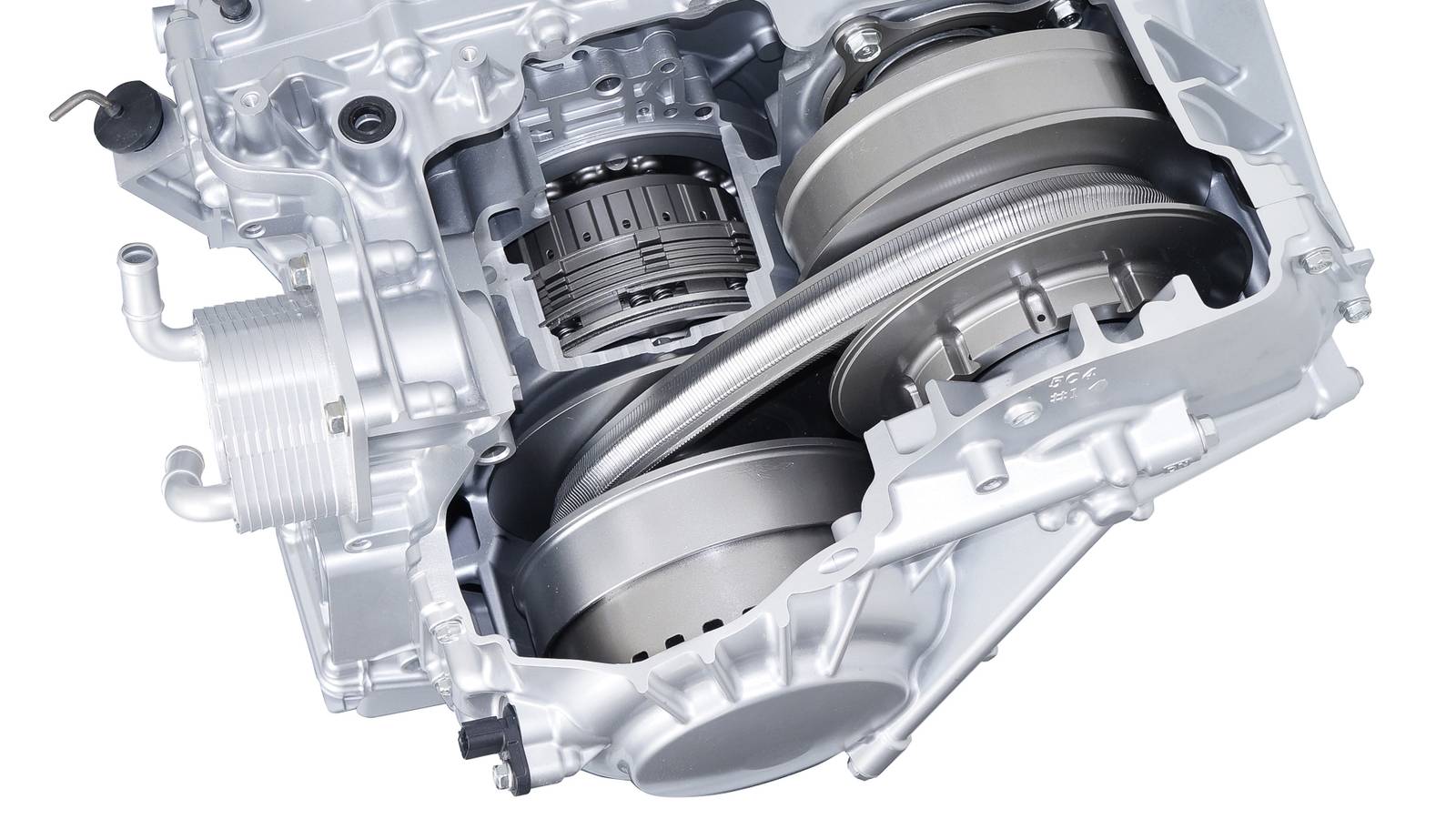
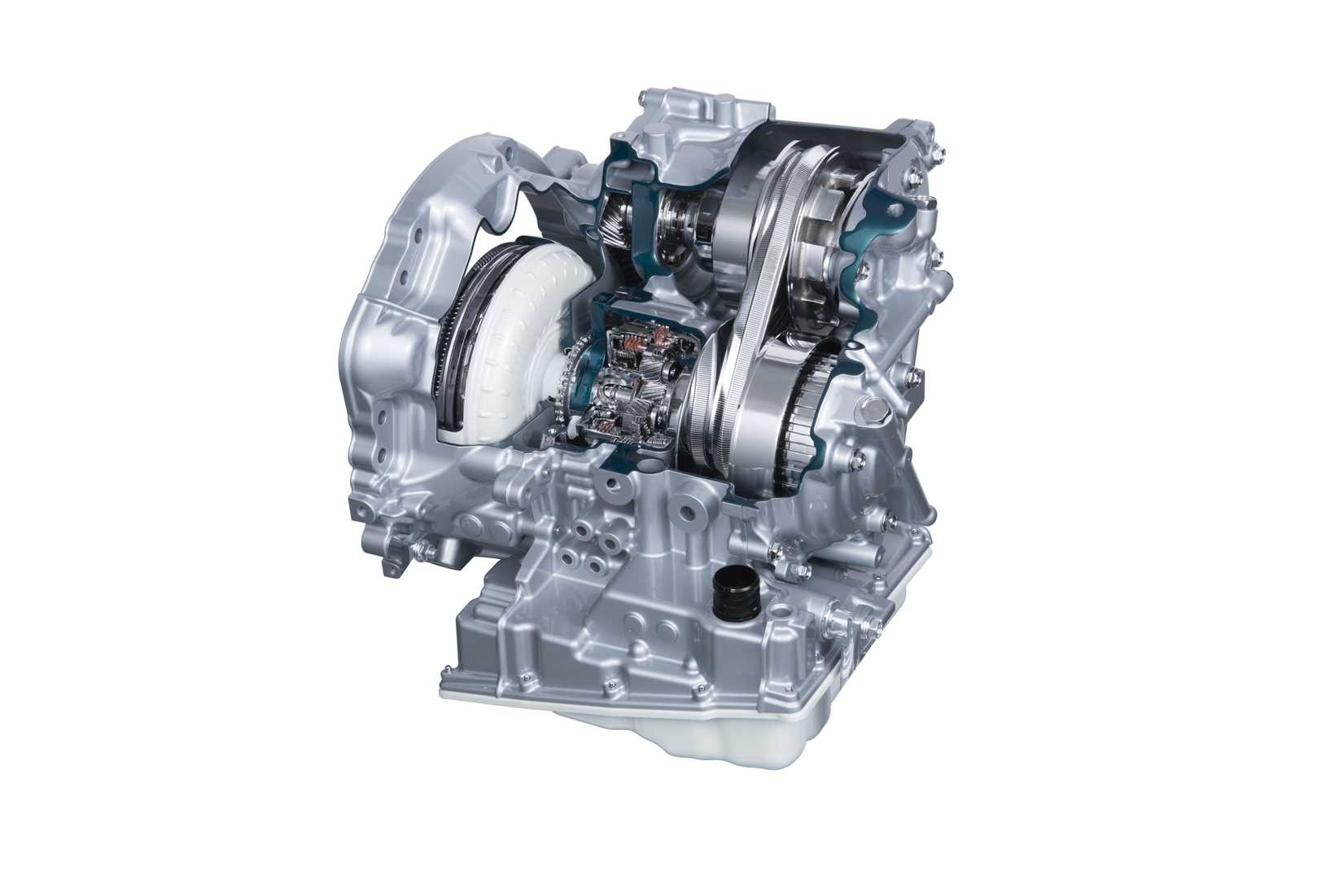
Though it’s a staple today in road cars from the likes of Nissan, Subaru, Toyota, and Honda, among others, at the time, CVTs, especially in F1, was uncharted territory. Inspired by The Netherlands’ little-known DAF Variomatic road car, Williams’ system used two canonical pulleys, one connected to the engine and the other to the wheels, linked with a metal belt. As the vehicle accelerates, the pulleys change in diameter, effectively offering up an infinite number of gear ratios, as opposed to a conventional gearbox, which is built around a pre-determined number. The theory was that, across a two-hour Grand Prix distance, Renault’s powerful V10 could just sit at a near-constant rpm, with speed controlled by changing pulleys, and thus, the gear ratios.
Related
Own A 1:1 Replica Of The Williams FW45 In Gulf Colors
This is the ultimate piece of F1 memorabilia.
Pros And Cons Of The CVT
It was a master stroke. Binning the semi-automatic for a CVT meant that Renault, rather than finding a power-torque balance across a wide rev range, could optimize its RS5 V10 for one single rpm, generating more power as a result. It also took the risk of costly, and potentially race-ending, high-rev gear changes away from the drivers, with Williams’ engineers changing the ratio of the pulleys beforehand. Williams was convinced, and development, including on-track testing, began mid-way through the 1993 season ahead of a planned F1 roll-out for 1994. There were downfalls, however, chief among them was the awful sound of an engine at constant high revs. As Adrian Newey himself states in his autobiography:
“I have to say it would have sounded hideous to spectators, and would probably have been bad news for the sport… We tested our CVT at Silverstone. Yes, it sounded horrible, but it’s not our job to ensure that the car sounds nice or smells good or looks pretty. We’re shark-like in our pursuit of purpose. We exist only to make the car go faster.”
– Adrian Newey, How To Build A Car
Alongside that, developing a CVT gearbox for its first-ever use in F1 was ruinously expensive. Moreover, the greater friction associated with using just two pulleys meant the CVT might also be far less reliable, something a top-running Grand Prix team could scarcely afford. The innovative semi-automatic gearbox, for example, pioneered by British engineer John Barnard during his time at Ferrari, had won its F1 debut at the 1989 Brazilian Grand Prix, forced race retirements at least seven times that season. Indeed, rumors abound that Ferrari mechanics, predicting the new gearbox would fail before half-distance, were due to fly home from Brazil before the race had even finished.
Related
CVTs Vs. Conventional Automatics: Breaking Down The Pros And Cons Of Each
CVT or traditional automatic – which is best for you, and why? We explore the ins and outs of both.
Why The CVT Was Never Raced
The ‘Official’ Ruling…
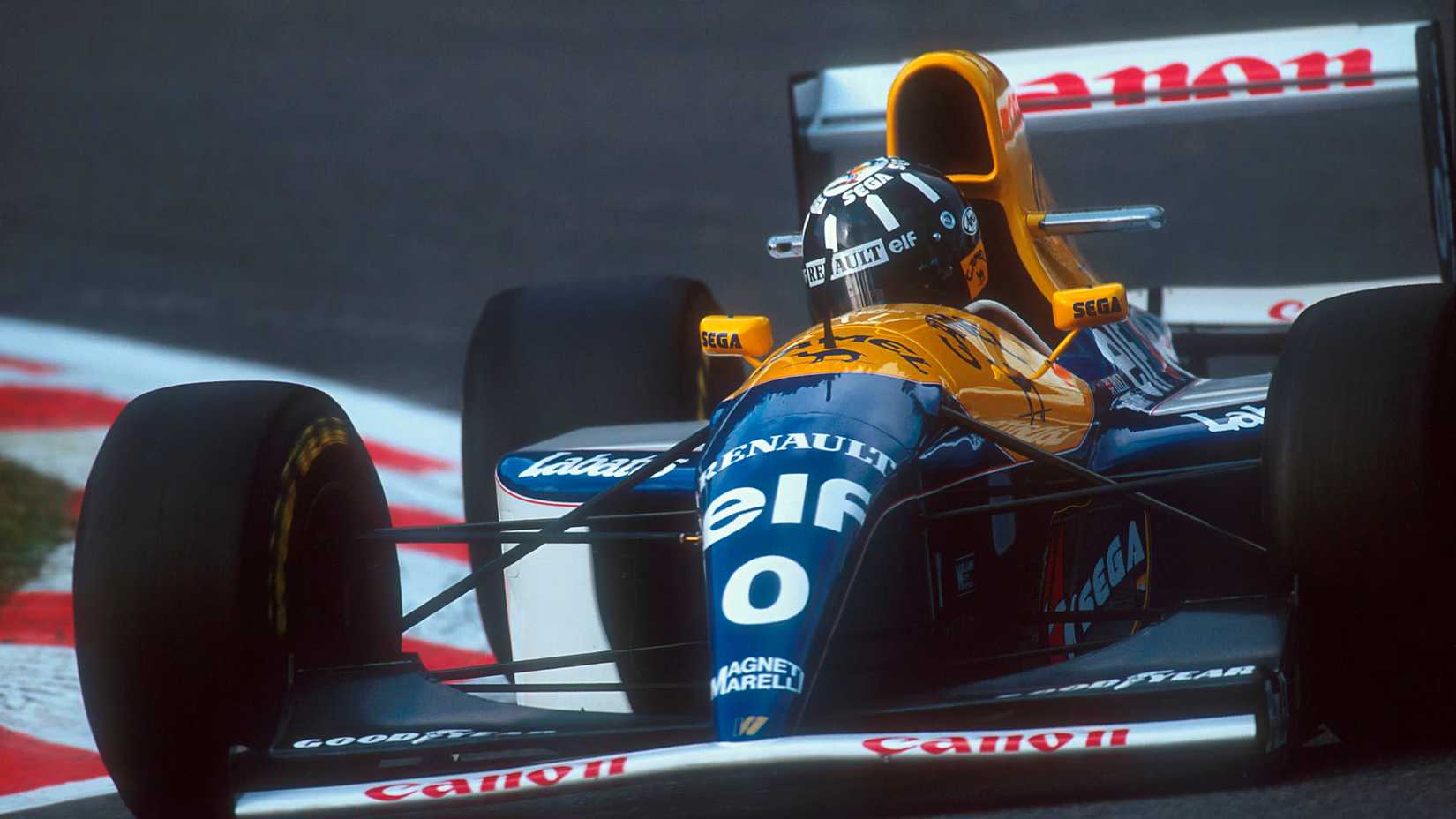
1993 Williams FW15C. Formula 1. Formula One. F1. Damon HillFormula 1
Sadly, Williams’ CVT program would never start a Grand Prix proper. Midway through the 1993 season, and with Williams already well on-course to secure both the drivers’ and Constructors’ for the second year in a row, Formula 1’s governing body – the FIA – ordered that all driver aids would be banned for 1994. Including ABS, the nascent CVT gearbox, and especially traction control and ‘active’ suspension.
Theories behind the FIA’s decision, unsurprisingly, ran rampant. In F1’s highly-politically charged arena, many felt this was a ‘like it or lump it’ gesture from the governing body designed to keep F1 teams in-check (it was even threatened that the ban would come into effect ahead of the French Grand Prix that July). Many, meanwhile, believed that Williams’ recent championship dominance, aided significantly by driver aids, was hurting TV viewing figures too, and thus, potential advertising revenue. Something a gear-change-less CVT in an already crushing Williams would hardly help in 1994.
…And The Hand Williams’ Rivals Played In The Decision
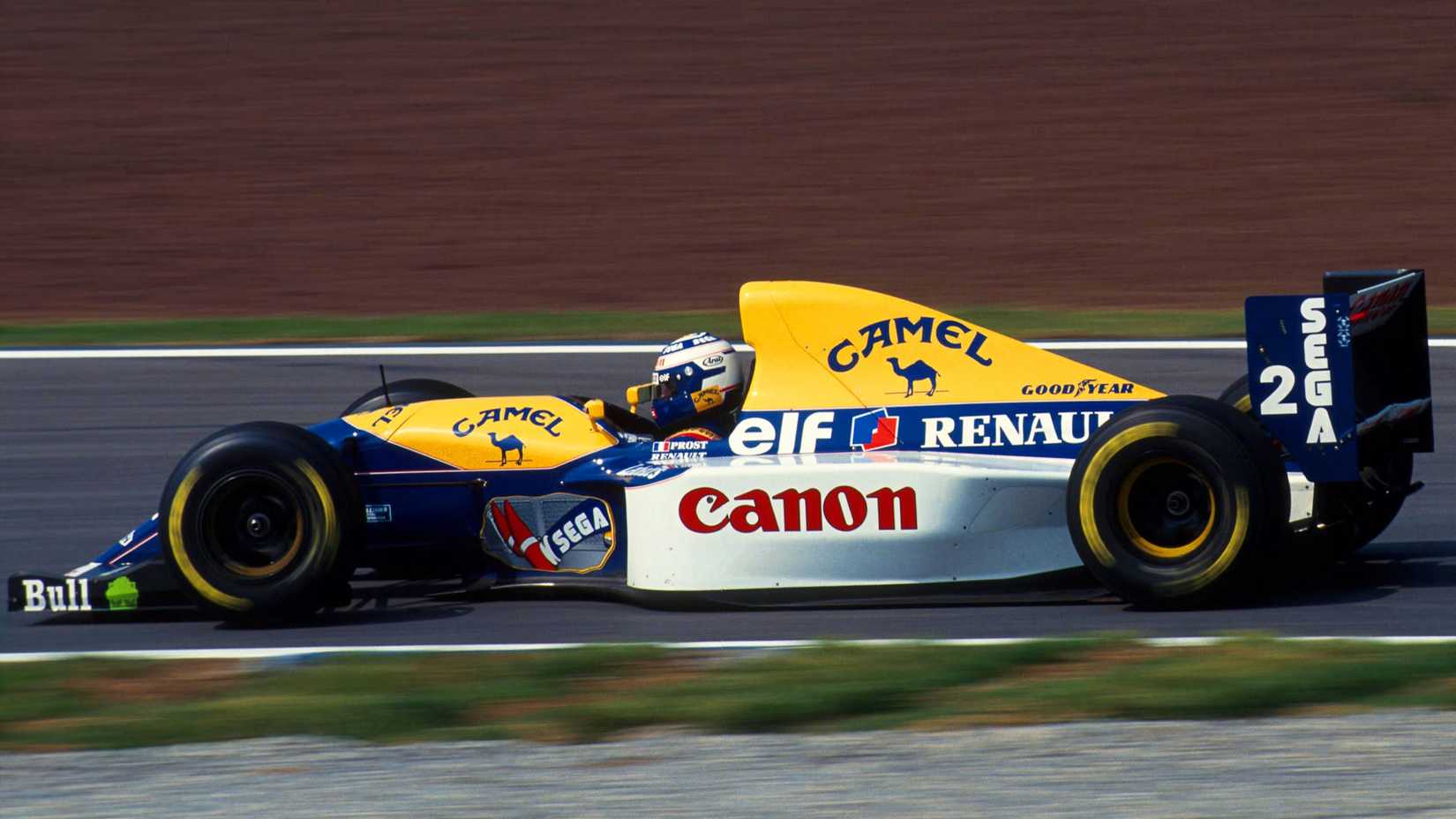
1993 Williams FW15C. Formula 1. Formula One. F1. Alain Prost. On-track. MotionFormula 1
Williams,’ meanwhile, smelt a rat. With the British team having introduced ‘active’ suspension to enormous championship-winning success in 1992 (again, we’ll get to that), Ferrari, like McLaren and the up-and-coming Benetton team, had also introduced its own active system to their 1993 car. But while the still-under-powered McLaren and Benetton, already a year behind Williams with its active technology, gradually clawed back ground, Ferrari rarely got their system to work at all. Indeed, Gerhard Berger suffered a frightening accident at the 1993 Imola Grand Prix when his Ferrari’s ‘clever’ suspension, dumped itself on the ground without warning, spearing the Austrian into the barrier at high speed in the process (imagine, for example, your knee buckling in the middle of a 100-meter sprint).
That Williams could stretch its advantage further in 1994 with a CVT was, the team believes, the last straw for its rivals, and complaints were soon levied at the FIA to step in. Indeed, Newey, albeit slightly tongue-in-cheek, suggests that continuously variable transmissions might well have been the next game-changer in Formula 1…
“In an alternate universe, perhaps, we used the CVT, the other teams cottoned on, and that beloved noise of Formula 1, something that drew many of us to the sport in the first place, changed irrevocably, at least for a while.”
– Adrian Newey, How To Build A Car
For Williams, naturally, the ruling was disastrous. Stripped of the driver aids around which their cars had been designed for at least three years, Adrian Newey and Head effectively had to start from scratch, and, gallingly, at least six months behind their rivals. Unsurprisingly, and while far from a total flop, the start of the 1994 season was a notable fall from grace, with the new, now hyper-sensitive, and very-non-driver-aid-ed Williams FW16 lagging significantly behind new benchmark Benetton. This, even with a certain Ayrton Senna behind the wheel, but that’s a story for another time.
Related
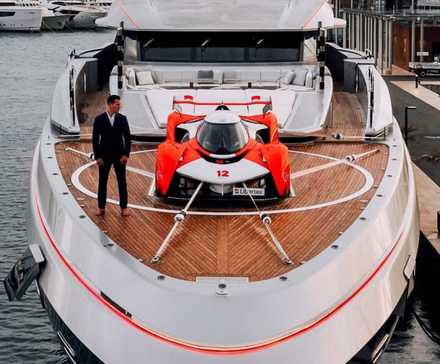
You Can’t Park That There. Special Commission McLaren Spotted On Superyacht
One of only 25, Gran Turismo-inspired supercars spotted parked on superyacht
How Else The Williams FW15C Was A Technical Marvel
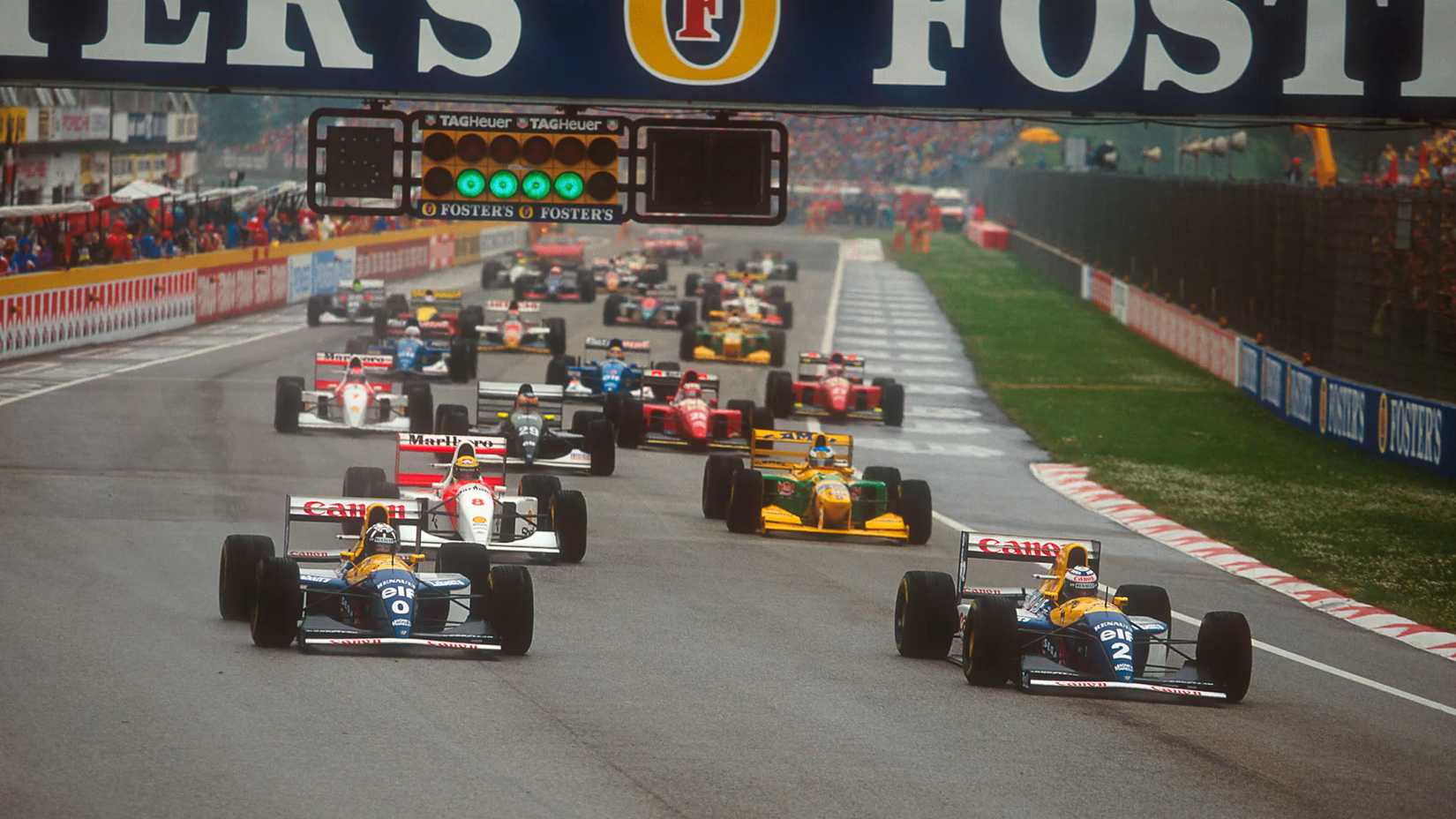
Williams FW15C. 1993 Formula 1. Formula One. F1. San Marino Grand Prix. ImolaFormula 1
Ironically, given that the team would go on to win five of the next six constructors’ championships, four drivers’ crowns, and 52 of the 98 races held from 1992 to 1997, in early 1991, the British team to beat in F1 was not Williams, but McLaren. Woking’s finest, after all, had won all but two of the F1 Constructors’ crowns since 1984 (they’d dutifully add another in 1991) thanks to pioneering use of F1’s first carbon-fiber monocoque, almost sarcastically aerodynamic cars, and the crushing might that was Honda’s ‘RA’ V10. Having a certain Ayrton Senna, a soon-to-be three-time World Champion and considered by many the greatest to don the helmet, didn’t hurt things either.
Williams-Renault, meanwhile, either unwilling or unable to take on Honda in a horsepower arms race, needed an alternative plan: if it couldn’t out-gun its Japanese-powered compatriot, it would have to out-maneuver them.
Active Ride And Active Suspension
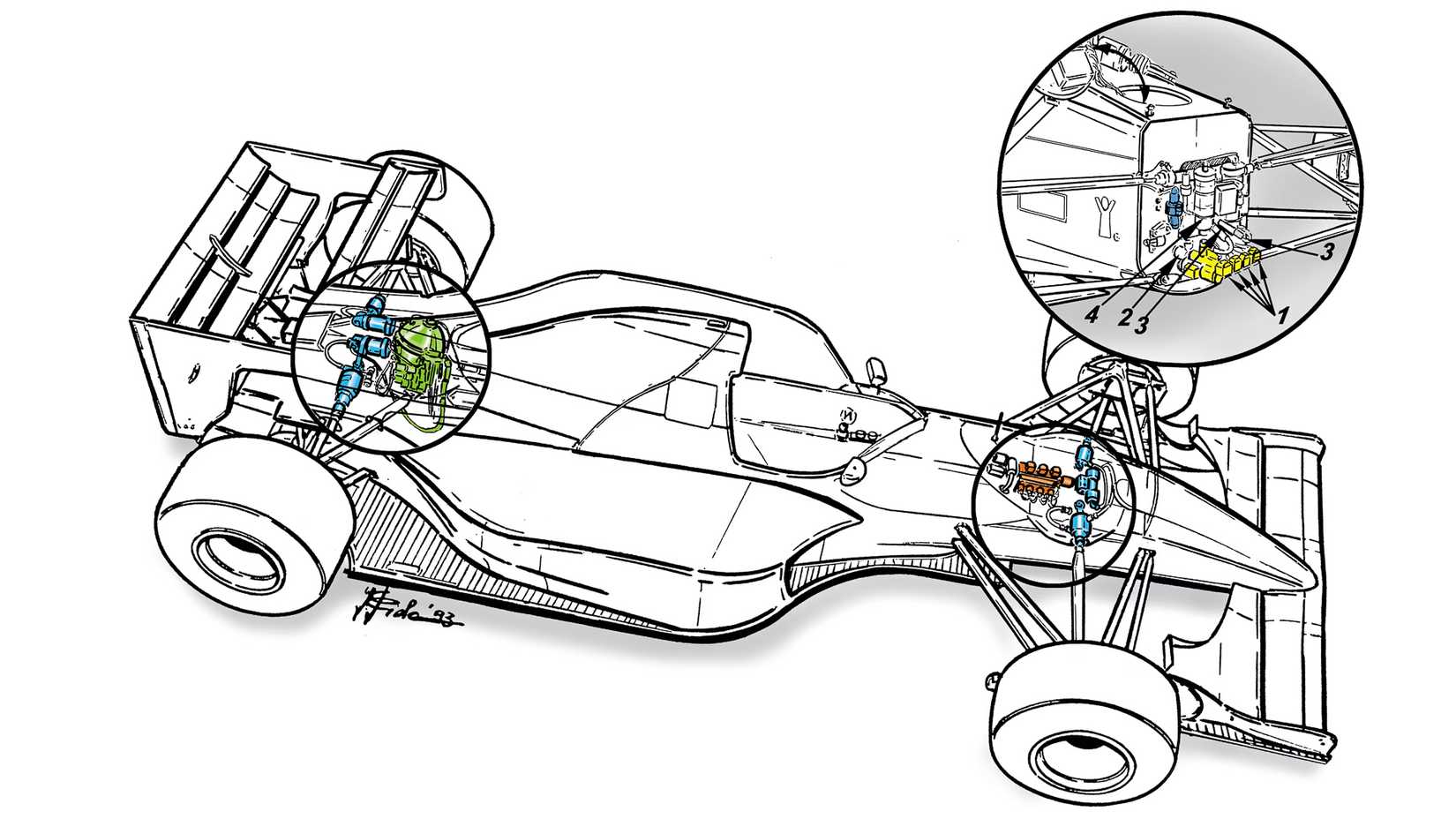
1993 Williams FW15C. Formula 1. Formula One. F1. Technical drawing. Active suspensionFormula 1
Key to this was Williams’ newly-developed active suspension. As on today’s road car, actuators fitted to each wheel expanded and shortened as needed via hydraulics, depending on the load being put upon them as the car cornered. This computer-controlled system effectively kept all four wheels on the ground to maximize. Alongside this was active ride height, which allowed the drivers – and later the team’s engineers either from the pitwall or via pre-programmed software – to adjust the vehicle’s ride height corner-by-corner, to reduce, if not eliminate, pitch and body roll. A huge advantage.
Developed across most of 1991, this ‘active’ system was summarily bodged onto Williams’ 1992 car – the FW14, which had originally been designed with ‘passive,’ or standard suspension components – as a ‘B’ spec. It went on to win the 1992 championship, five rounds early, after a crushing performance by Britain’s Nigel Mansell.
Related
Why People Still Care About 24-Hour Endurance Racing
The effect of 24-hour racing at Le Mans, the Nürburgring and Spa-Francorchamps
Power Steering, Anti-Lock Brakes… And Sonic The Hedgehog
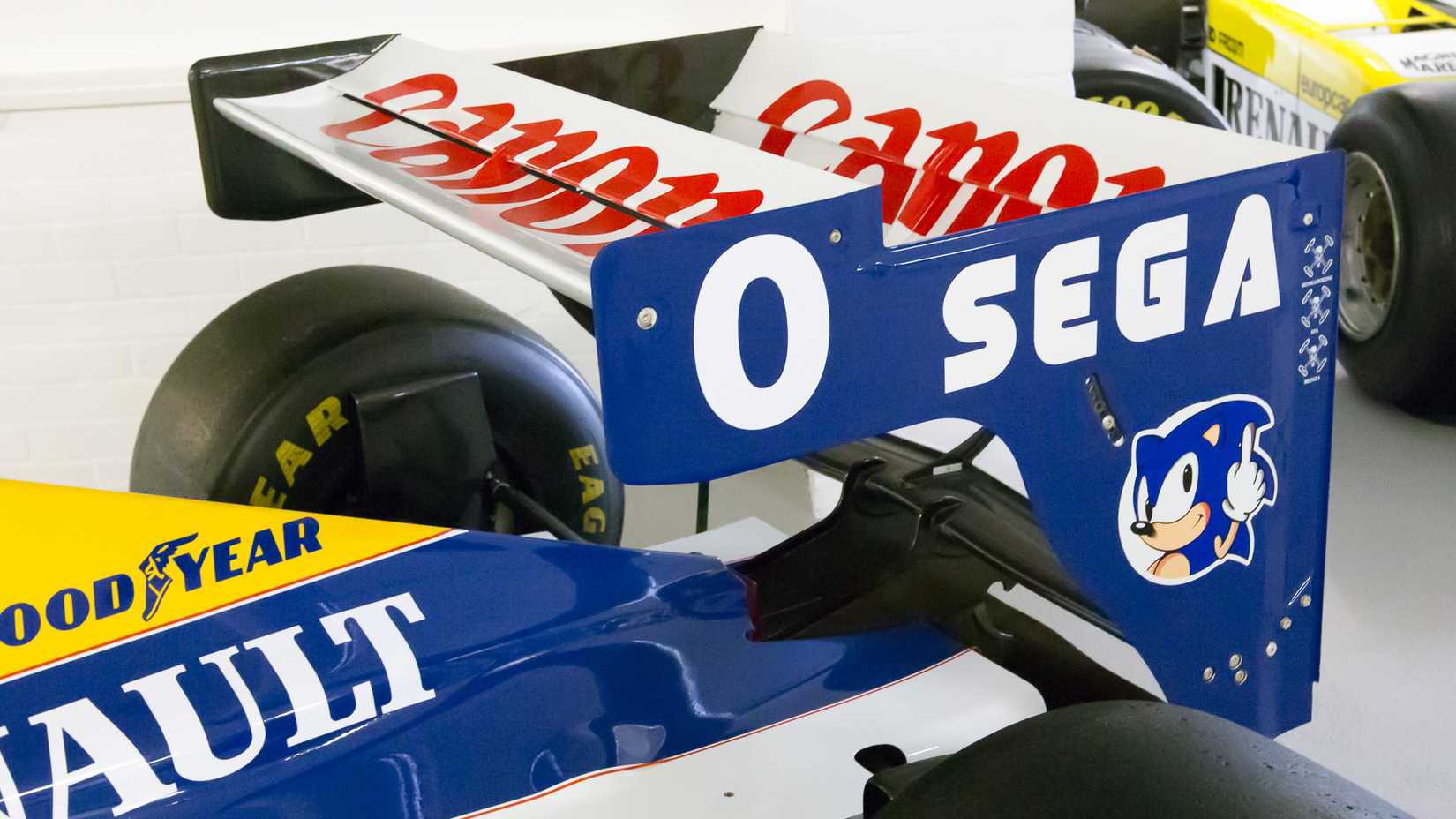
1993 Williams FW15C. Formula 1. Formula One. F1. Rear wing. Sega. Sonic the HedgehogWilliams Racing (Facebook)
“But why stop there?” thought Adrian Newey and Patrick Head? Tight cockpit surrounds, and the limited room for a steering wheel that left (all to improve aerodynamics), meant driving the V10-powered Williams FW14B was akin to wrestling the front wheels of an 815-horsepower Ford Mustang GTD with a stale donut. Something the enormously strong Mansell could do, but which his successor for 1993 – the already three-time World Champion, and much lither – Alain Prost could not. Thus, onto the ‘active’ car was also added power steering (still a novelty at that point). From the mid-point French Grand Prix onwards, anti-lock brakes were also incorporated, allowing Prost and new teammate Damon Hill to stamp on the middle pedal without locking the calipers, gaining them up to 15 meters in the braking zones alone. And at the start of the race, traction control got the FW15C off the grid without wheel spin.
Throw in a Sonic the Hedgehog decal from team sponsor Sega, and Prost sailed to a deserved fourth World Championship with seven wins and five further podiums. With new teammate Hill winning his first three GPs on the bounce mid-season, Williams secures its sixth Constructors’ title with the double the points of nearest rival McLaren. Prior to the 1994 ban on driver aids, it really is no hyperbole to say the 1993 Williams FW15C, though primitive in terms of software compared with a contemporary Gran Prix car, remains the most technologically advanced Formula 1 single seater there had been to that point, or indeed there likely ever will be again.
Source: Formula1.com / Honda / F1 Exhibition / Tony Matthews (khulsey.com)