
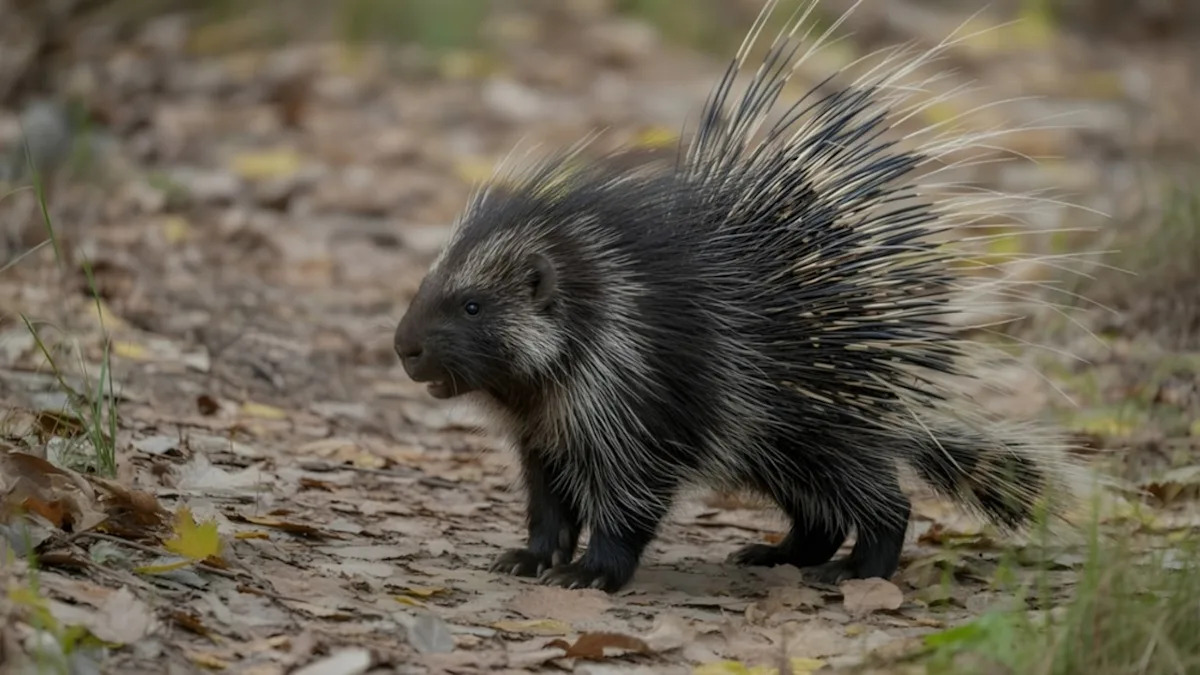
With much of the country experiencing record-breaking low temperatures, heavy snowfall, and winter weather that keeps many of us stuck indoors, it’s no surprise we’re all counting down the days until we can get outside, stretch our legs, and welcome the (hopefully!) warmer days of spring. Animals that are used to spending most of their time outdoors feel the same way, as you’ll see in this video that @ExoticAnimalSanctuary.org recently shared on TikTok.
The video features two African crested porcupines excited after their first time back outside following a snowstorm in Nashville, Tennessee, complete with joyful zoomies to prove it. If that’s not enough to make you smile, just wait until Henrietta starts literally jumping up and down with excitement…it’s impossible not to cheer her on!
The sanctuary captioned the video, “African crested porcupines are moved back outside after the winter storm, and they are zooming all over. Not sure I’ve ever seen Henrietta literally jump up and down like this.”
We’re just glad he was able to record it for all of us to see!
Related: Porcupine’s Reaction to Getting His Ear Scratched Is Absolutely Adorable
🐶SIGN UP to get “pawsitivity” delivered right to your inbox with inspiring & entertaining stories about our furry & feathered friends🐾🐾
Breaking the Myth About Porcupine Quills
Growing up, many of us were told that if you get too close to a porcupine, they’ll shoot their quills out at you. This is a myth!
Porcupines have up to 30,000 quills that they raise when they’re excited, like the porcupines in this video, or when they’re threatened, agitated, or scared. The Mass Aubudon explains that each quill has a tiny barb, similar to a fishhook, making them painful and difficult to remove. If a predator gets too close, the quills can easily detach on contact. Some porcupines will rattle their quills or make noises if someone gets too close, giving predators a clear warning before they get poked.
Porcupines are solitary and slow-moving animals that are rarely aggressive with other animals and humans, but if you ever encounter one in the wild, keep your distance just to be on the safe side to avoid pain, potential infection, and even deep tissue damage from their quills.
This story was originally published by PetHelpful on Mar 1, 2026, where it first appeared in the Pet News section. Add PetHelpful as a Preferred Source by clicking here.