
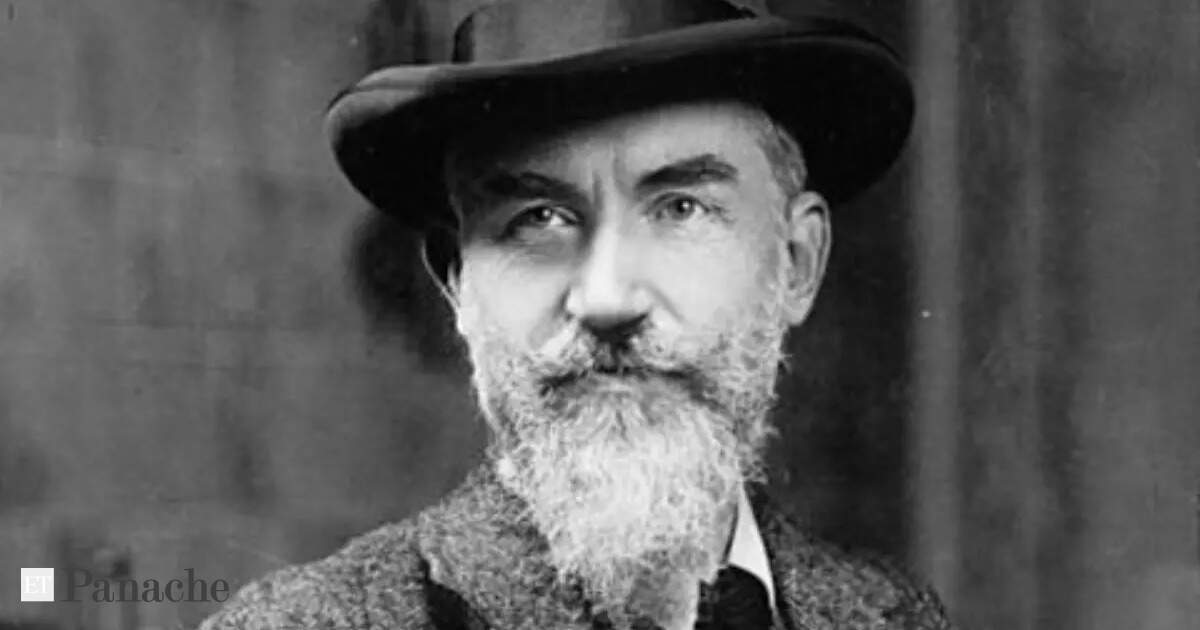
Human life is an ongoing process of trial and discovery. Errors are not rare interruptions in this journey; they are woven into the fabric of growth itself. Every individual, no matter how careful or experienced, stumbles at some point. Centuries ago, the celebrated Irish dramatist and thinker George Bernard Shaw underscored the profound value hidden within our missteps. He believed that blunders are not the opposite of achievement but an essential pathway toward it.Quote Of The Day By George Bernard Shaw On Importance Of Learning From MistakesHe stated, “Success does not consist in never making mistakes but in never making the same one a second time.”
The Deeper Meaning Behind Shaw’s WordsShaw’s statement shifts the definition of accomplishment away from flawlessness and toward thoughtful growth. Many people mistakenly assume that triumph belongs only to those who move through life without slipping. However, Shaw challenges this illusion. Mistakes, in his view, are evidence of action, bravery, and experimentation. They indicate that a person is attempting something meaningful rather than remaining frozen by fear.
True achievement, therefore, is rooted in awareness. When individuals pause to examine what went wrong, extract lessons, and adjust their behavior, they demonstrate maturity. Repeating identical errors reveals carelessness or stagnation. In contrast, evolving after failure shows adaptability and intelligence. Progress emerges from reflection and recalibration.
Shaw’s perspective places improvement above perfection. Instead of chasing an unrealistic ideal of error-free living, he encourages continuous refinement. Each setback becomes an opportunity to sharpen judgment and strengthen resilience. Over time, this pattern of learning transforms weaknesses into wisdom. Growth is not measured by the absence of mistakes but by the presence of insight.
Why Shaw’s Insight Matters TodayIn the modern era, where competition is intense and expectations are high, fear of failure often prevents people from taking risks. Whether in classrooms, workplaces, or personal relationships, individuals may hesitate to step beyond comfort zones because they dread making mistakes. Shaw’s message remains strikingly relevant in such an environment.
Innovation depends on experimentation. Entrepreneurs, scientists, artists, and students all advance by testing ideas that may not succeed immediately. The ability to analyze setbacks quickly and refine strategies provides a significant advantage. Those who treat failure as feedback rather than final defeat move forward faster and wiser.Shaw’s words also promote accountability. Instead of blaming circumstances or others, individuals are encouraged to examine their own actions. By acknowledging misjudgments and correcting course, they cultivate discipline and character. This mindset fosters steady development rather than fragile confidence.
Ultimately, the quote reminds us that advancement is dynamic. It is shaped by adaptation, not by rigid perfectionism. Each corrected error becomes a stepping stone toward enduring accomplishment.
The Life and Legacy of George Bernard ShawEarly Years and StrugglesGeorge Bernard Shaw was born at 3 Upper Synge Street in the Portobello district of Dublin, an area regarded at the time as predominantly lower middle class. He was the youngest child and the only boy in the family of George Carr Shaw and Lucinda Elizabeth, known as Bessie, whose maiden name was Gurly.
He had two older sisters: Lucinda Frances, often called Lucy, and Elinor Agnes. The Shaw household traced its roots to England and was part of the Protestant Ascendancy in Ireland, the social group that historically held political and economic influence during that period.
Shaw relocated to London in 1876 with ambitions of building a literary career. His early years were marked by financial hardship and repeated rejection. Determined to succeed, he immersed himself in intense self-education, reading widely and refining his craft. By the mid-1880s, he had earned recognition as a respected critic of theatre and music.
Rise as a PlaywrightShaw eventually produced more than sixty dramatic works. Among his most celebrated creations are Man and Superman, Pygmalion, and Saint Joan. These plays blended sharp satire with philosophical inquiry, challenging audiences to reconsider social conventions.
His first major stage triumph came with Arms and the Man, which established him as a formidable voice in drama. Influenced by the realism of Henrik Ibsen, Shaw transformed English-language theatre by introducing bold social commentary into his narratives. Later successes such as Major Barbara, The Doctor’s Dilemma, and Caesar and Cleopatra further secured his reputation.
In recognition of his literary impact, Shaw received the Nobel Prize in Literature in 1925.
Political Engagement and ControversyBeyond the stage, Shaw was deeply engaged in political thought. He became a leading member of the Fabian Society, advocating gradual social reform. However, his outspoken opinions often stirred debate. He criticized both sides during the First World War and expressed views that attracted controversy, including admiration for certain authoritarian leaders of his era.
In 1938, he adapted Pygmalion for the screen, earning an Academy Award for his screenplay. Even in his later years, Shaw continued writing energetically, declining official honors such as the Order of Merit.
Enduring InfluenceWhen Shaw passed away in 1950 at the age of ninety-four, he left behind a formidable intellectual legacy. Scholars frequently rank him just below Shakespeare among British dramatists. His distinctive wit and provocative ideas shaped generations of playwrights, and the term Shavian emerged to describe his unique style and philosophy.
Through both his words and his life, Shaw demonstrated the very principle he articulated: growth arises not from avoiding errors, but from learning, adapting, and striving forward with greater wisdom each time.
Add  as a Reliable and Trusted News Source