
Fears of a protracted and complex war deepened as missile strikes were exchanged by countries across the Gulf on Monday, pushing the Middle East into a new chapter of volatility.
The immediate consequences were evident in reports of hundreds of lives lost and thousands displaced within the region, and the more privileged fretting over spiking fuel and energy prices in Europe and the West.
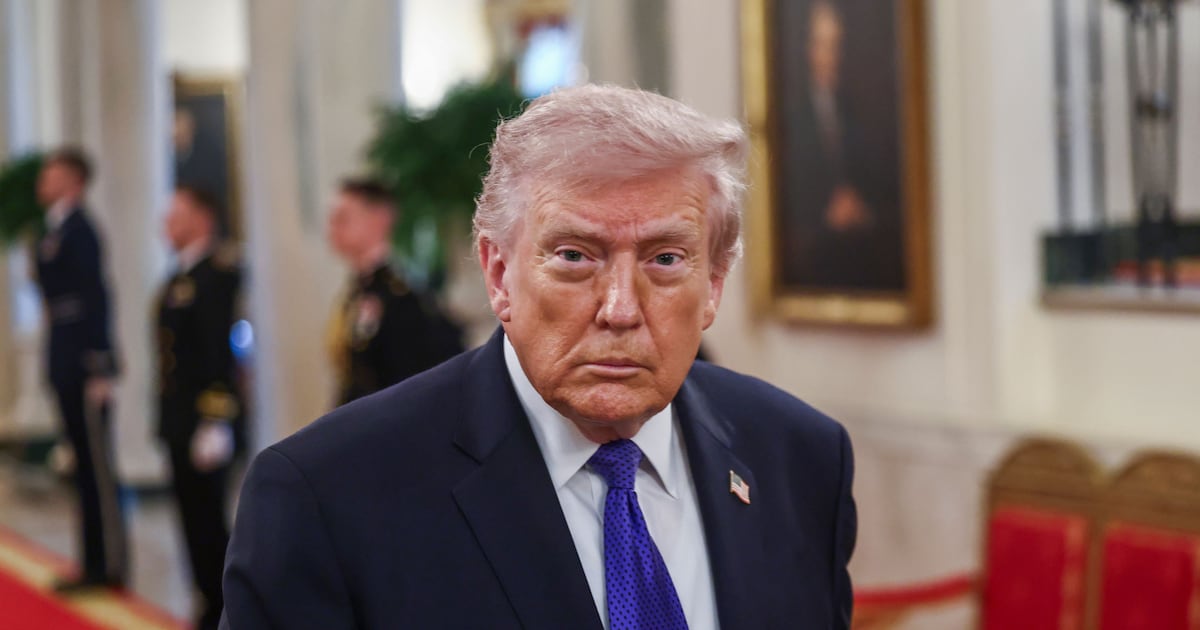
At the White House in Washington on Monday, US president Donald Trump said the United States would continue attacking Iran for as long as it takes to leave it incapable of posing a threat, indicating that an expanding war in the Middle East could continue for weeks or more.
Confirming that “Operation Epic Fury” was ongoing with combat strikes on Iran, Trump said there was an urgent need “to eliminate the great threats posed to America by this terrible terrorist regime”.
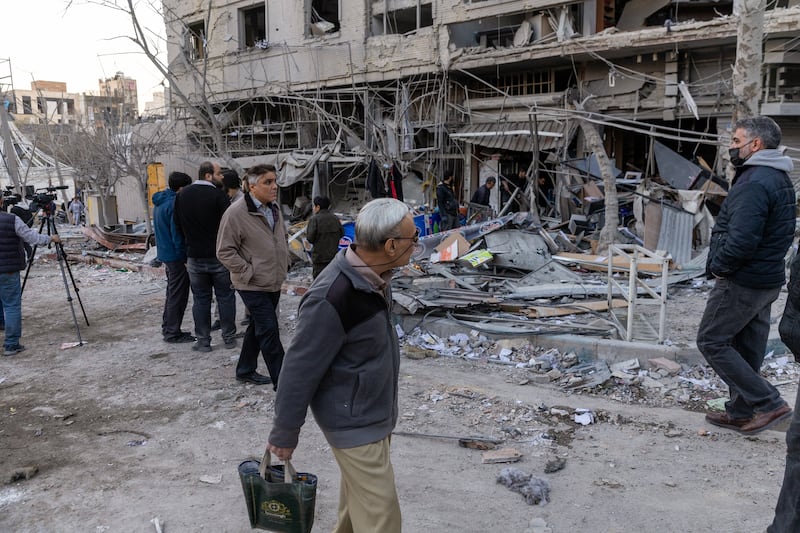 People view damage to shops and residences destroyed by an air strike on Monday in Tehran, Iran. Photograph: Majid Saeedi/Getty
 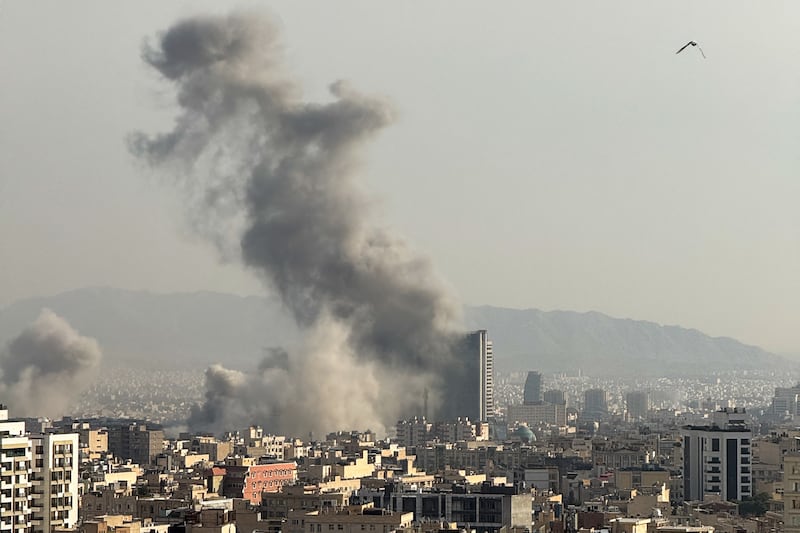 Plumes of smoke rise following reported explosions in Tehran on Monday. Photograph: Mahsa/Middle East Images/AFP via Getty
“We warned Iran not to make any attempt to rebuild at a different location … but they ignored those warnings and refused to cease their pursuit of nuclear weapons. This posed a very clear colossal threat to America and our forces stationed overseas,” he said, claiming that Iranian military power “would soon be capable of having missiles reaching our beautiful America”.
That claim has been widely disputed.
Iranian state media reported over 160 were killed in a strike on a girls’ school on the first day of the US and Israeli attacks.
The reported strike took place on a girls’ elementary school in the town of Minab in southern Iran on Saturday.
As US and Israeli planes pounded targets in Iran for a third day, fighting expanded into Lebanon, where the Iran-allied militia Hizbullah fired rockets into Israel, prompting Israel to bombard the militia’s strongholds outside Beirut.
The Israeli military said late on Monday night that it was carrying out strikes on Hizbullah command centres and weapons storage facilities in Beirut.
Three US jets were shot down by Kuwaiti air defences in what the US military called an “apparent friendly fire incident”.
As Iran responded with missile strikes on Israel and the region on Monday, all six Gulf Co-operation Council member countries – Saudi Arabia, Bahrain, Kuwait, Oman, Qatar and the United Arab Emirates (UAE) – issued a joint statement condemning Iran’s “reckless and indiscriminate attacks” and noting the right to respond.
Israel’s prime minister Binyamin Netanyahu declared that the Iranian people will soon “be able to throw off the yoke of tyranny” and sought to present the joint Israel-US bombardments as “an effort to save the world”.
Iran’s leaders remained defiant.
The country’s top security official, Ali Larijani, who survived Saturday’s slaughter of the leadership, denied news reports that Iran’s new leaders were seeking to negotiate with Washington, denouncing Trump for “delusional fantasies” and for plunging the Middle East “into chaos”.
He added: “Iran, unlike the United States has prepared itself for a long war.”
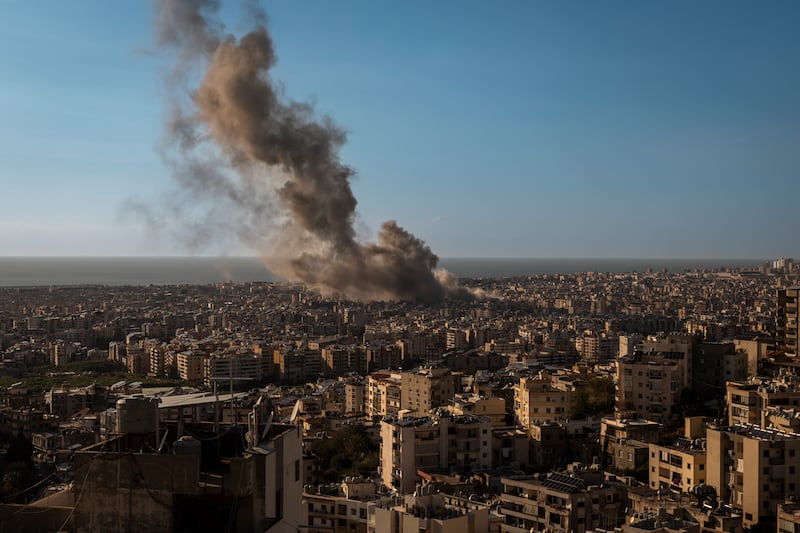 Smoke rises from an Israeli air strike in the suburbs south of Beirut, Lebanon, on Monday. Photograph: Diego Ibarra Sánchez/The New York Times
The regional turmoil was evident in images and reports varying from a luxury hotel in flames in Dubai to villagers fleeing their homes in southern Lebanon as Israeli strikes concentrated on Hizbullah strongholds in and around Dahiya.
The announcement by Qatar’s state energy company that it would suspend production of liquefied natural gas, which it exports through the Strait of Hormuz, led to a dramatic spike in the price.
Iranian officials threatened to fire on any ship that tries to pass through the strait, a key shipping route for the world’s oil supply.
Oil prices also rose steadily on Monday, exacerbated by the vague messages emanating from Washington as to how long the fighting will continue.
Trump projected military operations may continue for the next “four or five weeks”, but “we have the capability to go far longer than that. We’ll do it.”
Trump did not rule out the prospect of US troops participating in land-engagements in Iran, telling the New York Post: “I don’t have the yips with regards to boots on the ground.”
But he spoke about the conflagration in the Middle East for just five minutes in the White House on Monday, before switching subjects to anticipate the success of the White House ballroom and inviting guests to admire the decor in the East Room as a preview.
“I picked those drapes in my first term,” he said, gesturing to the curtains behind him. “I always liked gold.”
The price of that commodity rose in tandem with global uncertainty on Monday.
Irish authorities are considering bussing citizens stranded in the UAE to Oman before flying them home if flights from Dubai and Abu Dhabi remain heavily restricted because of the Iran conflict.
Senior officials and Ministers met in Dublin on Monday to discuss the escalating crisis in the region. – Additional reporting AP/Reuters