
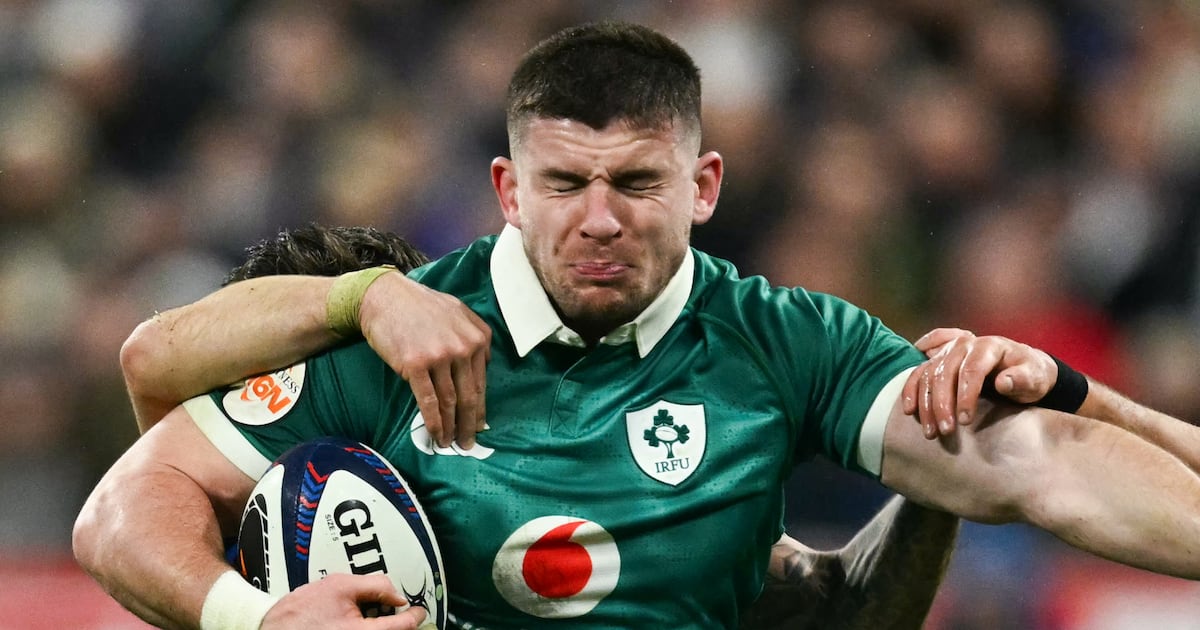
As the French rugby side massacre their way to being champions of the 2026 Six Nations – yes, it’s the year of the French! – it might help, as we lick our wounds after the assassination of Ireland in Paris last month, to reflect on the game itself.
Not many people know, even suspect, that late taoiseach and president Éamon de Valera was passionate about the game. He played for Blackrock College in Dublin and Rockwell in Tipperary, and was fullback for Munster in 1905.
Who would have thought?
GAA followers will be shocked to hear that he even said “there is no football game to match rugby. If all our young men played rugby not only would we beat England and Wales, but France and the whole lot of them together.” If only.
Rugby, he believed, was the sport best suited to the Irish psyche. Well, well …
None of this means much to those who remain bewildered by what’s actually happening during a rugby match or how it is that so many overweight, overwrought men can pronounce in pubs across the land during games that the referee, officials, and players at times, “are making pure shite of it all”.
A simple guide, from Florence Lox on X, to positions on the rugby field may help:
“1,2, and 3; nice wee chubby guys. One of them has to be brainy. Often a GP. 4 and 5; the two tall ones. One has to be brainy. They take turns each at being sin binned. 6,7, and 8; two of them are called flankers and look normalish. One of them is called the number 8. Not sure which.
9; wee jolly guy. Likes to kick the ball straight in the air. 10; brains, nice hair, knows roughly what’s going on. 11 and 14; fast, tries not to get too involved. 12 and 13; two actual athletes who have got involved by accident. 15; big show off, boots it, catches it, boots it again.”
It has also been said that one to eight and 10 to 15 “are all psycho b*****ds of varying sizes who will kill you with a look”, while nine is “tiny, and advertises shampoo on the telly”.
Rugby: after English school where it originated. Defined as “a hooligan’s game played by gentlemen” (there were no women then!).