

Five years ago, Eldred Tellis heard about a “wonder drug” that could give a fighting chance to people at high risk of contracting AIDS.
Tellis’s work involves one such group – drug users in Mumbai, many of them unlettered. “They share needles often and do not understand the consequences,” said Tellis, who founded the Sankalp Rehabilitation Foundation to advocate for the healthcare of addicts. “Several end up contracting HIV.”
The human immunodeficiency virus, or HIV, spreads through unprotected sex and the sharing of needles. The virus attacks the immune system and, if not treated, develops into the deadly acquired immunodeficiency syndrome or AIDS.
But the new drug, Lenacapavir, holds out hope. If injected once every six months, it can prevent the onset of AIDS even in people at high risk. “When we heard about it, we realised we could save many with Lenacapavir,” he told Scroll. “Not just drug users. Even sex workers who have no choice when their customer refuses to use a condom” stand to benefit.
Lenacapavir has shown a 96% reduction in HIV incidence, and is 89% more effective than current oral medications. Last year, the World Health Organisation recommended Lenacapavir as a pre-exposure prophylaxis.
The drug is yet to get permission for use in India. But when it does, it may be unaffordable for most Indians.
In the last few years, Gilead Sciences, the American pharmaceutical giant that made the drug, put in several applications to patent the drug in India.
If granted, the patents would make the drug prohibitively expensive, Tellis said. In the United States, Gilead has priced the drug at $28,218 per patient per year – an unaffordable Rs 25.8 lakh per year for an Indian patient.
To make sure that HIV patients in India have a chance at affording the drug, Tellis registered four pre-grant oppositions with the Indian Patent Office in 2021. “This drug is the best possible tool to prevent HIV and it must be made accessible to those at risk,” Tellis said, explaining his reason for filing an opposition on behalf of Sankalp Rehabilitation.
UNAIDS agrees. “It is beyond comprehension how Gilead can justify a price of $28,218 [for a game-changing medicine],” said Winnie Byanyima, executive director of UNAIDS, in a statement issued last year. “I urge Gilead to do the right thing. Drop the price, expand production, and ensure the world has a shot at ending AIDS.”
Between 2021 and 2025, nine pre-grant oppositions were filed in India against Gilead’s patent applications on Lenacapavir, including the one by Sankalp Rehabilitation Foundation.
Last year, while adjudicating one of the applications, the patent office heard both sides, the manufacturer and Tellis. Its decision is pending.
What Gilead proposes: ‘Sustainable access’
A patent gives a pharmaceutical company a legal right to prevent others from producing, using or commercialising a drug formulation for a certain period. “Often to seek more profits, pharma companies attempt to increase their patent duration by making minor tweaks in their drug,” said Tellis.
This could include a minor change in dosage, or formulation, or the method of administering the drug, he said.
This is called patent evergreening.
Several attempts have been made to extend patents to crucial drugs in India. In some cases, the court has stepped in.
In 2013, Swiss pharma company Novartis’s plea to extend the patent of cancer drug Imatinib was rejected by the Supreme Court.
More recently, the Indian Patent office rejected Johnson and Johnson’s application for bedaquiline, a popular life-saving medication for drug-resistant tuberculosis patients.
So far, objections to Gilead’s pre-grant applications on Lenacapavir have been filed in India, Thailand, Vietnam and Argentina. In 2025, Argentina rejected one such application, which could allow generic drugs to enter the market. This may set a global precedent, activists hope.
In a pre-print paper in the medical journal Lancet, experts pointed out that the cost of manufacturing Lenacapavir could be as low as $25 to $40 if the global demand is between 5 and 10 million people. In India alone, the demand would be huge – there were 64,470 new HIV infections in 2024 and there are 25.61 lakh people with HIV in the country.
When Scroll asked Gilead why it was filing patents that could put the drug out of reach of Indian patients, Ryan Mckeel, the firm’s executive director for public affairs, said it is “pursuing a strategy to enable broad, sustainable access to Lenacapavir for HIV prevention globally”.
Mckeel was referring to the royalty-free voluntary licence agreement Gilead signed with six generic manufacturers in October 2024 to make the drug for 120 low- and low-middle income countries, including India.
At least three manufacturers are from India, including Dr Reddy’s Laboratories Limited. “We believe this approach has the potential to be the most efficient strategy for enabling registration as quickly as possible in India so it can reach people who want and need it most,” Mckeel added.
When Scroll contacted Dr Reddy’s, it declined to comment on the price of the drug.
Leena Menghaney, an expert on medicine law and policy, said that simply signing a voluntary licence agreement will not bring down prices of medicines like Lenacapavir to $40. For that to happen, India will have to approve generics of the drug and must decisively roll out a pre-exposure prophylaxis programme at large scale, she said.
“Access to preventive regimens that can stop HIV infection among vulnerable populations is a core part of right to health,” Menghaney said.
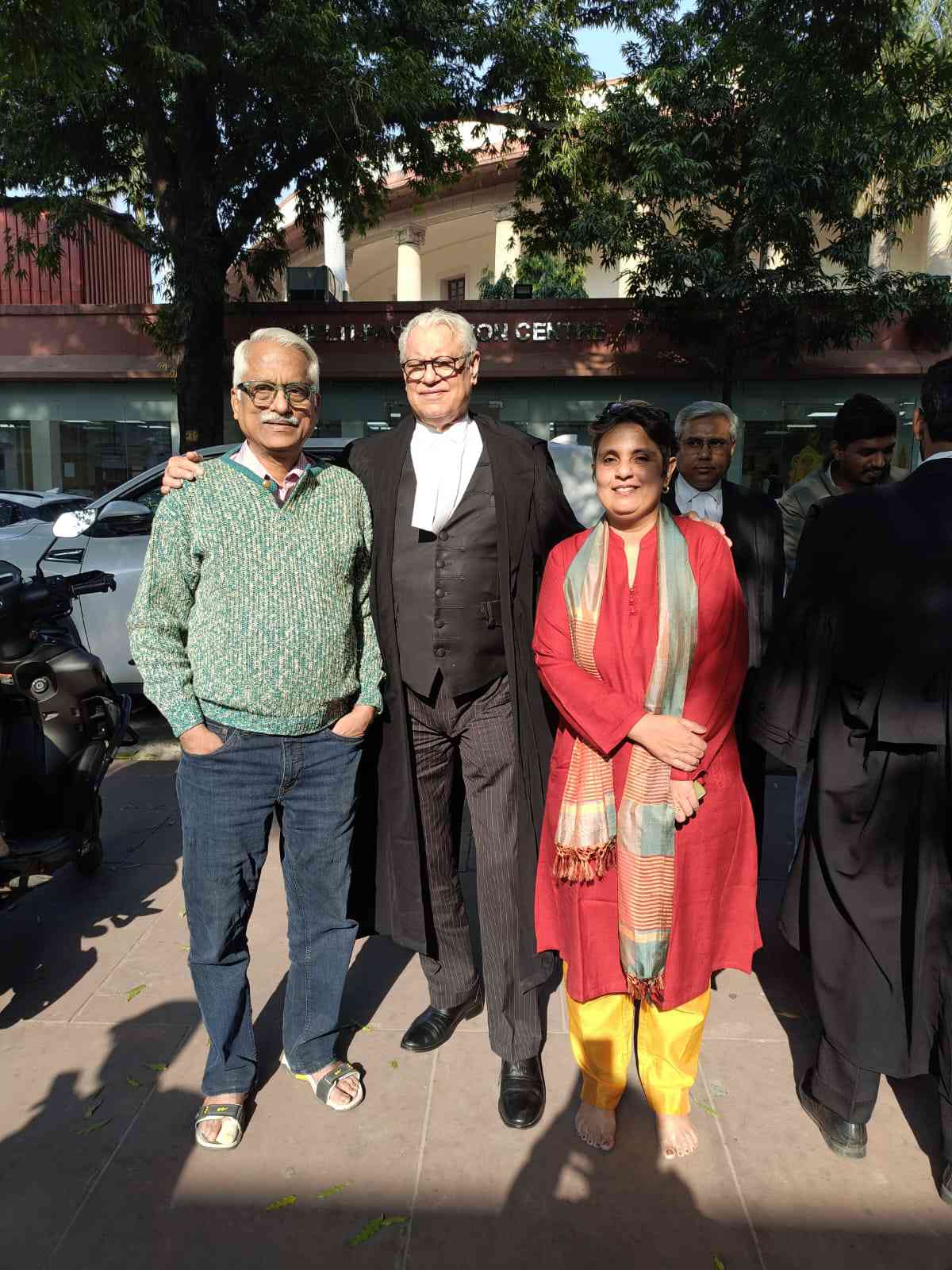 From left: Elred Tellis, lawyer Anand Grover and Leena Menghaney, an expert on medicine law and policy. Credit: Special Arrangement.A long struggle
Tellis, now 66, has spent a lifetime fighting to keep drugs affordable for Indian masses. Over the years, he has filed oppositions against patents for crucial Hepatitis C, tuberculosis, HIV, and more recently Covid-19 drugs.
His first success came in 2012, when the Indian authorities cancelled pharma firm Roche’s patent on a crucial drug to treat Hepatitis C. It was a landmark decision because the patent had been granted under the Trade-Related Aspects of Intellectual Property Rights or TRIPS, which advocated at least 20 years for a patent.
Later, Tellis also filed opposition to Gilead’s patent application on Sofosbuvir, another Hepatitis C drug. This drug cost 84,000 US dollars for a three-month course. “Our application pushed the government to bring the manufacturing cost to less than 100 dollars in India,” Tellis said. “It benefitted lakhs of patients.”
The process to win such patent oppositions is tedious and long. It needs a coalition of experts from the pharmaceutical sector, legal fraternity, public health activists, and NGOs.
Tellis often seeks the help of the Third World Network, a network of experts and groups that work to ensure equitable distribution of world resources.
To make a persuasive case against a patent application by a pharma giant, a person needs technical advice and understanding on how a drug is formulated and what loopholes pharma companies exploit in order to extend the patent.
Chetali Rao, senior scientific advisor at Third World Network, said a safeguard in the Indian Patent law under Section 3(d) prevents evergreening of a patent if the formulation of a medicine is changed without much change in its therapeutic value.
“In the case of Lenacapavir, too, Gilead has filed for patent extension for salts by minor tweaks in the drug. The therapeutic value does not change,” she told Scroll. “We are basing our opposition on that ground.”
Access for all
Patients at risk of contracting AIDS told Scroll that Lenacapavir might be a better alternative to existing preventive treatments.
Mannu BJ, a 46-year-old from Delhi, was put on prophylaxis treatment against HIV but dropped out of it. The treatment was expensive and involved taking a daily dose of medicine, a regimen he found hard to maintain.
Murugesh, a counselor at Humsafar Trust said that the people at the highest risk of HIV infection are also the ones who can least afford to prevent it. “Even if we convince someone to take it, they drop out in a few months.
But Mannu believes Lenacapavir might change things. “If it is introduced, many will start taking it. One injection in six months is easy to comply with. It can help bring down new infections,” he said.
Hari Shankar, an HIV positive resident of Delhi who actively campaigns for drug availability for patients, said “the production has to be opened up to generic manufacturers”.
Murugesh added: “India must approve Lenacapavir fast, and ensure that it remains accessible to all.”