
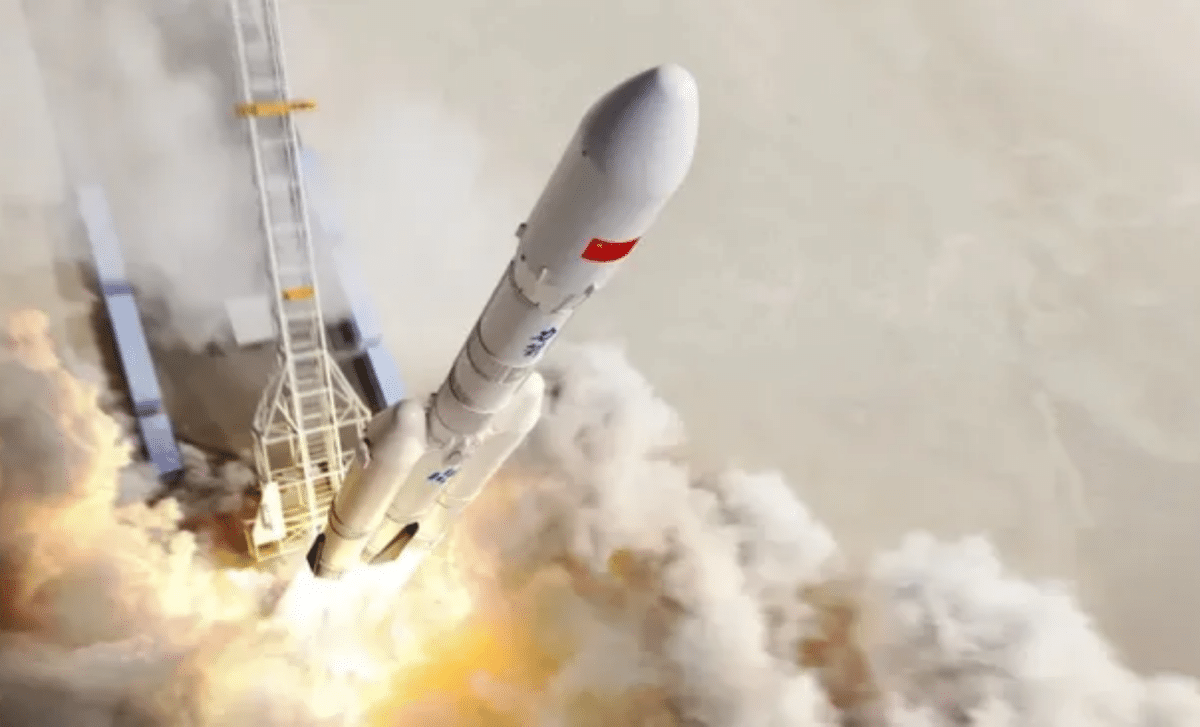
In late March 2026, CAS Space, a commercial offshoot of the Chinese Academy of Sciences, will be launching its new Kinetica-2 rocket. The mission, scheduled for lift-off from the Jiuquan Satellite Launch Center in China’s Gobi Desert, is an important milestone for both the company and the broader Chinese space industry. As reported by Space News, this inaugural launch will carry a prototype of the Qingzhou-1 cargo spacecraft, designed to support China’s Tiangong space station. This article explores the significance of the Kinetica-2’s development, its potential for the future, and the broader context of China’s rapidly evolving space ambitions.
The Rise of CAS Space and the Kinetica-2 Rocket
CAS Space, a spinoff of the Chinese Academy of Sciences, has been making waves in the commercial space sector. With a commitment to reducing launch costs and increasing the frequency of space missions, CAS Space is positioning itself as a key player in China’s growing space ambitions.
According to Space News, the Kinetica-2, a 53-meter-long rocket, will use a reusable design aimed at cutting costs for future launches. Powered by three YF-102 engines, which use kerosene and liquid oxygen, the rocket will be capable of carrying up to 12,000 kilograms to low Earth orbit. Additionally, it will be able to transport up to 7,800 kilograms to a 500-kilometer sun-synchronous orbit, a feat that places it in competition with other international heavy-lift rockets.
This development comes as part of a wider effort to create reusable rockets within China’s space program. The design of Kinetica-2 allows it to be refurbished for multiple flights, reducing the need for new rockets and lowering the cost per launch. This reusability mirrors trends in the space industry, with companies like SpaceX already utilizing similar technologies to reduce the financial burden of frequent space missions.
The entire CAS Space team wishes you a healthy and prosperous Year of the Horse – Galloping Through the Stars, Soaring Across the Heavens 🐎🚀
马载星途 箭啸九天
金驹辞岁,载星途荣光归航
福马迎春,赴天穹新程再启
航天事业从无停歇
正如新春灯火长明不熄
探索脚步永不止步… pic.twitter.com/SxuegTWSko
— CAS Space (@cas_space) February 16, 2026
Qingzhou-1: Supporting China’s Space Station with Low-Cost Resupply Missions
The Kinetica-2 launch will carry the Qingzhou-1, a prototype cargo spacecraft developed by the Innovation Academy for Microsatellites of the Chinese Academy of Sciences (IAMCAS). This spacecraft is part of a two-pronged effort to design low-cost, reusable cargo vehicles for China’s Tiangong space station. These spacecraft are being developed under a program led by China’s human spaceflight agency, the China Manned Space Engineering Office (CMSEO).
The Qingzhou-1 is specifically designed to resupply the Tiangong space station. This cargo vehicle will serve to ferry essential supplies such as food, water, and other equipment that astronauts need while aboard the station. In the future, a full version of this spacecraft will be produced, enabling more frequent missions to Tiangong and facilitating longer stays for astronauts in orbit.
Given China’s ambition to establish itself as a global leader in space exploration, the development of these low-cost spacecraft is a crucial part of its strategy to sustain operations in orbit. The Qingzhou-1 and its sister vehicles will ensure that the Tiangong space station remains operational for years to come, enabling continued research and international collaboration.
China’s Ambition: Satellite Megaconstellations and the Future of Kinetica-2
The launch of Kinetica-2 represents more than just a step forward for CAS Space. It is a significant development in China’s strategy to dominate the global satellite market, including the burgeoning industry of satellite megaconstellations. These massive satellite networks aim to provide global broadband internet access, especially in underserved regions, and will be a major area of focus for CAS Space in the coming years.
In 2026, CAS Space plans to conduct at least four Kinetica-2 launches for various missions, including satellite megaconstellation deployments. These will help China compete with other major space powers, particularly SpaceX and its Starlink project, which has already launched thousands of satellites into orbit.
By increasing the number of launch opportunities and pushing for greater launch cadence, CAS Space is working to establish itself as a key provider of reliable and efficient rocket launches for commercial and national clients. The Kinetica-2, with its reusable design, will make it possible for China to ramp up its satellite launch efforts, playing a pivotal role in the future of global connectivity.
CAS Space’s Growing Rocket Portfolio and the Kinetica-1 Success
The development of Kinetica-2 comes after the success of CAS Space’s smaller Kinetica-1 solid rocket, which has already flown 11 successful missions, with plans for eight more launches in 2026. The Kinetica-1 has proven its reliability in smaller missions and continues to serve as a stepping stone toward the company’s larger goals.
CAS Space’s Kinetica-1 rocket has already completed multiple launches, including suborbital capsule landing tests, aimed at establishing space tourism services. These tests mark a significant step toward offering commercial space travel options to the public in the near future. While Kinetica-1 is smaller and less powerful than Kinetica-2, its success has laid the groundwork for future advancements, both in reusable rocket technology and in CAS Space’s commercial endeavors.