
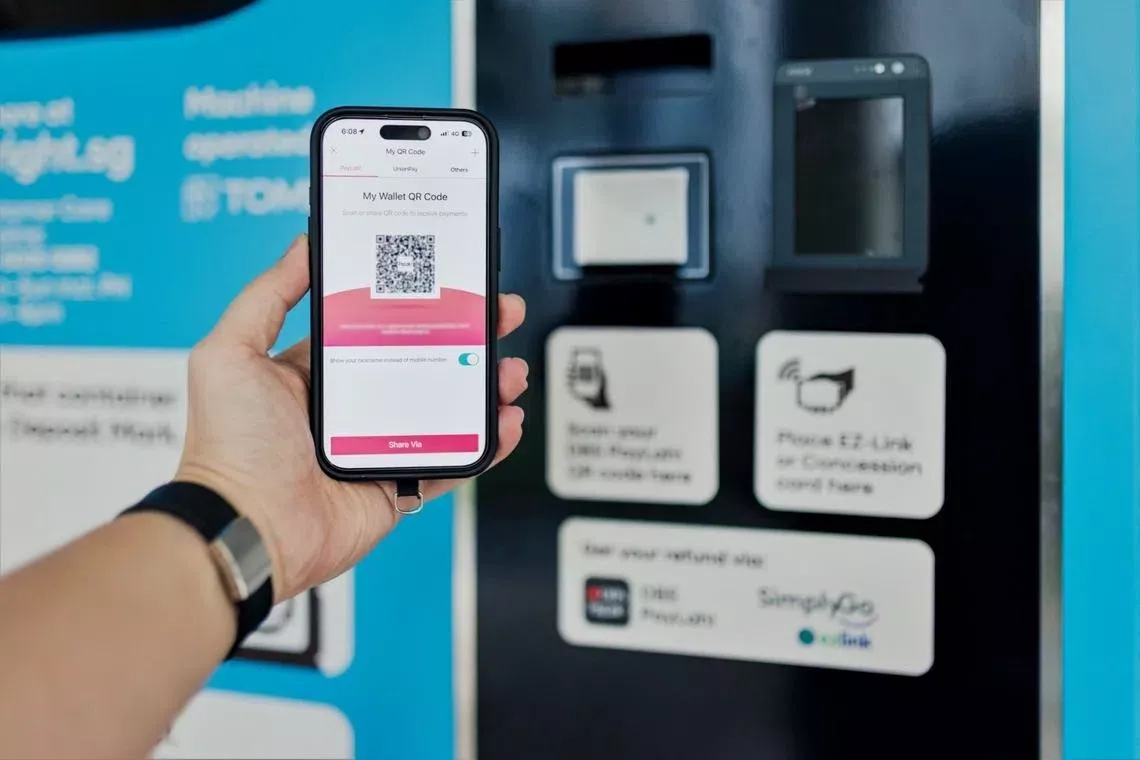
SINGAPORE – After dropping off eligible cans and bottles for recycling from April 1, consumers can receive 10-cent refunds via their DBS PayLah! wallets.
This is the second digital refund option under the Beverage Container Return Scheme (BCRS), apart from tapping ez-link cards, which was announced earlier.
The recycling scheme requires consumers to return their used drink containers at over 1,000 reverse vending machines islandwide.
Under the programme, consumers will pay an additional 10 cents, which is a refundable deposit, for bottled and canned drinks ranging from 150ml to 3 litres.
To use PayLah!, consumers must generate their personal QR code under “My QR” in the app and scan it at the machine, said DBS Bank in a statement on March 2.
PayLah! is open to all residents in Singapore, and people can sign up for the app without a DBS or POSB bank account, it added.
After consumers return the bottles and cans, refunds will be credited into their PayLah! wallets, with confirmation via a notification.
Reverse vending machines will be placed in supermarkets, HDB void decks and town centres, among other high-footfall areas.
Ms Chan Sow Han, head of payments and unsecured lending at DBS’ consumer banking group, said that DBS PayLah! is Singapore’s most widely adopted mobile wallet, with more than three million users.
PayNow, another fund transfer platform, however, had 5.5 million bank accounts registered with it as at 2022.
Asked why PayNow was not included as an option for people to receive their refunds, the Beverage Container Return Scheme’s operator BCRS Ltd told The Straits Times that transaction costs for PayLah! were “significantly lower” than for PayNow.
“The PayLah! e-wallet has extensive reach and is accessible to all Singaporeans and permanent residents, including those who do not bank with DBS. These options are well suited to the anticipated high volume of small-value refunds,” said BCRS Ltd.
The operator will continue to explore additional digital refund methods, including PayNow, for higher-value or larger-volume returns, it said, adding that it aims to provide a convenient refund process that is also cost-effective.
[[nid:728454]]
There are currently no plans to have the machines dispense 10-cent coins, and the modes of refund will be digital, Senior Minister of State for Sustainability and the Environment Janil Puthucheary told Parliament in February.
Community ambassadors will be on the ground to help residents, especially seniors, retrieve their 10-cent deposits digitally.
It is still uncertain how the return process will work for coffee shops, eateries and restaurants. Dr Janil had previously said that discussions are under way with coffee shops and small retailers to address concerns about the scheme.
Singapore’s household recycling rate in 2024 fell to a record low of 11 per cent. Overall, the country saw 5 per cent of its plastic waste recycled.
With the scheme, Singapore aims to have 70 per cent to 80 per cent of bottles and cans returned.
This article was first published in The Straits Times. Permission required for reproduction.