
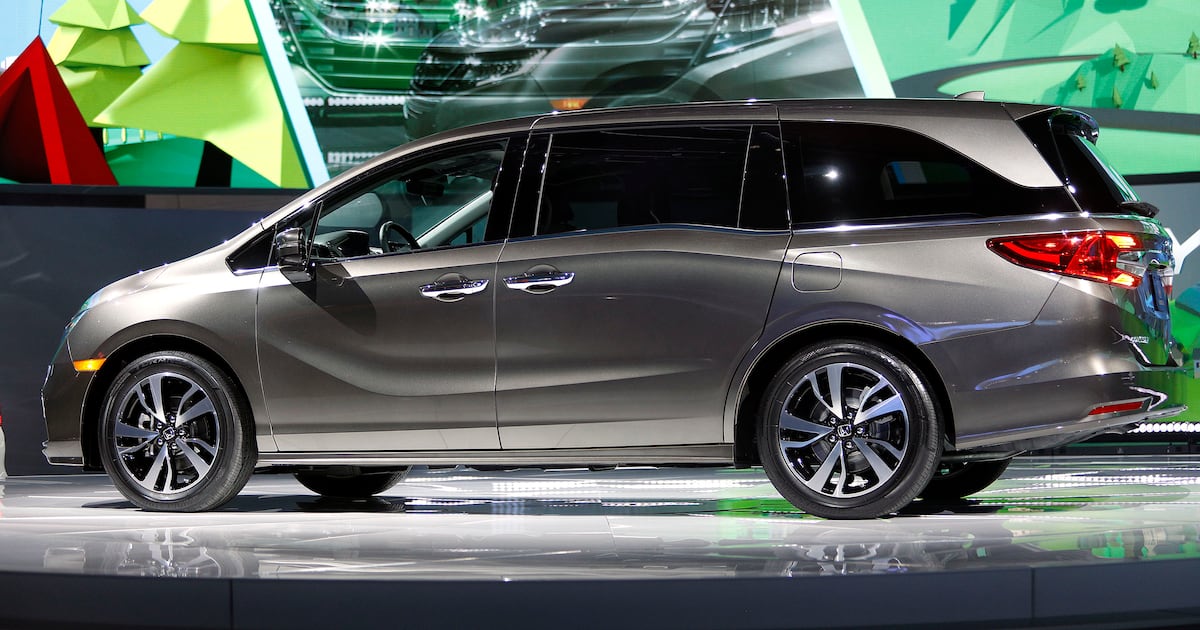
Why do Japanese manufacturers have large seven- and eight-seater cars such as the Honda Odyssey, but do not sell similar models in Europe? Tax is low, engine sizes are normal, they come with hybrid power and are economical.
From Mark G, Co Dublin
The short answer? Jeremy Clarkson.
Okay, so maybe it’s a bit unfair to blame the world’s most famous farmer for the death of the people carrier in Europe, but he’s at least a little bit responsible, and a shift away from multi-seat MPVs of the sort you describe is the actual reason why such cars aren’t sold in Europe.
In a more direct sense, many of these models aren’t sold in Europe because it wouldn’t make financial sense to re-engineer them to meet European safety and emissions standards, as well as sundry other vehicle regulations which are subtly different between Europe and Japan.
Which is not to say that Japanese standards are any less rigorous – they’re just different, and making cars different costs money. If these car makers don’t think they’ll sell enough to turn a profit on that investment, they simply won’t bother.
Why won’t they sell enough? Because sales of MPVs across Europe have collapsed. Think back a decade, and you could have chosen your seven-seat car from the ranks of the Ford Galaxy and S-Max, and C-Max, or the Renault Scenic, or the Peugeot 5008, or the Citroen C4 Picasso, or the Opel Zafira, or many more tall and practical family cars (my personal favourite was the 1999 Fiat Multipla).
One by one, those cars have died out, trampled by our rush to buy far less space-efficient SUVs. Why? Because we all want to look rugged, and the sensible, egg-shaped SUV was doomed by its suburban image, not least since Clarkson opined that driving an MPV was proof you had simply given up on life, and were doomed to motoring mediocrity.
It’s a far cry from a time when the likes of Renault were revolutionising the car market with the likes of the original Espace and the first-generation Scenic, or when Opel blitzed the motoring world with the first Zafira and its extra seats that folded seamlessly into the floor. Now? For the most part, if you want a seven-seat family car, you have to choose an SUV, and they tend to be far more compromised when it comes to third row seat space, meaning they can’t usually carry adults back there.
There are some models still available on the European market which are not SUVs (technically …) but which are actually full seven-seaters.
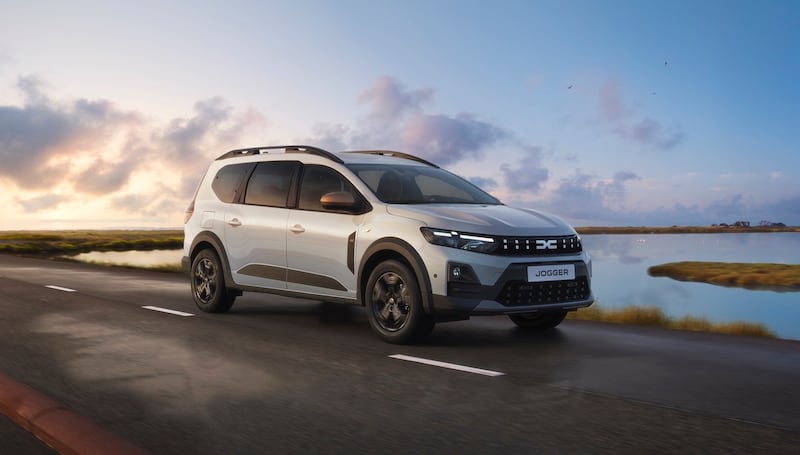 Dacia Jogger. Photograph: PA
[ EV sales set to overtake petrol as hybrids dominate new car marketOpens in new window ]
The Dacia Jogger is an excellent choice, and has third row seats into which even 185cm of me can fit comfortably. Or there’s the Volkswagen ID.Buzz, a funky electric van with three rows of proper seating for full-sized adults.
It’s a pretty expensive choice – as too is the excellent diesel and hybrid powered VW Multivan – but if you want something more affordable, Kia has just introduced the space-age-looking PV5, which is also all-electric but which is far cheaper than the Buzz (although we have to wait another few months before the seven-seat version comes on stream).
Toyota, Peugeot, Citroen, and Opel also offer passenger versions of their mid-sized vans, as does Ford with the Transit Custom, which is rebadged Tourneo when there are seats in it. There are also passenger versions of smaller vans such as the Citroen Berlingo and Volkswagen Caddy, which make great practical family cars, even if they can be a touch crude to drive.
Annoyingly, there are some other options – such as the luxurious Lexus LM (an upmarket re-work of the Toyota Alphard) and the mid-sized Volkswagen Touran – which don’t reach these shores because Irish car buyers have gone so potty for SUVs that there’s just no point.
Or you could just take the direct route and directly import one of the Japanese market models into Ireland. They are, after all, all right-hand drive and come with kilometre speedos, and there are any number of specialist importers in Ireland who can help you achieve your Odyssey or Alphard dreams.
The usual checklists when it comes to Japanese imports apply – make sure you can easily get spare parts, watch for rustproofing, make sure there’s a rear foglight fitted, and make sure it can get through an NCT emissions test.
[ Motorists now spend €224 on monthly car running costs, report findsOpens in new window ]
For all the caveats, though, there’s a simple truth – Japanese buyers keep their cars in far, far better condition than Irish buyers. It’s why so many European models from the likes of VW, Audi, and others are re-imported here from Japan to feed the second-hand market.
According to the dealers who specialise in such cars, there’s simply no comparison between a year or two-year-old Japanese market car and one of the same age which was originally registered in Ireland.