
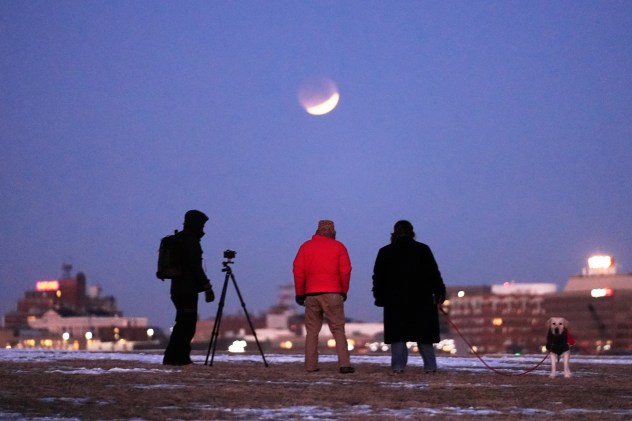
The only total lunar eclipse of 2026 unfolded in the pre-dawn hours of Tuesday, March 3, causing the moon to turn red in a phenomenon often called a “Blood Moon.”
Totality was visible across parts of western North America, where the eclipse reached its peak in the pre-dawn hours. Farther east, including the eastern United States, the total eclipse was not visible, though some areas were able to catch partial phases of the event.
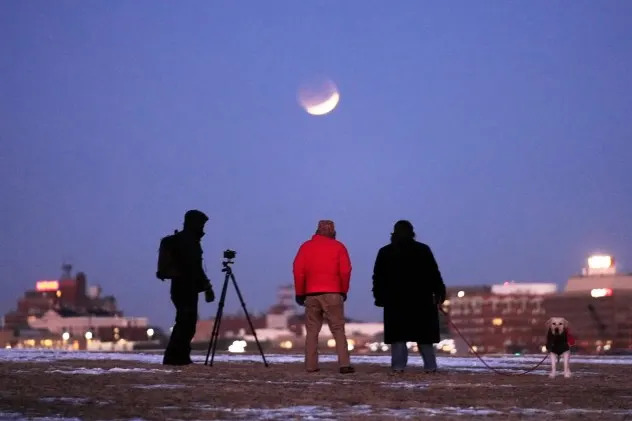
A photographer and dog walkers watch the lunar eclipse, Tuesday, March 3, 2026, in South Portland, Maine. (AP Photo/Robert F. Bukaty)
People across Australia, New Zealand and eastern Asia were also able to catch a glimpse of the eclipsed moon, at least where the weather cooperated.
Here are some of the best views of the eclipse from around the world:
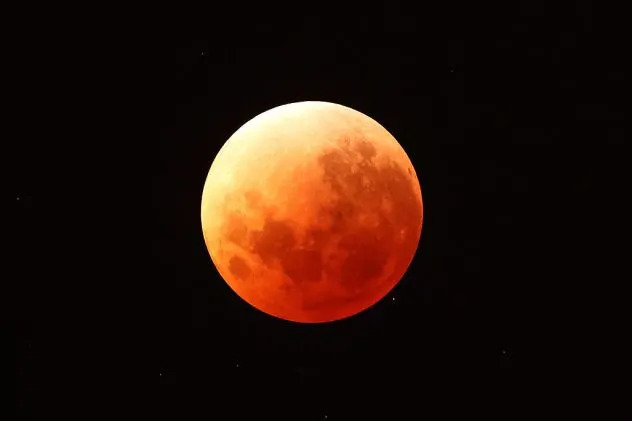
The Moon orbits through the Earth’s shadow resulting in a lunar eclipse turning the moon red on March 3, 2026, in Auckland, New Zealand. (Photo by Phil Walter/Getty Images)
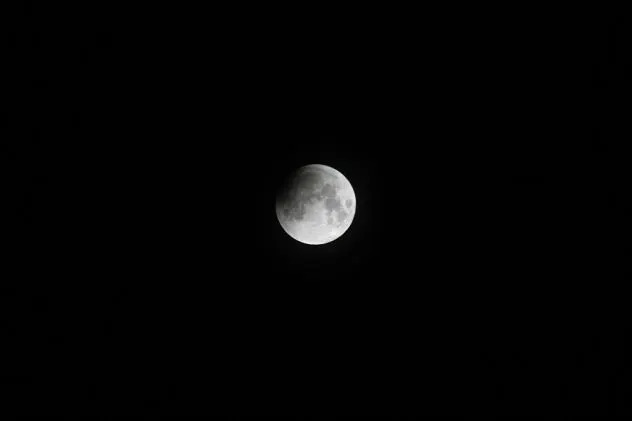
The moon is partly covered in the Earth shadow during a phase of the lunar eclipse over Toronto, Ontario, on March 3, 2026. (Photo by Mert Alper Dervis/Anadolu via Getty Images)
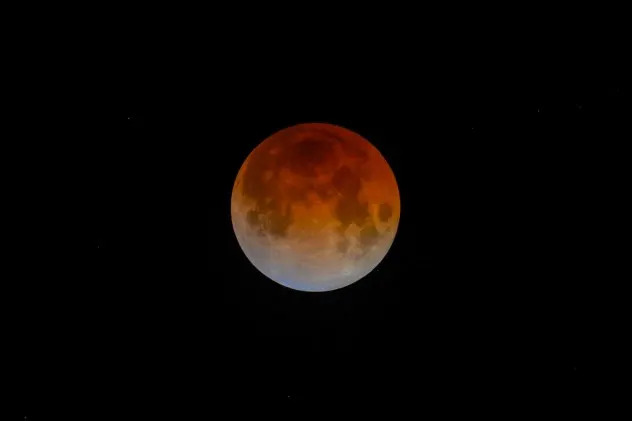
A total lunar eclipse photographed over San Rafael, California, on March 3, 2026. (Tayfun Coskun/Anadolu via Getty Images)
Advertisement
Advertisement
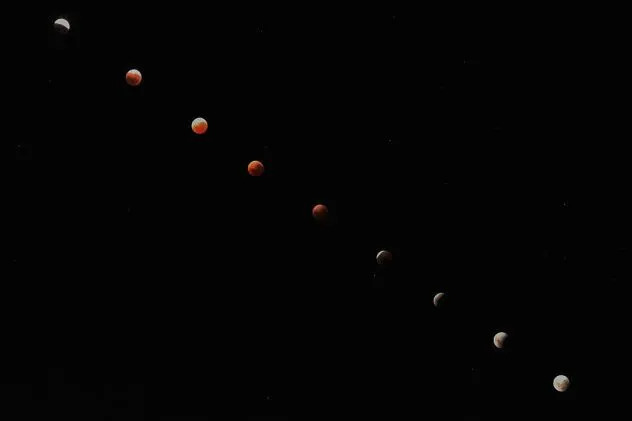
The moon orbits through the Earth’s shadow resulting in a lunar eclipse turning the moon red on March 3, 2026, in Auckland, New Zealand. (Photo by Phil Walter/Getty Images)