

The average price of 500 litres of home heating oil in Northern Ireland this morning (Tuesday) is now 50% (or £150) more expensive than last week.
That’s the highest price average since January 2023, at a time when the war in Ukraine sparked a European-wide energy crisis.
The most common question is why heating oil prices have increased at a far greater rate than road fuel and crude oil itself?
It may be the most prevalent source of heat for the north’s households (around two-in-three are oil fired), but unlike gas and electricity, heating oil is an unregulated market.
THE GLOBAL PICTURE


Oil is a globally traded commodity and in times of crisis, such as what is happening in Iran and across the Middle East now, the market will typically price in ongoing disruption and anticipated future disruption.
No matter where the oil comes from, any major disruption to supply, will impact the price of oil, regardless how far away the oil fields are from the Middle East.
Brent Crude, the global market price for oil prices in the North Sea, the Middle East and elsewhere, jumped to around $81 per barrel (as of noon on Tuesday).
While some analysts are predicting it could reach $100 a barrel if the conflict continues beyond a number of weeks, $81 is still just 15% up over the past five days.
Why then is home heating oil 50% more expensive over the same period?
The answer appears to be a mix of supply chain and market forces – both global and local.
SUPPLY CHAIN
In very basic terms, the supply chain starts with crude oil, which is refined into other products – including kerosene – and is then shipped to three terminals in Belfast and one in Derry.
It is these terminals which supply the heating oil companies, which drive the roads and deliver kerosene to the tanks outside our homes and businesses.
Unlike the Republic or other EU countries, Northern Ireland does not have a central reserve to hold large quantities of oil.
The volatility in oil prices over the past number of years also means few in the industry are willing to buy in large quantities to hold stock.
Instead the suppliers of heating oil in Northern Ireland will buy in stock as required, meaning they are generally ‘price takers’, as in, they set their price according to the price they buy at.
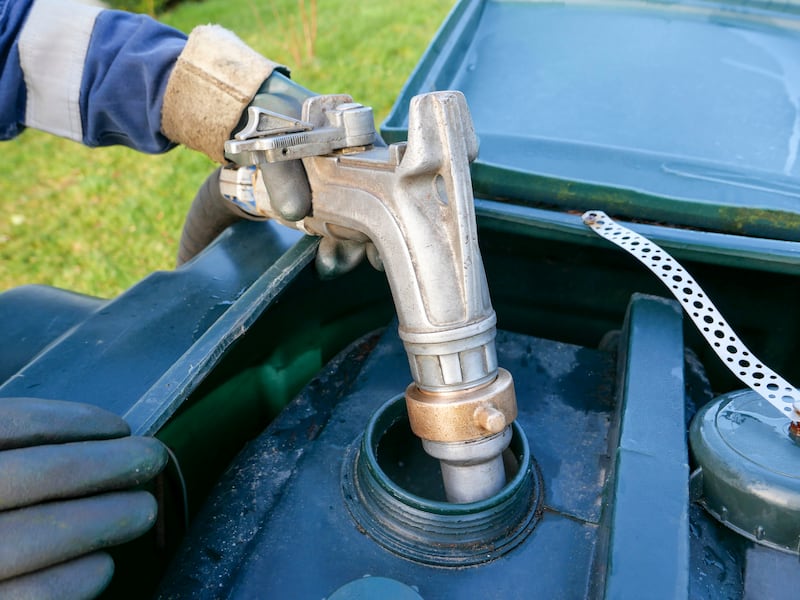 The average price of 500 litres of home heating oil has increased by £150 in a matter of days amid a buying rush. (K Neville/Getty Images)
This is a key factor to understand, i.e suppliers (and the terminals) will set their prices according to what it will cost them to replace their current stock.
During times of crisis, those oil terminal companies will be competing within a global market, which wants to secure supply.
What many households won’t realise, is the heating oil burning through their boiler to heat their water and radiators is a very similar product to the fuel used for aircraft.
Both kerosene and aviation fuel are similarly extracted from crude oil, meaning refineries may opt to prioritise production of one over the other.
So, if the aviation industry suddenly decides to bulk buy to ensure supply in the medium-term, that sharp rise in demand for jet fuel will inevitably drive up the price of kerosene.
If the refineries price that into their wholesale asking price, then that immediately filters through to the main supply terminals, who in turn pass it onto suppliers.
PANIC BUYING
But it was the pace of price increases on Monday that raised so many eyebrows.
The answer to this appears to be the massive surge in demand for heating oil on Monday morning.
Tens of thousands of people woke up on Monday with the same thought in their head: “There’s a crisis in the Middle East, I need to buy oil now.”
Many suppliers were unable to keep up with the demand, with some running out completely.
Others are limiting supply.
In an unregulated market, where there is scarcity and massive demand, the basic law of supply and demand dictates prices will increase.
The rush for buying oil is creating a shortage/backlog in the local industry that is sustaining the price increases.
The message from the Oil Federation is this: ‘If you can hold off ordering oil now, then hold off.’
Prices will likely ease in the days and weeks ahead as the panic-buying subsides.
But if the conflict in the Middle East continues for weeks and into months, then the market will likely reflect that.