
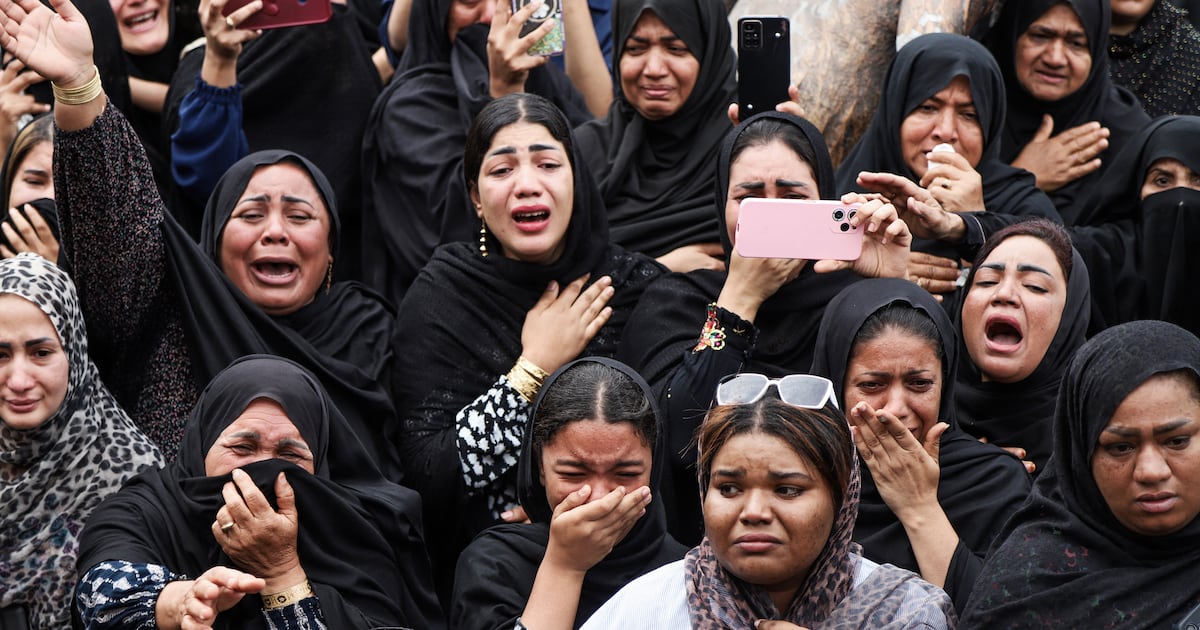
Iran broadened the scope of its drone and missile strikes on US allies across the Gulf on Tuesday, as US president Donald Trump and leading White House officials continued to offer contradictory accounts about the rationale for getting involved in a volatile conflict which has killed an estimated 800 people.
Between 1,500 and 2,000 Irish people stranded in the United Arab Emirates and Qatar due to related flight cancellations have registered with the Department of Foreign Affairs as they seek a route home.
Minister for Foreign Affairs Helen McEntee on Tuesday night said the Government was working to finalise a first charter flight that would depart from Oman in the coming days if the security situation permits.
As the conflict threatens to deepen into a protracted crisis, the strategy of the US administration remains opaque.
“I might have forced Israel’s hand,” Trump said on Tuesday, which was a stark correction of the assertion on Monday by secretary of state Marco Rubio that the US had taken pre-emptive defensive action in joining an Israeli-led assault.
Trump also commented, while hosting a bemused German chancellor Friedrich Merz in the Oval Office, on the helpfulness of European allies in recent days. He said he had ordered treasury secretary Scott Bessent to “cut off all dealings” with Spain over a refusal to use air bases. He also delivered a stinging rebuke of Britain’s prime minister Keir Starmer over his stated position.
“This is not Winston Churchill we are dealing with,” he said.
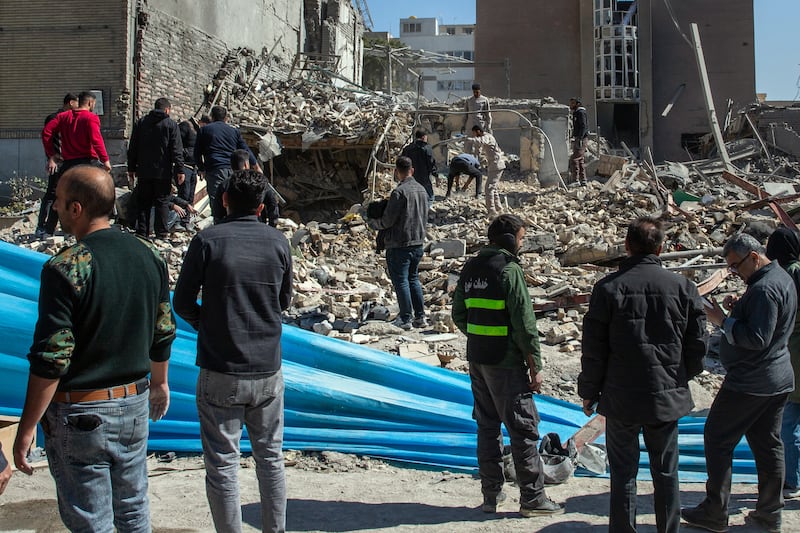 Workers in Tehran clear rubble at the site of a police station destroyed by US-Israeli air strikes. Photograph: Arash Khamooshi/New York Times
[ Mark Weiss in Jerusalem: Israel wants regime change. The US isn’t so sureOpens in new window ]
[ Naomi O’Leary: Why have the US and Israel attacked Iran?Opens in new window ]
As Israel confirmed new strikes against Islamic republic officials in Tehran and intensified its attacks on Hizbullah in southern Lebanon, at least five countries in the region reported drone and missile attacks from Iran.
The US announced the closure of its embassies in Kuwait and Saudi Arabia while internationally, oil and energy prices began to climb sharply as stock and bond markets were down.
Given the administration’s muddled messaging about a potential regime change in Iran, Trump was non-committal about a preferred successor to Ayatollah Ali Khamenei, who was killed in the initial wave of attacks which obliterated his compound in Tehran.
“Most of the people we had in mind are dead,” Trump said.
“Now we have another group, they may be dead also, based on reports. So, you have a third wave coming. Pretty soon we’re not going to know anybody.”
He was sceptical about the idea of a dramatic return of the exiled Iranian crown prince, Reza Pahlavi. “We haven’t been thinking too much about that. It would seem to me that someone from within might be more appropriate.”
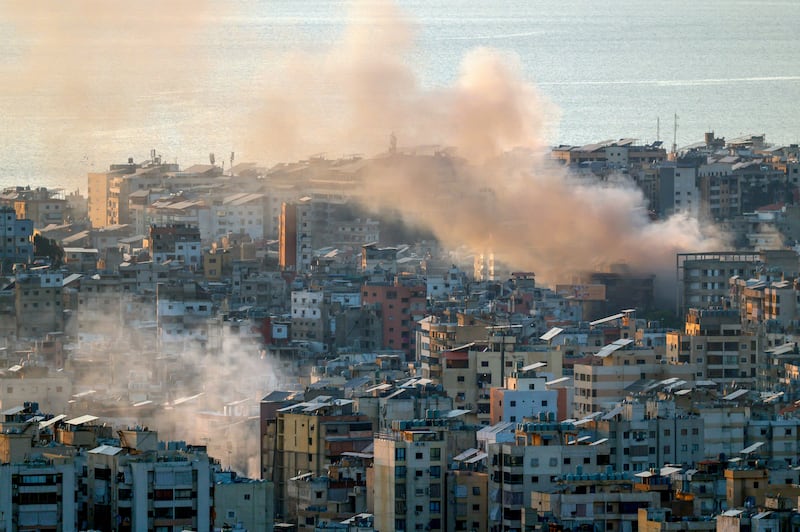 Smoke rises from destroyed buildings after Israeli strikes in the southern suburbs of Beirut, Lebanon. Photograph: Wael Hamzeh/EPA
McEntee asked Irish people stranded in the Gulf to be patient, saying those “requiring most assistance” would be contacted directly by her department in the coming days regarding the first of what she hoped would be many charter flights out.
She said vulnerable Irish citizens and those not resident in the Gulf would be prioritised. It is understood that between 250 and 300 people could depart on the first flight.
Earlier on Tuesday, in an interview with The Irish Times, McEntee said she expected Taoiseach Micheál Martin would raise Ireland’s concerns about the US-Israeli action when he meets Trump at the White House later this month.
“If this is still going on in the way that it currently is, I have no doubt that there will be conversations about it,” she said.
The Minister said no US military aircraft connected to the conflict have passed through Shannon Airport since last weekend.
Late on Tuesday night, the Israel Defense Forces said in a post on X its air force was launching a new “wave of extensive strikes against launch sites, defense systems, and additional infrastructure of the Iranian terror regime”.
Trump said earlier on Tuesday that the US government would provide insurance to tankers in the Gulf region and its navy would escort them through the Strait of Hormuz if necessary.
The narrow shipping channel – crucial to global trade and through which one-fifth of the world’s oil and liquefied natural gas supplies are transported – was declared closed by Iranian authorities as conflict in the region deepened. – Additional reporting: Reuters