
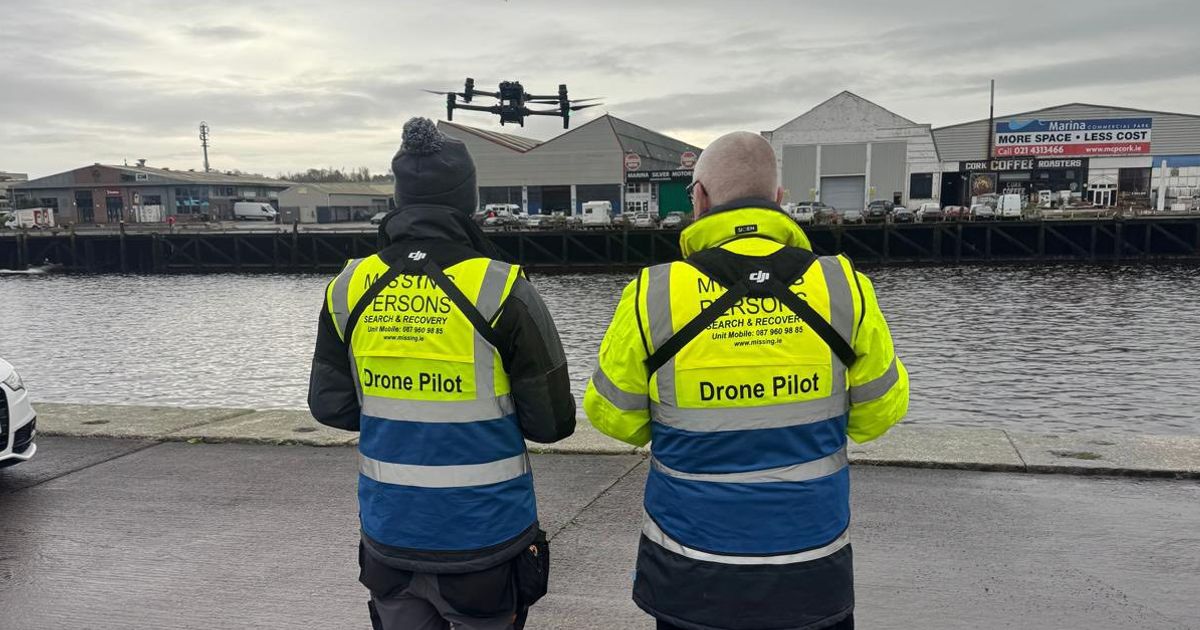
Cork’s vital volunteer search-and-rescue teams have expressed concerns over the new ‘no-fly zone’ for drones over the city – saying they’ve been given “no clarity” about the way forward, which is “clear as mud.”
Under current regulations, people need to submit a form to Cork Air Traffic Control (ATC) at least two days before flying a drone in Cork city. However, this is a major obstacle for the various rescue teams that regularly conduct training and urgent search-and-rescue operations on Leeside, often at a few minutes’ notice. For many callouts, they have to get drones in the air as soon as they have a report of an incident in the River Lee or a vulnerable person is reported missing.
Christy O’Donovan, who volunteers with the Cork City Missing Person Search and Recovery (CCMPSR) charity, stresses they don’t get to choose when a search happens, and is urging for more guidance on how the new rules will impact groups like them.
The Irish Aviation Authority (IAA) has said the restrictions are being put in place to ensure safety within Cork’s airspace, and has reassured the public that there will be no change to how ‘blue light’ emergency services access this airspace. They said: “Emergency services will continue to have absolute priority, and all non-emergency drone activity will be paused immediately whenever required to ensure safe access.”
Cork City search and recovery operation
However, volunteer groups like CCMPSR and Mallow Search and Rescue – both of whom were central to the recovery of bodies in Cork City and north Cork last week – are not ‘official’ first responders, even though they provide vital support and expertise – including trained divers – to agencies like Cork City Fire Brigade. CCMPSR were involved in recovery operations on the River Lee throughout Christmas.
Members of Cork missing person search teams believe they are not currently exempt from the no-fly regulations. Volunteers fear that if they put drones up without explicit clearance, they could face legal consequences.
Christy told Cork Beo: “If we fly our drone now without permission, we would be breaking the law. Obviously, people would be way more important than anything, so you can be rest assured that if someone does go missing, we will do whatever it takes to get a drone in the air. These devices can save lives. But there’s no clarity… The way forward is as clear as mud. Every time someone picks up the phone, we get a different answer. For example, if a search carries on for a few days or even weeks, do we need to get permission every day for it?”
Christy added that the new regulations are also impacting their training. He said the charity spent approximately €20k on their latest drone – between the device itself, a license to use it and training to teach people how to fly it safely. They were practising with the drone in Cork city, but he said they recently had to cancel a training session due to issues obtaining clearance to fly.
“We had a really good training area on the Curraheen Road which the Munster Agricultural Society let us use. But now, we would have to go to Carrigtwohill or West Cork for it. As per the rules of the license we have for our drone, we have to do regular training sessions.”
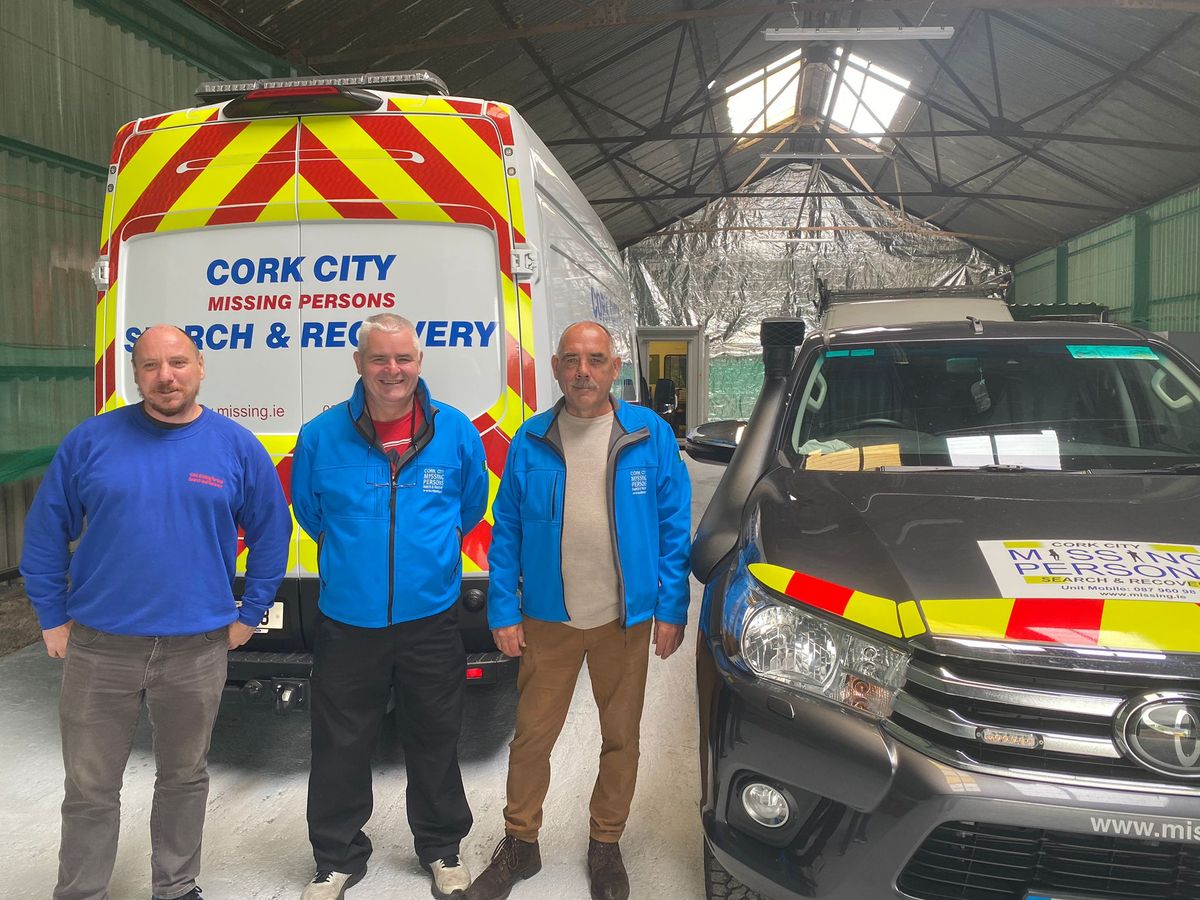
David Varian, Chris O’Donovan and Denis Kiely at the new Cork City Search and Recovery base on Horgan’s Quay (Image: Sara Rountree)
Meanwhile, member of the Mallow Search and Rescue (MSAR) team Philip Johnston is holding out hope that charities like them will be made exempt. He told Cork Beo: “If it’s something where we need to put a drone up, we will absolutely get permission for it, there’s always a way. But I think search and rescue groups are going to be made exempt – they have to be.”
He raised concerns, however, that if they don’t get an update soon, it “may take a tragedy” before things start to change.
The new regulations came into effect in February and will be in place until May. During this time, any aircraft, whether manned or unmanned, operating in the control zone will be subject to entry conditions, with AirNav Ireland managing that access. The consultation process on whether to make these restrictions permanent is already underway.
CorkBeo understands that, in response to recent feedback, the two-day notice rule is expected to be rescinded and a ‘workaround’ will be put in place to facilitate hobby drone users and other drone flights.
Within the ATC Control Zones, there are additional blocks of airspace with specific rules for unmanned aircraft and drone operations. These airspace blocks or volumes are called UAS Geographical Zones and are available to view on iaa.ie/geozones.
CorkBeo has contacted the IAA and we expect to have clarification on this issue shortly.
Want to see more of the biggest and breaking stories from Cork Beo? Making us your preferred source on Google means you’ll get more of our exclusives, top stories and must-read content straight away. To add Cork Beo as a preferred source, simply click here.