
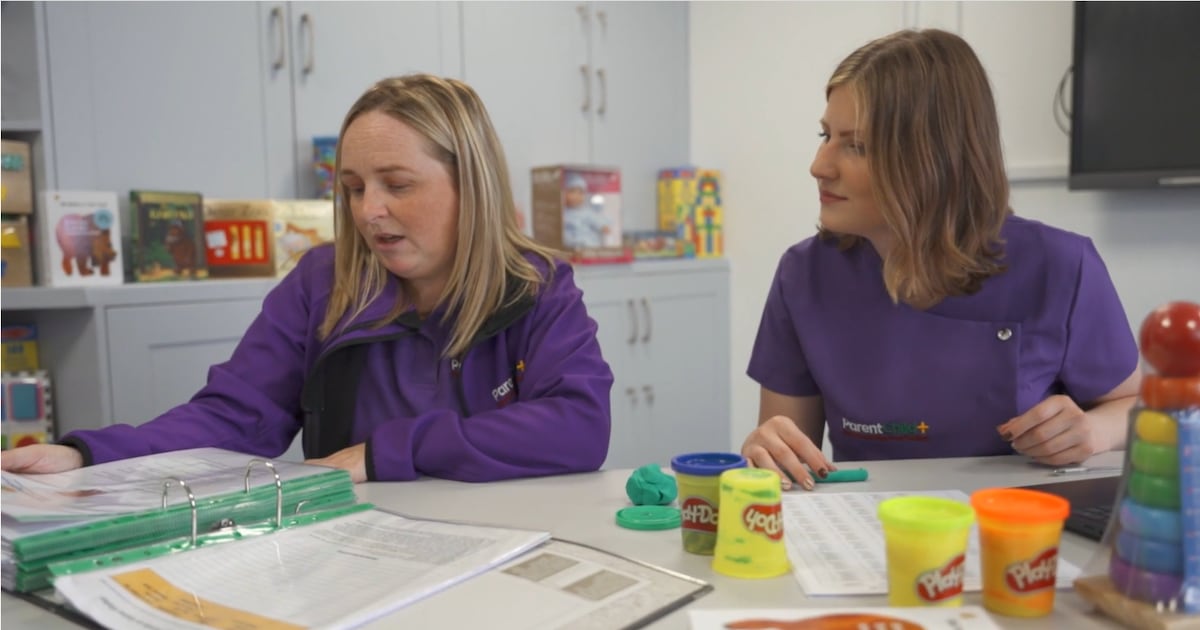
Karen Duke is a home visitor in a programme run by the Area Based Childhood programme in Co Louth.
On her twice weekly visits to parents with babies or preschool children in disadvantaged communities, she gets down on the floor to play with and read to the child. “On each visit, I bring a new book or a new toy which is developmentally appropriate and I’m on the floor playing with the baby or child,” she explains.
The aim of the ParentChild+ programme is to model good parent-child interactions for parents who often grew up in emotionally charged or physically disruptive family environments. “We bring it back to basics, as it can be hard to practice playing with your child if you didn’t have that experience yourself,” says Duke.
The home visiting programme is part of the Early Learning Initiative which was started by the National College of Ireland (NCI) in the Dublin docklands 15 years ago. “We now have 16 sites around Ireland set up with community organisations in areas with young mothers, parents with low levels of education, antisocial behaviour and drug problems,” explains Michelle Moore, the national home visitor manager at the NCI.
She explains how the job of the home visitors is to improve the parent-child bond and get parents on board for the serious role they have in their child’s education. “Often, the children we visit haven’t reached their developmental milestones or the parent/child bond hasn’t happened automatically,” explains Moore.
She says the role of play as a learning tool can’t be over emphasised. “Many of these parents won’t have been talked to, read to, or played with, as children,” says Moore.
On my visit to Rathmullan Community House, a terraced house owned by Louth Local Development in a large housing estate, I meet a 28-year-old single mother who joined the ParentChild+ programme over a year ago. “I love being a parent but it comes with its hardships,” she says, explaining how being on the programme has helped her manage her own emotions while managing the emotions of her child.
“It has showed me that in the heat of the moment how important it is to take a breath and pause myself. Learning to deal better with my emotions has helped him deal with his emotions.”
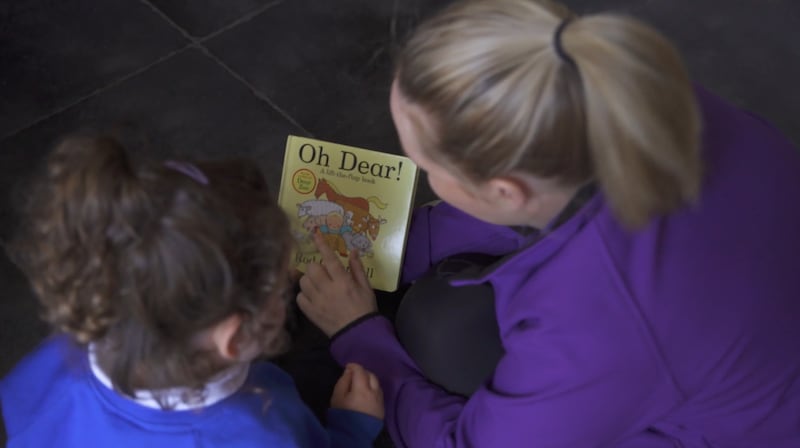 The ParentChild+ programme accepts children from 16 months old until they start school
Placing a value on playing with your child is central to the programme. “In the beginning, my son was a little shy but each week, the programme helped to deepen our bond and connection through play. I could see his level of curiosity grow each week we had a new toy,” she explains. The stacking blocks and cars were particular favourites, but the boy doll and tea set also led to lots of role play between the parent and child.
Duke explains how parents who participate in the programme are also given a “tips and tricks” sheet explaining what area of development each toy and book focuses on. “It’s not high-risk work. It’s about playing and supporting the parent. As a home visitor, I feel so privileged to be part of someone’s life for so long and see them grow in confidence over time,” says Duke. A local mother from Drogheda, she trained to become a home visitor linking in with families near where she lives.
Approximately 20 per cent of home visitors were originally parents on the ParentChild+ programme who later trained to work with families in their own areas. Duke adds: “It’s a massive commitment letting someone into your home twice a week for 46 weeks. You are meeting parents where they are at in all the fun, chaos and madness of their home.”
Children aged from 16 months up to when they start school are eligible for the programme. Families can self-refer or be referred by the public health nurse. The programme has a mix of State and corporate funding. And new community groups who seek funding independently can apply for a licence and guidance from the Early Learning Initiative to run the programme in their local area.
Lara Williams is the coordinator for the ParentChild+ programme and other family support programmes in Drogheda and south Louth. She says that 30-40 per cent of those in the programme are single mothers. “We also have multicultural families, some of whom have limited English but we can still communicate well with them through play,” she says.
According to Moore, the programme is also dealing more and more with children with additional needs while these families wait for State supports. “The home visitor models how to talk, read and play and when the parent starts to do that with their child, they are already doing the work they’d be asked to do by speech and language therapists,” she explains.
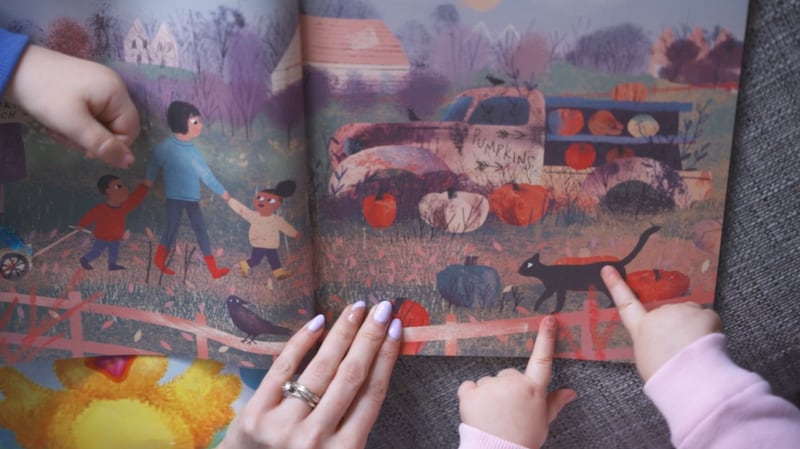 Children who take part in the programme develop better pre-numeracy and pre-literacy skills
Moore was the first ever home visitor with ParentChild+ in Dublin’s docklands. Over the years, she has witnessed the growth and expansion of the programme outside of Dublin. She points to a soon to be published evaluation which highlights its successes and challenges.
Extra training for home visitors working with children with additional needs or in homes where there is domestic violence are key recommendations in this report.
One of the successes of the programme is when parents themselves return to education. “I remember one parent who couldn’t read or write who then got support through the National Adult Literacy Agency to go back to study,” says Moore.
Another sign of success is that children who partake in the programme develop better pre-numeracy and pre-literacy skills, making them ready to learn when they start school.
The ultimate aim of the programme is that these children will stay in education and training, giving them opportunities to break the cycle of disadvantage they have been born into.