
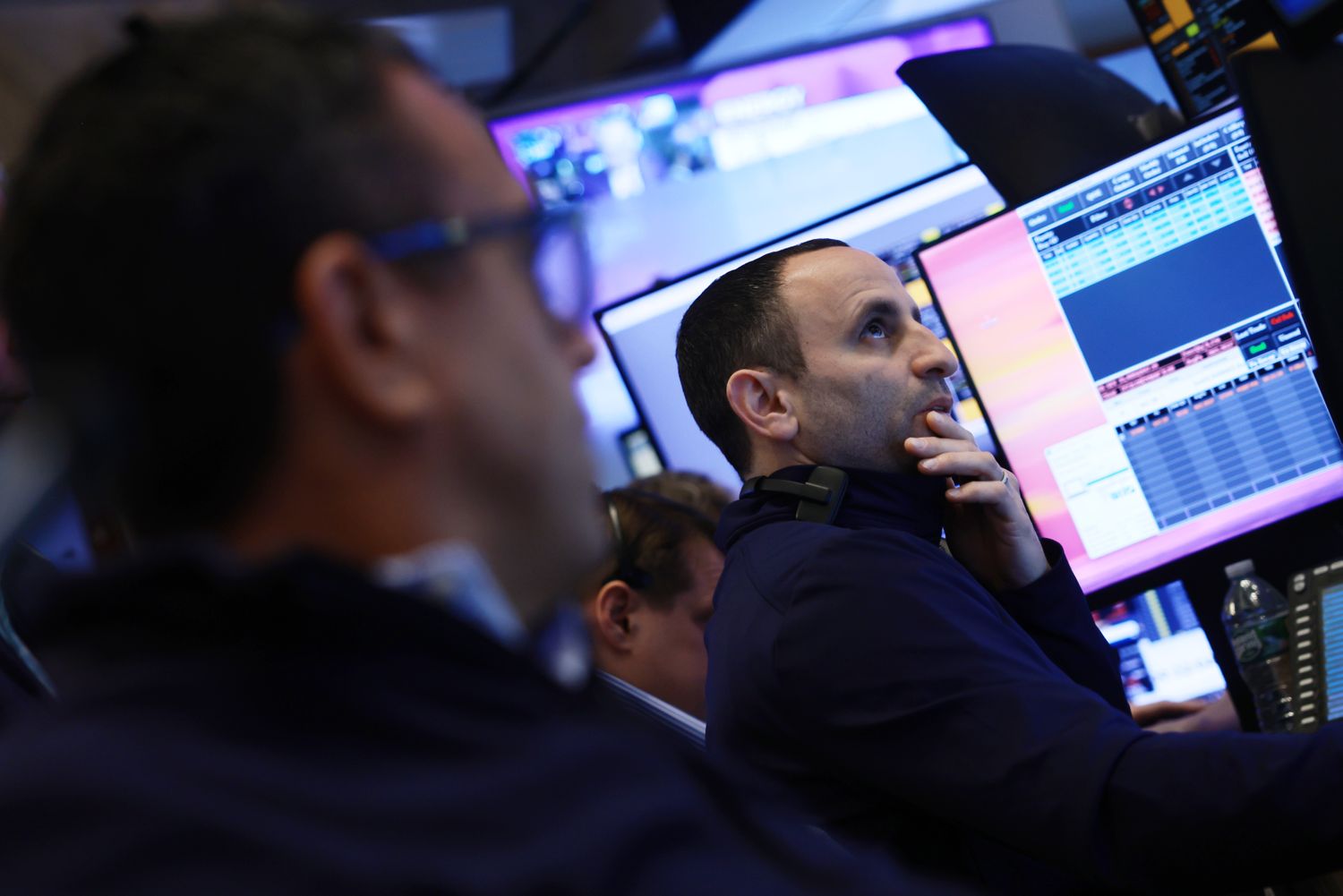
The VIX hit an intraday high of 28.15 Tuesday—its highest reading since November—as concerns about the potential impact of the U.S.-Iran conflict pushed oil prices sharply higher and sent major stock indexes reeling.The volatility index remains well below past crisis peaks such as those registered during the pandemic, the 2008 financial crisis and last April’s tariff shock.
Get personalized, AI-powered answers built on 27+ years of trusted expertise.
Wall Street’s much-watched fear gauge jumped to its highest level of the year on Tuesday as the U.S.-Iran conflict entered its fourth day,
The CBOE Volatility Index, known as the VIX, climbed as much as 31% to an intraday high of 28.15 this morning, before finishing the day nearly 10% higher at 23.57. The index is up 19% since last Friday’s close, before U.S. and Israeli forces launched strikes on Iran over the weekend.
The big moves in the VIX mirrored wild swings in major stock indexes. The benchmark S&P 500 index fell as much as 2.5% in the first hour of Tuesday’s session before finishing the day less than 1% lower, the second straight day that stocks have rebounded from steep declines.
Why This Matters To You
The VIX doesn’t just measure Wall Street’s mood. When it spikes, the cost of protecting your investments rises, and sudden moves can trigger automated selling that deepens short-term losses even when economic fundamentals haven’t changed.
Investors are scrambling to price in new risks amid fears that war in the Middle East could disrupt oil supplies, spurring inflation and weighing on economic activity. Brent crude futures, the global oil benchmark, have risen 13% so far this week, pushing their year-to-date gain to 35%.
JPMorgan economists warned the conflict “generates greater macroeconomic risk than recent military conflicts,” comparing it to Russia’s 2022 invasion of Ukraine.
A sustained closure of the Strait of Hormuz—through which about a fifth of the world’s oil flows—would directly slow the global oil supply, potentially reigniting inflation. That could complicate the Federal Reserve’s plans for interest rates with a weakening job market and inflation still about a percentage point above the central bank’s target rate of 2%.
What the VIX Is Telling Investors
The VIX measures what traders expect the market to do over the next 30 days. And right now, they’re bracing for turbulence.
The VIX tracks the prices of options contracts on the S&P 500. When investors rush to buy those contracts to protect their portfolios, the price rises, and so does the VIX.
It’s like flood insurance in a hurricane zone: the more worried people are about storms, the more they’ll pay for coverage, and the higher premiums rise. A VIX below 20 generally signals calm waters—that’s about the historical average for the index. Above 20 generally means traders are nervous.
How This Compares to Past Crises
The VIX’s all-time closing high was 82.69, set in March 2020, during the initial lockdowns and the COVID-19 selloff. During the 2008 financial crisis, the index topped 80. After 9/11, it surged to nearly 45. Even last April’s tariff shock pushed it past 52.
But investors should still pay attention to the speed of this week’s surge: a near-20% jump over two sessions is the kind of rapid repricing that catches institutional investors off guard. JPMorgan noted in a client report that what’s driving markets is an “immediate repricing of geopolitical risk rather than a measured response to fundamentals.”
Important
The volatility during the Gulf War was exacerbated by the savings-and-loan crisis already underway. The 9/11 sell-off was amplified by the dot-com bust. But a healthy economy can generally shake off even severe shocks within weeks.
The market response to geopolitical events is pretty consistent. LPL Financial tracked 25 major geopolitical shocks dating back to Pearl Harbor and found the average total S&P 500 drawdown was 4.6%, with stocks typically recovering within about six weeks. The critical variable isn’t the severity of the event. As LPL notes, “the economic environment was the primary cause of the declines”—like whether the shock happened during (or helped trigger) a recession.
What Should You Do With Your Money Right Now?
When the VIX starts showing signs of anxiety, that’s not a signal for you to do likewise.
“A common instinct is to sell in a panic,” said David Tenerelli, a certified financial planner at Values Added Financial. “That reaction makes a lot of sense—our brain senses danger, so the amygdala kicks into protection mode.” But he urged investors to keep perspective with a simple question: “Has my life materially changed? … If it hasn’t, then this is probably part of the normal ups and downs of the market.”
For investors who are five to 10 years from retirement and worried about their portfolio dropping, Tenerelli said that time is still on your side: “The good news is, you have five to 10 years to watch the eventual recovery unfold, and to continue adding to your investments during your remaining working years.” You can even do so, he said, “at relatively lower prices” should the market continue its near-term decline.
He noted tactical moves that open up during selloffs: tax-loss harvesting—selling losing positions to offset gains elsewhere—and converting traditional IRA funds to Roth accounts at lower values, which can help lower your tax bill.
For those trading stocks in the near term, the Street is split.
Barclays Global Head of Research Ajay Rajadhyaksha warned investors to avoid buying dips right now because the risk-reward profile doesn’t yet look favorable.
Tom Porcelli, chief economist at Wells Fargo Economics, wrote in a commentary that he wasn’t worried about volatility getting out of hand—yet. “Absent a prolonged war and major long-term disruptions to key shipping routes in the Strait of Hormuz, the impact on U.S. economic growth, inflation and monetary policy should remain modest,” he wrote. “Of course, the opposite also could be true.”