
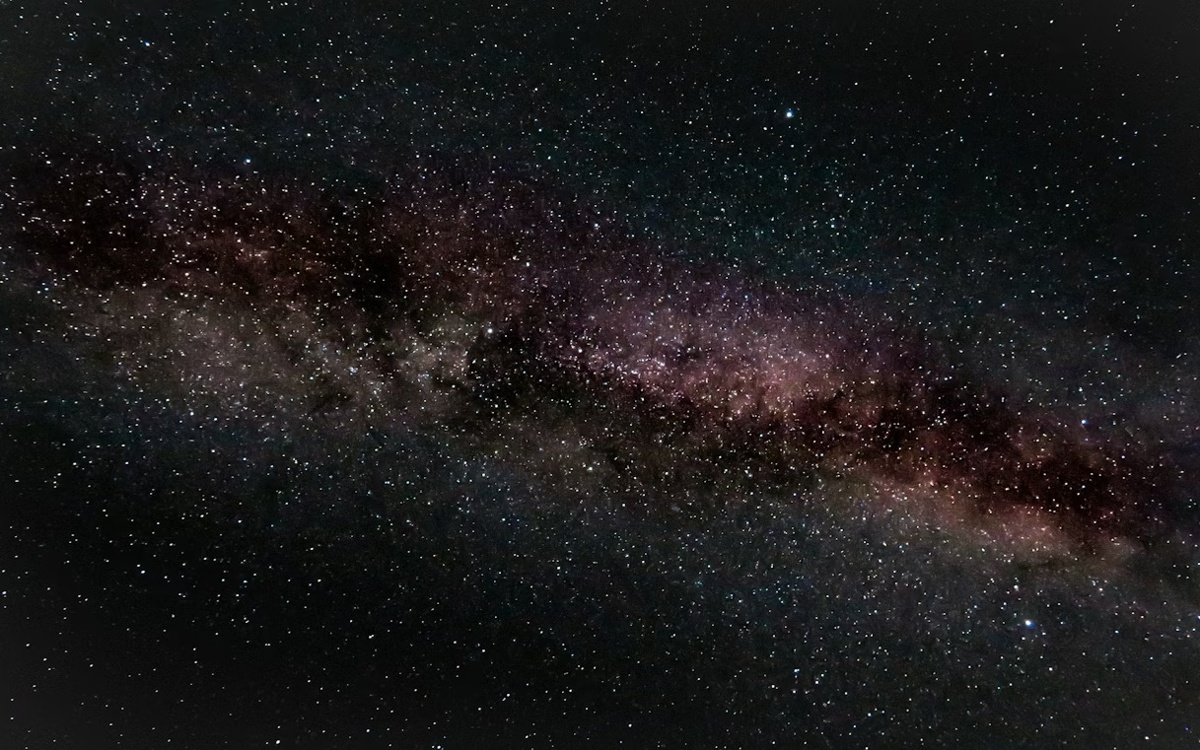
The object, known as Candidate Dark Galaxy 2 (CDG 2), lies about 300 million light years away in the Perseus galaxy cluster. Researchers say the galaxy contains only 4 globular star clusters and shines with the light of roughly 1 million Suns, making it extremely difficult to detect.
Most galaxies are bright and contain billions of stars, but low-surface-brightness galaxies like CDG 2 are almost invisible because they host very few stars and are dominated by dark matter. Scientists estimate that about 99% of the galaxy’s mass consists of this unseen material, which does not emit or absorb light but exerts gravitational influence.
The discovery was led by astronomer David Li, whose team searched for tight groupings of globular clusters that can reveal hidden galaxies. Hubble observations identified four such clusters, while combined data from Hubble, Euclid and Subaru revealed a faint glow around them, confirming the presence of the underlying galaxy.
Scientists believe much of the normal matter needed for star formation was stripped away through gravitational interactions with nearby galaxies inside the Perseus cluster.
The findings, published in The Astrophysical Journal Letters, suggest that future sky surveys could uncover more of these nearly invisible galaxies as astronomers analyze vast datasets using advanced statistical methods.
Earlier, Qazinform News Agency reported that the scientists discovered dark matter ‘shadows’ behind galaxy arms.