
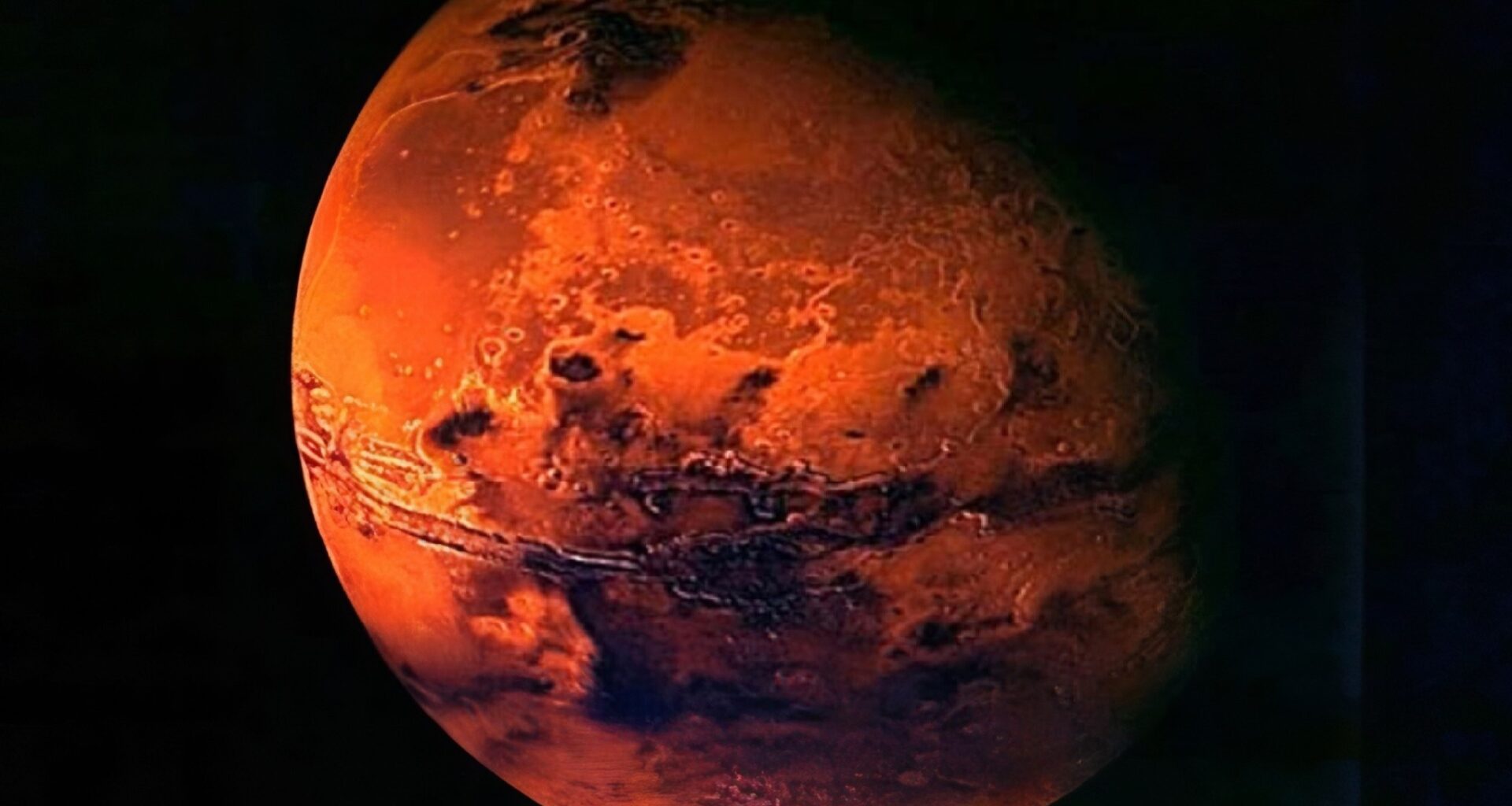
If humans ever set up camp on Mars, the first problem won’t be building a house. It will be the dirt.
Mars is covered in a layer of loose, dusty material called regolith. It looks like soil, but it is nothing like the rich ground we grow food in on Earth.

Future astronauts may need to use it to grow plants, build shelters, or extract resources. At the same time, space agencies must prevent Earth microbes from contaminating another planet.
That balance matters. It protects both science and whatever might already exist out there. To explore that question, scientists turned to one of the toughest creatures on Earth: the tardigrade.
Tardigrades test the limits on Mars
Tardigrades, often called water bears, are microscopic animals with a serious survival record. In their dormant state, they can endure the vacuum of space, intense radiation, extreme heat and cold, and crushing pressure deep in the ocean.
When they dry out, they shut down almost completely. Add water, and they wake up. In their active state, they are more sensitive but still hardy. They can handle freezing temperatures and limited food.
That makes them useful test subjects for extreme environments. If something harms an active tardigrade, it raises questions about how it might affect other forms of life.
An international research team co-led by Penn State Altoona professor of microbiology Corien Bakermans decided to see what Martian-like dirt would do to them.
Simulating Mars soil on Earth
The team used two Martian regolith simulants. These lab-made materials closely match samples NASA’s Curiosity Rover collected from the Rocknest deposit in Gale Crater, south of Mars’ equator.
One simulant, called MGS-1, represents a broad, “global” version of Martian surface material. The other, OUCM-1, was designed to more closely match the exact chemical makeup of the Rocknest site.
Bakermans mixed active tardigrades into the Mars samples of each simulant and then checked their activity under a microscope over several days.
“For the MGS-1 simulant, we saw significant inhibition – reduced activity – within two days,” Bakermans said. “It was very damaging compared to OUCM-1, which was still inhibitory but much less so.”
The tardigrades exposed to MGS-1 stopped showing activity after only two days. That result stood out. Even for animals known to survive space itself, something in this dust was clearly a problem.
Water changes the results
The team had a hunch. What if a specific chemical in the MGS-1 simulant was causing the damage?
“We were a little surprised by how damaging MGS-1 was,” Bakermans said. “We theorized that there might be something specific in the simulant that could be washed away.”
So they rinsed the MGS-1 with water and introduced fresh tardigrades. This time, the animals showed almost no reduction in activity.
The results suggest that something highly damaging in MGS-1 – possibly salts or another compound – can dissolve in water, and the team is continuing to investigate the cause.
“That was unexpected, but it’s good in a sense because it means the regolith’s defense mechanism could stop contaminants. At the same time, it can be washed to help support plant growth or prevent damage to humans who come into contact with it.”
Preventing contamination on Mars
The work ties directly into a bigger issue known as planetary protection. Countries involved in space exploration agreed decades ago to prevent contamination between Earth and other worlds. NASA and other space agencies regulate this carefully.
“When considering sending people to non-Earth environments, we need to understand two things: how the environment will impact the people and how the people will impact the environment,” Bakermans said.
“We’re looking at a potential resource for being able to grow plants as part of establishing a healthy community – but we’re also looking at whether there are any inherent damaging conditions in the regolith that could help protect against contamination from Earth.”
If Martian regolith naturally harms Earth organisms, that could act as a built-in defense system. In theory, it might reduce the risk of human microbes spreading across the planet.
On the other hand, if that same chemistry harms plants or people, it creates a serious obstacle for any long-term base.
Water adds another twist. Water is scarce in space. Washing regolith would require careful planning and recycling. Still, knowing that harmful components can dissolve gives mission planners more options.
Mars has other hazards
Scientists know a lot about how bacteria and fungi behave in simulated regolith from Mars, but far less about how it affects animals – even microscopic ones like tardigrades.
To address that gap, the team tested the specific, isolated impact of simulated regolith, which is designed to closely mimic the mineral and chemical composition of Mars’ surface.
Mars is more than just dusty soil. Its atmosphere is thin. Surface pressure is far lower than on Earth. Temperatures swing wildly. Radiation levels are high. The researchers are now examining how those factors, combined with regolith, affect life.
“Regolith isn’t the only component, of course,” Bakermans said. “But we’re beginning to tease apart components of this overall system where any single piece could be a drawback or benefit the larger understanding of planetary protection.”
Tiny survivors reveal risks on Mars
The study might seem simple. Mix tiny animals with fake Mars dirt. Watch what happens. But it touches on some of the biggest questions in space exploration.
Can we use local materials to grow food and build shelters? Will those materials harm us? And how do we protect other worlds from our own biological footprint?
Tardigrades will not be the ones planting crops on Mars. But their reaction to Martian-like soil gives scientists early clues. Sometimes the smallest life forms tell us the most about our chances among the stars.
The full study was published in the journal International Journal of Astrobiology.
Image Credit: European Space Agency
—–
Like what you read? Subscribe to our newsletter for engaging articles, exclusive content, and the latest updates.
Check us out on EarthSnap, a free app brought to you by Eric Ralls and Earth.com.
—–