
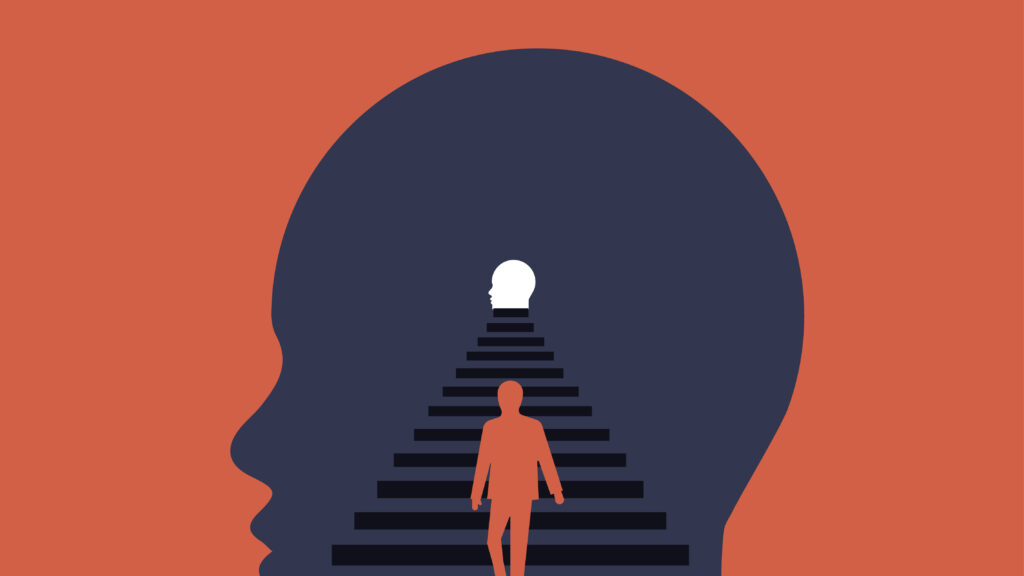
When you’re vulnerable in a hospital bed — confused, frightened, surrounded by machines — it might seem obvious you’re not in charge. A doctor speaks, a patient listens. But Alexis de Tocqueville, writing in the 1830s about a new country, not about its health care, would have predicted the opposite.
De Tocqueville observed that Americans carry two powerful, conflicting instincts. We want experts. And we resist experts. We crave guidance. And we resent hierarchy. Equality, he noted, “begets in men the desire of judging everything for themselves,” and pushes them to look not to superiors but to people like themselves for guidance.
Nearly two centuries later, that same tension shapes one of the most intimate relationships in American life: the doctor–patient encounter.
Modern medicine still often assumes an older, more hierarchical model in a world where a physician’s authority is uncontested and a patient’s role is to comply. But actual patients behave differently, especially in the digital age. They arrive with their own research, Google-driven theories, and “expert” advice generated by artifical intelligence. When medical guidance feels rushed, impersonal, or dismissive, patients instinctively turn toward the people de Tocqueville said they trust most: their peers.
This is not a rebellion against medicine. It is a democratic reflex.
I learned it firsthand during my recovery from a severe traumatic brain injury. A neurosurgeon saved my life, and rehabilitation specialists taught me to walk, speak, and plan my day again. But the moments that made me believe recovery was possible didn’t come from clinicians. They came from others who had lived what I was living. A woman who wrote a book about her own brain injury. A physical therapist describing a previous patient relearning stairs. A mentor who handed me a biography of Franklin D. Roosevelt’s battle against polio. Friends who had been paralyzed and beat the odds to walk again.
The FDA’s pivot from ad comms to ‘expert’ panels is bad medicine
Their authority wasn’t clinical. It was experiential. And it worked.
De Tocqueville understood why. In democracies, people grant legitimacy not only to those with superior knowledge but also to those whose experience mirrors their own. We listen not just vertically, to institutions, but horizontally, to one another. And we often listen better to the horizontal voice.
Increasingly, research supports the idea that medicine works better when it acknowledges this democratic psychology. Peer-support models improve adherence, mental health, and long-term outcomes across chronic disease, cancer, and addiction. Alcoholics Anonymous is the most famous example. But smaller studies — including in traumatic brain injury — show the same pattern: patients engage more deeply when someone “like them” is part of the picture. For medicine, this creates both a challenge and an opportunity.
The clinicians who earned my deepest trust were not the ones who projected dominance or confidence at all times. They were the ones who spoke with humility, acknowledged uncertainty, and treated my lived experience as part of the clinical picture rather than an obstacle to it.
Geoff Manley — the neurosurgeon who saved my life — was chief among them. In the ICU and throughout recovery, he paired extraordinary technical mastery with something rarer: an instinct to level with patients and families. He explained what he knew, what he did not yet know, and what depended on time or chance. He asked questions. He listened. He made space for my wife’s observations. His authority — he’s the chief of neurosurgery at Zuckerberg San Francisco General Hospital — rested not only on expertise, but on his ability to meet us as partners in rebuilding a life.
That blend of expertise delivered with democratic humility is the form of authority de Tocqueville believed Americans would always accept.
The logic also helps explain a quieter crisis: the erosion of trust in institutions. Americans are losing confidence in government, universities, science, and medicine. De Tocqueville anticipated this, too. When societies emphasize equality, traditional hierarchy loses persuasive power. People do not want to be commanded; they want to be convinced. They listen for honesty, humility, and recognition of their autonomy.
Medicine can adapt to this reality, and some clinicians already have. What I call de Tocquevillian medicine is not anti-expert. It is authority grounded in knowledge and offered with humility, shaped through relationship rather than imposed by status. When clinicians practice this way, patients still seek out peers — but as companions, not counterweights.
The doctor–patient relationship is one of the rare places where democratic equality and human vulnerability collide. When we are ill, we need expertise more than ever, yet our agency feels fragile. The best clinicians recognize this. They do not treat patients as passive recipients of wisdom. They treat them as collaborators in the work of healing, people whose stories matter even when incomplete or imperfect.
De Tocqueville would tell us that this is not a threat to authority. It is its renewal.
Experts earn trust today not by standing above us, but by standing with us. Medicine becomes stronger, not weaker, when it invites patients into the circle of understanding. Healing becomes more likely when patients feel seen, not rushed or judged. And democracy becomes healthier when the institutions we rely on behave in ways that respect our hunger for equality without surrendering expertise.
Scott W. Hamilton is the founder of the Brain Care Catalyst Foundation and director of the TBI Post-Acute Care Clinic Collaborative.