
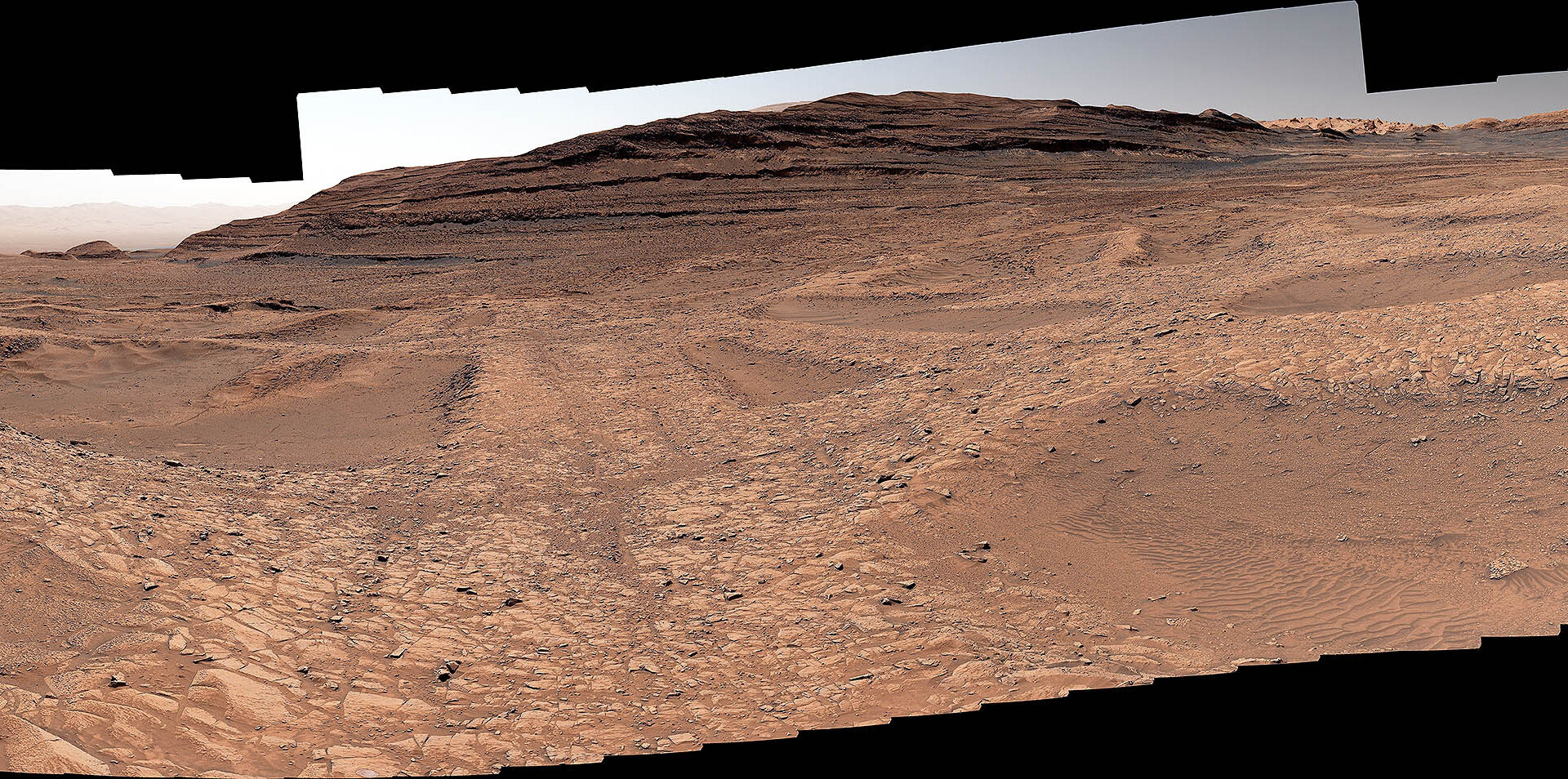
Mars today is cold, dusty, and bone-dry. At least that’s how it looks at first glance. But the surface still shows scars from a time when water flowed more freely.
New findings from NASA’s Curiosity rover suggest that water may have lingered on the Red Planet longer than scientists once thought.

Partway up Mount Sharp, a 3-mile-high mountain inside Gale Crater, Curiosity has been exploring a bizarre stretch of terrain.
From space, it looks like someone traced spiderwebs across the ground. On the surface, it’s a tangle of low rock ridges and sandy dips.
These ridges, known as boxwork, could hold important clues about ancient groundwater and whether Mars once had conditions that life could tolerate.
A rocky maze on Mount Sharp
For about six months, Curiosity has been exploring this region of crisscrossing ridges. The formations stand roughly 3 to 6 feet tall. They stretch for miles.
From space, they look delicate. On the ground, they are solid enough for a one-ton rover to drive across.
Scientists think groundwater once moved through cracks in the bedrock here. As the water flowed, it left behind minerals.
Those minerals hardened the rock along the cracks. Over time, wind eroded the softer rock around them. What remained were raised ridges in a web-like pattern.
On Earth, boxwork exists too. But it usually forms in caves or dry, sandy places. And it is rarely more than a few inches tall. The Martian versions are much larger. That alone caught scientists’ attention.
Driving a rover through a spiderweb
Getting a closer look was not easy. Curiosity weighs nearly 1.980 pounds. The ridges it travels along are not much wider than the rover itself.
“It almost feels like a highway we can drive on. But then we have to go down into the hollows, where you need to be mindful of Curiosity’s wheels slipping or having trouble turning in the sand,” said engineer Ashley Stroupe of NASA’s Jet Propulsion Laboratory, which built Curiosity and leads the mission. “There’s always a solution. It just takes trying different paths.”
While engineers focused on safe routes, scientists focused on the bigger picture. Each layer of Mount Sharp formed during a different chapter in Mars’ climate history.
Lower layers show clear signs of lakes and rivers. Higher layers tell a story of drying conditions, with only occasional wet periods. That makes the boxwork location important. It sits higher up the mountain, in rock that formed later.
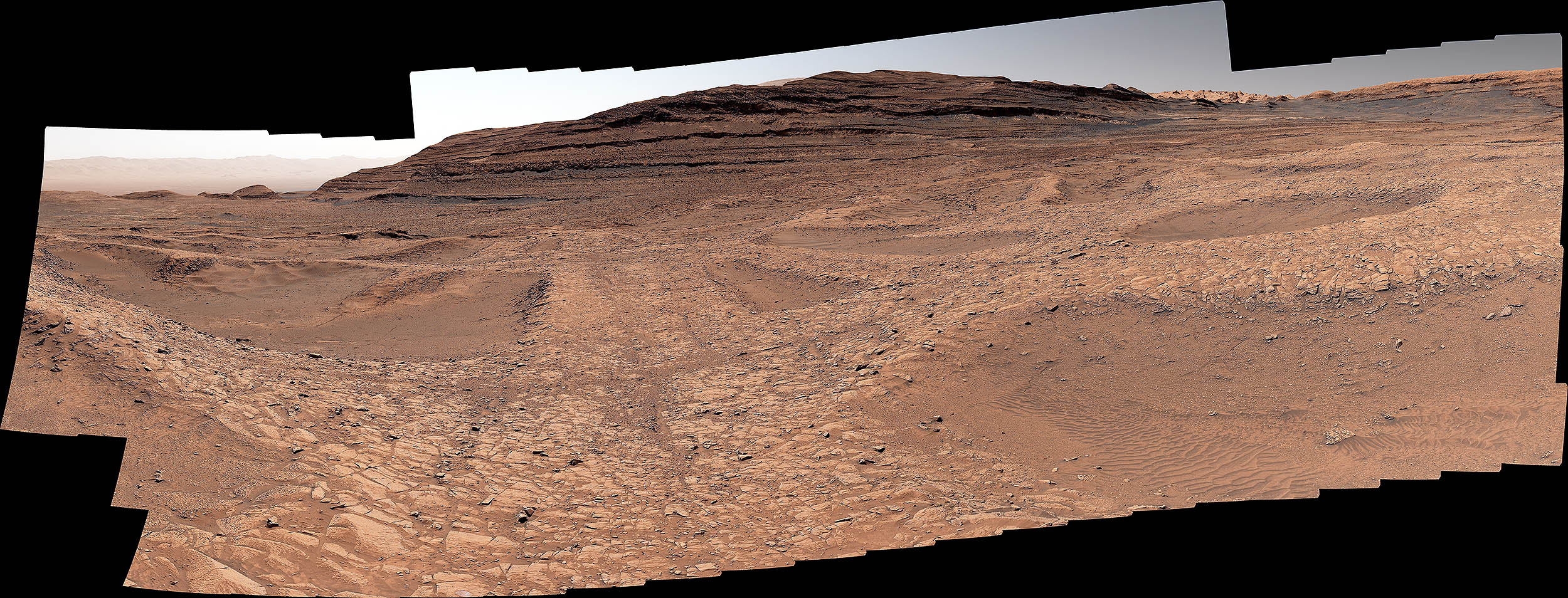 NASA’s Curiosity Mars rover captured this panorama of boxwork formations – the low ridges seen here with hollows in between them – using its Mastcam on Sept. 26, 2025. Credit: NASA/JPL-Caltech/MSSS. Click image to enlarge.Clues to Mars’ groundwater levels
The height of these ridges may reveal something critical. If groundwater created them, then the water table had to be high at the time.
“Seeing boxwork this far up the mountain suggests the groundwater table had to be pretty high,” said Tina Seeger of Rice University, a scientist leading the boxwork investigation. “That means the water needed for sustaining life could have lasted much longer than we thought looking from orbit.”
Earlier images from orbit showed dark lines running across the spiderweb patterns. In 2014, scientists proposed that these might be central fractures where groundwater once seeped through cracks, concentrating minerals.
Curiosity has now examined those lines up close. They are indeed fractures, supporting that idea.
The rover also spotted small, bumpy textures called nodules. These features have shown up before in other places on Mars and are strong signs of past groundwater. But this time, something unexpected happened.
“We can’t quite explain yet why the nodules appear where they do,” Seeger said. “Maybe the ridges were cemented by minerals first, and later episodes of groundwater left nodules around them.”
Instead of clustering near the central fractures, the nodules appeared along ridge walls and in the sandy hollows between them. That pattern suggests a more complicated water history than anyone first assumed.
Curiosity drills into Mars’ past
Curiosity is not just a rover. It is a mobile lab. At the end of its robotic arm sits a drill that can grind rock into powder. That powder gets delivered into instruments inside the rover’s body.
Last year, the team drilled three samples in the boxwork region. One came from a ridgetop. One from bedrock in a hollow.
One from an area just before the ridges began. The rover analyzed them using X-rays and a high-temperature oven.
The X-ray results showed clay minerals in the ridge and carbonate minerals in the hollow. Clay often forms in the presence of water.
Carbonates can form when water interacts with rock and carbon dioxide. Together, they add more detail to the story of groundwater shaping this place.
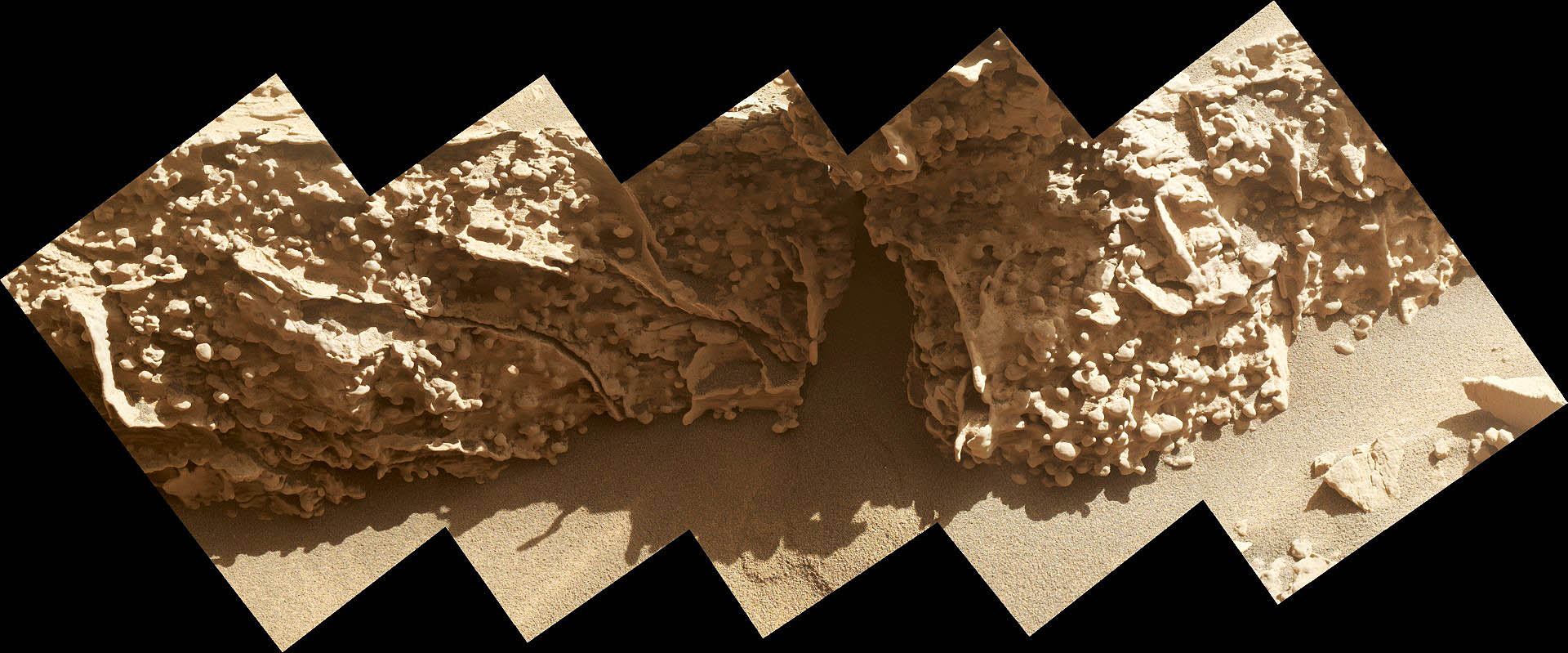 These bumpy nodules were formed by minerals left behind as groundwater was drying out on Mars billions of years ago. NASA’s Curiosity rover captured images of these pea-size features while exploring geologic formations called boxwork on Aug. 21, 2025. Credit: NASA/JPL-Caltech/MSSS. Click image to enlarge.A closer look for organic clues
More recently, the mission collected a fourth sample. This one received special treatment. After heating the powdered rock in the oven, the rover added chemical reagents in a process called wet chemistry.
This method helps detect certain organic compounds, which are carbon-based molecules important to the formation of life.
Organic molecules do not prove life existed. They can form through non-living processes. But finding them in water-related environments makes scientists pay close attention.
Mars groundwater implications
Billions of years ago, Mars had rivers, lakes, and maybe even shallow seas. Over time, the planet lost much of its atmosphere. Water either escaped to space or froze underground. The surface turned into the cold desert we see today.
The boxwork region sits within a layer rich in sulfates, salty minerals that form as water dries up. That suggests this area developed during a time when Mars was losing its water.
Yet the evidence of groundwater here hints that wet conditions may have lasted longer underground than on the surface.
Sometime in March, Curiosity will leave the boxwork behind and continue exploring this sulfate layer for many miles. As it climbs higher on Mount Sharp, it keeps moving forward in distance while traveling backward in time.
Each new layer adds a piece to the puzzle. And in these spiderweb ridges, scientists may have found signs that Mars held onto its water, and possibly habitable conditions, longer than anyone expected.
—–
Like what you read? Subscribe to our newsletter for engaging articles, exclusive content, and the latest updates.
Check us out on EarthSnap, a free app brought to you by Eric Ralls and Earth.com.
—–