
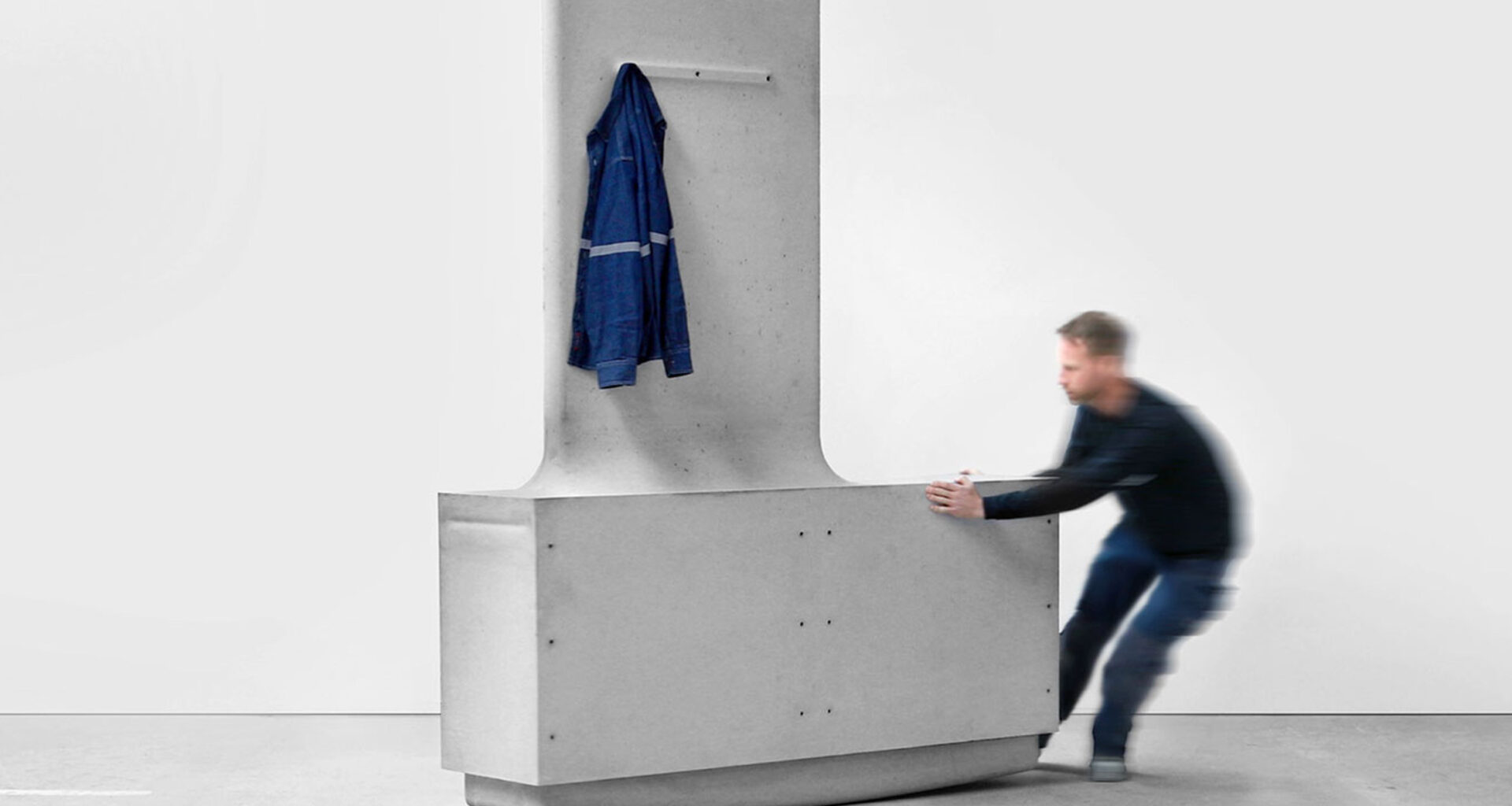
Researchers at Massachusetts Institute of Technology have unveiled the Heirloom House project, a series of nine structural-concrete components that can be manually rearranged and that are intended to last for 1,000 years.
As part of its ongoing partnership with the R&D department of Mexican building materials company Cemex, the Massachusetts Institute of Technology (MIT) research studio Matter Design used kinetics and physics to engineer the modular elements.
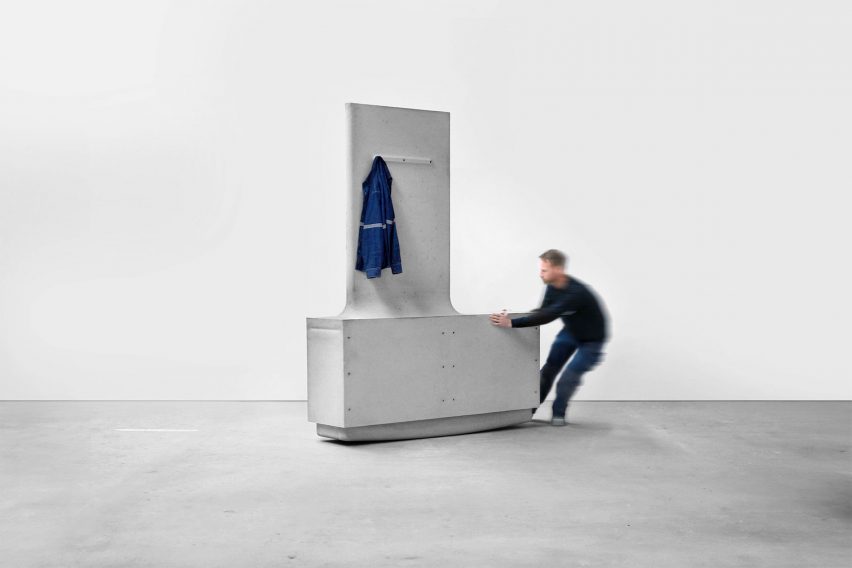 MIT’s Matter Design has designed the Heirloom House project
According to Matter Design, the Heirloom House project confronts the paradox of permanence and adaptability in architecture.
Most people live in an average of 12 homes in their lives, but these structures are initially built with the intent of lasting for much longer.
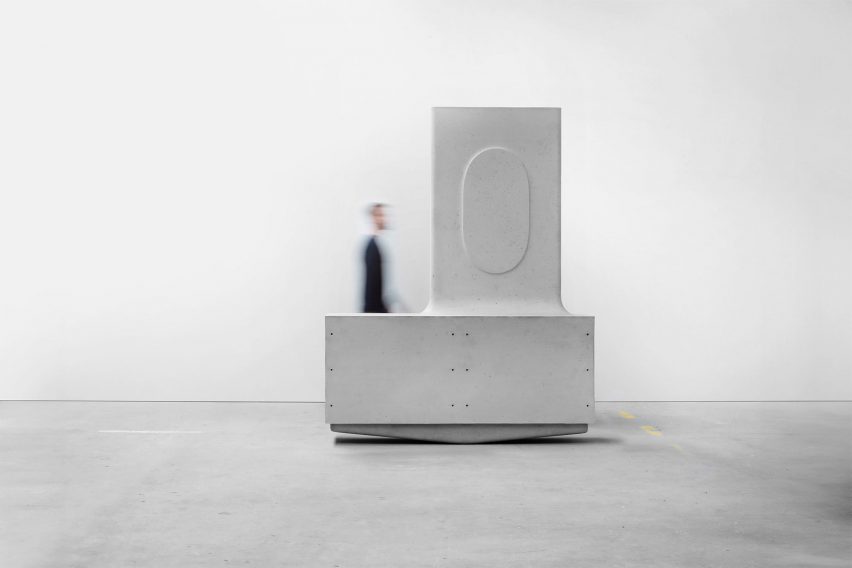 Heirloom House consists of modular concrete furniture
To meet changing requirements, they need to be endlessly renovated, which requires more energy and creates waste.
“Architecture doesn’t fail because it falls down – it fails because it becomes obsolete,” Matter Design director Brandon Clifford said.
“If we treat time as design material – and mass as an asset rather than a liability – we can imagine homes that endure for generations by transforming instead of being replaced.”
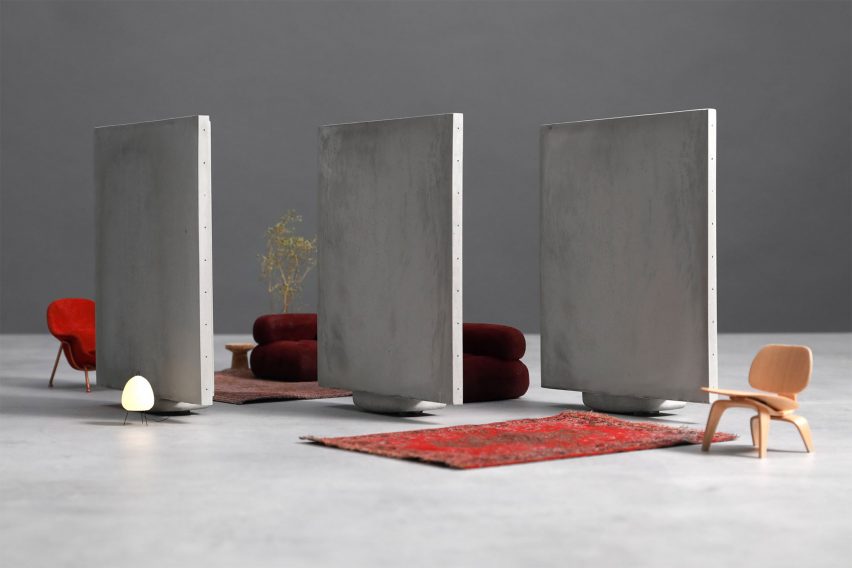 The components come to a point that allows them to be pivoted and moved
Responding to shifting needs over time, the heavy megaliths were designed to be moved quickly.
Rounded, boulder-like foot elements make it possible to pivot and wobble them into place. They can be combined in different room enclosure configurations.
The team has completed three pieces to scale, showcasing the rest of the configuration at dollhouse scale.

MIT and Harvard researchers find secret to “self-healing” Roman concrete
Most designs include thicker bases supporting thinner wall surfaces, and one incorporates steps.
Scientists at MIT’s Department of Architecture recently conducted a study on the average lifespan of buildings and concluded that the figure is shorter than the average life expectancy.
“The climate crisis is revealing the limits of treating buildings as consumables,” said Clifford.
“What if, instead of tearing our buildings apart, we designed them to evolve with us for a thousand years?”
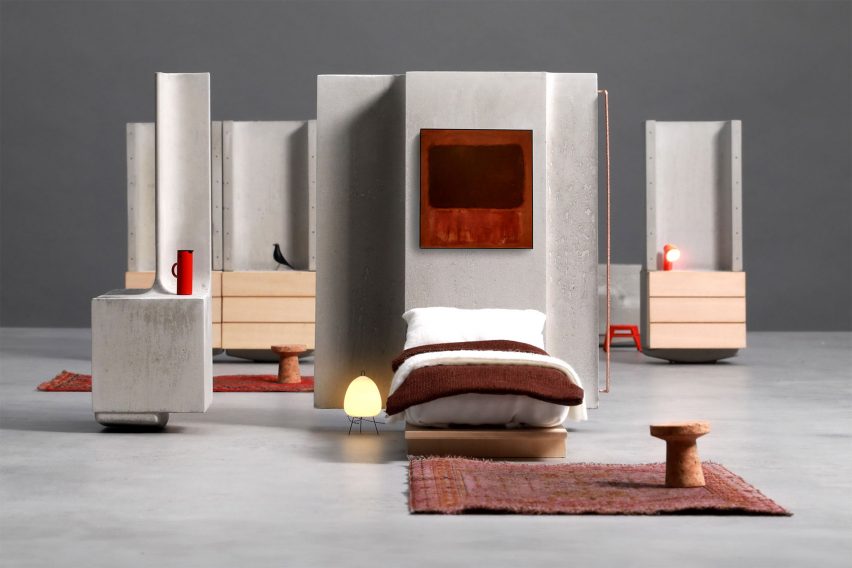 The components were designed to fit together into different configurations
Cemex’s involvement with the project tests the viability of concrete in such a project.
“Designing for a thousand-year horizon pushes us to rethink what concrete can do,” said Cemex global R&D vice president Davide Zampini.
“From a research and development perspective, Heirloom House challenges us to innovate at the level of material science, so concrete can endure, reconfigure, and even gain value over time.”
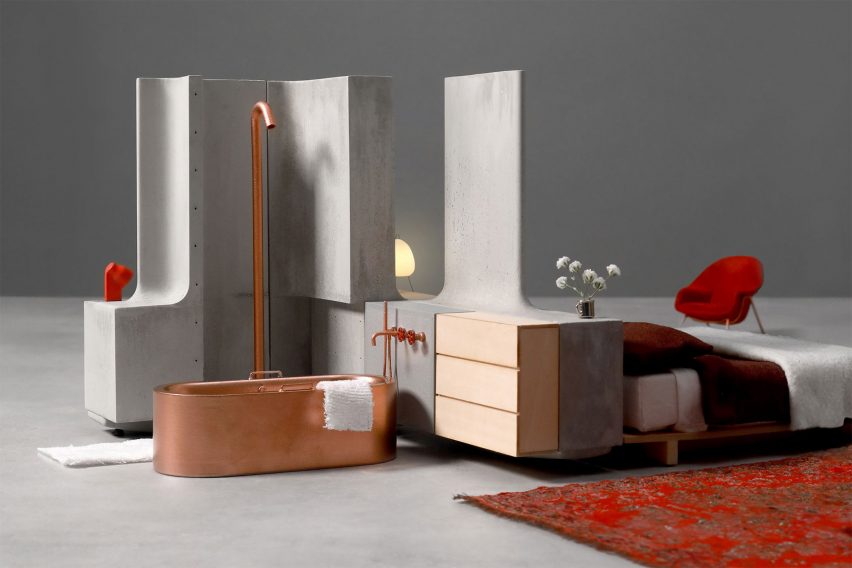
According to Matter Design, the project also addresses an economic consideration. Building with adaptable components would require no additional materials or manpower.
If used multiple times over an extended time period, they could appreciate and become heirlooms.
The research is built on years of work by Clifford and associates at MIT, including the construction of megaliths that can be moved with a “fingertip” in 2015, using geometries found in ancient structures.
Other research to come out of MIT recently includes a process to make houses from recycled plastic and tiny robots that can fly as fast as a bumblebee.
The photography is courtesy of Matter Design.