
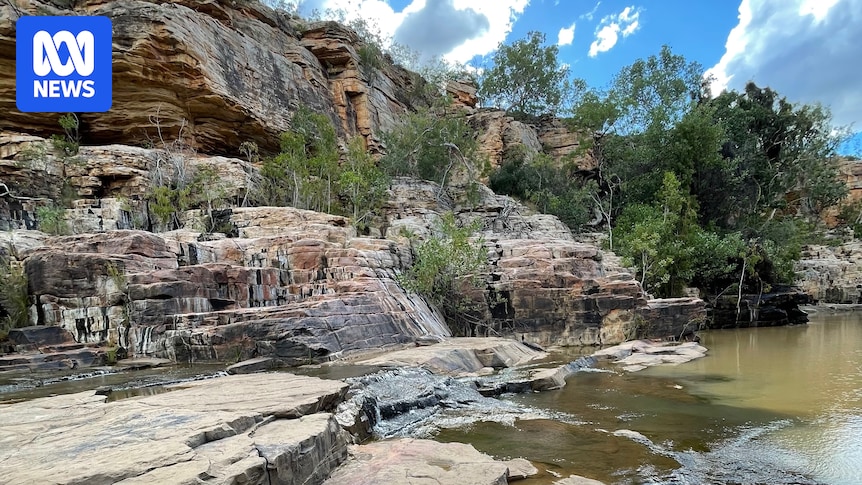
Water scientists and Indigenous custodians are calling on the Northern Territory government to reject an application by Santos to drill and frack 12 test shale gas wells on a remote cattle station, warning the project could damage little-explored hot springs.
Charles Darwin University environmental scientist Jenny Davis is among those worried the project could affect the Hot Springs Valley on the remote Tanumbirini Station in the north-east of the Territory’s gas-rich Beetaloo Basin.
Professor Davis carried out preliminary research for the federal government in 2020 into whether gas fracking could have impacts on the valley’s water system.
She said that revealed “there are still substantial knowledge gaps”.

Jenny Davis says the Santos application should be considered a high risk to the Hot Springs Valley. (Supplied: Jenny Davis)
“This information suggests that risks to groundwater resources in the local region could be much higher than Santos has currently recognised,” she said.
“These knowledge gaps need to be addressed before the Santos development can be considered anything other than a high-risk activity from an environmental perspective.”
Griffith University water scientist Matthew Currell said rock in the Hot Springs Valley area had a high level of natural fracturing, and it had a complex aquifer system under it, from which hot water and methane gas rose to the surface.
“I don’t think we can underestimate the significance of these springs and the permanent flow of good quality water that they produce,” he said.
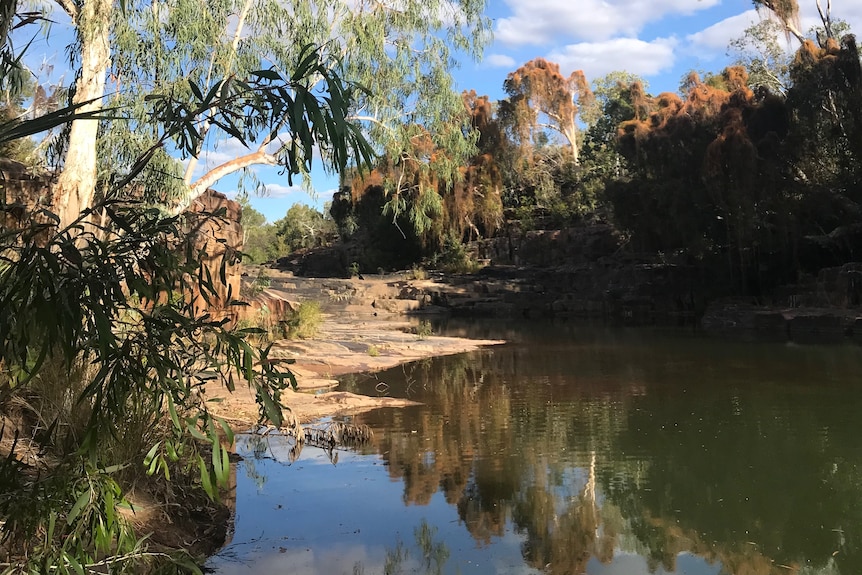
The Hot Springs Valley on Tanumbirini Station is remote and little-known. (Supplied: Jenny Davis)
“There’s significant concern that the hydraulic fracturing activity could have an impact on them.
“There is significant faulting around the springs and pathways that may allow for fluid flow from deep in the system to migrate upwards.
“It may cause hydrocarbons to migrate into some of the aquifers above and below where the fracking is taking place.”

Matthew Currell thinks the Santos project risks contaminating aquifers. (ABC News: Michael Lloyd)
Professor Currell thinks the project also could affect the Cox River and Limmen Bight in the Gulf of Carpentaria.
“When we have potentially contaminating activities occurring in the upper parts of these catchments, the effects of that can be felt downstream for many hundreds of kilometres,” he said.
Loading…
That worries Indigenous custodian, ranger and chairman of the Namultja Aboriginal Corporation on the Limmen Bight, David Barrett.
“We’re very worried the fracking is going to be above our rivers. It could really affect our waters, even as far as the Gulf,” he said.
“The aquifers and rivers are all connected, and the dry savannah country is dependent on that water, for our animals and fish.
“We’re worried about a lot of the animals like the freshwater swordfish, which are dependent on flows of freshwater out to the ocean,” he said.
Garrawa Indigenous custodian Jack Green said he was concerned there could be negative impacts on a devil dreaming songline.
“I don’t trust what’s going to happen. It’s going to affect us mob that got totems through that area,” he said.
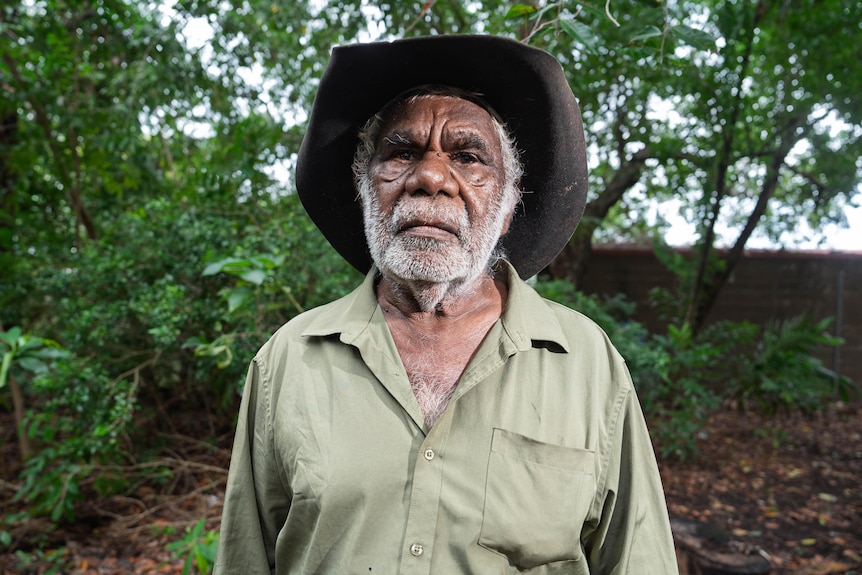
Jack Green is worried songlines could be affected by fracking. (ABC News: Marcus Kennedy)
The national science agency, CSIRO, is currently undertaking another study into whether fracking could have a negative impact on the Hot Springs Valley.
It has assessed the springs as “highly environmentally, culturally and spiritually significant” and “understudied”.
The agency said its research would not be complete until the second half of the year.
Professor Currell said the NT government should not assess Santos’s application until it had received and taken into account the CSIRO study results.
“There is a long way to go before the risk level can be confidently assessed,” he said.
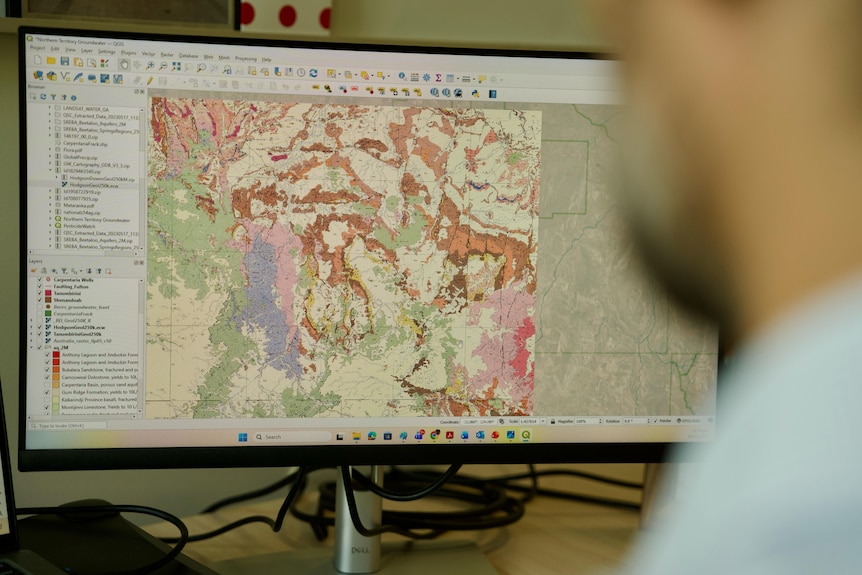
The Hot Springs Valley area has a complex network of aquifers underneath it. (ABC News: Michael Lloyd)
Santos said in its application that the risk to the environment from its project was “low”.
“Santos is committed to minimising the impact of its operations on the local environment,” it said.
The application said the company would stop contamination between aquifers by protecting “the quality and integrity of surface and groundwater … and maintaining natural flow regimes where possible”.
It said it would make sure wastewater, chemicals and gases were not released accidentally and would use “appropriate controls” during drilling.
The company said it would also put a water monitoring regime into place to quickly detect any problems.
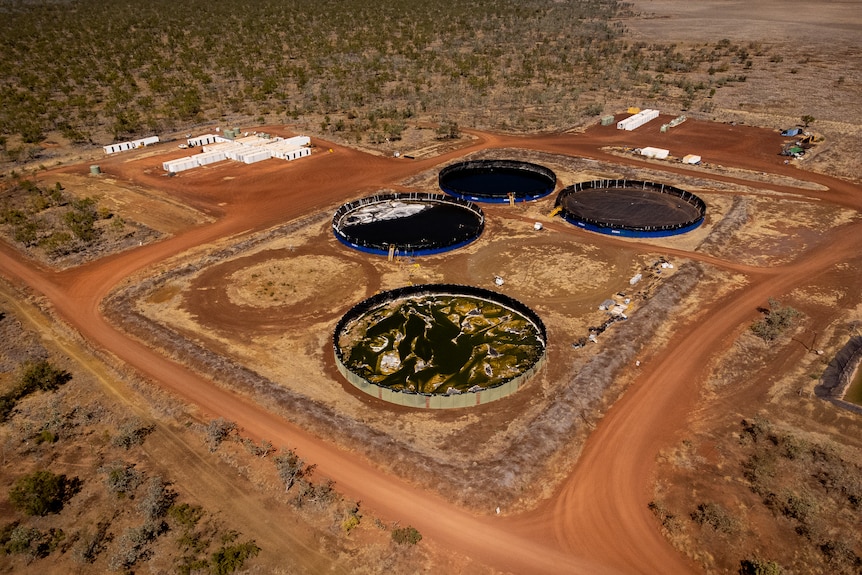
Santos says it is committed to minimising the impact of its fracking project on the environment at Tanumbirini Station. (ABC News: Hamish Harty)
In its application, Santos has predicted the Territory is “on the cusp of a shale gas boom akin to the coal seam gas boom experienced by Queensland from around 2010 onwards”.
It said the project had the potential to support Australian energy security, “lower costs for households, manufacturers and businesses” and drive “significant economic growth”.
In response to the ABC’s questions about whether the project would pose a risk to the Hot Springs Valley, Cox River and Limmen Bight, Santos did not reply directly.
It provided a statement which said: “Santos has been safely developing and producing gas in the Cooper Basin in South Australia and south-west Queensland for more than 60 years.
“We have submitted an environmental management plan … [that] will only be approved if it can satisfy government requirements, including a requirement that environmental impacts and risks of the proposed activity will be reduced to a level that is as low as reasonably practicable and acceptable.”