
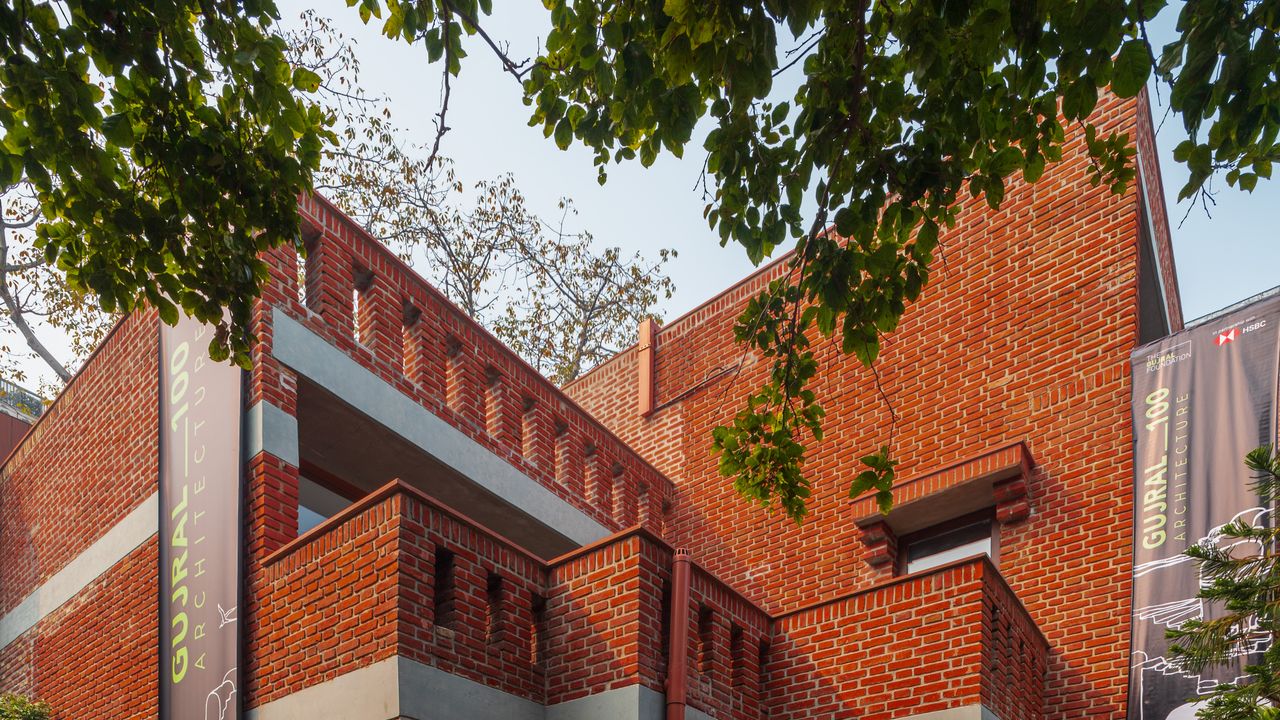
The home’s exposed red brick façade, protruding turrets, glass walled rooms, and floating staircases provided a striking backdrop, with individual spaces dedicated to showcasing each emotion. “This bare and versatile canvas with its niches, levels and unusual corners, is a curator’s dream,” shares Varma, adding, “Creativity needs creative spaces that inspire and encourage a flow of ideas. My imagination ran wild and free there.”
This was merely an appetiser. The space officially opened its doors on 30 January 2026, with its first exhibition titled ‘Satish Gujral 100: World of Architecture’, paying fitting tribute to Gujral’s legacy as an architect. Curated by architect and scenographer Rhea Sodhi, it runs parallel to an ongoing showcase of Gujral’s art at the NGMA, Delhi.
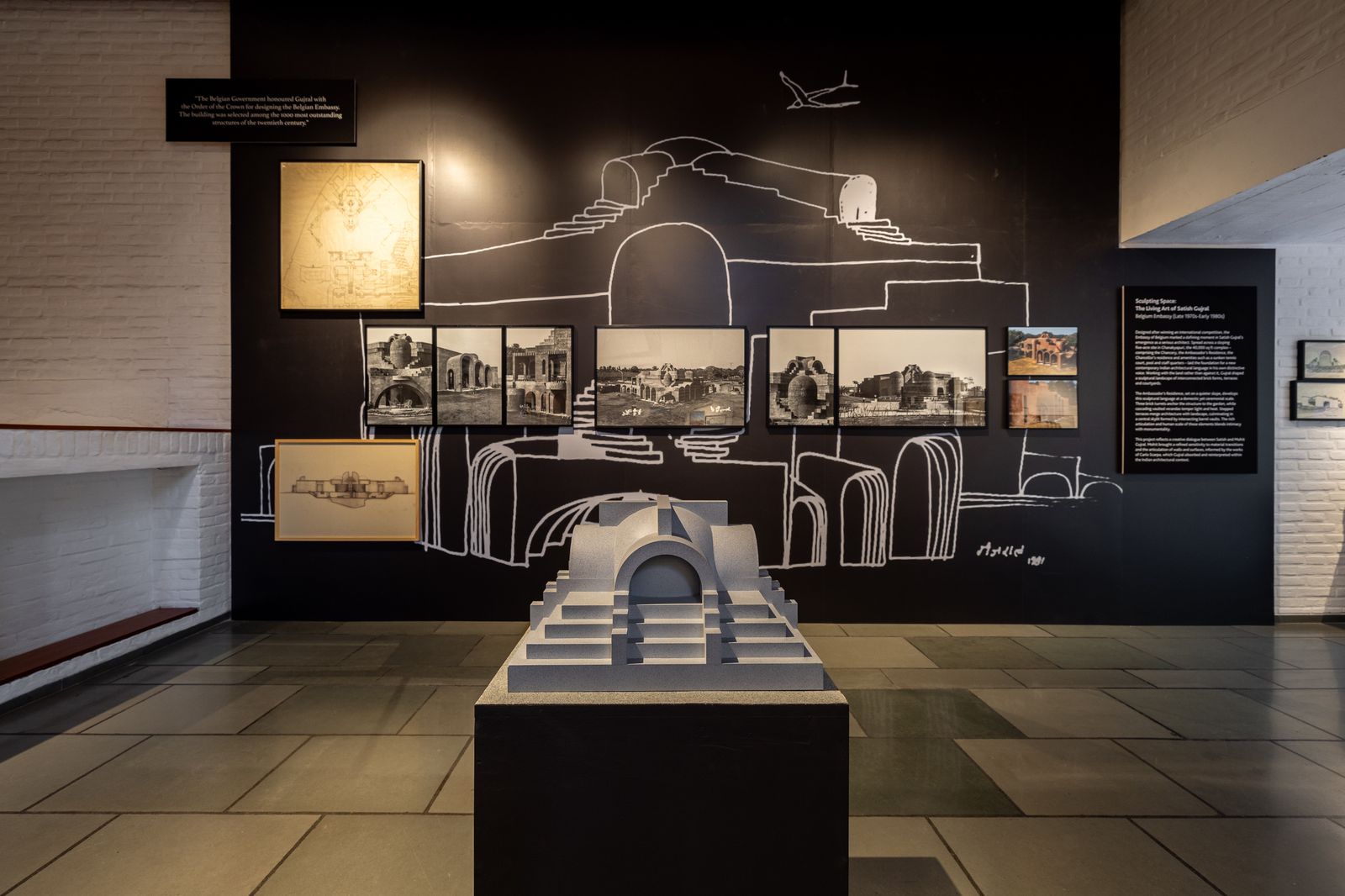
Another work in the exhibition
The Gujral Foundation
Sola Nambar, named for its address–16, Feroze Gandhi Marg–as The Gujral House is affectionately called, was designed by Raj Rewal in 1970, yet the strongest imprint on the building is Gujral’s. It spurred him towards an architectural practice for which he won both praise (from the world at large) and brickbats (from a disgruntled community of architects as he was never formally trained in the field). His home becomes the contextual frame for understanding his work. Spread across the basement, ground and first floor, the exhibition includes photographs, blueprints, films, sketches, archival material and more, displayed alongside Gujral’s early mixed-media metal works to demonstrate his proficiency across fields. Distinct spaces are devoted to eight of his most famous projects.
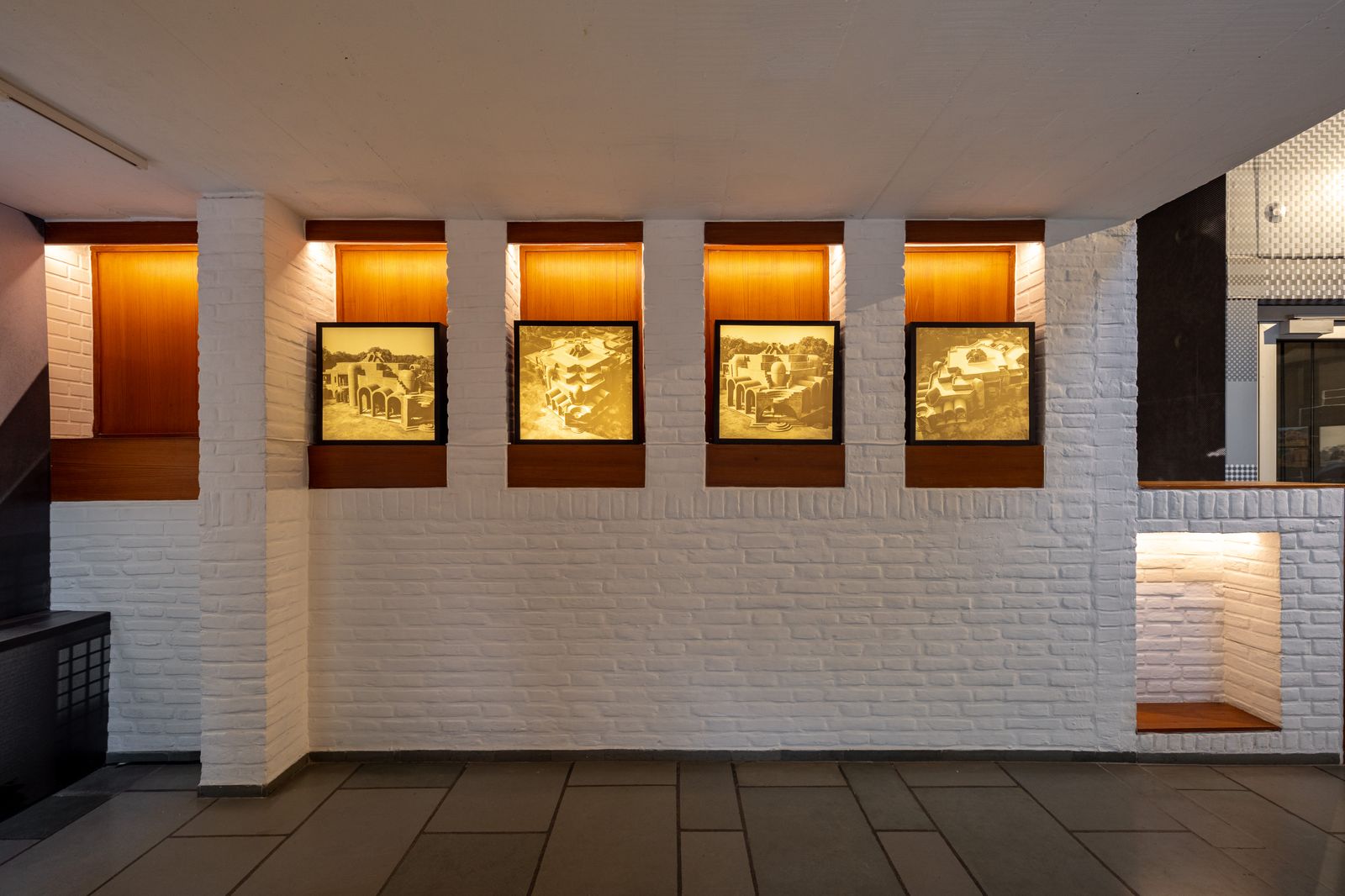
Another work in the exhibition
The Gujral Foundation