
Scientists have officially confirmed the discovery of Geraisites: Brazil’s first-ever field of tektites.
These glassy shards are the scorched remains of a massive asteroid impact that rocked the Earth roughly 6.3 million years ago.
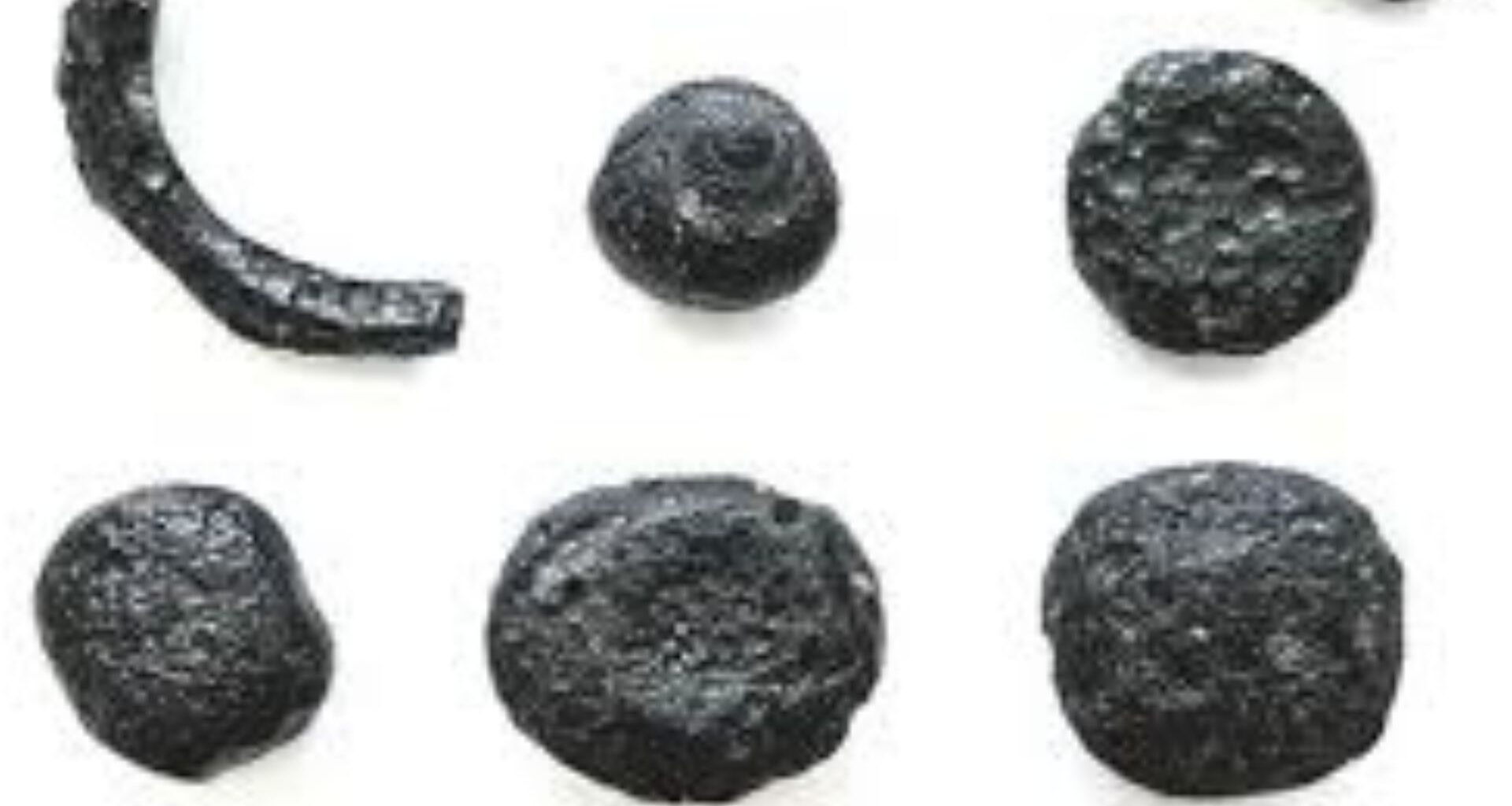
Named after the state of Minas Gerais, geraisites are dark, aerodynamic glass droplets formed during a massive ancient impact.
These rare specimens now span a debris field of over 900 kilometers (559 miles), marking what may be one of the most significant extraterrestrial events in South America’s geological history.
Until now, the world recognized only five major “strewn fields” of tektites — located in North America, Central Europe, the Ivory Coast, Australasia, and Belize.
The discovery of the Brazilian field, led by geologist Álvaro Penteado Crósta of the University of Campinas (IG-UNICAMP), adds a sixth site to this geological group.
Glass rain of Minas Gerai
Initially discovered along a 90-kilometer stretch in northern Minas Gerais, the known distribution of geraisites has since expanded to over 900 kilometers, reaching into the states of Bahia and Piauí.
According to geologist Crósta, this massive “strewn field” is a direct indicator of the impact’s immense energy, showcasing the vast debris patterns seen in the world’s other major tektite sites.
Since the first discovery, researchers have collected over 600 fragments ranging from tiny grains to 85-gram specimens.
These dark, pitted stones appear black at first glance but reveal a translucent, grayish-green interior when held to the light.
The material’s varied, aerodynamic shapes — including dumbbells, teardrops, and disks — provide a frozen record of their high-speed, molten flight through the atmosphere.
While Europe’s vibrant green moldavites have been crafted into jewelry since the Middle Ages, these Brazilian specimens possess a more muted, distinctively different hue.
Hunt for missing crater
Chemical analysis confirms an impact origin, revealing high silica levels and the presence of lechatelierite, a rare mineral formed only under extreme heat.
The glass materials‘ sodium and potassium levels are slightly higher than those of other global tektites, but the varying trace levels of chromium and nickel suggest that the original target rock was geologically diverse.
“One of the decisive criteria for classifying the material as a tektite was its very low water content, as measured by infrared spectroscopy: between 71 and 107 ppm. For comparison, volcanic glasses, such as obsidian, usually contain from 700 ppm to 2 percent water, whereas tektites are notoriously much drier,” Crósta explained.
Using argon-40/argon-39 dating, researchers traced the origin of the field back to approximately 6.3 million years ago, in the late Miocene epoch.
The analysis yielded three consistent age results, all hovering near the same timeline, which confirms that the entire 900-kilometer spread of glass was created during a single, massive impact event.
Despite the 600 fragments collected so far, one glaring piece of the puzzle is missing: the crater.
Geochemical analysis suggests the asteroid struck the São Francisco craton, a stable part of Earth’s crust that is over 3 billion years old. However, millions of years of erosion and sediment may have buried the “ground zero” of this event.
“The isotopic signature indicates a very ancient continental, granitic source rock. This greatly reduces the universe of candidate areas,” said Crósta.
To quantify the event’s power, researchers are developing mathematical models to calculate the impact’s energy and trajectory.
Also, the search may now move to specialized sensors that can detect the subtle magnetic and gravitational scars left behind by a massive, ancient collision.
The findings were published in the journal Geology.