
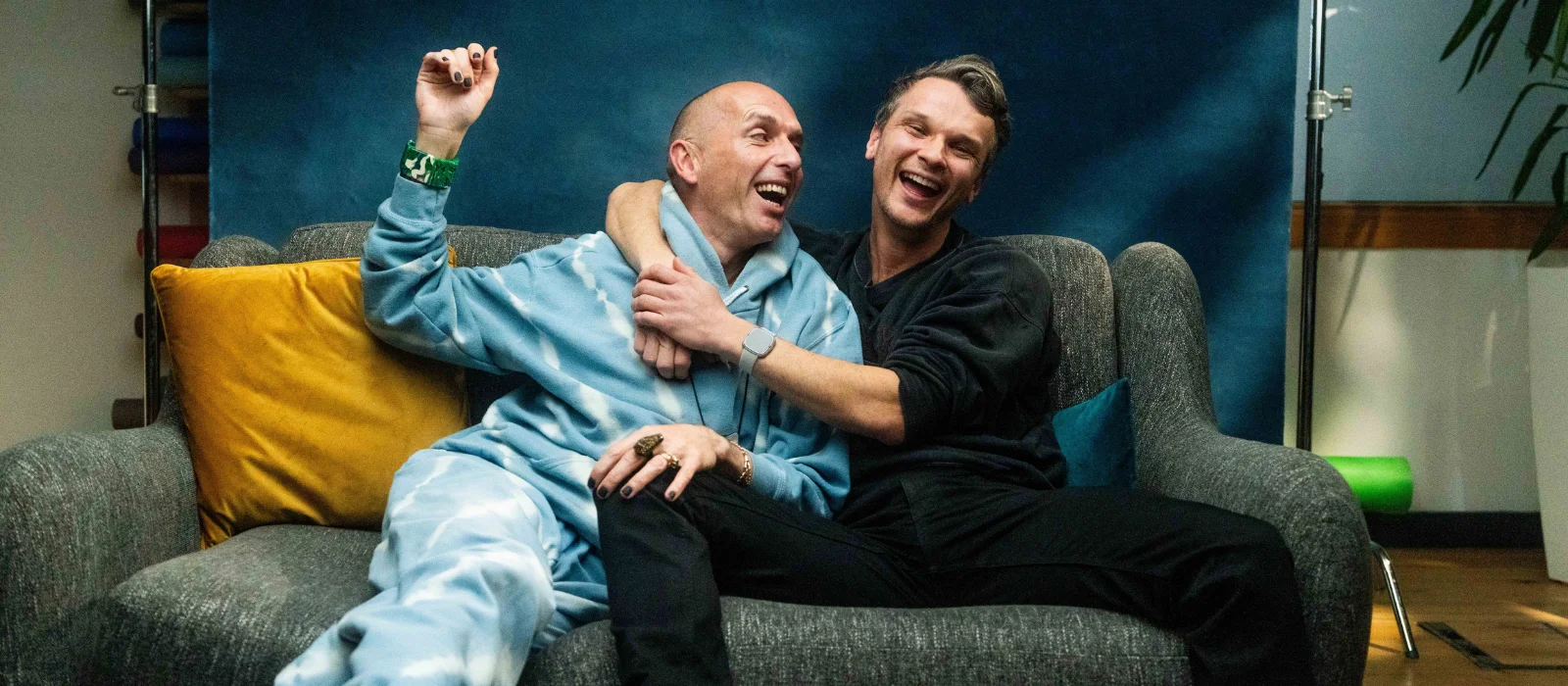
“Back in the 80s and 90s, HIV stigma was very much related to homophobia,” says Robbie. “Now we’re seeing it related to transphobia, to racism to other minorities. The world is trying to do everything it can to dehumanise people in general, but if you have HIV, then you have a double or triple stigma. Our goal is to make sure that everyone feels empowered to come out if they choose to. Not everyone has to come out with their status; everyone has a right to privacy. We just don’t want secrecy forced upon them. That’s what we’re trying to change. Because we’ve all felt that we’re thrown in a closet. You know, if you grow up queer, we all know what a closet is like and we know how damaging closets are for your mental health. The viral closet is the exact same thing. Society says ‘this is bad, shut up,’ or you tell your parents, who say, ‘don’t talk about this because I don’t want to hear what John and Mary down the road have to say.’ That’s still a huge reality for people.”
“Thinking yourself out of that closet, imagining yourself out of that closet, when there’s no one outside of it yet, is really hard,” says Veda. “What’s been amazing for me is that Robbie is one of the people that I could see outside of the closet and that made me want to do it, too and do it as big as I could. So for me to connect with Robbie on that journey and make a documentary together and make a podcast together is such a gift to me. It’s the hand that reaches back to help the person who’s coming next. That really makes the chain, and we’ve seen this small chain of people just grow and grow, steadily, organically, one link at a time. We have the ability now to show each person all of the love and care that we can.
“In 2021, I was the first person living with HIV to be in a HSE campaign about HIV. You wouldn’t think it would take that long. And to be smiling and showing my face and all of these things that never happened before. Then last year in 2025, Luis Noguera became the first Latina, the first person of colour to be in a HSE campaign living with HIV. That’s such a privilege, an amazing thing to see in our lifetime, in our community.”
What started with Veda and Robbie quickly became about something much bigger. Far from a vanity project for either of them, Poz Vibe became about a community. A self-declared Poz Tribe was formed, consisting of people living with HIV in Dublin. Veda tells me “we have always said that being a community group is the core of Poz Vibe and we never want to lose our finger on the pulse of the community. We are the community.
“Our tribe and our organisation is a place where we can really have fun with it. We are experimental, and the emphasis is on the mental. The friendships and the connections within the tribe, the beauty of how they impact people’s lives in a very real and positive way, whether it’s helping to find you a flat, find you a job, find you a fiancé, or just the organic care that everybody shows to each other seems to uplift everybody in the tribe in a very natural way.”
“Sometimes disclosure of HIV status gets a bad rap,” says Robbie. “We’re more inclined to talk about the negative times we tell people we live with HIV and the kind of negative things that may happen from that. But some of the best things that ever happened in my life is when I shared with people that I live with HIV.”
I’m eager to know what Veda and Robbie would like women to understand about HIV. Robbie tells me, “HIV is not a gay disease. I know that that’s what women have been taught. A few women that I know who were diagnosed with HIV have said, ‘Robbie, no disrespect, but I thought that was a gay thing.’ There’s no disrespect taken at all because that’s all we’ve seen on TV or radio and as humans we think ‘oh that’s for other people, that’s not for me.
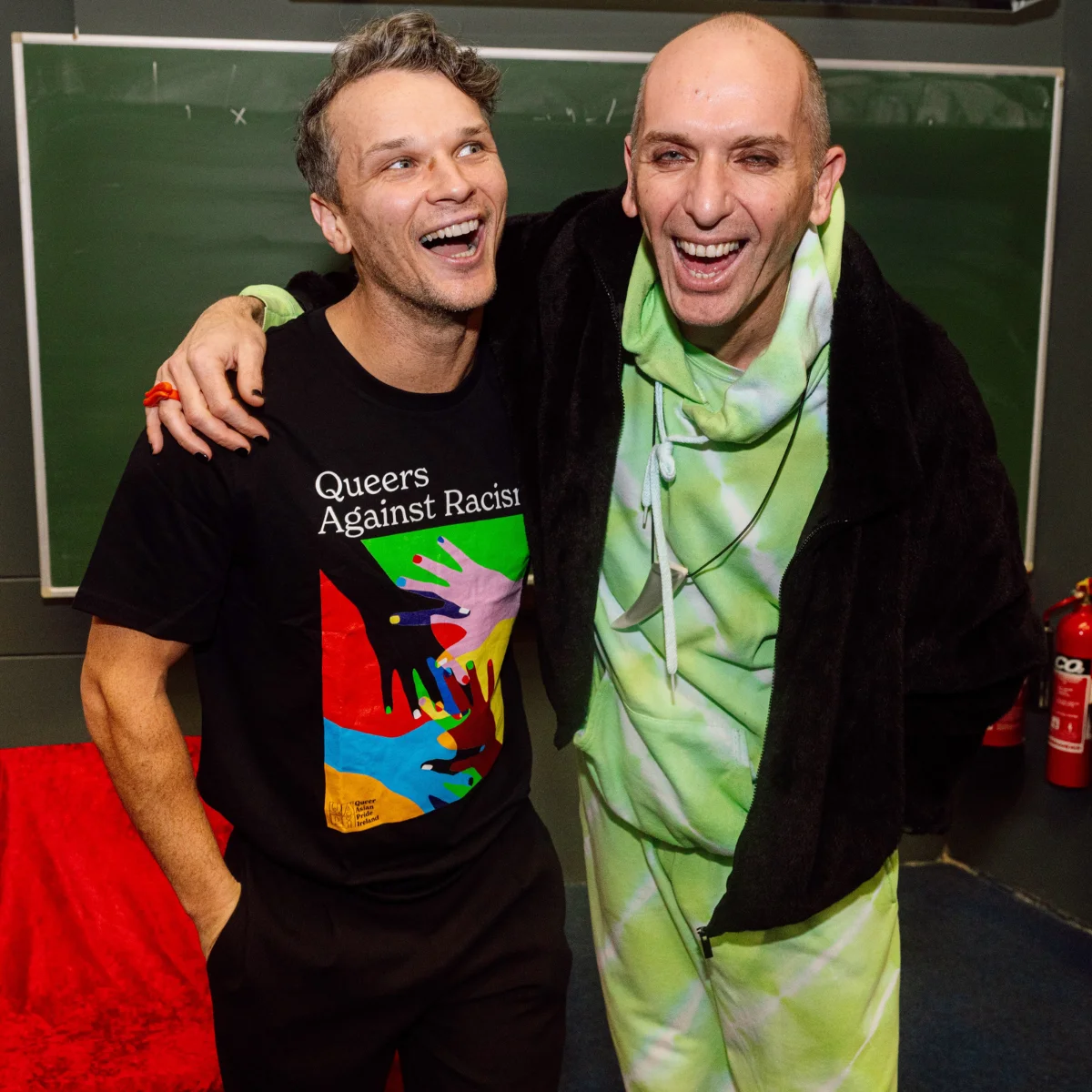
“Women used to account for around one-fifth of new HIV diagnoses in Ireland. That’s gone up last year to one in four. So women are increasingly getting diagnosed and there’s more transmission among heterosexual women. Also, it’s heterosexual women and men that are more likely to get an Aids defining illness because they’re not getting tested so HIV is affecting their immune system longer. The queer community has a culture of getting tested. We pick it up more quickly, we go on medicines, and we stop the chain of transmission. Heterosexuals don’t and GPs don’t even think about giving people a HIV test if they’re heterosexual.”
“We really just need people to realise, just like Covid, HIV is a virus and it just needs a host. It could be anyone. It doesn’t matter who you are, what you are, where you come from. Unprotected sex is one of the main ways in which that happens. So just get tested. Know your status. There’s a phenomenal service; SH24.ie. You can get a free STI test delivered to your house. You can do it all in the comfort of your home and you put it back through free post and you get your results back in 5 days. If anything pops up, you’ll get the message and every STI is treatable or curable. So, ignorance isn’t bliss when it comes to STIs. Don’t think that STIs are for other people. Take responsibility for your own sexual health. Whether it’s once a year or whenever, depending on your sexual activity.
“One other thing we need to tell women is if you’re put on HIV treatment, then you can have kids without fear of passing on HIV. You take one pill a day and your HIV only impacts or affects you. There are many women living with HIV in this country. Don’t do it alone. There’s a great women’s WhatsApp group to link into. If you’re a woman living with HIV, you’re generally decentralised out of the big cities. You’re not always based in Dublin or Galway. Reach out, don’t do it alone. If you want to, get in contact with us and we can link you up with other women.
“And continue to have great sex, because that is another thing that we see for women and for everyone living with HIV. They almost feel like you just have to kind of settle for whatever sex is happening. You’re the safest person to have sex with and not pass on HIV. There’s nothing wrong with you. There’s nothing unclean about you. You deserve that.”