
The state of Welsh rugby should concern everyone invested in the game. The sport is not durable enough to lose one of its established powers.
None of this happened overnight. Warren Gatland warned the WRU, back in 2007, about the long-term impact of not investing in schools.
Not much changed. The clubs held sway, like they used to across Ireland.
Wales’ abysmal run of 24 defeats from 26 Test matches since the 2023 World Cup should have every other union on alert.
The decline has been a long time coming. Gatland even suggested that it goes back to Thatcherism and teacher strikes in the 1980s.
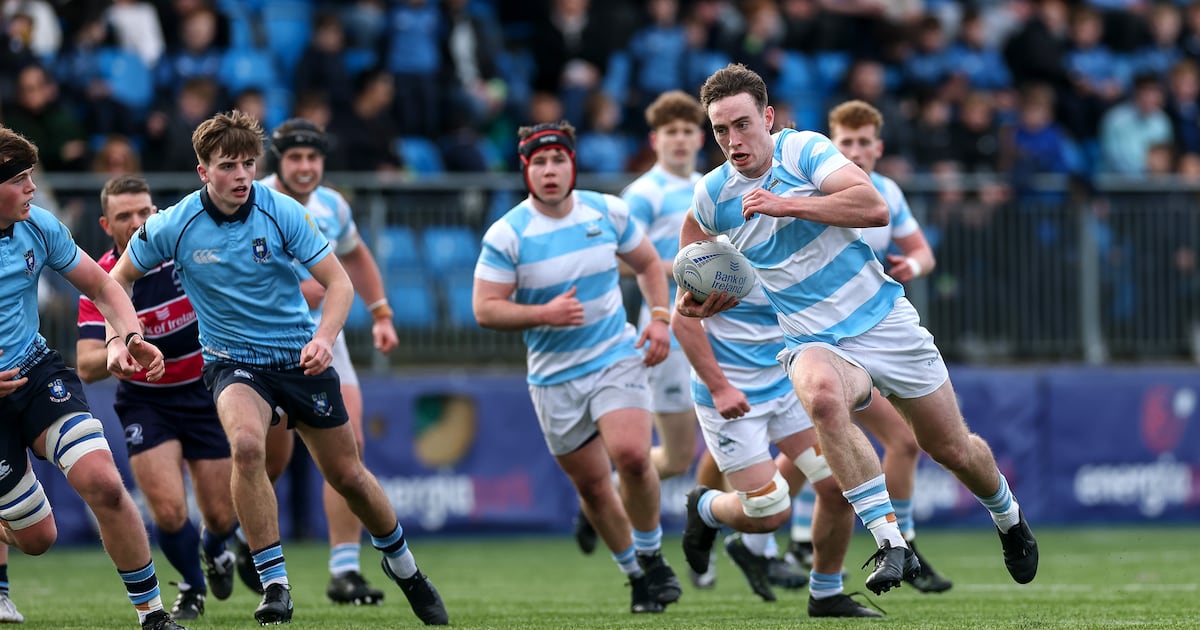
The talent, the physiques and more importantly the coaching on display when Blackrock played St Michael’s in the Leinster schools semi-final last Monday in Donnybrook indicates that Irish rugby has avoided the Welsh pitfalls.
Some Irish players are ready to play professional rugby at 19. Others come strong in their early 20s because of the foundational work done in the private schools.
At St Munchin’s College, I missed out on selection for Ireland Schools. It was my performances for Young Munster and Garryowen that earned a call-up to the Ireland under-19s and, eventually, the Munster academy.
The pathway was wide enough to keep track of me. It would be further strengthened by talent, like Tadhg Furlong and Edwin Edogbo, coming through non-traditional routes.
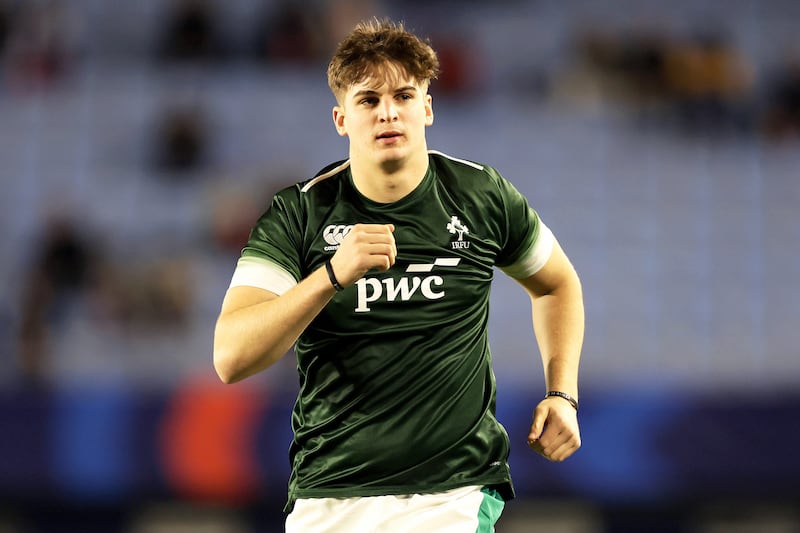 Ireland’s Josh Neill warms up before the game.
Photograph: Laszlo Geczo/Inpho
That is the challenge for the IRFU. In fairness, they are constantly thinking outside the box. After World Rugby increased the three-year residency rule to five years, the enormous contributions of Kiwis like Jamison Gibson-Park, James Lowe and Bundee Aki are no longer a viable option.
The recruitment process has been readjusted to go after younger players born outside Ireland. Josh Neill, a South African flanker, tapped into his Irish grandparents to join the Leinster academy last year.
He’s not alone. The Ulster academy includes the Australian-born Paddy Woods and Rynard Gordon from South Africa, Munster have Ben O’Donovan, a New Zealand under-20s scrumhalf, and Connacht signed Rourke O’Sullivan from South Africa.
The national team is the last group to suffer when a system stops nurturing talent. Wales have four Grand Slams this century, one more than Ireland, with the last one coming in 2019. They won the Six Nations title as recently as 2021.
The decline of an established rugby nation takes time before it accelerates into only beating Japan in a three-year period.
Regardless of what happened against England two Saturdays ago, Ireland should have too much power for Wales.
 Data in rugby and Ireland’s tactical revolution explained
Even after the opening night defeat to France in Paris, I was convinced there was more to come from a pack that includes Caelan Doris, Tadhg Beirne, Dan Sheehan, Joe McCarthy, James Ryan, Josh van der Flier and Furlong.
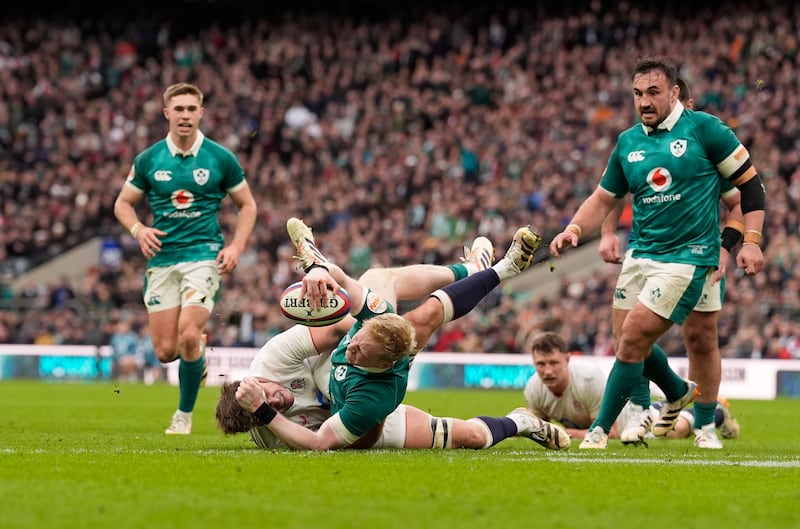
The Irish public had come to expect a certain level of performance. I think that pact, between team and fans, was firmed up at Twickenham.
That is what Wales has lost. Expectations within Wales have nosedived.
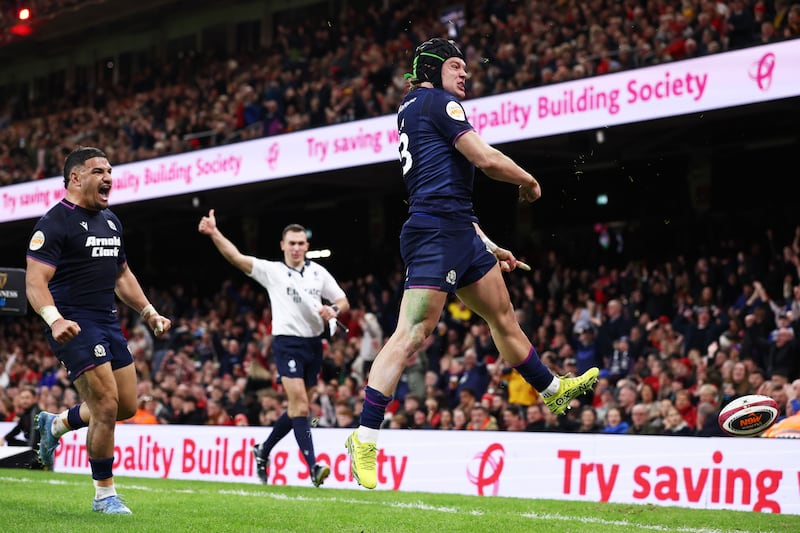 Darcy Graham of Scotland celebrates scoring his team’s third try with team-mate Sione Tuipulotu in the Six Nations match against Wales. Photograph: Getty Images
They were unlucky to lose to Scotland in Cardiff. Darcy Graham’s try will haunt them for a long time. It had nothing to do with the state of the game. It was a collective lapse in concentration from a Finn Russell restart.
Having recently spoken to my old Lions team-mate Jamie Roberts, I know the overall showing against the Scots has brought renewed optimism to Wales.
They can no longer rely on one-off performances driven by Lions captains like Alun Wyn Jones and Sam Warburton. Or huge three-quarters like Roberts and George North.
Famous last words. I have to be cautious. If this year’s Six Nations has shown us anything, it is to expect the unexpected.
Financially, Irish rugby appears to be on a sounder footing than the WRU. But there are small concerns that should not be ignored.
It is known that Mike Prendergast interviewed for the Munster head coach job last season. It went to Clayton McMillan, a New Zealander with a strong reputation, having coached the Chiefs and the Māori All Blacks.
Fair enough. Prendergast is a Limerick man and a former scrumhalf, both like myself. I remember his advice before my first cap in 2011: “Just nail your passing. Hit your man. The rest will take care of itself.”
It shaved off a few nerves.
Prendergast has already moved abroad to ply his trade in France, across four different clubs over 10 years. But now, having spent another season as the Munster number two, he’s off again.
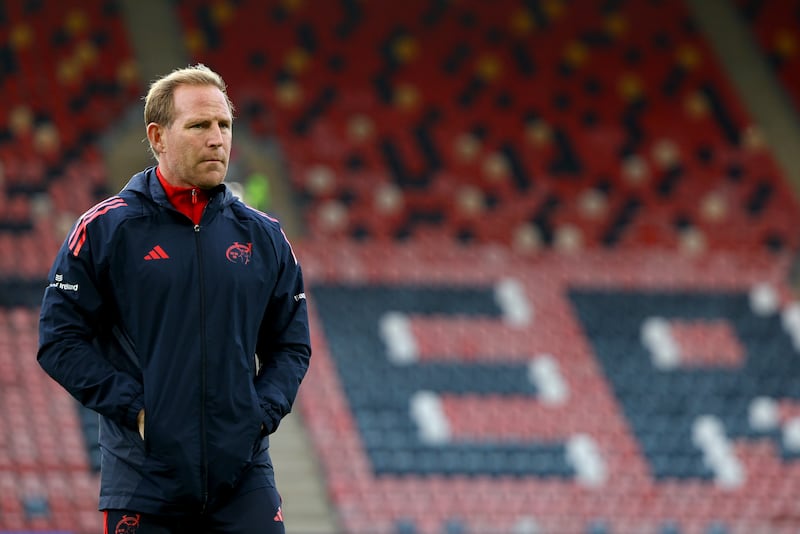 Mike Prendergast is being tipped to join Johann van Graan at Bath. Photograph: Inpho
Travel comes with any coaching career. But I do not think Munster factored Prendergast’s leaving during the recruitment of McMillan. Maybe it will prove the right decision for everyone involved; time will tell, but the list of Irish coaches plying their trade abroad concerns me.
Prendergast is being tipped to join Johann van Graan at Bath, with some reports suggesting he will succeed the former Munster coach if Van Graan returns to South Africa. That would be class for Prendergast, and a really good move by Bath.
The exodus shows no sign of abating as Prendergast joins Ronan O’Gara, Felix Jones, Donnacha Ryan, Jerry Flannery, Nigel Carolan and Noel McNamara, who came through the Leinster schools as the Clongowes Wood College coach. All of them are employed outside the IRFU system.
There are several reasons why this has happened. Only five head coaching jobs exist for adult male teams in Ireland: Leo Cullen at Leinster, Stuart Lancaster at Connacht, Richie Murphy at Ulster, McMillan and Andy Farrell.
There are plenty of opportunities within the system. Take the coaching ticket that Ulster general manager Rory Best constructed this season.
Murphy climbed the internal ladder, going from Ireland kicking coach under Joe Schmidt to a hugely successful period as the under-20s head coach before earning a promotion to a provincial role.
It’s also important to note who Murphy added to his Prendergast’s with the highly rated Mark Sexton joining Willie Faloon, Jimmy Duffy and Dan Soper.
From what I hear, Mark is definitely cut from the same cloth as his brother Johnny. The Ulster lads love working with him. He encourages players to express themselves. To play ball.
The results are undeniable. Ulster are on the rise again, while Munster and Connacht are adjusting to life under McMillan and Lancaster.
The IRFU system is solid. Only five years ago, we could have said the same about Wales.
Follow our rugby WhatsApp channel
If you want the latest rugby news, analysis and opinion then you should follow our dedicated WhatsApp channel. From Gerry Thornley to Owen Doyle and Gordon D’Arcy, we have every angle covered.
Find the channel here.