
A star rating of 3 out of 5.
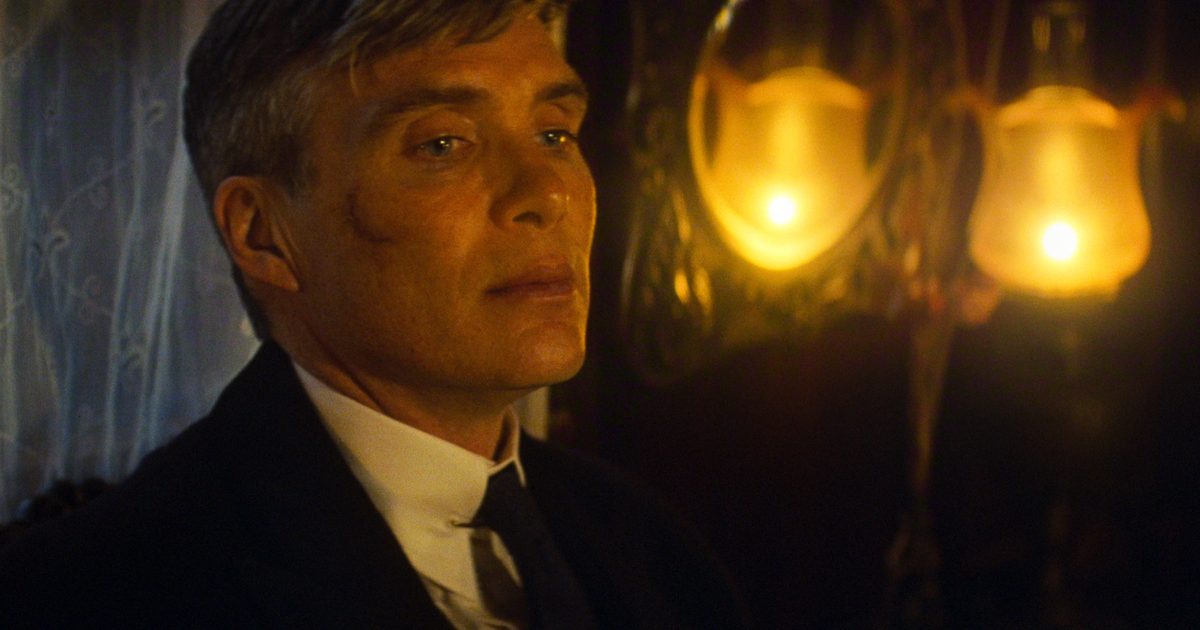
Whatever happened to Peaky Blinders‘ Tommy Shelby? The last we saw of Cillian Murphy’s charismatic mob boss turned Member of Parliament at the conclusion of Peaky Blinders’ sixth season, he was riding off into the sunset after brokering dubious transatlantic business deals and infiltrating Fascist figurehead Oswald Mosley’s inner circle, while on the verge of a nervous breakdown following the death of his young daughter.
Time doesn’t necessarily heal wounds, though, and during his long self-imposed exile (the story picks up again in 1940) Tommy’s been trying to make sense of it all by writing a book. But, Murphy’s protagonist is still haunted by personal tragedies that prey on his mind much more than the war that’s broken out between England and Germany: “I’ve got a war of my own, inside of me ‘ead,” he says early in the narrative.
All that changes with a visit from Kaulo (Rebecca Ferguson), the Romani gypsy twin sister of the woman with whom he fathered a son back in the 1910s; she tells him the now fully grown Duke (introduced late in the most recent series and played here by Barry Keoghan) is causing havoc back in Birmingham, forcing Shelby senior to return to the city and re-take the reins of the family business.
Want to see this content?
Accept and continue
Duke’s been using muscle and intimidation to steal weapons from local munitions factories intended for squaddies on the front line, and he’s about to upset even bigger applecarts, helping Nazi sympathiser John Beckett (Tim Roth) to undermine the war effort by flooding the UK economy with £70 million in counterfeit banknotes.
How does Kaulo know all this? Gypsy visions, of course; a Peaky staple going back several series that creator-writer Steven Knight enjoys calling upon for short-cut exposition, and to dig around inside the noggin of his central character – Tommy’s still hearing the voice of matriarch Aunt Polly, long after her murder in series five.
It’s not the most satisfying of ploys, an all too convenient get-out clause, but the mystical Shelby gypsy roots continue to play a role in the family’s affairs, especially brought into focus in The Immortal Man via Keoghan’s rough-hewn Duke and his staunch pride in his ancestry.
Knight and director Tom Harper just about get away with it, as a device to draw parallels between Duke and Tommy’s own youthful menace (father describes son as “my dark reflection”), driving home the Shelby dynasty’s bedrock ethos of tradition and family loyalty.
Here, the family extends to Tommy’s sister Ada (a returning Sophie Rundle), a beacon of decency in war-torn Brum, having taken over her brother’s seat in Parliament. There are examples of non-blood ties too, with a call back for Stephen Graham as Liverpool docks supremo Hayden Stagg, along with a few others unwaveringly faithful to the Shelby cause.
Of the newcomers to the saga, Keoghan imbues Duke with a tender vulnerability beneath all his surface bluster and violence, and his scenes with Murphy give the film palpable heart whenever it runs the risk of being overwhelmed by beatings, bullets and bombs.
He’s matched every step of the way by Roth, an initially laconic presence but increasingly terrifying as his dastardly plans edge closer to fruition, against elaborate locations and sets more imposing than on the TV version that make the devastation of war and its impact on ordinary folk horrifically real.
The switch from a small screen six-hour narrative arc to a cinema release one-third of the length inevitably results in incident and characterisation being truncated, but Knight and Harper nonetheless manage to construct a robust story that doesn’t necessarily require viewers to have deep knowledge of the Peaky Blinders’ past, keeping a firm red right hand on proceedings.
Peaky Blinders: The Immortal Man is released in cinemas 6 March. The movie will stream on Netflix from 20 March – sign up from £5.99 a month. Netflix is also available on Sky Glass and Virgin Media. The Peaky Blinders series is available to stream on BBC iPlayer.
Check out more of our Film coverage or visit our TV Guide and Streaming Guide to find out what’s on. For more TV recommendations and reviews, listen to The Radio Times Podcast.