
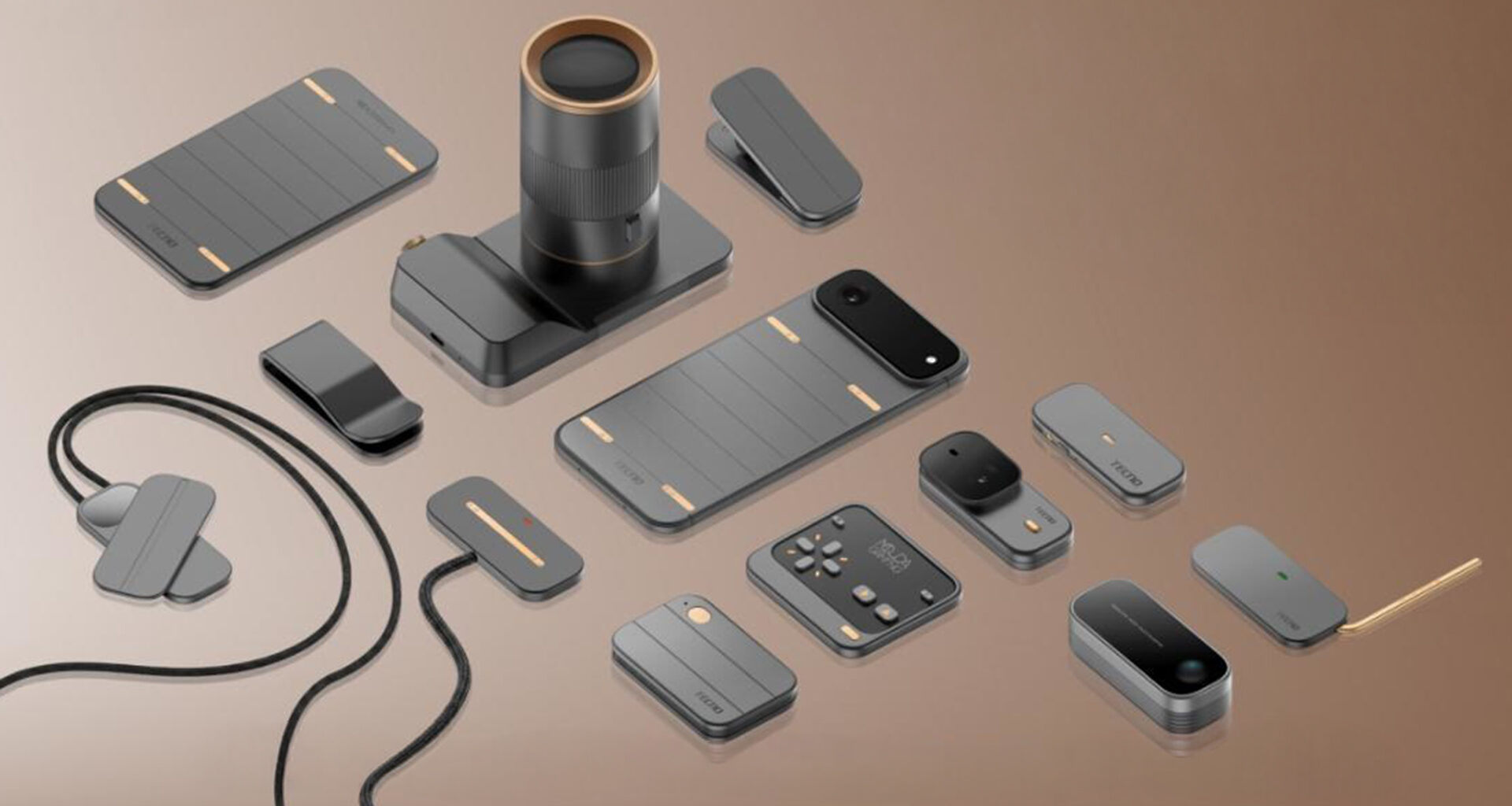
TECNO presented more than a dozen concept devices and technologies at Mobile World Congress 2026 (MWC 2026) in Barcelona, including a modular smartphone architecture that lets you attach hardware components magnetically to the phone. The concept, called Modular Magnetic Interconnection Technology, lets users snap on modules like batteries, cameras, and telephoto lenses without increasing the phone’s thickness beyond that of a typical handset. The showcase also included several experimental ecosystem products and AI imaging concepts that hint at where the company is experimenting next. Let’s take a look.
Some elements of this idea will already sound familiar. Magnetic attachment has become fairly common since Apple introduced MagSafe, where accessories like chargers, SSD mounts, and even lenses snap onto the back of a phone. The newer Qi2 wireless charging standard is beginning to bring similar magnetic alignment to Android devices as well. What TECNO is exploring goes a step further. Instead of simple accessories, the modular system adds functional hardware, things like camera modules or additional batteries that connect directly to the phone. The concept itself isn’t entirely new either. Google’s Project Ara and Motorola’s Moto Mods both experimented with modular smartphones about a decade ago, although neither system survived long commercially.
Modular magnetic phone architecture
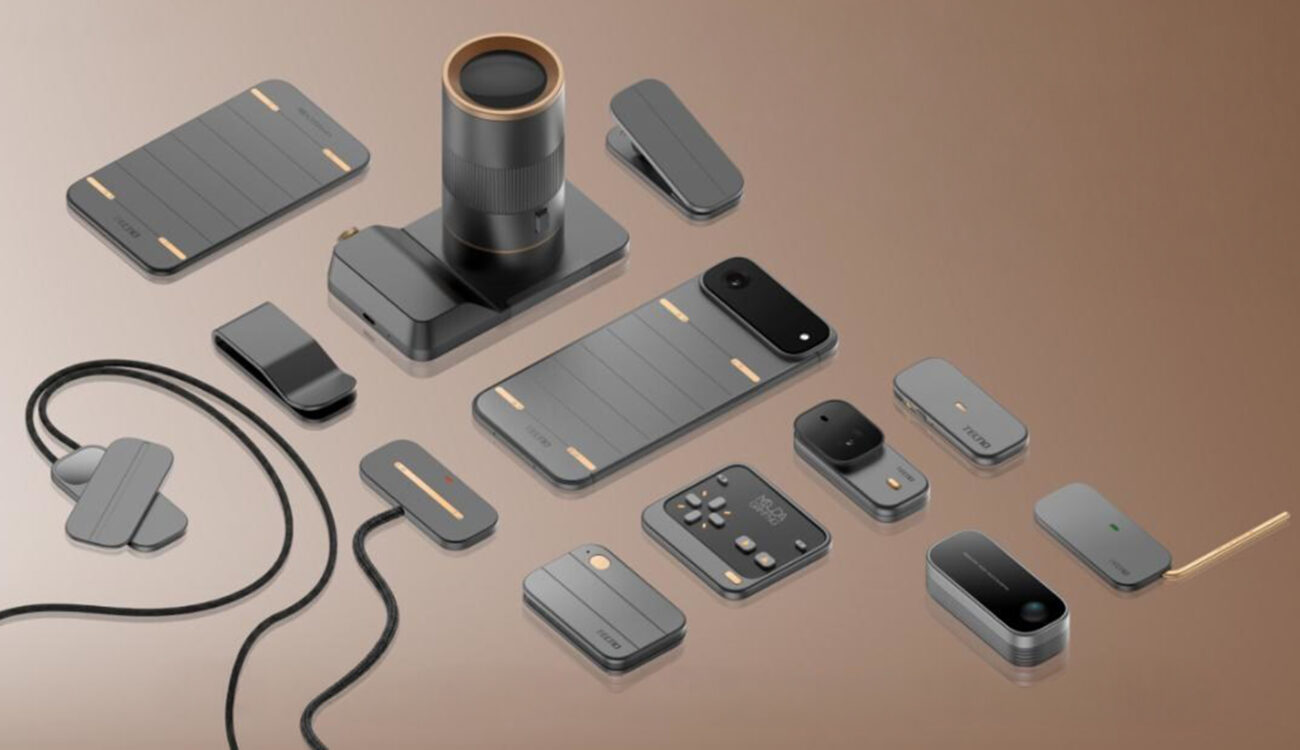
One of the more interesting ideas TECNO showed is its Modular Magnetic Interconnection Technology, a system where hardware modules attach directly to the back of a smartphone using magnets paired with electrical connectors. The concept smartphone itself is extremely thin, around 4.9mm (0.19 in), and the magnetic battery module measures about 4.5mm (0.18 in) thick. So even with modules attached, the overall thickness is just about the same as a typical smartphone.
Instead of integrating every feature permanently into the phone, the idea is to attach specific hardware only when needed. The current concept modules include a magnetic power bank, an action camera module, and a telephoto lens module, with the system designed to support additional modules in the future.
As an example, the telephoto lens concept functions almost like a small, standalone camera. The phone’s display acts as the viewfinder, while a wireless link handles preview and capture with low latency. In practical terms, this means more specialized optics without permanently increasing the size of the phone.
TECNO showed two design interpretations of the concept device:
ATOM editionMinimal, structured designSilver aluminum body with red accentsFocus on functional clarityMODA editionMore expressive industrial designVisible structural elementsStronger visual identity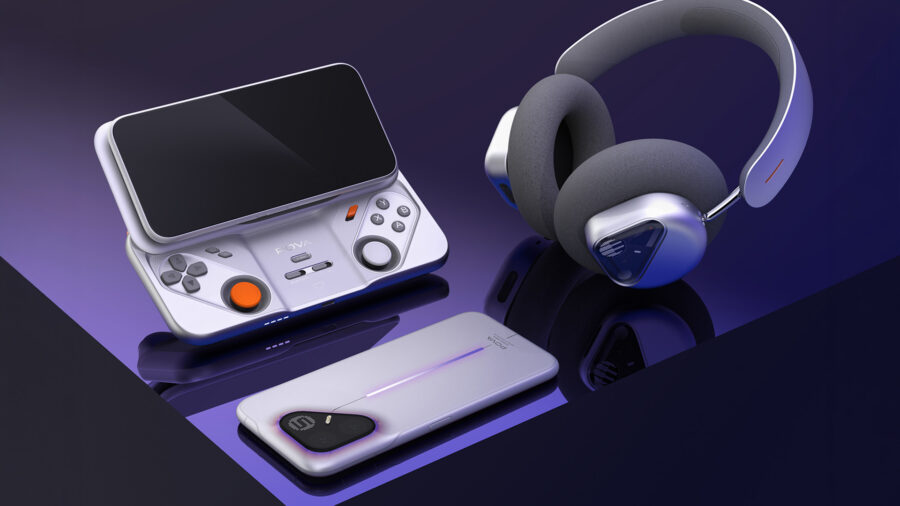 POVA Ecosystem. Image credit: TECNOThe POVA ecosystem concepts
TECNO also used the event to preview an experimental POVA ecosystem, where the smartphone acts as a central hub connected to specialized accessories. Three concepts appeared within this system.
POVA Metal
A full metal unibody 5G phone concept powered by a Snapdragon processor. The focus here is industrial design, with a solid metal chassis instead of the glass or plastic construction common in most phones.
POVA Controller Slide
A mobile gaming controller built for first-person shooter and MOBA titles. The phone slides into a dock with an adjustable viewing angle between 0° and 25°. Wireless charging continues while the phone sits in the controller.
POVA Earphone
Wireless earbuds that visually match the ecosystem, featuring illuminated dot matrix elements on the case.
The basic idea is that the phone acts as the center, with its processing power and connectivity shared across other devices depending on how someone wants to use it.
 Edge-Side AIGC Preview Concept Technology. Image credit: TECNOEdge-side AI preview technology
Another concept at the booth focused on edge-side generative AI processing, where AI features run directly on the phone instead of relying on cloud services.
TECNO’s prototype system includes a style transfer preview tool that performs real-time image transformation in the camera viewfinder. According to the company, the preview runs at roughly 30fps, so users can see the effect before capturing the image. The system also addresses one of the practical limitations of mobile AI tools, the heavy computing load required for generative models. TECNO says the models have been compressed so they can run offline on the phone while maintaining stable performance. Running the models locally also keeps the preview immediate, without depending on a network connection.
 AI EINK Image credit: TECNOAdditional concept devices
Alongside the modular phone and AI tools, TECNO displayed several industrial design experiments.
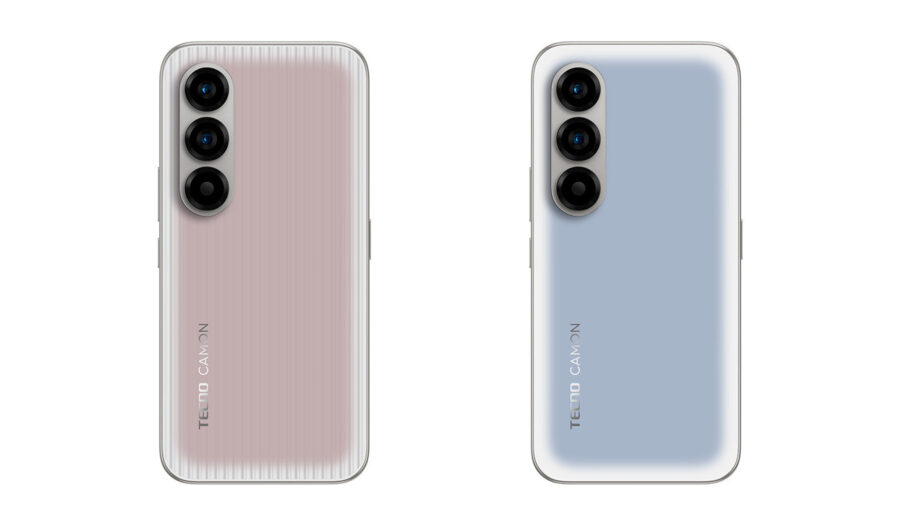
AI EINK
A smartphone concept that uses electronic ink technology on the rear panel. The device analyzes colors captured by the camera and adjusts the back panel to match them, turning the phone itself into a customizable display surface.
TECNO Slim 2
An ultra-thin phone concept with a narrow 0.7 mm (0.03 in) bezel that pushes the display closer to the edge of the device.
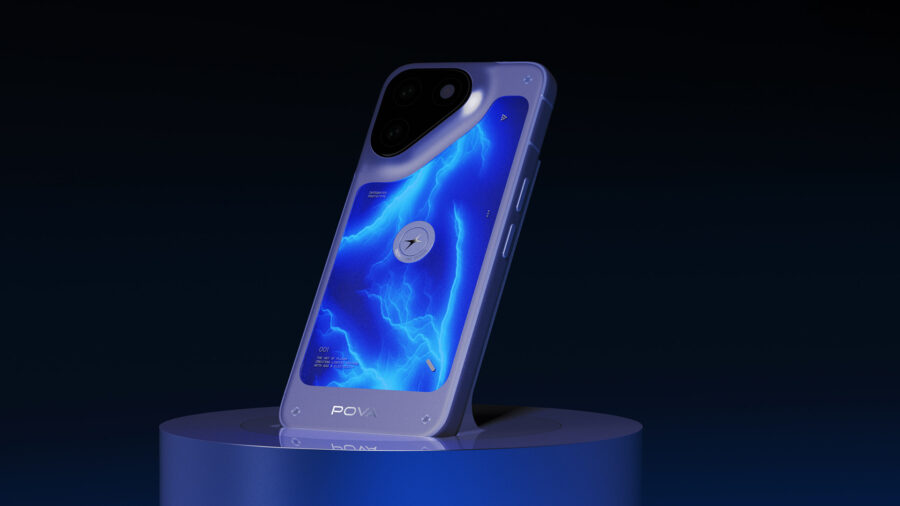 POVA Neon. Image credit: TECNOPOVA Neon
A prototype that incorporates ionized inert gas lighting inside the device, producing a glow similar to miniature neon lighting.
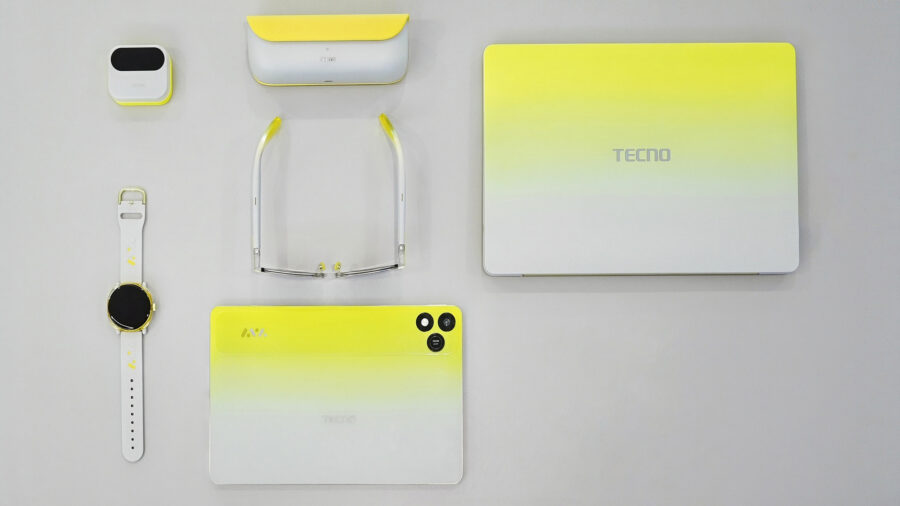 Concept Design Suite. Image credit: TECNOConcept Design Suite
A coordinated set of devices, including a laptop, tablet, smartwatch, glasses, and earbuds, built around a shared visual theme called “Music in Motion.” The project focuses on industrial design exploration rather than outlining a commercial product lineup.
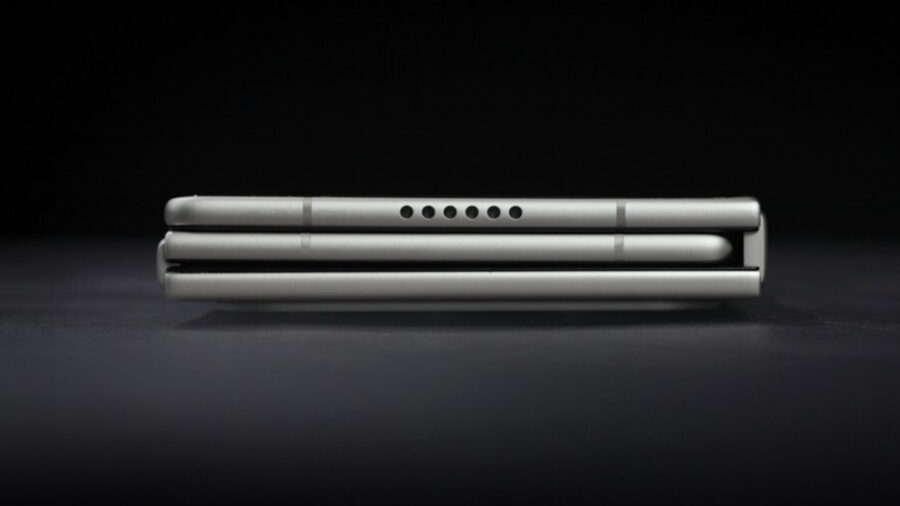 G-style tri-fold design with dual inward folds. Image credit: TECNO
TECNO also showed the PHANTOM Ultimate G Fold, a tri-fold phone concept with a nearly 10-inch (25.4 cm) display that folds inward twice, protecting the main screen when closed.
What these concepts suggest
None of the devices shown at the TECNO booth is a confirmed product yet. They function more as design studies exploring how smartphones might evolve as processing power, AI workloads, and user expectations continue to grow. The modular phone concept stands out technically because it addresses a familiar constraint. Smartphones continue gaining capabilities, but their physical size can only grow so much before they become difficult to handle. Moving certain hardware functions into attachable modules offers one possible way around that limitation.
Earlier attempts at modular phones struggled to gain traction. Accessories were often expensive, the ecosystems stayed small, and most users preferred an all-in-one device rather than carrying extra modules.
Magnetic attachment systems, however, have become far more common over the past few years, which may make the concept easier for users to understand than earlier modular designs. Whether that shift is enough to make modular hardware practical this time around remains an open question.
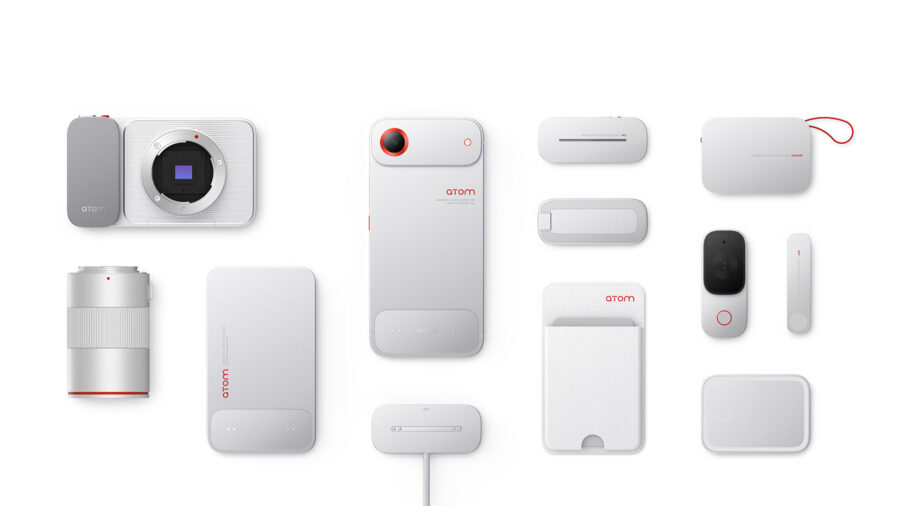 ATOM edition of the Modular Magnetic Interconnection Technology. Image credit: TECNOPrice and availability
All devices presented at TECNO’s MWC 2026 booth remain concept platforms rather than announced products. TECNO has not shared pricing, launch timelines, or confirmation that any of the devices will reach commercial production. More information about the concepts is available on TECNO’s website.
Would you actually use a modular smartphone system if it meant carrying extra camera or battery modules when needed? If modular phones became practical, what kind of module would you want most: a camera module, larger battery, storage expansion, or something else? Let us know in the comments below!