
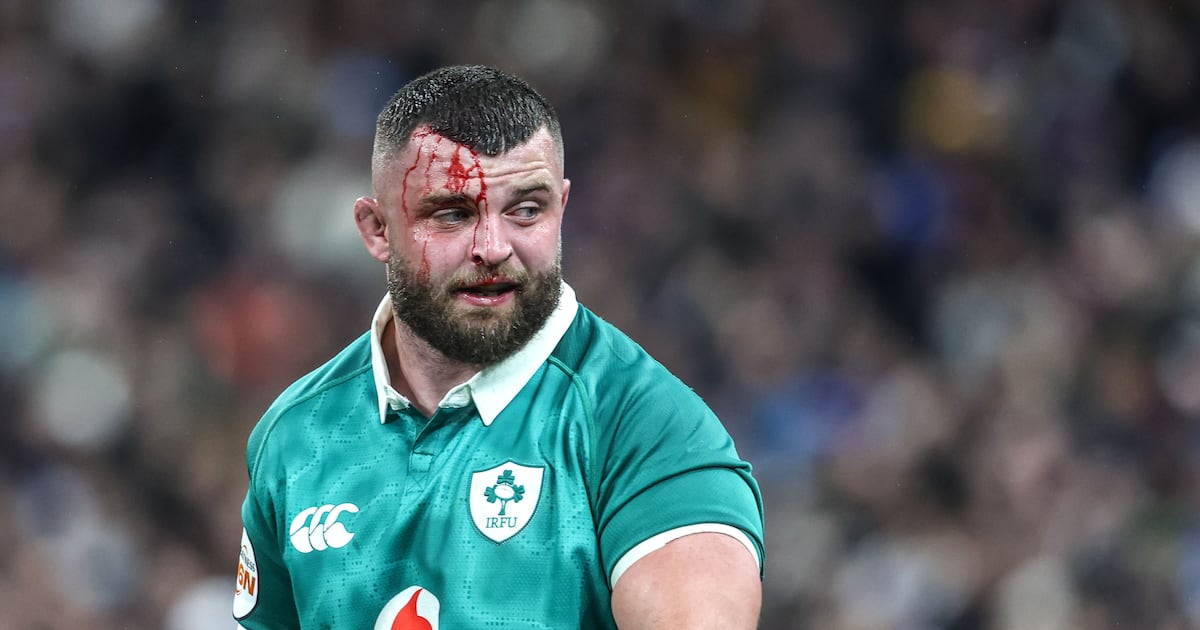
In late January, France announced their 42-man squad ahead of the Six Nations and notable by their absence were Grégory Alldritt, Gaël Fickou and Damian Penaud.
Coach Fabien Galthié had left them out of the squad entirely. Alldritt was the French captain during Antoine Dupont’s recovery from injury, 29-year-old Penaud is France’s top scorer with 40 tries in 59 appearances, while 31-year-old Fickou had 98 French caps. There was to be no Six Nations roll out in Stade de France for a celebratory 100th cap for Racing 92 centre Fickou.
Galthié knew it was brutal but necessary. He explained the selection in terms of the next World Cup in 2027 and not this 2026 Six Nations.
Speaking to the French sports daily L’Equipe, the French coach said that the players he picked, such as Pau’s Théo Attissogbe, “need to play” and “need the chance to make mistakes”.
He spoke about players evolving and the three that were originally omitted “will come back”. He didn’t say when.
Ireland don’t have the capacity to do what France does and leave out established players for most of, or all, the Six Nations. There just aren’t the numbers to do that.
In the French Top 14, for example, Galthié can watch from a selection of 28 props starting each week, albeit not all are French qualified. In Ireland Farrell has eight from the four provinces.
Still, what Farrell has done for the game against Wales on Friday night is to push several players forward to see what they can make of the pressure to perform. It’s the right thing for the Irish coach to do, although in some ways he has little alternative.
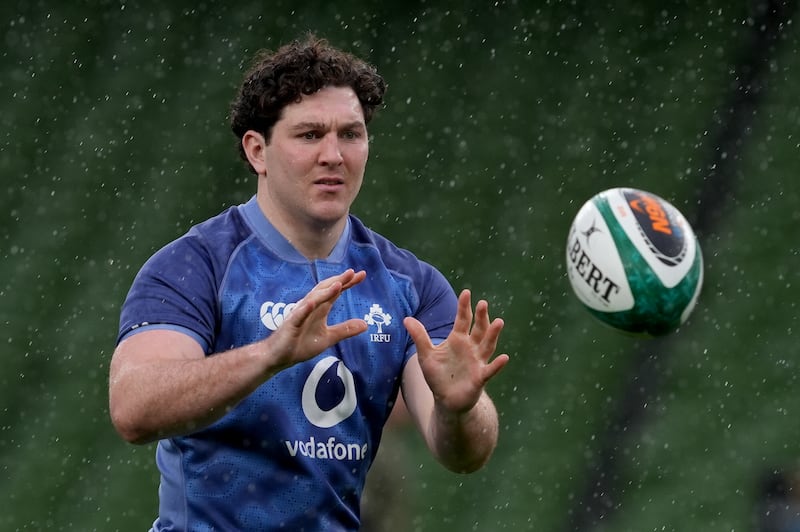 Ireland’s Tom Stewart during a team run at the Aviva Stadium, Dublin. Photograph: Brian Lawless/PA Wire
Players such as Nick Timoney, who starts for the first time in the Six Nations, but also bench players Nathan Doak, Tom Stewart, Michael Milne and Tom Farrell need to make mistakes, fail at certain things and gain experience in working problems out.
If that means leaving out hooker Dan Sheehan and pushing Josh van der Flier and Joe McCarthy to the bench, then so be it. They won’t like it but there is a long game that Farrell must play.
It’s also a balancing act for the Irish coach because the Six Nations has always been the IRFU cash cow.
One thing former chief executive Philip Browne hammered home at every opportunity, was the primacy of the Six Nations because it generates the lion’s share of money that oils the wheels of not just the senior men’s side but all the other teams. The messaging was always clear – don’t mess around with the Six Nations.
But the World Cup has grown exponentially in size since its inception in 1987, when the overall attendance was 604,500, while the French World Cup of 2023, with more matches, drew an attendance of nearly 2.5 million.
Bigger, but also more important, and since the Irish team discovered a frame of mind whereby it believes it can win it, the competition has become of greater consequence.
The now familiar quarter-final Irish exits serve only as a painful reminder of an ongoing legacy of World Cup failure.
Farrell is between a rock and a hard place in trying to give players game time while serving both Six Nations and World Cup masters. Beating Wales on Friday night is primary but Ireland’s first match in Pool D against Portugal at Sydney Football Stadium in October 2027 is also pressing.
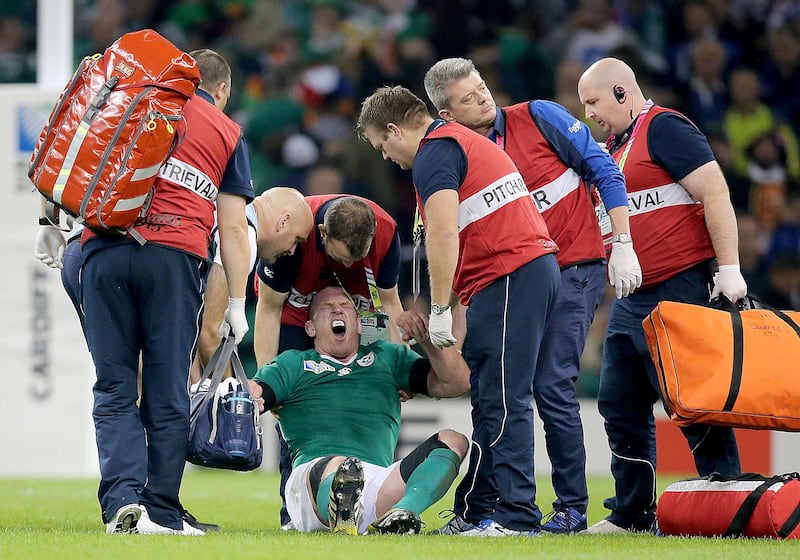 Ireland’s Paul O’Connell. Photograph: Dan Sheridan/Inpho
Farrell needs only to look back to Ireland’s 2015 World Cup game against France in the Millennium Stadium to understand the importance of depth and how the best laid plans can go wrong.
Ireland, under coach Joe Schmidt, won the Pool D decider 24-9 that day but Johnny Sexton departed after 25 minutes in tears with a groin injury. He rejoined the action but didn’t last.
Paul O’Connell suffered a career-ending hamstring tear and left on a stretcher just before half-time wearing an oxygen mask. Peter O’Mahony departed after 55 minutes when his foot appeared to get stuck in the pitch. He also needed a stretcher.
Keith Earls made the list longer with an arm injury, while man of the match Seán O’Brien was handed a two-match suspension, reduced to one, for striking French secondrow Pascal Pape and missed the next game, a doomed quarter-final against Argentina.
Injuries have helped shape Farrell’s current decision making with Hugo Keenan, Andrew Porter, Ryan Baird, James Lowe, Mack Hansen and Jeremy Loughman not involved.
The upside there is it has made slotting players into the team easier, although time is closing in quickly.
Ireland have two Six Nations matches remaining this year against Wales and Scotland, a July series of three Nations Championship matches against Australia, Japan and New Zealand, with three in Nations Championship games in the autumn against Argentina, Fiji and South Africa and a Nations Championship final game in London in the last weekend of November.
That gives Ireland nine more international games this year. There are five more matches in the 2027 Six Nations bringing the number to 14 plus whatever pre-World Cup warm-up games are organised before the 2027 World Cup.
It’s not a lot of time to grow depth. That Farrell is doing it now can only be seen in a positive light. As Galthié said in January, it allows inexperienced players to make mistakes now instead of at the 2027 World Cup.
Follow our rugby WhatsApp channel
If you want the latest rugby news, analysis and opinion then you should follow our dedicated WhatsApp channel. From Gerry Thornley to Owen Doyle and Gordon D’Arcy, we have every angle covered.
Find the channel here.