
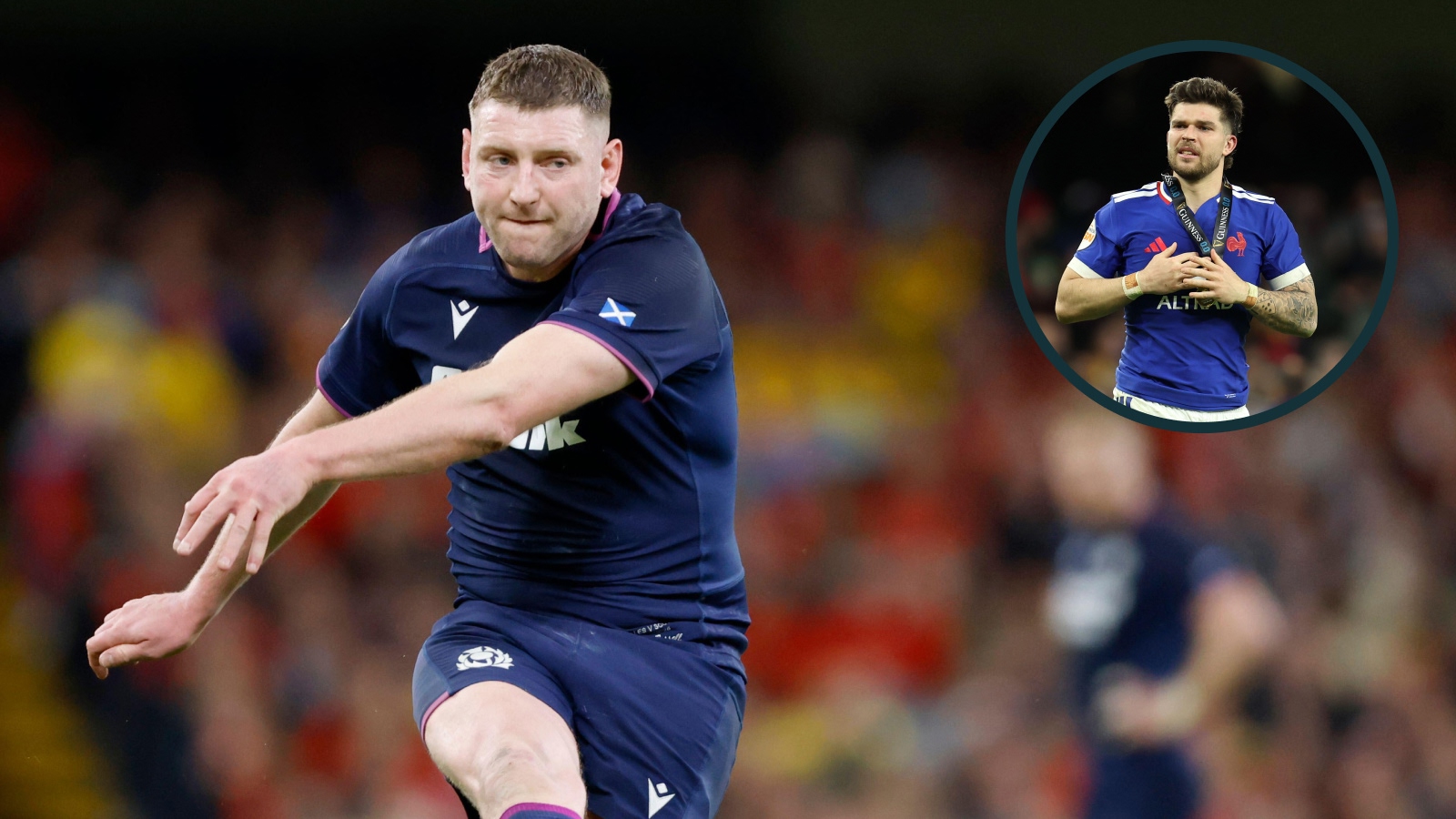
Grand Slam rugby arrives in Edinburgh on Saturday, and Scotland know exactly what is being asked of them.
France have won their three matches in this championship with bonus points, clinical finishing and a ruthlessness in the red zone that has left Ireland, Wales and Italy with little to show for their efforts beyond a scoreline to forget. Three wins, three performances that have confirmed what their Grand Slam of 2022 suggested and their championship of 2025 delivered; this is a French team that has learned how to close out the matches they used to find ways to lose.
Scotland have earned their own story, and it is one of genuine character. A chastening opening defeat in Rome against an Italy side, transformed under new direction, threatened to derail both Gregor Townsend’s tournament and, whisper it, his tenure. What followed was a genuine recalibration. The Calcutta Cup reclaimed in Edinburgh with something to spare, a hard-fought win in Cardiff that owed much to Finn Russell’s invention and a composure under pressure that has not always been a defining Scottish trait. The Murrayfield sell-out, the title race mathematically alive, the knowledge that victory here would make the final weekend genuinely explosive; this is the context in which Scotland host the strongest team in Europe.
For France, this is the one match they cannot afford to treat as routine, and Fabien Galthié has not. The decision to restore Charles Ollivon and Mickael Guillard to the engine room, with Emmanuel Meafou and Thibaud Flament withheld as a second-half power surge, and the return of Nicolas Depoortère and Yoram Moefana in the centres after injury, signals with absolute clarity how seriously Les Bleus regard what a sold-out Murrayfield can generate. This is a selection built to win a match that could define the tournament’s final shape.
For Townsend, the selection carries its own talking points. The fitness of Jack Dempsey at eight after injury scares adds a genuine carrying threat to a back-row that now reads Matt Fagerson, Rory Darge and Dempsey, all Glasgow Warriors, all familiar with each other’s instincts. Gregor Brown and Scott Cummings anchor the lock pairing with deep power and familiarity, whilst D’arcy Rae, with five caps to his name, takes the tighthead berth against a French loosehead in Jean-Baptiste Gros, who has been outstanding in this tournament. It is a selection that either looks bold in hindsight or costly. There is no middle ground.
Where the game will be won
Both these teams create; that is not the debate. France have generated attacking opportunities with a frequency and variety that has made opposing defensive coaches question their professional choices weekly. Scotland, at their sharpest against England, moved the ball with precision and pace, punishing defensive misalignment repeatedly. The fundamental question on Saturday is not which team gets into the red zone, because both almost certainly will.
The answer lies in what they do when they get there. France have been devastating in this respect. Three bonus-point wins against opponents who are far from poor sides, and a finishing rate inside the opposition 22 that speaks of a team with genuine collective intelligence about how to complete. Scotland’s record has been more variable. Against Italy in Rome, they created without converting with the regularity the match required. Against England and Wales, that conversion rate improved markedly, driven partly by Russell’s intervention and partly by a more disciplined approach to the scoring moments that define close internationals.
The kicking game is therefore not peripheral to this contest. It is central. Scotland must manage territory intelligently, but the calibration required is genuinely delicate. Kick without precision and without destination and purpose, and Thomas Ramos, Louis Bielle-Biarrey and Theo Attissogbe will punish from deep with pace and accuracy in transition that has already consumed better-organised defences than Scotland’s. The aerial contest is the mechanism through which Scotland either keep France playing in their own half or invite the kind of sustained red-zone pressure that has proven irresistible in all three previous rounds. The margins in this equation are small. The consequences of misjudging them are not.
France’s breakdown intelligence remains the platform from which their clinical finishing becomes possible. Francois Cros has been fourth in the tournament for dominant tackle contacts and his work at the ruck is exemplary for a player whose carrying and defensive qualities already threaten to overshadow it. Oscar Jegou has quietly become one of the championship’s most effective poachers. When Scotland are in possession and moving the ball, the quality of their recycle speed will be the determining factor in whether France’s counter-pressure creates the turnovers and field inversions it has found against previous opponents.
The front-row battle will be watched closely and with good reason. Rae’s selection at tighthead is a gamble on potential over experience against a French pack that has generated sustained scrummaging pressure throughout the campaign. If Rae can hold his own through the first quarter and grow into the match, Scotland’s set-piece becomes a platform. If France smell a vulnerability there early, Galthié will target it relentlessly and the consequences will extend well beyond the scrum itself.
France team: Fabien Galthie makes five changes including midfield shake-up for Scotland showdown
Last time they met
What they said
Darge, speaking after the win in Cardiff, described the momentum Scotland have accumulated as a “snowball of belief.” It is an apt metaphor for a campaign that has grown in confidence and purpose with each passing weekend, defying the early narrative of Roman collapse.
Matthieu Jalibert’s publicly stated regard for his opposite number is both genuine and unambiguous, describing Russell as “an incredible player who is capable of being the point of difference at any given moment — ultra-dangerous.”
Ollivon, having earned his 50th cap during this tournament, was characteristically direct about what France demands of themselves after the victory in Cardiff: “It was war from the first minute to the eightieth. We required a huge performance.”
Players to watch
Charles Ollivon starts in the second-row here, as Galthié continues his policy of deploying his most versatile forward wherever the tactical requirement demands. He produced 14 tackles against Wales in a performance that confirmed just how complete a back-row forward he is, regardless of the jersey number on his back. He defends with the commitment of a man who takes it personally, carries with authority through contact, and brings a breakdown presence that adds genuine dimension to France’s forward unit. Cummings will know the afternoon will be long and unforgiving.
Matthieu Jalibert is playing the finest rugby of his international career. The Bordeaux-Bègles fly-half has orchestrated France’s attacking patterns with a composure and creativity that draws entirely legitimate comparison with the best in the world at the position. His decision-making in critical moments, his relationship with Antoine Dupont, and his ability to locate space where there appears to be none make him Scotland’s single most dangerous opponent. The pressure must be applied early and consistently, before Jalibert finds his rhythm and sets the tempo that every French attack in this tournament has eventually found.
Louis Bielle-Biarrey scored eight tries in last year’s Six Nations to rewrite the tournament record books. He is an initiator as much as a finisher, a player whose positioning and change of pace create problems in the defensive structure well before the ball arrives. Murrayfield’s surface will not diminish him. Scotland’s right channel will require sustained defensive intensity for eighty minutes.
Lenni Nouchi arrives off the bench in the second half, direct and powerful, capable of breaking the first tackle and drawing in additional defenders to release space for others. He represents the kind of impact player who can turn a marginal French lead into a comfortable one if Scotland’s energy levels dip at the critical moment.
For Scotland, Rory Darge leads the entire championship in jackals won (six) and total turnovers (eight) with a tackle success rate of 97.6%. He is the principal mechanism by which Scotland can disrupt France’s rhythm at source, and he must replicate that form against a team that protects possession with real collective sophistication and lightning ability to recycle. Ben White has been outstanding at nine throughout this tournament, his tempo and decision-making at the base setting the foundation on which Russell operates.
Blair Kinghorn’s familiarity with French rugby through his time at Toulouse is an underrated advantage. He knows how they think, how they shape attacks in the wide channel, and what they regard as negotiable.
Jack Dempsey is key at eight after injury and his significance to Scotland’s forward equation should not be underestimated. At his best he is a powerful, direct carrier who gives Scotland a different shape at the base of the scrum and takes pressure off the breakdown by gaining metres through contact. His partnership with Darge and Fagerson, all three Glasgow Warriors, all three intimately familiar with each other’s instincts from week to week in the URC, gives Scotland a back row with collective coherence that France, for all their individual quality across the loose forward positions, may find genuinely difficult to dominate.
World Rugby announce ANOTHER Six Nations referee change due to Middle East ‘disruption’
Main head-to-head
The argument about who occupies the apex of the world fly-half hierarchy runs through Matthieu Jalibert and Finn Russell like a crack in good porcelain: conspicuous even to those who prefer not to look too closely. Jalibert himself has explicitly placed Russell in that conversation, and those acknowledgements speak volumes about the mutual respect between the two players.
Russell, 92 caps in and approaching his 34th birthday in September, produced the slap pass against England that nine out of ten fly-halves would never conceive of, let alone execute, and a moment of quick-thinking genius at the restart against Wales that almost certainly saved the match. The quality is not diminishing.
The contrast in style is more nuanced than the lazy shorthand suggests, and it matters enormously for how this match unfolds. Jalibert is the most intuitively gifted attacking fly-half of his generation; a player whose instincts in broken play and ability to read space before it exists are genuinely extraordinary. But on Saturday, he will begin within the tricolore structure, using the rouge/blanc/bleu vertical channels to punch Scotland repeatedly through the middle, breaking down the defensive line through collision and attrition before his own instincts take over once the gaps appear. Russell does not wait for the system to create the opening. He invents the opening himself, from the first whistle, in conditions that would make most fly-halves reach for the safe option. Both are operating at the apex of the position. The difference is in sequencing; Jalibert earns his chaos, Russell starts there.
Jalibert will arrive at Murrayfield knowing exactly how dangerous Russell and this Scotland team are capable of being when the conditions suit them.
Sir John Kirwan’s verdict on Dave Rennie appointment as Springboks ‘blamed’ for NZ Rugby decision
Prediction
The recent record makes grim reading for the home support. France have won four of the last five Six Nations meetings, Scotland’s sole success coming in Paris in 2022 (27-23). Since then: France 22-15 Scotland (2021), France 36-17 Scotland (2023), France 20-16 Scotland (2024 — a result that still rankles, with Sam Skinner adjudged to have been held up over the line in the final play by a TMO ruling that Edinburgh took weeks to accept), and France 35-16 Scotland in Paris last year. The 2024 defeat in particular haunts this fixture’s recent history: Scotland led and deserved to win, Bielle-Biarrey produced a moment of individual genius to turn the match, and the Auld Alliance Trophy remained in French hands by the narrowest of margins. Scotland have everything they need to compete in this match for sixty minutes.
The Murrayfield atmosphere will be extraordinary. Townsend’s team arrives with a belief forged from difficult results rather than soft victories, and the combination of Russell’s invention and Darge’s abrasive, intelligent work at the breakdown gives Scotland a genuine mechanism to test France in a way that Ireland, Wales and Italy were unable to sustain. They will score tries. They will have their moments and the crowd will believe.
The problem is France’s second half. It is the point at which Galthié’s squad depth tightens the vice rather than loosens it. Flament and Meafou arriving together in the closing stages represent a considerable upgrade in forward power that Scotland’s legs will struggle to absorb after sixty minutes of attritional defensive effort. The rookie tighthead question may also resurface at scrums in that phase, when fatigue magnifies technical weaknesses and France’s front row senses opportunity. If Scotland enter the final quarter with parity or close to it, the game remains genuinely alive. If France carry a lead of more than a score into that phase, the outcome is likely settled
France have demonstrated in this tournament a capacity to absorb pressure, remain patient, and locate the decisive moment with a ruthlessness that is entirely new to a French team historically defined by its ability to squander exactly these occasions. That fragility has been coached out of this group. Scotland will make it uncomfortable. France will make it count. France by 12.
Previous results
2024: France won 20-16 at Murrayfield
2023: France won 30-27 in Saint-Etienne
2023: Scotland won 25-21 at Murrayfield
2023: France won 32-21 in Paris
2022: France won 36-17 at Murrayfield
2021: Scotland won 27-23 in Paris
2020: France won 22-15 at Murrayfield
2020: Scotland won 28-17 at Murrayfield
2019: Scotland won 17-14 at Murrayfield
2019: France won 32-3 in Nice
2019: France won 27-10 in Paris
The teams
Scotland: 15 Blair Kinghorn, 14 Darcy Graham, 13 Huw Jones, 12 Sione Tuipulotu (c), 11 Kyle Steyn, 10 Finn Russell, 9 Ben White, 8 Jack Dempsey, 7 Rory Darge, 6 Matt Fagerson, 5 Scott Cummings, 4 Gregor Brown, 3 D’arcy Rae, 2 George Turner, 1 Pierre Schoeman
Replacements: 16 Ewan Ashman, 17 Rory Sutherland, 18 Zander Fagerson, 19 Grant Gilchrist, 20 Freddy Douglas, 21 Josh Bayliss, 22 George Horne, 23 Tom Jordan
France: 15 Thomas Ramos, 14 Theo Attissogbe, 13 Nicolas Depoortere, 12 Yoram Moefana, 11 Louis Bielle-Biarrey, 10 Matthieu Jalibert, 9 Antoine Dupont (c), 8 Anthony Jelonch, 7 Oscar Jegou, 6 François Cros, 5 Mickael Guillard, 4 Charles Ollivon, 3 Dorian Aldegheri, 2 Julien Marchand, 1 Jean-Baptiste Gros
Replacements: 16 Peato Mauvaka, 17 Rodrigue Neti, 18 Demba Bamba, 19 Thibaud Flament, 20 Emmanuel Meafou, 21 Lenni Nouchi, 22 Baptiste Serin, 23 Pierre-Louis Barassi
Date: Saturday, March 7
Venue: Scottish Gas Murrayfield, Edinburgh
Kick-off: 14:10 GMT
Referee: Angus Gardner (RA)
Assistant Referees: Andrew Brace (IRFU), Craig Evans (WRU)
TMO: Brett Cronan (RA)
FPRO: Olly Hodges (IRFU)
TV: BBC, Virgin Media, Premier Sports, TF1, SuperSport, Sky Italia, Sky NZ, Stan Sports, Peacock