
At 6.42pm last Saturday evening, Milan Kalita, a 24 year old from south Co Dublin was at glitzy golf driving range in Dubai when he saw smoke rising from a high-rise building in the distance.
“Everybody in that place, including the local staff and tourists, suddenly stopped what they were doing,” he recalls. “We saw missiles coming down, almost like a shooting star.”
From a distance, he says, they look like fireballs, coming in formations, usually before being taken out by interceptors.
Kalita, who was in Dubai on holiday, is among thousands of Irish people stranded in the Middle East after Iran responded to US–Israeli attacks and spread the attacks into the wider region.
A WhatsApp group of “Irish people stuck in transit Dubai” gives a real-time window into the frustrations and fears of that group.
They use the group to try to piece together information about securing seats on flights home, how to contact airlines or to express shock at low-flying jets screaming overhead.
They find themselves in the middle of a crisis, while – at home – the pressure grows on Government and their officials to repatriate them.
By midmorning last Saturday, the day the US-Israeli attack on Iran began, staffers at the Department of Foreign Affairs were rushing into its consular crisis centre on Mount Street in Dublin city centre, a dedicated office set up for events like this.
There is recent muscle memory for officials to draw on: the airlifts of Irish people marooned overseas during the Covid pandemic.
People can be repatriated by commercial flights or chartered aircraft. But with flights suspended and uncertainty over the safety of land routes, Minister for Foreign Affairs Helen McEntee downplayed the prospect of evacuation last weekend.
By Tuesday’s Cabinet meeting, she was guarded, sources say. By that evening, however, there was growing confidence and she announced a flight would be chartered as a trickle of commercial flights restarted.
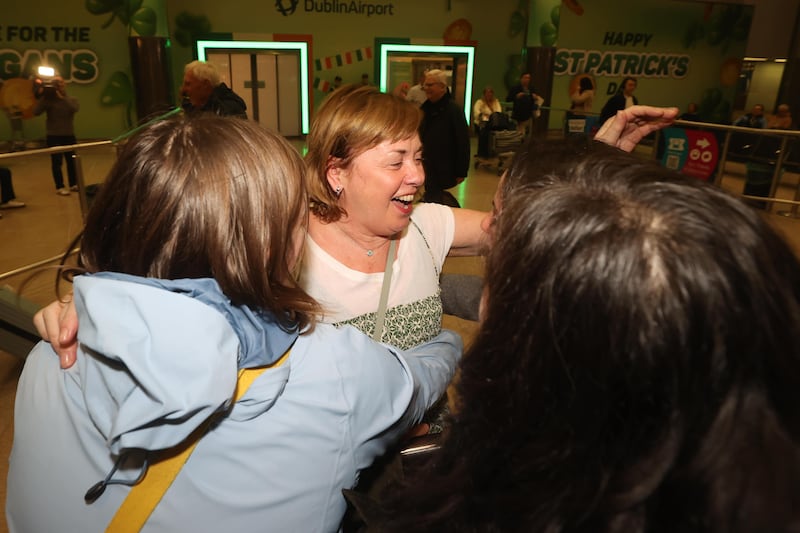 Colette Cummins is greeted as she arrives at Dublin Airport on a flight from Dubai on Thursday. Photograph: Liam McBurney/PA
Late this week, there was a hope in Government that those who wanted would be able to leave – not easily, but eventually. The big concern that remains is if the United Arab Emirates hits back at Iran.
“That’s the worrying thing,” says a source in the Department of Foreign Affairs. “How long will these countries put up with this level of missile attack without retaliation?”
An escalation could knock back evacuation efforts.
The conflict has upended plans everywhere.
“The whole idea of this term [in Government] is to hunker down,” laments one Cabinet minister in Dublin.
The Government doesn’t want to be grappling with international crises but tackling chronic domestic problems that are undermining its popularity. But it has little choice.
The week opened with sustained pressure on the Government to condemn the US-Israeli assault as a violation of international law.
Like many western governments, it has struggled to adapt to a White House at odds with the norms of diplomacy and international relations. But unlike many governments, it has an economy closely coupled to US foreign direct investment and a St Patrick’s Day appointment in the Oval Office coming up.
Ministers argue privately that while there are deep misgivings and concern about the attack, Ireland has to “box clever” on its national interests.
That is unlikely to satisfy those who want Taoiseach Micheál Martin to take a firm line with US president Donald Trump. The opposition piled in on the question in the Dáil on Tuesday, pelting Martin with charges that he was preparing to “genuflect” before the man destabilising the world.
Observers noted that during their meeting with Trump last year, Martin and his team looked visibly on edge. That nervous energy is unlikely to abate for this year’s visit.
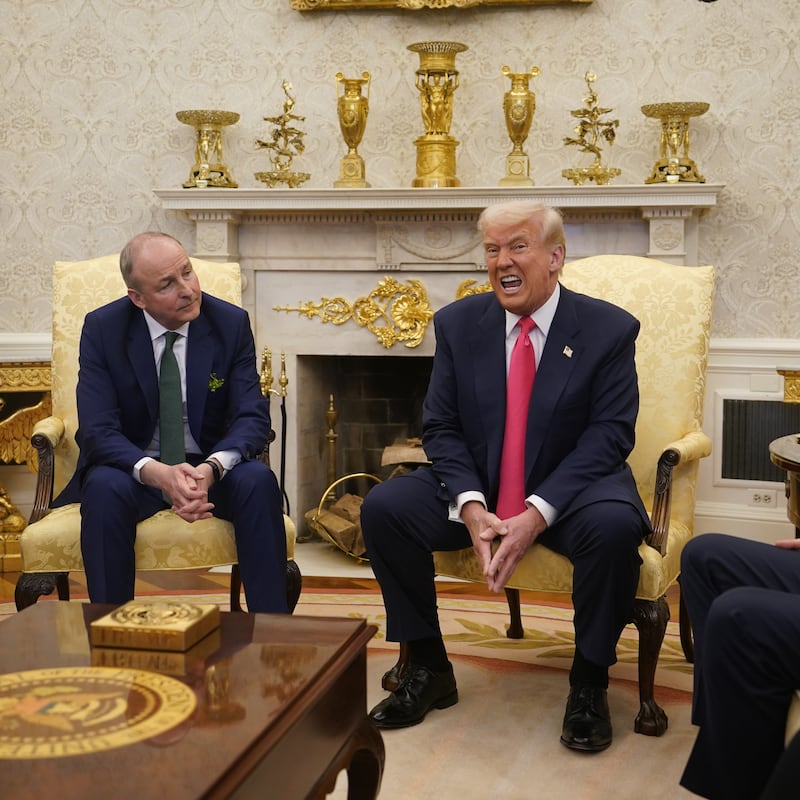 Taoiseach Micheál Martin with US president Donald Trump in the White House during last year’s St Patrick’s Day visit. Photograph: Niall Carson/PA
As war in the Middle East continued this week, pressure grew over the cost of living, with an unrelenting focus on the fast-climbing price of home heating oil and motor fuel.
This was already tagged as a risk on Monday, when Government leaders and senior ministers met as the Cabinet committee on the economy, trade and competitiveness. Also in the room was the State’s consumer watchdog, the Competition and Consumer Protection Commission (CCPC).
The agency was left in no doubt about what the political system expected, sources at the meeting say.
“We met with the CCPC and we told them: ‘Get on top of energy fast’,” says one person present. If there was any room for doubt, this was rammed home by Minister for Enterprise Peter Burke directing them to look into the retail energy market.
The growing nervousness in Government can be charted by the change in language across the week; Burke initially announced it as a “review” – 24 hours later, it was upgraded to an instruction to “urgently investigate” the issue.
It is also telling that the CCPC was instructed to conduct the review rather than deciding to conduct it itself.
[ Cost of home-heating oil rises 60% in a week, but where is the money going?Opens in new window ]
Burke, meanwhile, hauled the energy lobby in for a dressing down on Friday.
The Taoiseach and Ministers encouraged the idea that price gouging was afoot. Fuel companies protested that their members operate a “just in time” model that leaves them vulnerable to climbing oil prices and surging demand from nervous consumers.
Tough talk from politicians buys time but if turmoil in the Gulf results in persistently higher prices, it only gets the Coalition so far. The Government’s powers to bring down prices are limited. The opposition knows this and is looking to drive this point home to an electorate weary from cost-of-living pressures.
Beyond initial price hikes, the threat of a persistent inflation shock lingers.
“It might just be a season of high petrol, diesel and home-heating-oil costs,” says ESRI energy economics researcher Muireann Lynch.
But if gas prices remain high, like after the Ukraine invasion, that will hit the price of electricity, which goes on to household bills – and just about everything else in the economy. After two to three months, Lynch says, “we’re right back to where we were a few years ago – only from a higher base, of course”.
There is a hope in Government that some sort of endgame in the crisis will calm market jitters. One figure points to upheaval after the October 7th Hamas attacks which dissipated even as violence raged in Gaza. They also point to Trump’s climbdown on Greenland and a seasonal stroke of luck: with spring, this is likely to be the last fill of home heating oil for many households, while utility bills will drop.
But the Gulf is a fulcrum for global energy markets, and bombs never rained down on Greenland.
A Coalition insider expressed concern about the conflict becoming “entrenched” and the attacks continuing into June or July – “that’s the problem”.
Another senior Government figure privately outlined that the impact on costs could be worse than Ukraine, though this is not a universally held view within the Coalition. A third source summed up both the uncertainty and the potential risk: “[It] could be wrapped up this time next week, or it could be bigger than Ukraine and the inflation crisis it caused.”
The Coalition hasn’t had to wait long for calls for more spending, with the Opposition hammering it on electricity credits, while interest groups – from hauliers to farmers – are making their case on fuel and fertiliser costs already.
The Covid-era doctrine that the State would provide a backstop to hard-pressed households has been replaced by a new Government dogma that seeks, at all costs, to avoid tax and spending decisions outside of budget day.
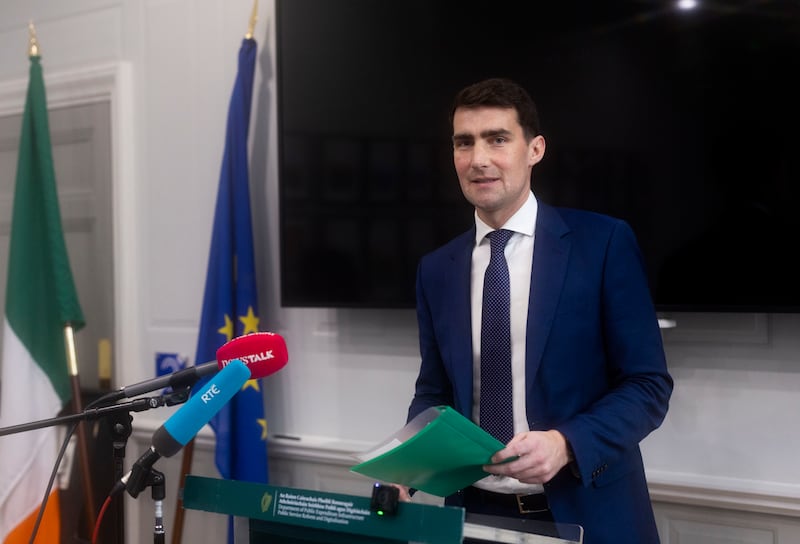 Minister for Public Expenditure Jack Chambers. Ministers baulk at the idea of universal cost-of-living payments. Photograph: Sam Boal/Collins Photos
Unsurprisingly, Minister for Public Expenditure Jack Chambers has been to the fore in pushing back against calls for more spending. The Taoiseach and Tánaiste have been more guarded; Simon Harris told the Dáil everything was under review.
Ministers baulk at the idea of universal cost-of-living payments, which seem to be firmly off the table, but privately the Government knows a second big inflation shock in five years would have a profound impact.
With wages rising, and the weather in its favour, the Coalition believes it has time to see how the situation develops before considering interventions.
Thousands of miles away, phones in Dubai lit up on Thursday evening, flashing another warning of a potential missile threat.
The WhatsApp thread used by stranded Irish citizens was flooded with people advising each other to retreat to basements, to stay away from windows or even to go to golf courses as “open spaces [are] better than buildings”. Some sent messages saying they were hiding in bathrooms.
Milan Kalita, meanwhile, is plotting a return via Manchester. At home, the threat of missiles will be far away, but politically, the shock waves from the Gulf may still be palpable.