
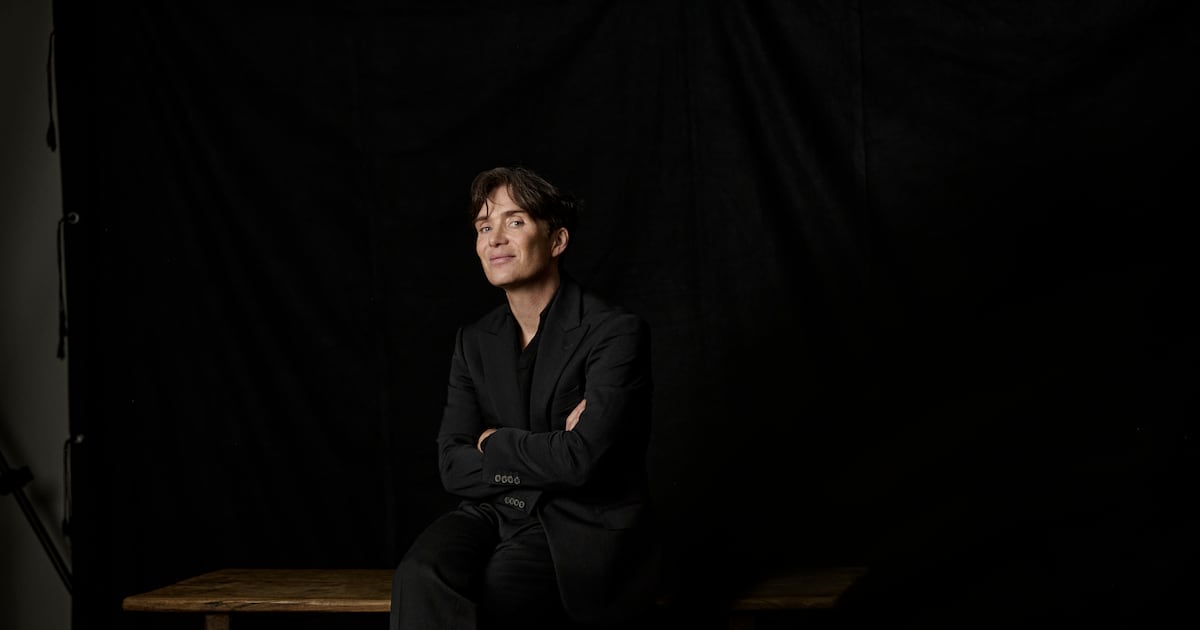
I am in a hotel room in London, watching Cillian Murphy and Antony Genn nerding out over music. Genn will recall some shared musical moment and Murphy’s eyes will widen and he’ll go, “Oh yeah!” At one point Murphy turns to face him and curls his legs up under him in the chair.
They could be the members of an ageing indie band. Both are dressed all in black. Genn, scruffier, straggly haired and tattooed, could be the louche guitar player. Murphy, neater, with those cheekbones and that intense stare, could be the charismatic singer.
Genn was once in indie bands: The Hours, Joe Strummer and the Mescaleros, Pulp (when he was just 16). Murphy is in what sound like indie bands – Oppenheimer, Disco Pigs, Steve – but are actually films.
The duo are, in fact, discussing Peaky Blinders: The Immortal Man (which also sounds like a band and their album), in which Murphy stars, once again, as the early-20th-century Birmingham gang lord Tommy Shelby and for which Genn and his writing partner, Martin Slattery, wrote and arranged eerie drones, mournful piano and growling garage-band riffs and marshalled a panoply of musical guests.
There’s significant input from the Irish band Fontaines DC but also from Amy Taylor of Amyl and the Sniffers, Nick Cave (of course) and a beautiful new version of Lankum’s Hunting the Wren, featuring the Fontaines’ Grian Chatten.
They were all at the film’s premiere the night before in Birmingham. Genn went to the pub afterwards with Lankum.
The film sees an older, haunted Shelby trying to save the soul of his violent son, Duke – played by Barry Keoghan – in a conflict with Nazis and home-grown British fascists.
Steven Knight, who created the Peaky Blinders TV series and has written the film, “had always had in his head, even when we were shooting series one – when we didn’t even know it was going to get recommissioned – that he wanted to end it in the second World War,” Murphy says. “And he always wanted that Tommy’s real values as a human being would be revealed.”
Murphy has been a producer of Peaky Blinders since the fourth series, which means he’s intimately involved with the soundtrack. He once told me that musicians had more influence on his career choices than other actors. Why?
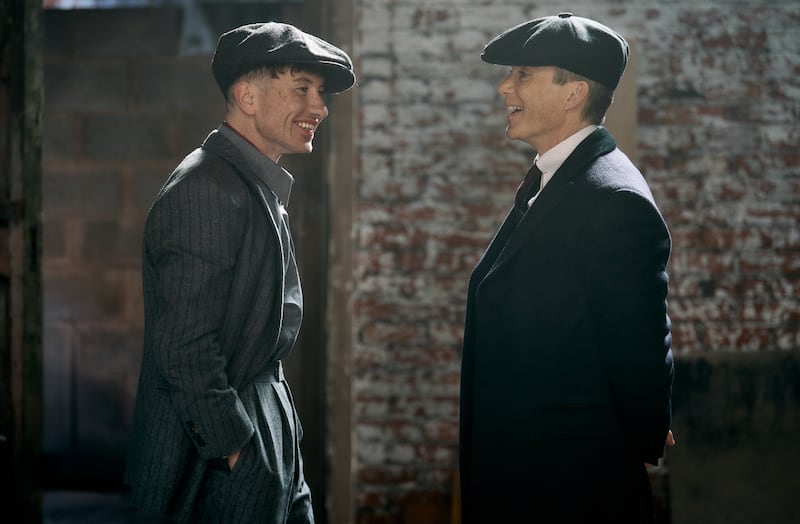 Barry Keoghan and Cillian Murphy in Peaky Blinders: The Immortal Man. Photograph: Netflix/Robert Viglasky
“It’s because that’s what I wanted to do forever. And then it segued into theatre. And then I went into film. But [music is] what I’ve always wanted to do. And the people that have had a huge impact on me in terms of how to be in the world as an artist are definitely musicians,” he says. “How to exist, how to tell the truth, how to be yourself, how to make original work: all of that has always come through musicians.
“Great musicians are creating something completely original. My job is interpretative … I’m not complaining, because I follow great writing and I’ve been lucky to work with amazing writers. You take this already-created piece of work and then you give to it, and you add to it … It’s extremely collaborative, but ultimately you are kind of [a] brick in the wall; you’re an instrument for [directors] to create their vision.
“Great musicians have created this piece of music and then put words to it and put it into the world. And it changes people. That’s something I really admire.”
Given that he works with writers like Max Porter, whose writing is often like verse, and now with singers like Chatten and Cave, whose delivery can be very close to spoken word, does Murphy really think he’s so different? He laughs.
“Beckett said once, when someone asked him about a play, it’s not about meaning, it’s about rhythm, which I think is f**king amazing, because you can say something over and over again and it completely loses meaning.
“When you hit a rhythm, particularly with another actor or with singers, it just unlocks things. When I was doing Grief Is the Thing with Feathers with Max, sometimes it was magic, because something completely different would happen with the words.”
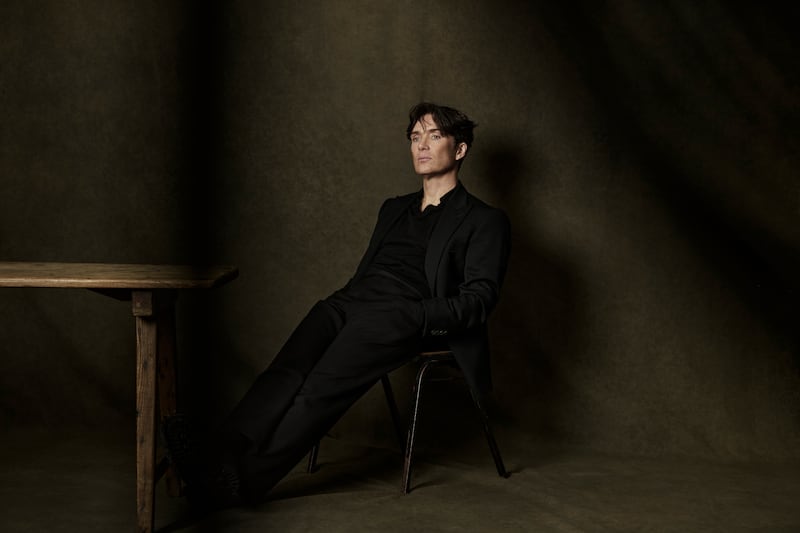 Cillian Murphy, star of Peaky Blinders: The Immortal Man. Photograph: Boo George/Netflix
Genn and Murphy have been friends for about 20 years. “We met in a pub in Camden with Alan Moloney” – Murphy’s production partner – “around the time that you’d done Breakfast on Pluto,” Genn says. “It’s funny, because I remember dropping you off at your flat, and I now drop your kids off – and they weren’t even born then. Yvonne” – McGuinness, Murphy’s wife – “was pretty pregnant at that point.”
Why did they bond? “We were just both music nuts,” Genn says. “I think we bonded over that. There aren’t many people that feel music very deeply. I am one of them and he is one of them, being inspired by music in all forms of art.”
Genn had worked on the music back on series four of Peaky Blinders. Why did he and Slattery return for the film? Genn explains that they’d been doing some work, for fun, with Tom Coll and Carlos O’Connell of Fontaines DC.
“I heard they were doing a film, and I just thought, surely we should be getting involved and the Fontaines should be involved. I just called you up and you were, like, ‘But of course’.”
Why did Murphy instantly say, “But of course”? “Some stuff is Peaky and some stuff isn’t, musically,” the actor replies. “You audition stuff to picture, and sometimes it clicks and sometimes it doesn’t. People have always asked us, ‘Why? What is it?’ It’s easier to list the artists that do work, like Nick, like PJ Harvey, like Radiohead; Leonard Cohen worked. Others are brilliant artists, but it doesn’t work.
“I felt like the Fontaines would be f**king amazing, but the idea of it being original music that these lads would do together, as opposed to stuff from their records, that was incredibly exciting to me.
“They were just putting out Romance, and we went to see the launch of the album down in Camden – me and Tom Harper, the director, and my son Aran – and it was f**king unbelievable. It was like every track was written for the film.”
Peaky Blinders seems to foreground hugely distinctive voices – Chatten, Radie Peat of Lankum, Cave – whereas other properties prefer something less characterful and more ethereal that sit in the background.
“I never really thought about that,” Murphy says. Peaky Blinders is “so anachronistic, so stylised, so writ large, maybe it can take it”.
“It was interesting watching it last night,” Genn says. “When those big voices come in, it’s pretty powerful.”
“Oh man,” Murphy says, his face lighting up. “I was sitting there with [Chatten’s] cover of Angel [by Massive Attack], and the vocal was moving across from speaker to speaker.”
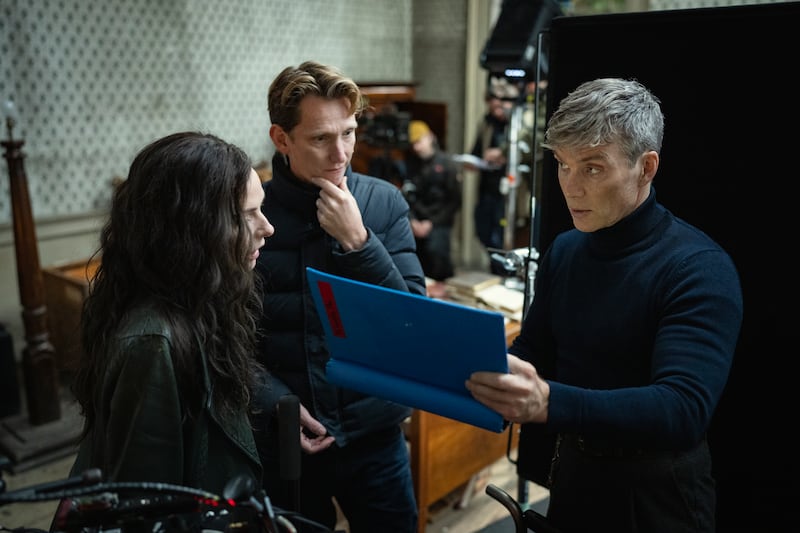 Rebecca Ferguson (Kaulo/Zelda), director Tom Harper and Cillian Murphy (Tommy Shelby) on the set. Photograph: Robert Viglasky/Netflix
The soundtrack also reinforces the underlying Irishness of Peaky Blinders. That has always been there, according to Murphy. “Lisa O’Neill did that Dylan song” – All the Tired Horses, at the end of series six – and it was “one of the greatest moments we had. Colm McCarthy directed series two. Anthony Byrne directed series five and series six. We’ve had some incredible Irish actors in there. And Steve Knight did write a lot of [Irish] politics into it”.
[ Cillian Murphy and Yvonne McGuinness buy historic Dingle cinemaOpens in new window ]
“I was adamant that we cast great Irish actors, because there is such a great pool and it would be insane to not … I’m quite proud of the Irishness of it,” Murphy says.
Genn adds: “The other Massive Attack cover, Teardrop, which is sung by a Cornish girl, three of the people in that band” – Girl in the Year Above – “are Irish as well. They grew up in Skerries.”
“Really?” Murphy says.
Lankum and Fontaines DC, along with other Irish musicians, like CMAT and Kneecap, are all politically outspoken in a way that isn’t so evident with musicians from other countries. Why do they think that is?
“God, that’s a big question,” Murphy says. “For me, it’s completely authentic and absolutely fully realised and [about a] deeply held belief. There’s a long tradition of that in Ireland, obviously, and it feels completely natural for [political] positions to be held by those artists in such an honest way.”
When does Murphy get involved in the music? “We talk to each other all the time about it,” Genn says. “By the time they were cutting, I think we had written fiftysomething pieces already. And, fortunately, I think that all the people we got involved with us trust us. So we can throw some s**t at the wall and they will know we will craft that and will take good care of those ideas and build on them.
“They’re all different, but there is a gravitas to them when they open their mouths. And that’s from Grian to Radie to Amy [Taylor, from Amyl and the Sniffers] to Jenny [Ball, from Girl in the Year Above] when she sings Teardrop.”
I thought, I can’t believe I’m actually doing this. I can’t believe David Bowie has watched Peaky Blinders.
— Cillian Murphy
He shakes his head. “When that came on last night…”
“Oh man,” Murphy says with wonder.
“We’d written a piece of music for that scene,” Genn says. “It kind of worked, but it was pretty sad. And you were, like, ‘It’s too sad’.
“I’m not saying we’re telepathically connected, but I had this idea to do Teardrop, and you sent me a voice note that said, ‘What I think it should be is just a really beautiful, pure song.’ And then I sent it to you. You called me, and you were, like, ‘Who is that singing?’ And I was, like, ‘Honestly, it’s this hairdresser I met’.”
Murphy laughs. “This is true.”
Ball “started showing stuff on her Instagram of her singing”, Genn says. “And I brought her in and she was so powerful. But it’s so funny that he’d said that to me that night. It was almost like he’d literally said, ‘You should do a really pure cover of Teardrop’.”
“Why didn’t you just f**king say that for the story?” Murphy responds, and they both laugh.
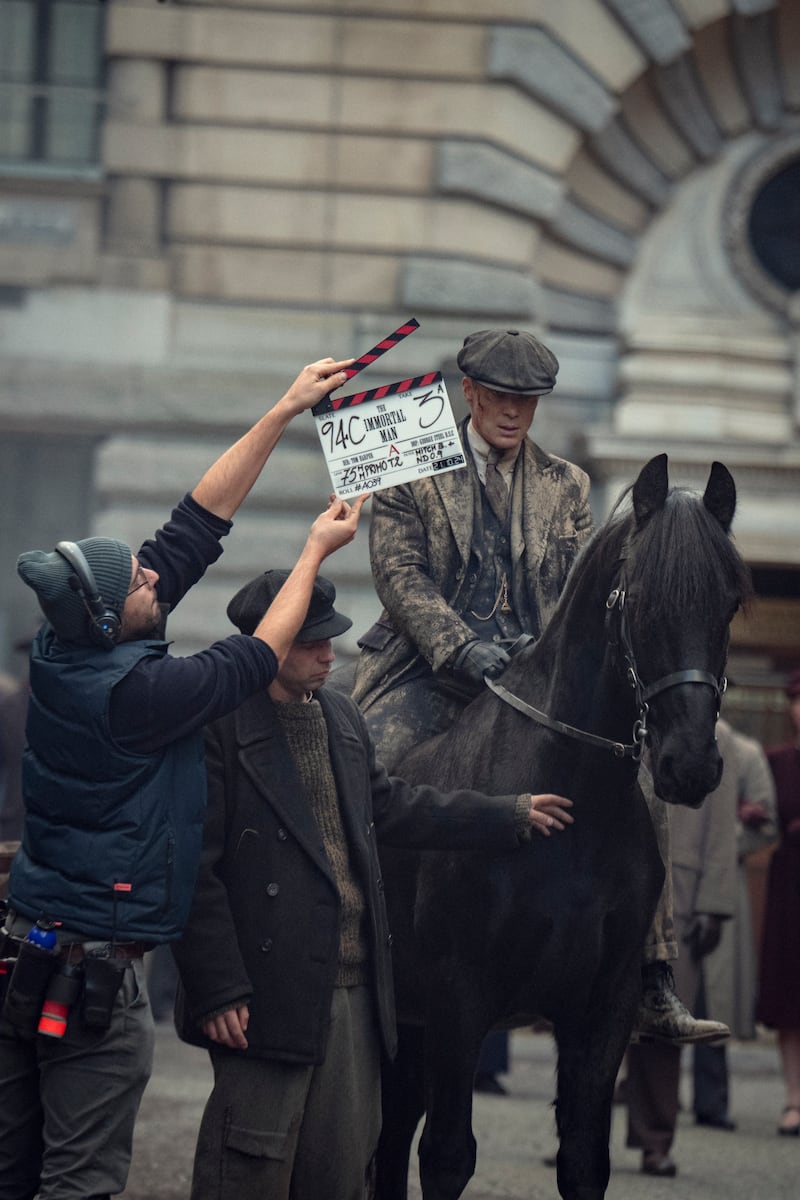 Cillian Murphy as Tommy Shelby on the set of Peaky Blinders: The Immortal Man. Photograph: Robert Viglasky/Netflix
In the film Nick Cave sings on a much mellower, sadder version of the Peaky Blinders theme song, Red Right Hand. “Whatever it was about that first version, when it appeared at the beginning of series one, Tommy is a young man,” Murphy says. “But it doesn’t work at this later stage in his life.”
Genn adds, “I said to Cillian, ‘You should call Nick and ask him to do a new version.’ Cillian called me when they sent the track. I’m in a field at Glastonbury,” – he mimes taking a call with a finger in the other ear – “and he goes, ‘Have you heard the track?’.” He laughs. “Then I was listening on the phone in the field.”
Grian Chatten is all over the soundtrack. “He was the glue,” Genn says. “Tom [Harper] kept calling him our spiritual narrator.”
He recalls a day when Chatten arrived as they were struggling with a sequence. He started typing into his phone and was, moments later, singing. “The whole process of seeing him writing it and singing ‘Life is but a dream’ took about eight minutes. It would have been five if the computer had booted up faster.”
“It’s like a Bond theme,” Murphy says.
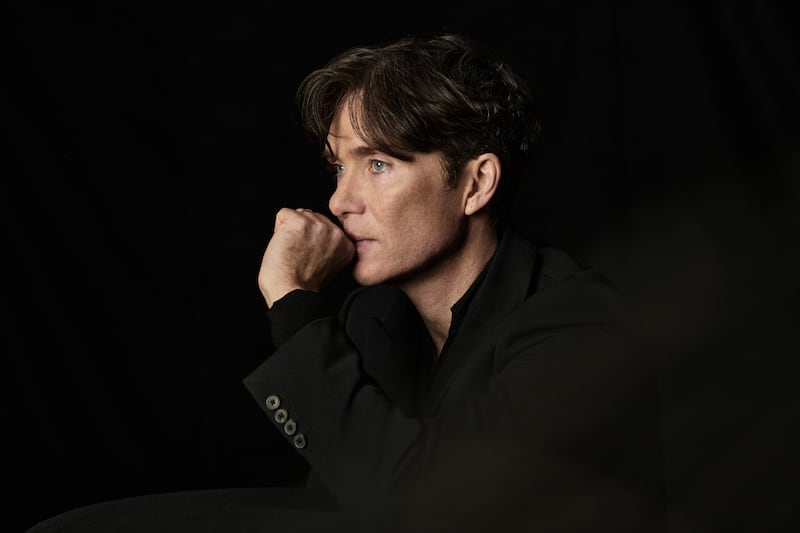 Cillian Murphy, star of Peaky Blinders: The Immortal Man. Photograph: Boo George/Netflix
Is the actor ever tempted to sing on tracks himself? “No,” he says, very quickly, and kind of joyfully. He almost shouts it. Why would you, he asks, “when you have Grian Chatten and Nick Cave?”.
It helps, Murphy adds, that musicians love the show. “In series two Flood did the music. He produced PJ Harvey, and he took all of her songs and kind of excavated them and rebuilt them and went back to all of the early demos,” Murphy says.
“On series three David Bowie gave us Blackstar. I was lucky enough to work with him briefly. I did a workshop with him and Enda Walsh in New York for a play [Lazarus]. I didn’t end up in the play, but I worked with him for a week,” he says.
What was that like? Murphy sighs. “It was one of the greatest weeks of my life,” he says. “I haven’t really talked about it a bunch, because it’s kind of a private experience. But I gave him the hat from series one, because he loved [Peaky Blinders], and he sent me back a picture of him in the hat.”
He shakes his head.
“I thought, I can’t believe I’m actually doing this. I can’t believe David Bowie has watched Peaky Blinders.”
Peaky Blinders: The Immortal Man is in cinemas now and on Netflix from Friday, March 20th. The soundtrack is released by RCA Records