
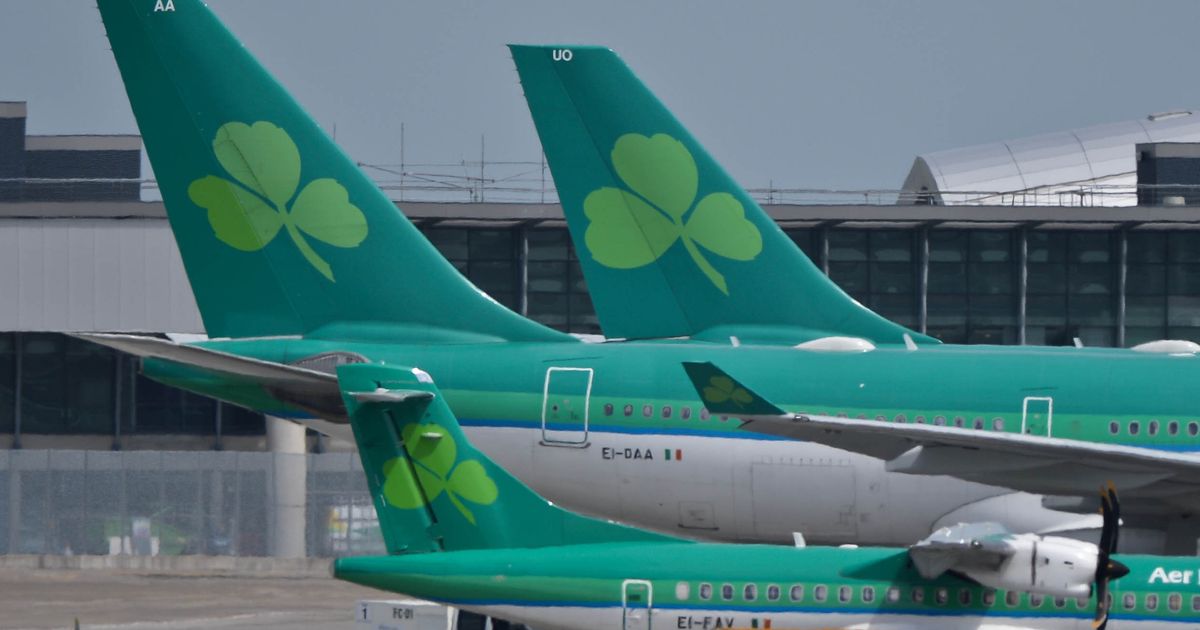
Oisín Moran posted his annoyance on X, formerly Twitter, after attempting to book a flight with the Irish airline, only for the online booking system to refuse to accept his name
Ian Craig Social Newsdesk Content Editor
12:28, 06 Mar 2026Updated 12:35, 06 Mar 2026
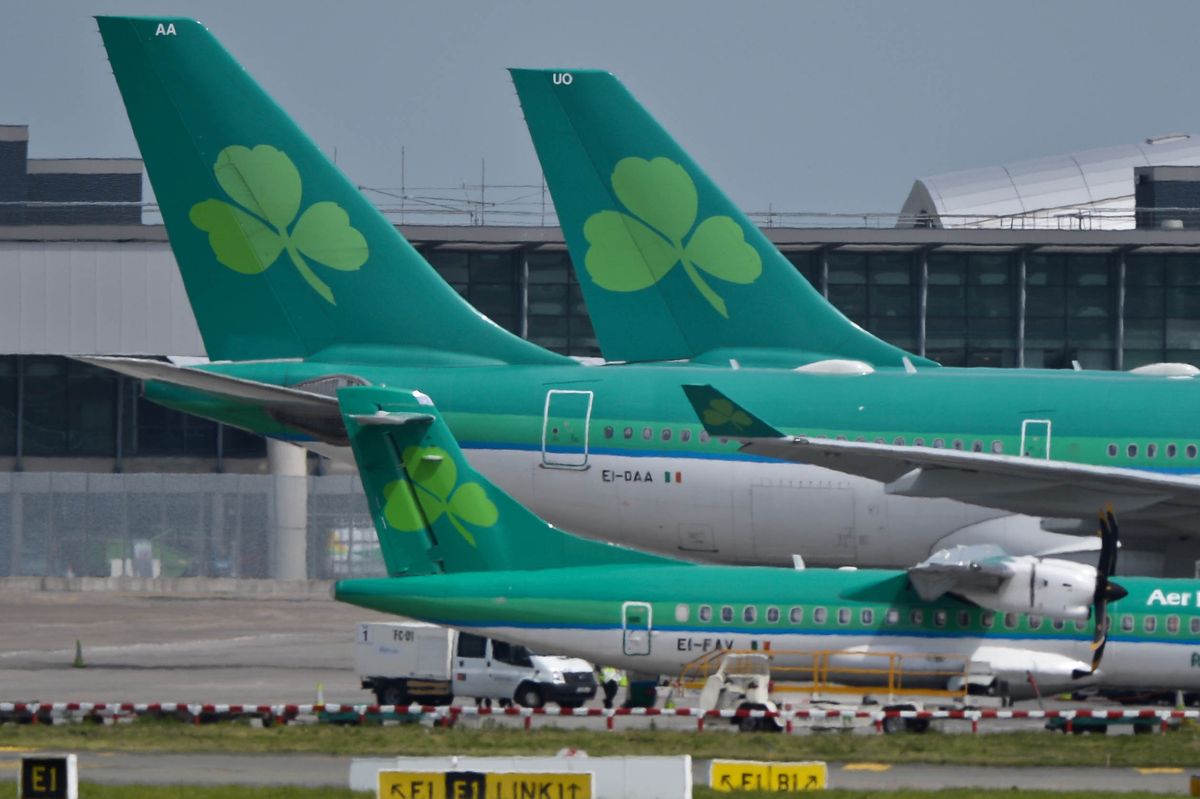
Aer Lingus is the flag carrier of the Republic of Ireland, meaning it is the airline picked to represent the country in global aviation (stock image)(Image: PA)
An Irishman was left shocked after discovering his specifically Irish first name wasn’t accepted while booking a flight with an Ireland-based airline. Dublin-based Oisín Moran posted his annoyance on X, formerly Twitter, after attempting to book a flight with Aer Lingus, only for the online booking system to refuse to accept his name.
He posted a screenshot of the First Name field in the booking form, filled out with his name, which was highlighted in red with a exclamation mark, indicating the information entered was not valid. It also displayed the message: “First Name may only contain letters, spaces, apostrophes, and hyphens. First Name must begin and end with a letter.”
Along with the image he posted the message: “My Irish name apparently invalid on Ireland’s flag carrier airline,” followed by the username of AerLingus‘ X account and a thumbs down emoji.
It appears Oisín’s name was not accepted due to the mark – or diacritic – above the second i in his name. This is called a síneadh fada, or simply a fada, as explained by Irish language and culture website Bitesize Irish. Unique to Irish Gaelic, it indicates the letter is a long-vowel, meaning an í is pronounced “ee” rather than the more common “ih” sound. Therefore Oisín is pronounced “Osh-een”, not “Oh-shin”.
A flag carrier is an airline which represents a specific country in global aviation. Although these airlines are usually privately rather than publicly-owned, they enjoy special privileges, such as government support. Other examples include British Airways for the UK, and Lufthansa for Germany, according to aviation website Simple Flying.
Content cannot be displayed without consent
One person suggested a possible reason for the problem. They wrote: “IATA (international airline agency) restrictions require passenger names to be in Latin characters, with all diacritics/accents/etc removed, and no symbols (no hyphens in last names, no O’, etc).”
Replying, Oisín said: “That’s not very international of them! My point still stands that Aer Lingus could store my name as is and then report whatever normalised version they need to. That would probably end up being more consistent too as the normalisation would be programmatic.”
An Aer Lingus spokesperson said: “The Aer Lingus booking system, Astral, does not currently facilitate the use of special characters, as it was developed in the late 60s on a platform which does not cater for fadas or other special characters. We recognise the limitations of the system with respect to accepting special characters and apologise to customers for any inconvenience caused.
“This technical limitation does not impact a customer’s ability to travel with Aer Lingus, and passengers can fly without issue even where special characters cannot be reflected in the booking. As part of future systems development, we are considering implementing reasonable steps to address this issue.”
Someone else wrote: “If his name has a fada in it his name has a f****** fada! Oisín is pronounced different to what Oisin would be, for Aer Lingus to not accept the name on his passport is f****** disgraceful.”
And another said: “In this day and age, it’s ridiculous that diacritics aren’t accepted especially if your given name is supposed to match your passport. We only have fadas in Irish names but loads of others have different letters e.g. Zoë, Gisèle, Joǎo.”
Explaining more about the fada, Bitesize Irish said: “Diacritic marks aren’t just there for decoration. They supply a lot of information about the word in question, including how certain letters should be pronounced and often which syllables should be emphasised.
“In most languages that use them, a letter with a diacritic mark is considered to be a different letter from its unmarked equivalent, and words that are supposed to have diacritic marks and don’t are considered to be misspelled. Also, in many languages (and Irish is one), sometimes the only difference between one word and another is the presence and placement of that little mark!”
When using a standard European keyboard a fada can be produced by holding the Alt Gr key and typing the letter in question.