

GDP growth in the euro area and the EU
In the fourth quarter of 2025, seasonally adjusted GDP increased by 0.2% in both the euro area and the EU, compared with the previous quarter, according to an estimate published by Eurostat, the statistical office of the European Union. In the third quarter of 2025, GDP had increased by 0.3% in the euro area and by 0.4% in the EU.
For the year 2025 as a whole, GDP increased by 1.4% in the euro area and by 1.5% in the EU, after +0.9% in the euro area and +1.1% in the EU.
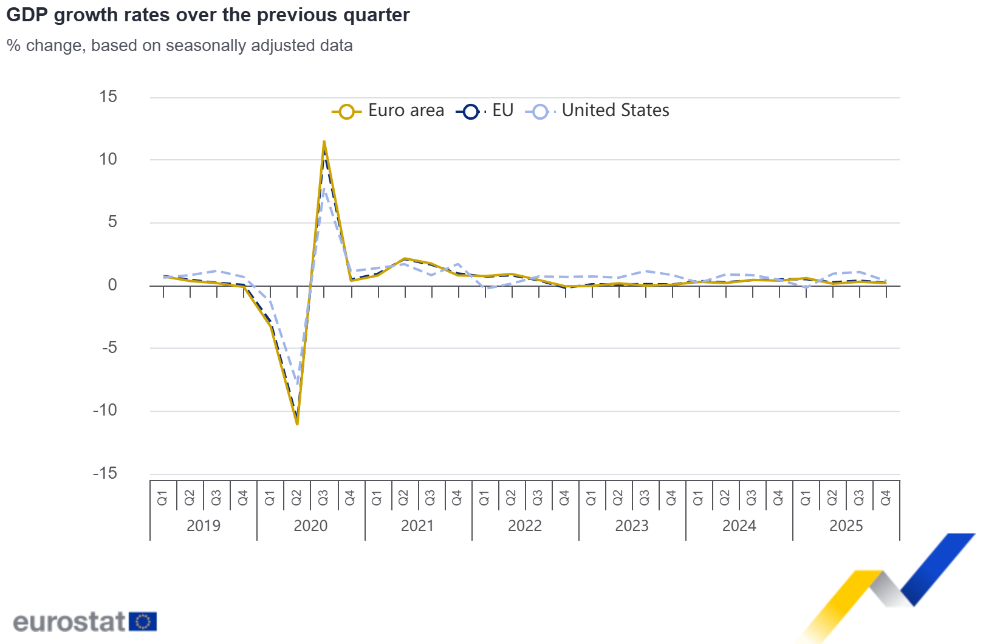
Compared with the same quarter of the previous year, seasonally adjusted GDP increased by 1.2% in the euro area and by 1.4% in the EU in the fourth quarter of 2025, after +1.4% in the euro area and +1.7% in the EU in the previous quarter.
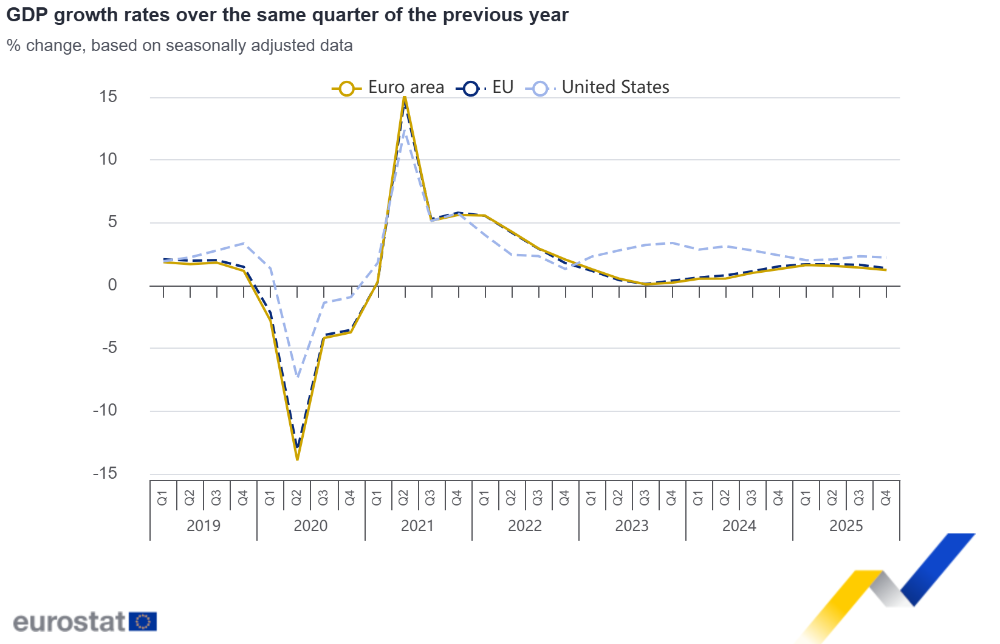
During the fourth quarter of 2025, GDP in the United States increased by 0.4% compared to the previous quarter (after +1.1% in the third quarter of 2025). Compared with the same quarter of the previous year, GDP increased by 2.2% (after +2.3% in the previous quarter).
GDP growth by Member State
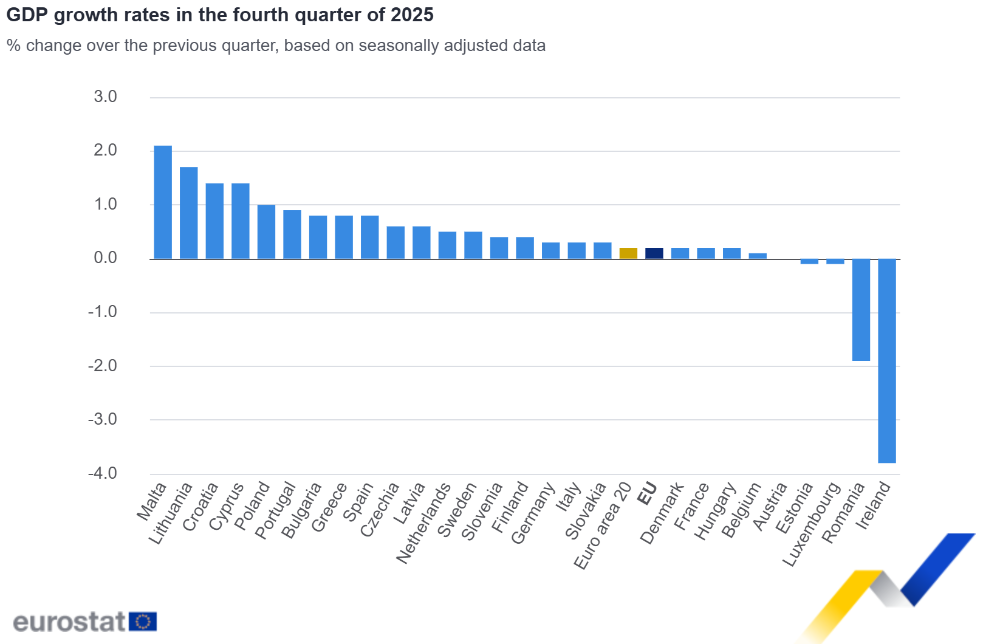
Malta (+2.1%) recorded the highest increase of GDP compared to the previous quarter, followed by Lithuania (+1.7%), Croatia and Cyprus (both +1.4%). Decreases were observed in Ireland (-3.8%), Romania (-1.9%), Estonia and Luxembourg (both -0.1%).
 GDP components and contributions to growth
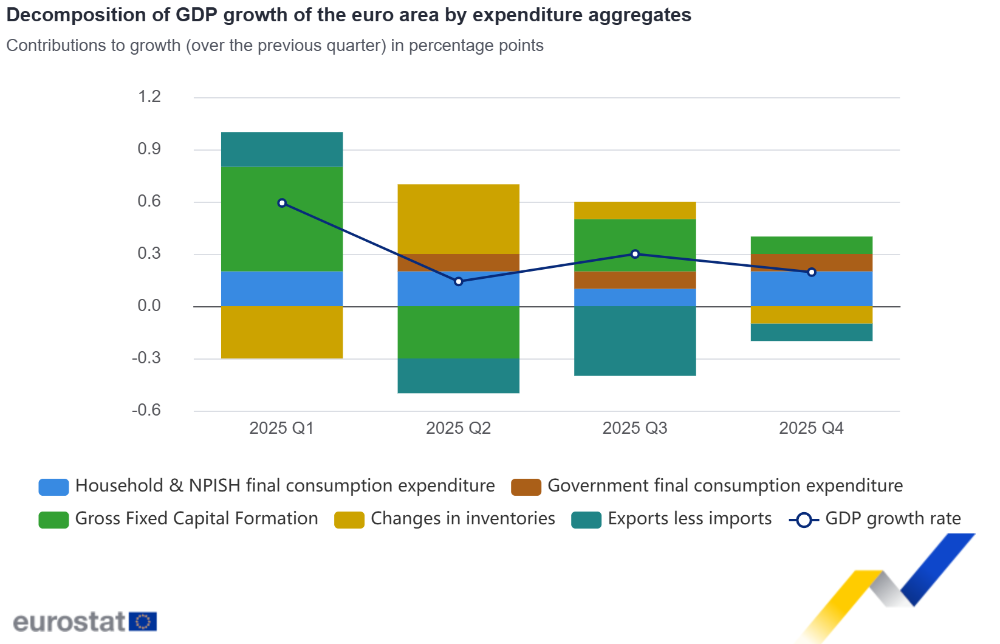
GDP components evolved in the fourth quarter of 2025 as follows:
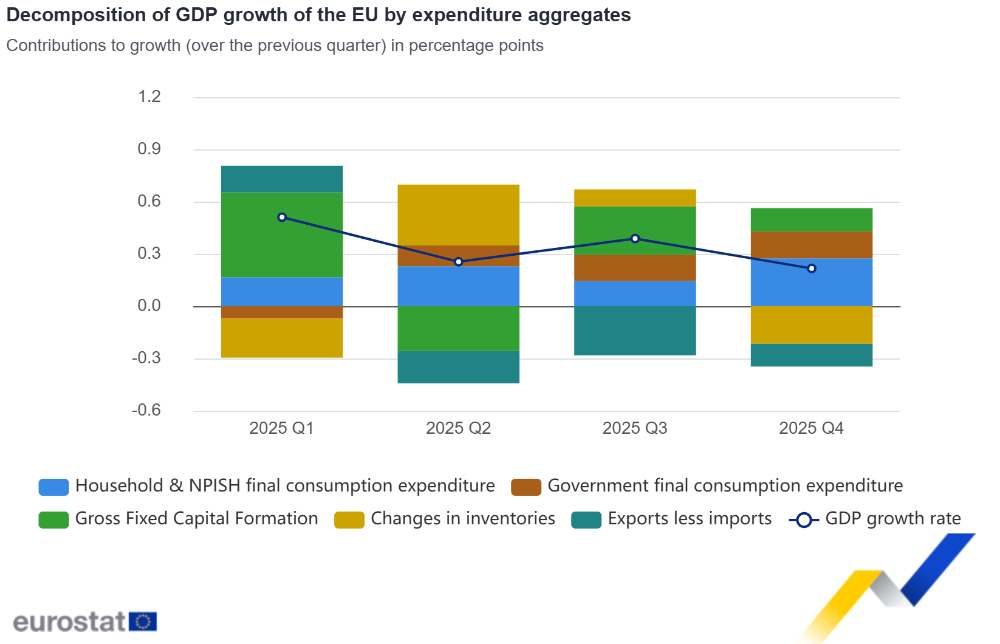
government final consumption expenditure increased by 0.5% in the euro area and by 0.7% in the EU (after +0.7% in both areas),
gross fixed capital formation increased by 0.6% both in the euro area and in the EU (after +1.3% in both areas),
The contribution to GDP growth from:
government final expenditure was positive for both the euro area (+0.1 pp) and the EU (+0.2 pp),
gross fixed capital formation was positive for both the euro area and the EU (+0.1 pp for both),
changes in inventories was negative for both the euro area (-0.1 pp) and the EU (-0.2 pp), and
exports less imports was negative for both the euro area and the EU (-0.1 pp for both).
 Employment growth in the euro area and EU
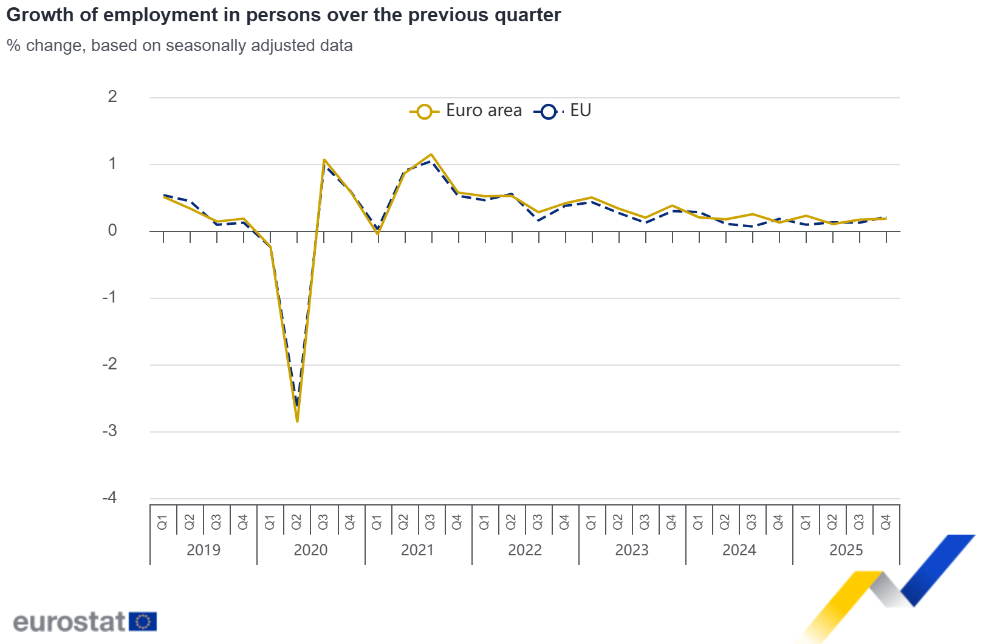
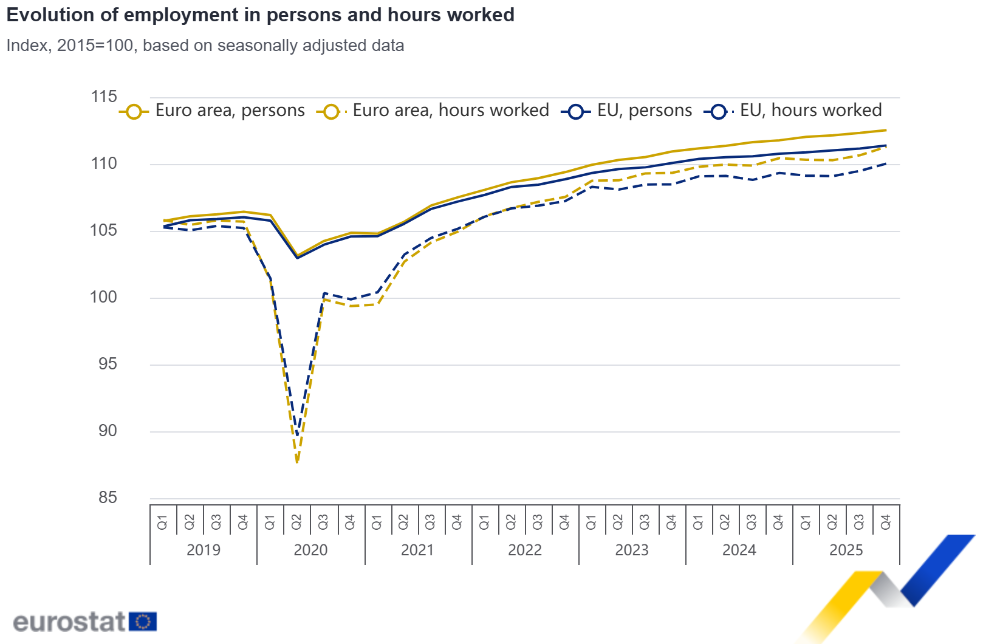
The number of employed persons increased by 0.2% in both the euro area and the EU in the fourth quarter of 2025, compared with the previous quarter. In the third quarter of 2025, employment had increased by 0.2% in the euro area and by 0.1% in the EU.
For the year 2025 as a whole, the number of persons employed increased by 0.7% in the euro area and by 0.5% in the EU, after +1.0% and +0.8% respectively in 2024.
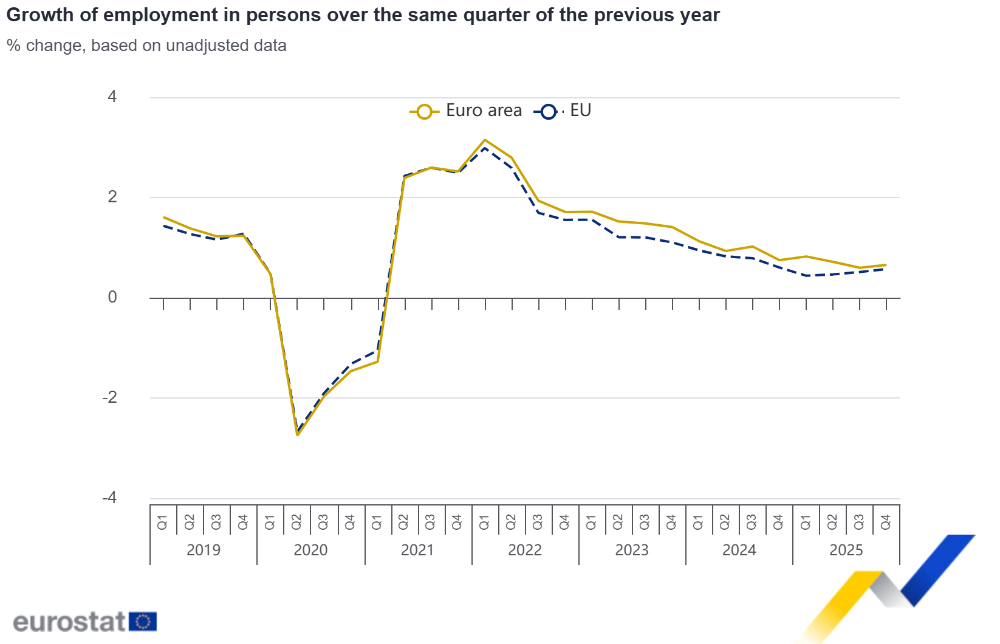
 Compared with the same quarter of the previous year, employment increased by 0.7% in the euro area and by 0.6% in the EU in the fourth quarter of 2025, after +0.6% in the euro area and +0.5% in the EU in the third quarter of 2025.
 Hours worked increased by 0.6% in the euro area and by 0.5% the EU in the fourth quarter of 2025, compared with the previous quarter. Compared with the same quarter of the previous year, hours worked increased by 0.9% in the euro area and by 0.7% in the EU.
These data provide a picture of labour input consistent with the output and income measure of national accounts.
Employment growth in Member States
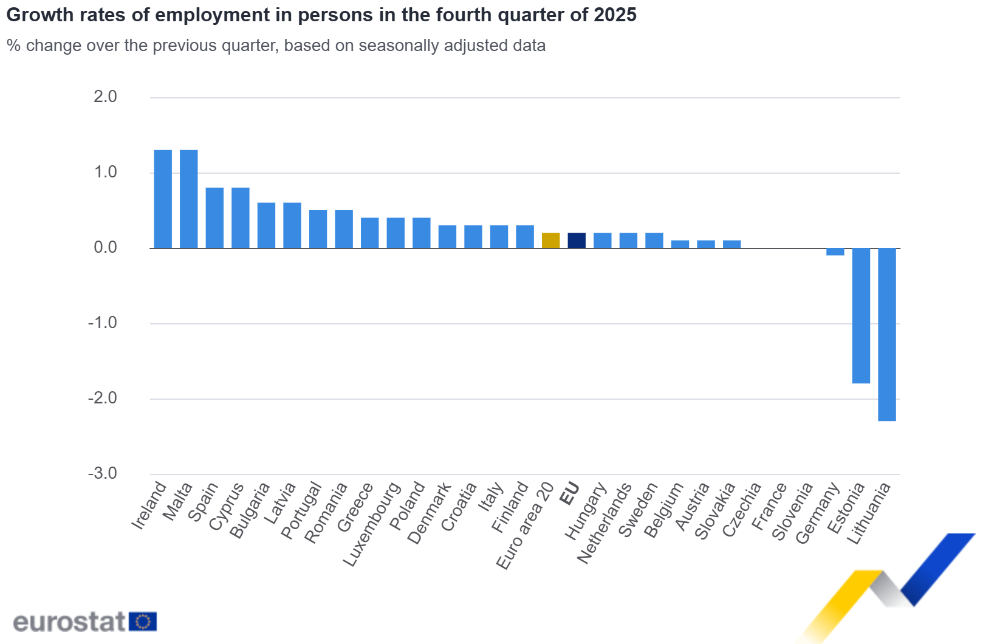
In the fourth quarter of 2025, Ireland, Malta (both +1.3%), Spain and Cyprus (both +0.8%) recorded the highest growth of employment in persons compared with the previous quarter. Declines of employment were recorded in Lithuania (-2.3%), Estonia (-1.8%) and Germany (-0.1%).
 Employment levels in the euro area and EU
Based on seasonally adjusted figures, Eurostat estimates that in the fourth quarter of 2025, 221.1 million people were employed in the EU, of which 172.6 million were in the euro area.
 Evolution of labour productivity in the euro area and EU
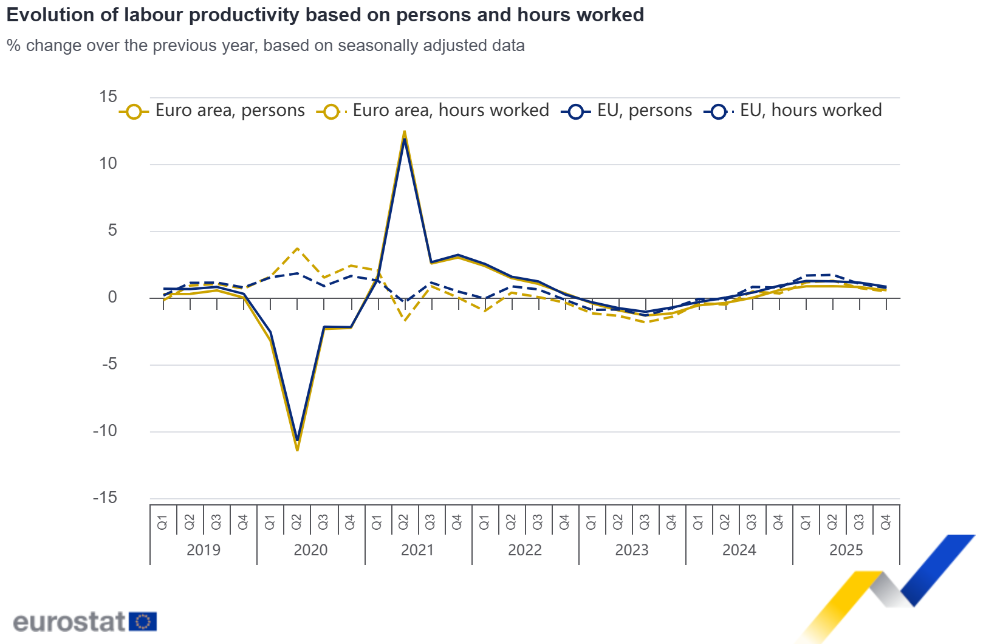
The combination of GDP and employment data allows an estimation of labour productivity.
In the fourth quarter of 2025, productivity based on persons increased by 0.6% in the euro area and by 0.8% in the EU compared to the same quarter of the previous year.
Based on hours worked, productivity compared with the same quarter of the previous year increased by 0.5% in the euro area and by 0.7% in the EU.
Tables
Growth rates of GDP in volume
(based on seasonally adjusted* data)
Percentage change compared with the previous quarter
Percentage change compared with the same quarter of the previous year
2025Q1
2025Q2
2025Q3
2025Q4
2025Q1
2025Q2
2025Q3
2025Q4
0.6
0.1
0.3
0.2
1.6
1.6
1.4
1.2
0.6
0.1
0.3
0.2
1.6
1.6
1.4
1.2
0.5
0.3
0.4
0.2
1.7
1.7
1.7
1.4
0.4
0.2
0.3
0.1
0.9
1.0
1.0
1.0
0.6
0.9
0.7
0.8
3.5
3.3
3.1
3.0
0.7
0.5
0.8
0.6
2.4
2.6
2.8
2.6
-0.9
1.3
2.3
0.2
2.6
2.0
3.9
3.0
0.4
-0.2
0.0
0.3
0.3
0.4
0.3
0.4
0.1
0.7
0.1
-0.1
-0.4
0.7
1.0
0.8
7.7
-0.6
0.0
-3.8
18.4
18.1
11.1
3.0
0.4
0.5
0.7
0.8
2.4
1.7
2.1
2.4
0.5
0.7
0.6
0.8
3.0
2.8
2.7
2.6
0.1
0.3
0.5
0.2
0.7
0.8
1.0
1.2
0.5
0.9
0.4
1.4
3.5
3.3
2.6
3.3
0.3
0.0
0.2
0.3
0.7
0.5
0.7
0.8
1.3
0.8
0.9
1.4
3.3
3.6
3.6
4.5
0.7
0.4
0.8
0.6
1.9
1.7
2.3
2.5
0.4
0.7
0.3
1.7
3.0
3.2
2.1
3.1
0.6
0.6
1.2
-0.1
-2.4
-0.6
3.2
2.4
-0.2
0.5
0.0
0.2
-0.3
0.3
0.7
0.6
1.4
1.7
1.1
2.1
3.2
2.5
3.8
6.4
0.3
0.3
0.5
0.5
2.2
1.7
1.8
1.8
0.3
0.0
0.3
0.0
0.4
0.7
1.1
0.7
0.7
0.9
0.9
1.0
3.7
3.0
4.0
3.6
-0.3
0.7
0.6
0.9
1.6
1.7
2.2
1.9
-0.5
1.0
-0.1
-1.9
0.6
2.1
1.4
-1.5
-0.6
0.9
0.9
0.4
-0.5
1.0
1.8
1.6
0.1
0.2
0.3
0.3
0.8
0.7
0.9
0.9
0.0
-0.1
-0.1
0.4
0.7
0.1
-0.1
0.1
-0.3
1.0
0.8
0.5
0.4
2.3
2.6
2.1
3.1
-1.0
1.3
-0.8
2.2
-0.8
1.2
2.6
0.2
1.0
1.3
-0.3
0.3
0.1
2.2
2.2
0.7
0.1
-0.4
0.1
2.4
1.5
0.6
0.5
-0.2
0.9
1.1
0.4
2.0
2.1
2.3
2.2
Growth rates of employment in persons*
Percentage change compared with the previous quarter
Percentage change compared with the same quarter of the previous year
2025Q1
2025Q2
2025Q3
2025Q4
2025Q1
2025Q2
2025Q3
2025Q4
0.2
0.1
0.2
0.2
0.8
0.7
0.6
0.7
0.2
0.1
0.2
0.2
0.8
0.8
0.6
0.7
0.1
0.1
0.1
0.2
0.4
0.5
0.5
0.6
0.1
0.1
0.0
0.1
0.3
0.5
0.4
0.4
0.6
0.8
0.5
0.6
1.4
2.6
2.3
2.5
0.4
0.5
0.2
0.0
1.1
1.0
1.1
1.1
0.4
0.2
0.3
0.3
1.2
1.0
1.2
1.2
0.0
0.0
-0.1
-0.1
0.1
0.0
0.0
-0.1
-0.4
0.6
0.6
-1.8
-1.1
-0.9
1.0
-1.1
0.7
-0.1
0.1
1.3
3.1
2.1
0.9
1.9
0.5
-0.1
0.1
0.4
0.6
0.8
1.1
0.9
0.6
0.7
0.7
0.8
2.7
3.0
2.7
2.6
0.0
0.1
0.1
0.0
0.3
0.1
0.0
0.0
0.9
-0.7
1.5
0.3
2.5
0.0
1.6
1.8
0.7
-0.1
0.2
0.3
1.6
1.1
0.6
1.2
0.0
0.7
0.5
0.8
1.5
1.8
1.4
2.0
0.1
0.0
0.6
0.6
-1.6
-1.3
-0.5
1.3
0.2
-1.3
1.0
-2.3
0.8
-1.3
-0.3
-1.9
0.3
0.3
0.5
0.4
0.8
1.0
1.4
1.6
0.1
0.1
0.1
0.2
0.3
0.3
0.4
0.6
1.1
1.1
0.6
1.3
4.1
4.1
3.4
4.1
-0.1
0.1
0.1
0.2
0.6
0.6
0.3
0.3
0.0
0.0
0.0
0.1
0.1
0.0
-0.1
0.1
-0.5
0.5
0.4
0.4
-1.1
0.0
0.7
0.7
0.5
0.7
0.9
0.5
1.5
2.3
2.7
2.8
-1.8
-0.5
-1.6
0.5
-4.4
-4.4
-2.5
-2.5
-0.3
0.0
0.0
0.0
-0.6
-0.5
-0.4
-0.2
-0.1
0.1
-0.1
0.1
-0.2
0.0
-0.2
-0.2
0.0
-0.1
0.0
0.3
-0.9
-0.7
-0.7
0.3
0.0
0.1
0.0
0.2
-0.5
-0.2
-0.1
0.3
0.3
0.3
0.1
:
1.2
1.1
1.0
:
0.3
0.1
0.1
0.2
0.8
0.7
0.6
0.6
0.2
0.0
-0.1
0.0
0.7
0.6
0.4
0.1
Growth rates of employment in hours worked*
Percentage change compared with the previous quarter
Percentage change compared with the same quarter of the previous year
2025Q1
2025Q2
2025Q3
2025Q4
2025Q1
2025Q2
2025Q3
2025Q4
-0.1
0.0
0.3
0.6
0.3
-0.3
0.7
0.9
-0.1
0.0
0.3
0.6
0.3
-0.3
0.7
0.9
-0.2
0.0
0.4
0.5
-0.1
-0.6
0.6
0.7
0.5
0.0
0.2
:
0.4
0.4
0.8
:
0.4
0.5
0.5
0.5
0.1
1.0
2.2
1.5
-0.1
0.7
1.2
1.2
1.9
0.8
3.5
2.3
0.3
0.2
0.3
0.1
0.9
0.7
1.4
1.0
0.0
-0.7
-0.1
1.1
0.3
-1.1
-0.5
0.5
-1.4
2.2
1.2
-1.6
-1.7
-2.2
1.4
0.3
0.0
1.0
0.1
1.5
1.1
1.8
0.9
2.9
-1.7
1.8
-1.5
2.6
-3.1
0.3
-0.7
1.1
-0.7
0.5
1.1
1.2
2.8
0.1
2.8
2.8
-0.1
-0.1
0.1
-0.1
-0.4
-0.7
-0.7
-0.7
1.0
0.1
0.2
0.9
2.0
-1.2
0.8
2.5
0.9
-0.1
0.8
0.0
0.2
0.7
2.0
1.6
0.0
0.7
1.1
1.4
1.8
2.2
1.9
3.3
-5.4
2.6
-0.1
3.2
-4.9
-1.9
-1.0
0.0
-0.8
-0.1
0.1
0.1
1.5
-0.5
0.4
-1.0
0.1
0.3
0.5
0.4
-0.5
-0.5
1.1
2.4
-0.3
-0.3
0.9
0.1
1.3
-1.8
0.9
1.5
0.8
1.4
0.0
2.6
7.3
5.5
1.7
4.9
0.0
-0.3
0.0
-0.3
-1.1
-1.6
0.1
-0.7
-0.7
-0.5
0.3
0.7
0.6
-0.1
1.9
-0.3
-0.2
0.2
0.4
0.0
-2.0
-0.7
0.3
0.4
-0.2
0.1
1.7
0.4
1.4
0.8
3.4
1.9
-1.7
-1.0
-0.4
0.6
-4.3
-4.2
-2.0
-1.8
-5.9
2.4
1.8
0.6
-4.4
-1.5
1.3
-2.2
-0.8
-0.3
0.5
0.2
-1.3
-1.3
-0.5
-0.2
-0.9
0.7
0.2
0.7
-3.0
-3.1
-0.8
2.3
-0.2
-0.4
0.2
-0.2
-1.8
-1.9
0.6
-0.6
-0.3
-2.2
1.0
:
2.6
-4.2
-1.2
:
0.3
0.2
0.2
0.0
2.5
-2.3
1.2
0.6
Overview on the evolution of main expenditure components
GDP and expenditure components seasonally adjusted, chain-linked volumes
Percentage change compared with the previous quarter
Percentage change compared with the same quarter of
the previous year
Euro area
EU
Euro area
EU
0.6
0.5
1.6
1.7
0.1
0.3
1.6
1.7
0.3
0.4
1.4
1.7
0.2
0.2
1.2
1.4
0.3
0.3
1.6
1.7
0.3
0.4
1.7
1.9
0.2
0.3
1.4
1.6
0.4
0.5
1.3
1.6
-0.2
-0.3
1.9
1.8
0.4
0.6
1.4
1.5
0.7
0.7
1.5
1.6
0.5
0.7
1.4
1.7
2.7
2.3
2.4
2.2
-1.5
-1.2
3.6
3.2
1.3
1.3
3.3
3.2
0.6
0.6
3.1
3.0
2.4
2.1
2.7
2.6
-0.5
-0.1
0.7
1.0
0.8
1.0
2.9
3.2
-0.4
-0.3
2.4
2.7
2.3
2.0
4.0
3.8
0.0
0.3
2.8
2.9
1.8
1.7
4.2
4.3
-0.2
0.0
3.9
4.0
Contribution of expenditure components to change of GDP
seasonally adjusted, chain-linked volumes
Contribution in percentage points to GDP change compared with the previous quarter
Contribution in percentage points to GDP change compared with the same quarter of the previous year
Euro area
EU
Euro area
EU
0.2
0.2
0.9
0.9
0.2
0.2
0.9
1.0
0.1
0.1
0.7
0.8
0.2
0.3
0.7
0.8
0.0
-0.1
0.4
0.4
0.1
0.1
0.3
0.3
0.1
0.2
0.3
0.3
0.1
0.2
0.3
0.4
0.6
0.5
0.5
0.5
-0.3
-0.3
0.7
0.7
0.3
0.3
0.7
0.7
0.1
0.1
0.7
0.6
-0.3
-0.2
0.3
0.4
0.4
0.3
0.5
0.5
0.1
0.1
0.1
0.2
-0.1
-0.2
0.2
0.0
1.2
1.1
1.3
1.3
-0.2
-0.1
0.3
0.5
0.4
0.5
1.4
1.6
-0.2
-0.2
1.2
1.4
-1.0
-0.9
-1.8
-1.8
0.0
-0.1
-1.2
-1.3
-0.8
-0.8
-1.9
-2.0
0.1
0.0
-1.7
-1.8
GDP and expenditure components in the fourth quarter of 2025 in millions of euro, seasonally adjusted, at current prices
Euro area
EU
4 014 034.4
4 781 441.2
2 109 545.5
2 513 650.3
871 270.2
1 040 703.1
853 812.6
1 022 161.3
27 619.4
29 090.5
3 862 247.7
4 605 605.2
1 924 987.9
2 340 923.5
1 773 201.1
2 165 087.5
Notes for users
Revisions
The reliability of GDP and employment flash estimates was tested by dedicated working groups and revisions of subsequent estimates are continuously monitored. Further information can be found on Eurostat website.
With these estimates, euro area and EU employment and GDP figures for earlier quarters are revised.
Flash estimates of employment and GDP growth were published in News Release issued on 13 February 2026. They were based on a more limited data set than the one used for the present News Release and additionally, on preliminary estimates that have now been revised by some Member States. Revisions for the last quarter are highlighted in bold in the table below:
To the previous quarter (Q/Q-1)
To the previous year (Q/Q-4)
Previous
Current
Previous
Current
Euro area
EU
Euro area
EU
Euro area
EU
Euro area
EU
0.3
0.3
0.2
0.2
1.3
1.5
1.2
1.4
0.2
0.2
0.2
0.2
0.6
0.7
0.7
0.6
All estimates presented in this release may be revised with the t+110 database update scheduled for 20 April 2026.
Release schedule
This news release presents estimates for euro area and EU GDP and employment aggregates based on national accounts transmission from all Member States due after t+2 months.
A further estimation is done at around t+110 days after some countries transmit updated estimates.
To increase the timeliness of key indicators, Eurostat also publishes flash estimates for GDP (after around 30 and 45 days) and employment (after around 45 days). The flash estimates are based on estimates provided by most EU Member States on a voluntary basis.
Methods and definitions
European quarterly national accounts are compiled in accordance with the European System of Accounts 2010 (ESA 2010). They include key policy indicators on GDP and employment.
Gross domestic product (GDP) at market prices measures the production activity of resident producer units. Growth rates are based on chain-linked volumes.
Employment covers employees and self-employed working in resident production units (domestic concept). Employment flash estimates are limited to total employment in persons, but regular estimates also cover hours worked and industry breakdowns.
Labour productivity is compiled as the ratio of economic output (GDP, chain-linked volumes with reference year 2010) to labour input (total employment measured in persons or hours worked, for all industries, according to the domestic concept).
The method used for compilation of European GDP and employment estimates is the same as for previous releases.
Geographical information
Up to 31 December 2025, the euro area included Belgium, Germany, Estonia, Ireland, Greece, Spain, France, Croatia, Italy, Cyprus, Latvia, Lithuania, Luxembourg, Malta, the Netherlands, Austria, Portugal, Slovenia, Slovakia and Finland (EA20). From 1 January 2026, the euro area also includes Bulgaria (EA21).
The aggregate data series commented on in this Euro indicator release refer to the official composition of the euro area in the most recent month for which data are available. Thus, Euro indicator releases with data for months up to December 2025 comment on EA20 series, while releases with data for January 2026 onwards will comment on EA21 series.
European Union: Belgium, Bulgaria, Czechia, Denmark, Germany, Estonia, Ireland, Greece, Spain, France, Croatia, Italy, Cyprus, Latvia, Lithuania, Luxembourg, Hungary, Malta, the Netherlands, Austria, Poland, Portugal, Romania, Slovenia, Slovakia, Finland and Sweden (EU27).
For more information