
“Young carers are invisible in our society and yet they perform a very important role for people that they live with and that they love.”
That’s the view of Dr Philip Jaffé who is on the UN Committee on the Rights of the Child, who said young carers were “putting away their own childhoods”.
He flew in from Switzerland to attend the first ever Young Carers Conference in Ireland, which aimed to increase awareness of young carers and to address the challenges they face.
A young carer is typically someone under the age of 18 who provides unpaid care for a loved one.
It is hard to get exact figures on how many people provide such care in Ireland.
The 2022 Census showed that 10,783 people aged 19 or younger identified as carers. But research by Family Carers Ireland published in December 2020 suggests the real figure is a multiple of that.
Its analysis suggested almost 67,000 people aged between 10 and 17 provided unpaid care for a loved one.
We need your consent to load this rte-player contentWe use rte-player to manage extra content that can set cookies on your device and collect data about your activity. Please review their details and accept them to load the content.Manage Preferences
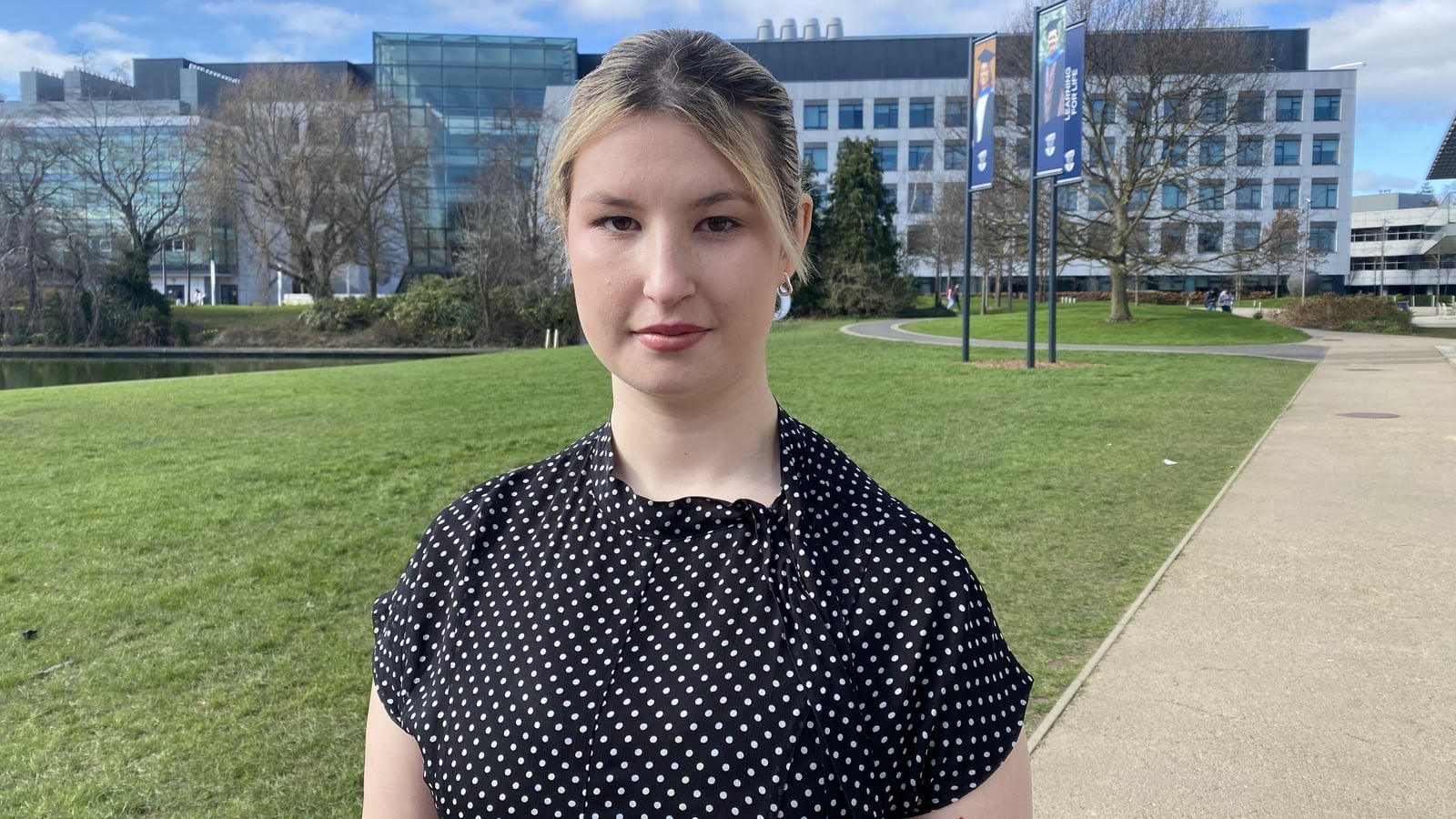
“There’s a huge disparity between Census reported data and the estimated actual amount of young carers, because it’s not very well known about, it’s not really talked about,” said Saoirse Hayden, one of the organisers of the conference which took place in University College Dublin.
“Self-identification as a young carer can come with stigma and can often feel a bit of a betrayal of the person you care for,” 19-year-old Ms Hayden told RTÉ News.
“We love these people, they’re our family, we care so much for them, but also, we don’t love the responsibilities, the burden and sometimes the violence that can come with that,” she said.
She also believes that “identifying young carers is one of the best ways to support them” and to identify their needs.
Both as a child and as a young adult Ms Hayden supported her parents in caring for her two siblings.
Her sister, who is 12, and her brother, who is 17, are autistic.
Ms Hayden explained that her brother also has ADHD and a complex Pathological Demand Avoidance profile and has difficulty in self-regulating, or managing his emotions and behaviours.
“A lot of his overwhelm and stress would come out in quite severe violence towards me and my sister,” Ms Hayden explained.
“Being the older sibling by quite a bit, I’m older than my sister by nearly seven years, I took on a massive caring role for her, as my parents were busy keeping us safe as much as they could from the violence, keeping (my brother) safe from himself, I would have to then take over the parenting of my sister, take her into a safe place,” Ms Hayden said.
She said that “carer harm” was “not as rare as people think” but she felt it was “quite a taboo thing to talk [about]”.
“You don’t want to talk about your loved one, who is not always at fault for these things,” she said, “my brother couldn’t help that he was violent, and I don’t blame him for it.”
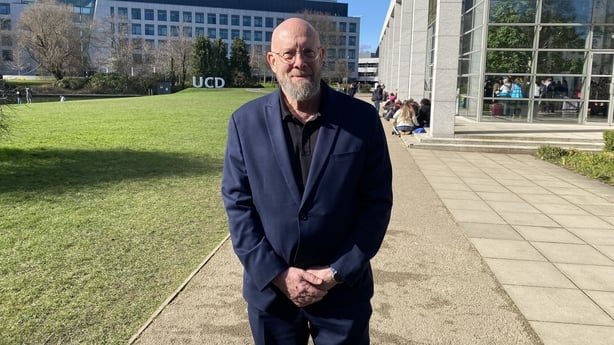
Dr Philip Jaffé said young carers were ‘putting away their own childhoods’
However she does feel that there were insufficient and inadequate supports in place for her and her family in Ireland.
Ms Hayden lives in Dublin and is currently studying in UCD.
However the rest of her family moved to Norway a year ago, where she believes her siblings are receiving better care and the family as a whole is better supported.
“They basically had to leave Ireland, leave their home, to hopefully have a better future for my sister and my brother,” Ms Hayden said.
As her brother is nearly 18, her family was concerned about how he would be supported into and through adulthood, and they believe there is “more support for that in Norway”.
Ms Hayden said that her sister was also “absolutely thriving in Norway”.
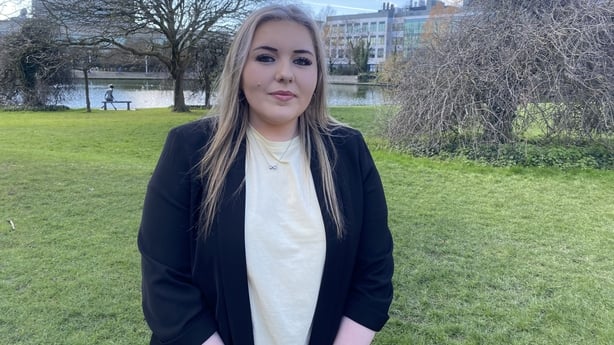
Co-organiser Shannika Greene said they want to present an “honest picture of what life is like” for carers
The theme of today’s conference was ‘The Real Lives of Young Carers’.
President Catherine Connolly opened the event and the Master of Ceremonies was young carer and activist 15-year-old Cara Darmody who last year carried out two 50-hour sit-out protests outside the Dáil in protest at waiting lists for disability assessments.
Ms Hayden’s partner in organising this event, and fellow carer, Shannika Greene, said that they hoped the conference would “create a space for young people to be seen, heard and valued”.
The two organisers said they did not want to “paint a picture that being a young carer is all doom and gloom” but they wanted to “present a very honest picture of what life is like”.
Another speaker was 16-year-old Sarah Ann Buday who supports her parents in caring for her four-year-sister Esther who has Down syndrome and Atrioventricular Septal Defect or AVSD which is a congenital heart condition.
Ms Buday described carrying out tasks such as helping with her sister’s speech and language therapy and physiotherapy exercises as well as helping to administer her medication through her nasogastric (NG) tube.
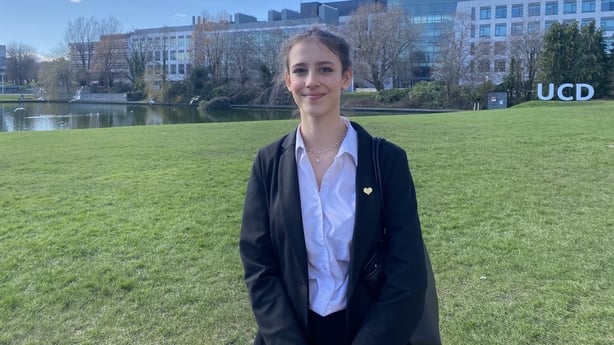
Sarah Ann Buday supports her parents in caring for her four-year-sister Esther
She also told RTÉ News how it could be challenging to balance teen life with her role as a young carer.
“Its difficult to go to school sometimes and focus when your sister just had a morning seizure or you had to call the ambulance the night before,” Ms Buday said.
“You do want to be there for the one that you care for, but you also want to have time for yourself, but you think you are selfish when you take the time for yourself, but its actually something you need as a teenager, so it can be quite stressful to be able to balance that,” Ms Buday said.
“These are young people that put their childhoods on the line,” Dr Jaffé said.
“They have very compelling and inspiring stories to tell, and their testimony is important, but I often hesitate to put it in positive terms,” he added.
“We shouldn’t speak too much about resilience, because they have suffered,” he said, “we should put the emphasis on helping them, protecting them, but also recognising that their maturity is really a mask in some cases, and what they’ve lost is not something that can be replaced.”