
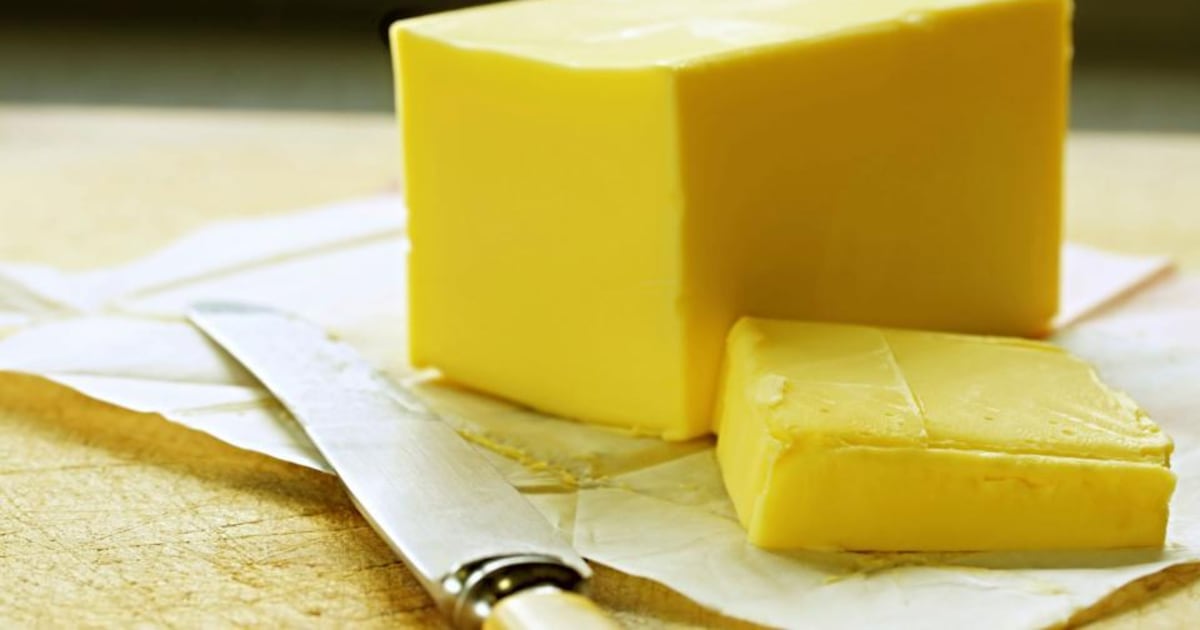
The butter world is in the midst of a kerfuffle after dairy fans on social media began to suggest the quality of their Kerrygold had changed.
Common themes included reports of a putty-like texture and, for those who fridge their blocks, a shocking ease of spread without the usual mandatory softening period. Something wasn’t right, was the general feeling.
One man asking questions was Mick Kelly, the Waterford-based founder of GIY and general advocate for non-processed food. He asked on Instagram whether any of his followers had noticed “a change in colour, flavour and texture” of Kerrygold.
Many weighed in: “weird and soft”, “more waxy”, etc. The company’s own posts, promoting various methods of consuming Kerrygold products, also feature the occasional comment querying the “change”.
Speculation on the cause was rife, from the plausible-sounding (it’s winter) to the obviously wrong (it’s not butter any more). The brand stayed mostly out of the fray.
Overheard is as passionate about Irish butter as the next patriot, so we sought our own answers directly, asking co-op owner Ornua whether it acknowledges that anything has changed and if it has any suggestions as to why.
Not really, is the short answer: “As Kerrygold is a grass-fed dairy product, some variation in colour and texture is normal, depending on what point in the grass-growing season the milk, and resulting cream, was produced and processed”, a spokeswoman said.
They “certainly have not changed our ingredients or how we make Kerrygold”, she said.
And it’s not winter milk – the year’s product is made with the better milk available the rest of the year: “We work to a very strict cream spec.”
The grass is growing again and the calves are arriving, so eagle-eyed consumers can keep their own eye on how things develop.
 Caoilfhionn Gallagher KC, a 1999 winner, returns to chair The Irish Times debate in 2026. Photograph: Alan Betson Chamber music
It’s goodbye from Caoilfhionn Gallagher to her old friends at Doughty Street, the London barristers’ chambers she left this week as she draws back on British commitments. The high-profile Irish human rights barrister is off to bigger and better things, planning “strategic” initiatives to make a difference in the world alongside a focus on international and Irish legal work.
Doughty Street has been home to many prominent practitioners over the years, including Amal Clooney (who is married to Hollywood star George) and British prime minister Keir Starmer, who spent his 30s there as a champion of the downtrodden before settling down to govern.
Even by those starry standards, Gallagher is considered somewhat unique by many colleagues as a preternaturally talented speaker, able to wow a room with minimal prep.
Her profile was partly built by acting pro-bono for the families of victims of the Hillsborough disaster and the 7/7 London bombings. And more recently, she has been heading up the legal team of Jimmy Lai, the Hong Kong media mogul convicted of sedition under the recently tightened national security laws imposed by China.
It’s been a long and lucrative case, and the fight goes on, though in the future it will be without the administrative support provided by chambers to their barristers in exchange for a percentage of their earnings.
Of course, she won’t need that support if her future lies in politics, to which she has been periodically linked. The presidency won’t be up for grabs again until 2032, but a vacancy could easily arise in the Seanad in the interim. Does she have the connections to snag a seat?
Barry Ward, a Fine Gael TD for Dún Laoghaire, is on the record as a “friend”, having been auditor of UCD’s illustrious Literary and Historical Society when Gallagher was its star debater. He might put in a good word.
 Minister of State Michael Healy Rae. Photograph: Sam Boal/Collins The flat cap and the Grey Lady
In an fast-changing world, it’s a relief to see some things stay the same in the Dáil Register of Interests.
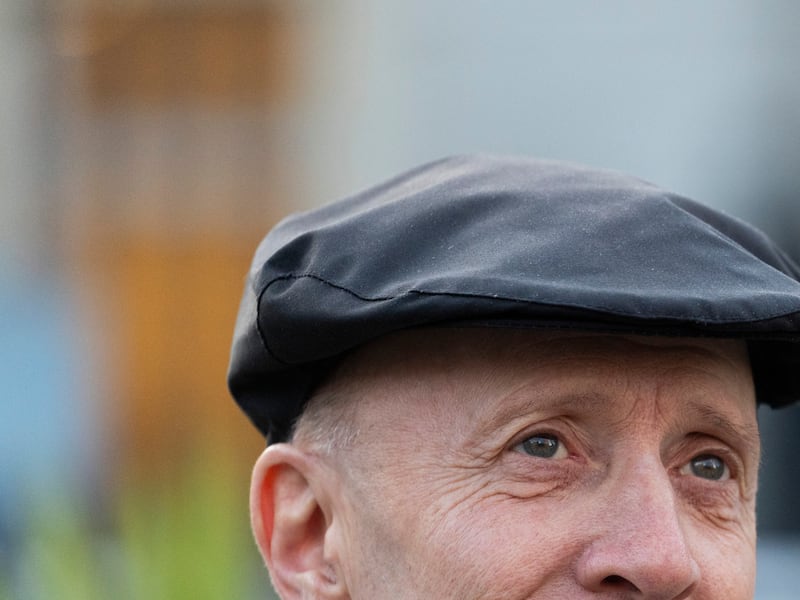
We were soothed this year to see the return of an old favourite: Independent TD from Kerry Michael Healy-Rae still owns shares in The New York Times. The rest of his entry depicts a canny businessman with many interests – so how canny is his media investment?
We don’t know how many shares he has exactly, but we can make some assumptions. Only holdings worth more than €13,000 have to be declared, and Healy-Rae first declared his interest in 2021.
Shares were around $47 each on the date the 2021 register was published, and given the exchange rate at the time, that means he had somewhere over 335 of them.
They are now worth $70 each as the US public looks to the Grey Lady again for updates on Donald Trump’s many, many newsworthy actions and pronouncements. What was worth €13,000 then would be worth around €22,500 today, or a return of 73 per cent.
Sounds good, though tracking the US markets passively through a fund would have returned close to 100 per cent. Healy-Rae is diversified well, from shopkeeping to renting apartments to being a Minister of State, so he will likely not be too worried.
 Montpelier, replacing O’Devaney Gardens in Dublin, will abandon its old links to the bishop Requiem for Bishop O’Devaney
Jubilation for the first residents of the Montpelier housing development in Dublin, where affordable purchasers, cost-renters and social housers are making preparations to move in to the first phase dwellings.
The location is a good one, between Stoneybatter (2022’s 49th coolest neighbourhood in the world, according to Lonely Planet) and the Phoenix Park (largest enclosed park in a European capital city, undoubtedly a hotly contested title).
Spare a moment’s thought, though, for Concobhar Ó Duibheannaigh, the former bishop of Down and Connor after whom the former O’Devaney Gardens, on the same site, was named.
A thorn in the side of Tudor and Stuart administrators, he was first arrested in 1588 and committed to Dublin Castle, though the authorities couldn’t think of a pretext to execute “so rank a traitor to Her Majesty as no doubt he is”.
Hugh O’Neill protected him while he had the power, but this did not help his cause after the Flights of the Earls, when he was arrested again and sentenced to be hanged, drawn and quartered. Accounts of the event generally portray him in a beatific mood, and the clouds may have parted to bathe him in light.
His memory may be left to the historians, however. There is no formal de-naming, like that experienced by his Anglican colleague Bishop Berkeley, whose name was pried from the Trinity library over slavery links.
But new roads, named Montpelier Avenue and Montpelier Close, are signed off for the new development.