

Two severed dorsal fins that washed up on a remote North Pacific shore have led scientists to ask whether one of the ocean’s most formidable predators is sometimes hunted by its own kind.
In 2022 and again in 2024, researchers on Bering Island, about 110 miles east of the Russian mainland, found detached fins from orcas lying on the beach. Both carried fresh scars, consistent with orca teeth.
The discovery has prompted a study suggesting that some orcas may hunt and eat others, and that this form of cannibalism could help to explain their unusually complex family lives.
Weighing up to four tonnes and famed for their intelligence, orcas have long been recognised as apex predators with few natural enemies. The research argues that for some pods the greatest danger may come from roaming, cannibalistic members of their own species.
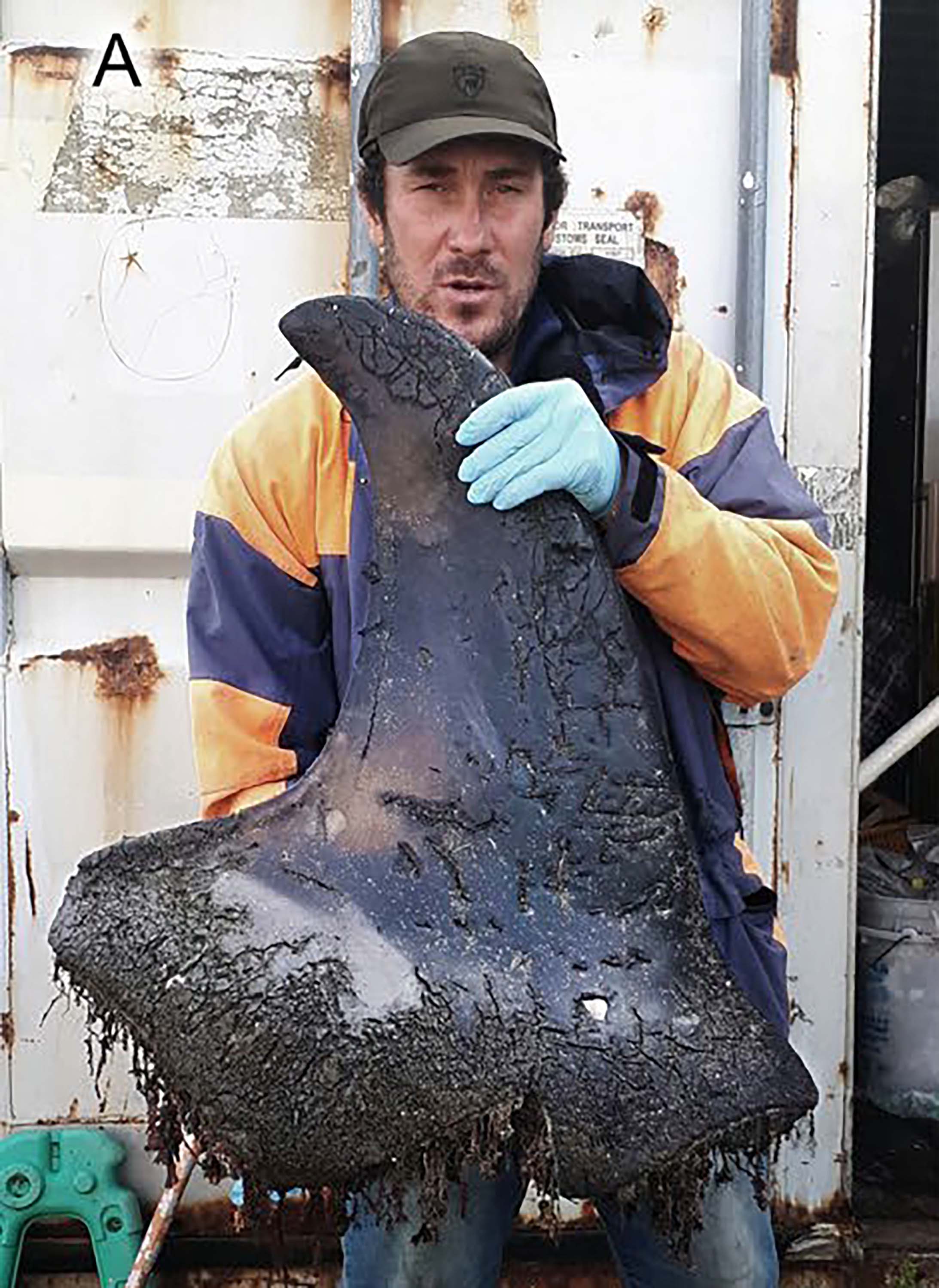
A severed dorsal fin found in 2022
Genetic tests showed the severed fins belonged to “resident” orcas, a fish-eating subspecies known for travelling in large, stable family groups.
The suspected attackers are Bigg’s orcas, a different subspecies that hunts marine mammals including seals, sea lions and other cetaceans.
Residents move in large, lifelong family units spanning several generations. Bigg’s orcas, by contrast, tend to travel in smaller and more fluid groups that split and re-form depending on hunting needs.
• Orcas feast on great white sharks in the Gulf of California
Olga Filatova of the University of Southern Denmark, who led the research, said: “When I saw the photo of the first fin, I didn’t think that much about it. I thought it was an oddity: interesting but not worth much attention. It was only when the second fin showed up that I started thinking that there could be a pattern.
“Fish-eating and mammal-eating orcas in the North Pacific are recognised as different subspecies of the same species, but apparently the latter perceive the former more as a prey.”
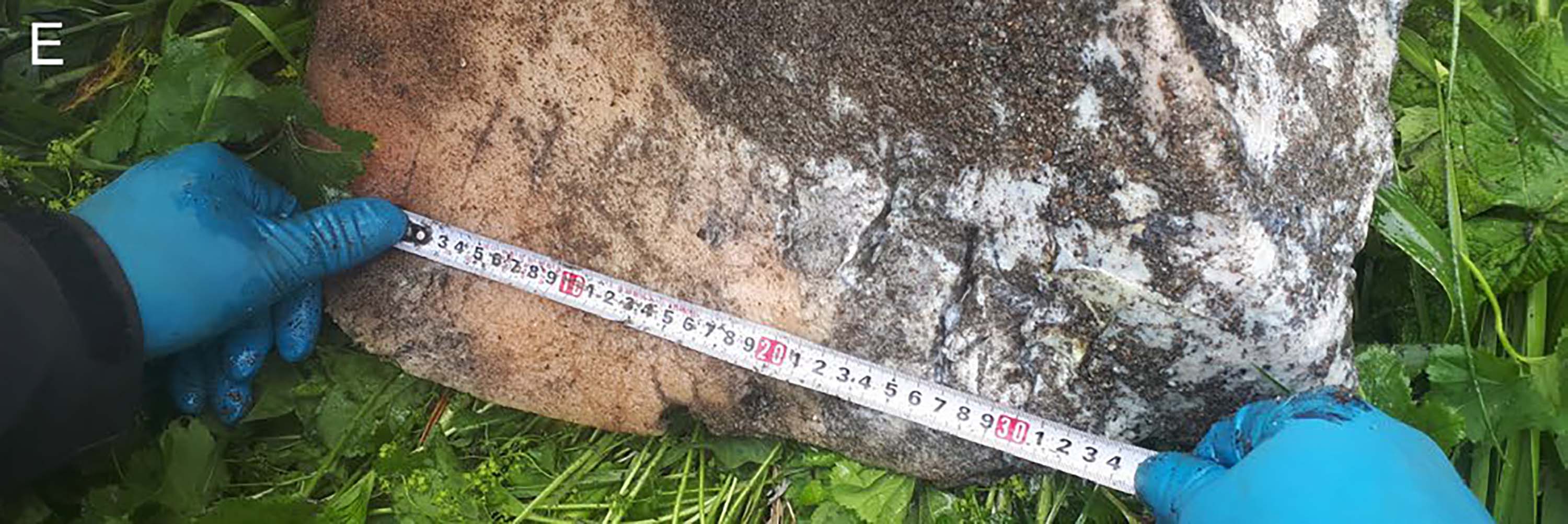
Teeth marks were visible in the fins, that appeared to be from another orca
Exactly what happened to the animals whose fins were found cannot be known for certain. The mammal-eating orcas may have scavenged carcasses rather than killed them. But the researchers argue predation is plausible. Whales usually sink quickly after dying, Filatova said, making them difficult to scavenge unless the animal was attacked near the surface.
If mammal-eating orcas do occasionally hunt their fish-eating counterparts, the implications could be significant.
Resident orcas have one of the most unusual social systems among mammals: both sons and daughters remain with their mother for life, forming large matrilineal clans that can span several generations.
• Orcas revive killer 1980s look with ‘salmon hats’
Filatova said: “In most social animals, at least one of the sexes leave their natal group after reaching maturity in order to prevent inbreeding. In resident killer whales, both sexes stay in their mother’s group, and they mate with other families during multi-pod aggregations.”
Biologists have long puzzled over why such a system exists. Residents mainly eat salmon, often hunting alone, so large groups offer little obvious advantage when it comes to catching food.
As Filatova and her colleagues put it in the journal Marine Mammal Science: “The highly stable, matrilineal social structure of resident killer whales … stands out as a rare and evolutionarily puzzling phenomenon among mammals.”
One possible explanation, they suggest, is safety. Large groups of closely related whales may provide collective defence.
Observations in the wild offer some support. Resident pods have been seen mobbing and driving off smaller groups of mammal-eating orcas.