
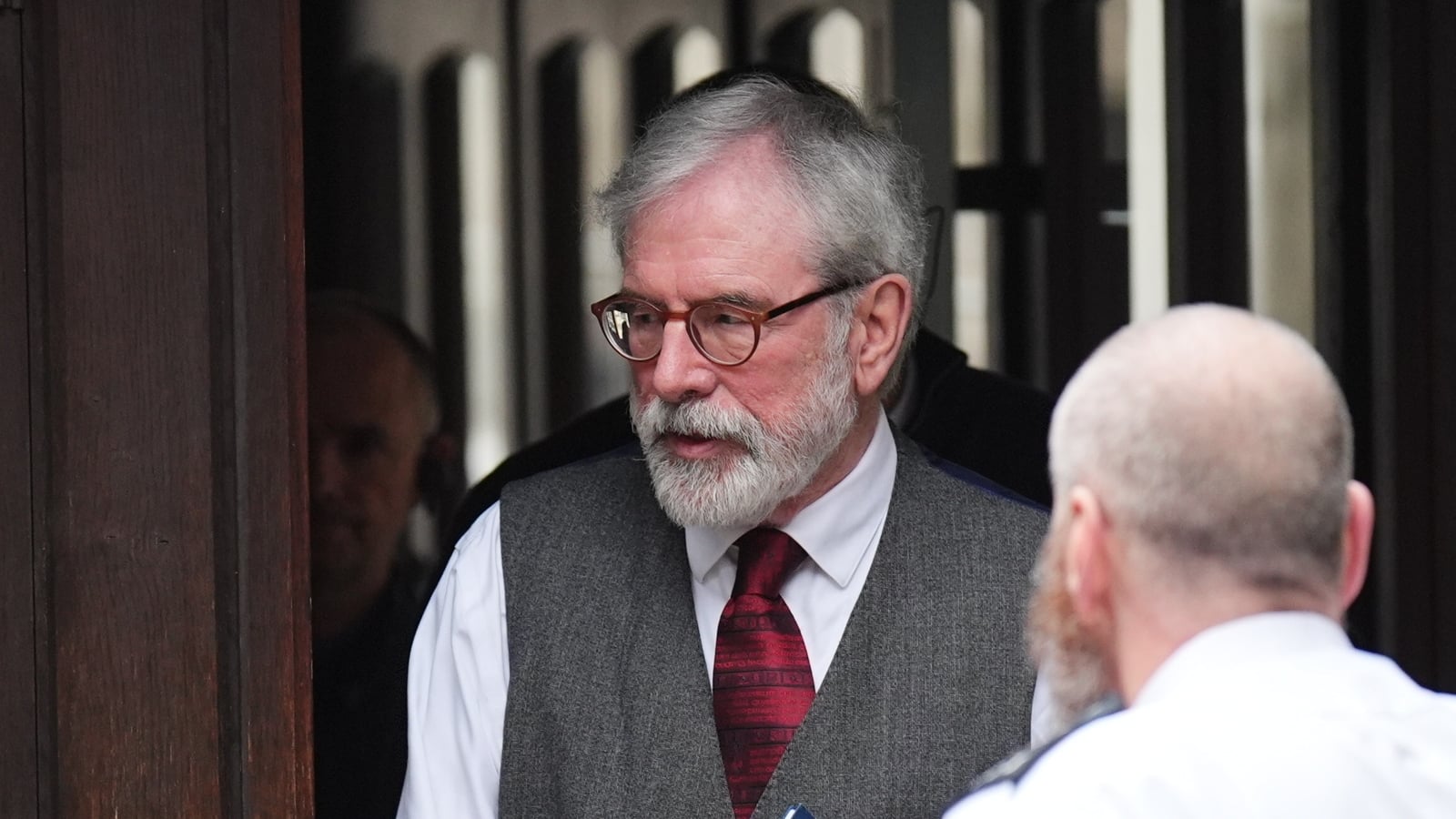
A legal action which alleges that ex-Sinn Féin leader Gerry Adams was a member of the IRA has begun in London.
The former Louth TD and MP for West Belfast is being sued for symbolic damages of £1 by three IRA bomb victims.
It is the first time that a court has been asked to adjudicate on claims that Mr Adams was a member of the IRA, which he has always denied.
He is in court and will give evidence in his defence next week.
The action is being taken by John Clark, a victim of the attack on the Old Bailey in London in 1973, and Jonathan Ganesh and Barry Laycock, who were injured in bomb attacks at London’s Docklands and Manchester’s Arndale Shopping Centre in 1996.
In documents submitted to the High Court, the claimants allege that Mr Adams was “directly responsible for and complicit in the decisions made” to detonate those bombs because of what they say was his role within the IRA.
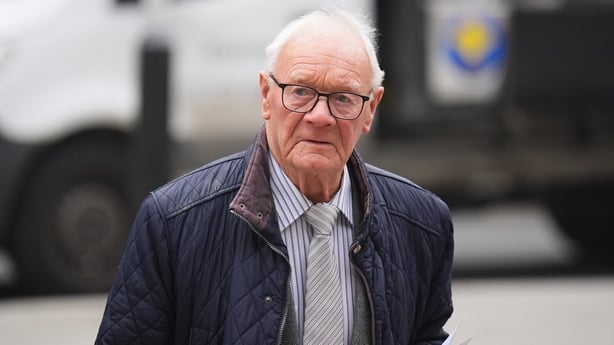
Barry Laycock pictured outside the court
Addressing his repeated denials of being a member of the IRA, a lawyer for the claimants told the court that the evidence demonstrates otherwise.
The lawyer said the claimants seek to prove the case against Mr Adams “with a jigsaw of evidence from those who knew him and those who knew of him”.
“Whilst we accept that the jigsaw may not result in the placing of every piece, we consider that there are more than sufficient pieces to enable the court reach a firm conclusion on balance of probabilities in relation to the whole picture of the defendant’s involvement in the armed struggle in 1973 and in 1996 through his membership of and the ranks he held within PIRA,” said Anne Studd KC.
She added: “There is no doubt that the defendant contributed to the peace in Northern Ireland, but the claimants say that on the evidence he also contributed to the war.”
In written submissions, Edward Craven KC told the court that Mr Adams “strenuously” denies the claims and said the “extraordinary delay” in issuing the claims had significantly prejudiced his ability to defend the claim and his right to a fair trial.
“The majority of potential witnesses and alleged protagonists are now dead; relevant documents and records have been lost; and recollections of events that took place decades ago have inevitably faded beyond the point of reliability,” he said.
The lawyer said the claimants were relying on “an assortment of hearsay evidence” because of “the absence of any direct witness evidence.”
The submission states that Mr Adams strenuously denies any involvement in the bombings and that he “played an instrumental role” in the peace process, which culminated in the Good Friday Agreement in 1998.
Mr Craven also said: “The defendant has never been arrested on suspicion of, still less charged or convicted of, any offence in connection with any of the bombings.
“Had law enforcement authorities been in possession of information which created a reasonable suspicion that the defendant may have been involved in those bombings, he would have been arrested and questioned.”
Those due to give evidence in the six day trial include former members of the British military, former police officers and former members of the IRA.
It is a non-jury trial civil action, not a criminal case, so the standard of proof required is “on the balance of probabilities” and not the criminal standard of “beyond reasonable doubt”.
In court documents, lawyers for Mr Adams say the action should fail because of the time taken to bring the proceedings and because “the evidence comes nowhere close to constituting clear and cogent evidence capable of establishing the defendant’s alleged responsibility for the bombings”.
Mr Adams was charged with IRA membership in 1978, but the case was dropped due to insufficient evidence.
Last year, the 77-year-old was awarded €100,000 in damages over a BBC Northern Ireland programme which alleged that he had sanctioned the murder of former Sinn Féin official Denis Donaldson.
Mr Donaldson was shot dead in Co Donegal in 2006 shortly after it emerged that he had worked as an agent for MI5 and police for 20 years.