
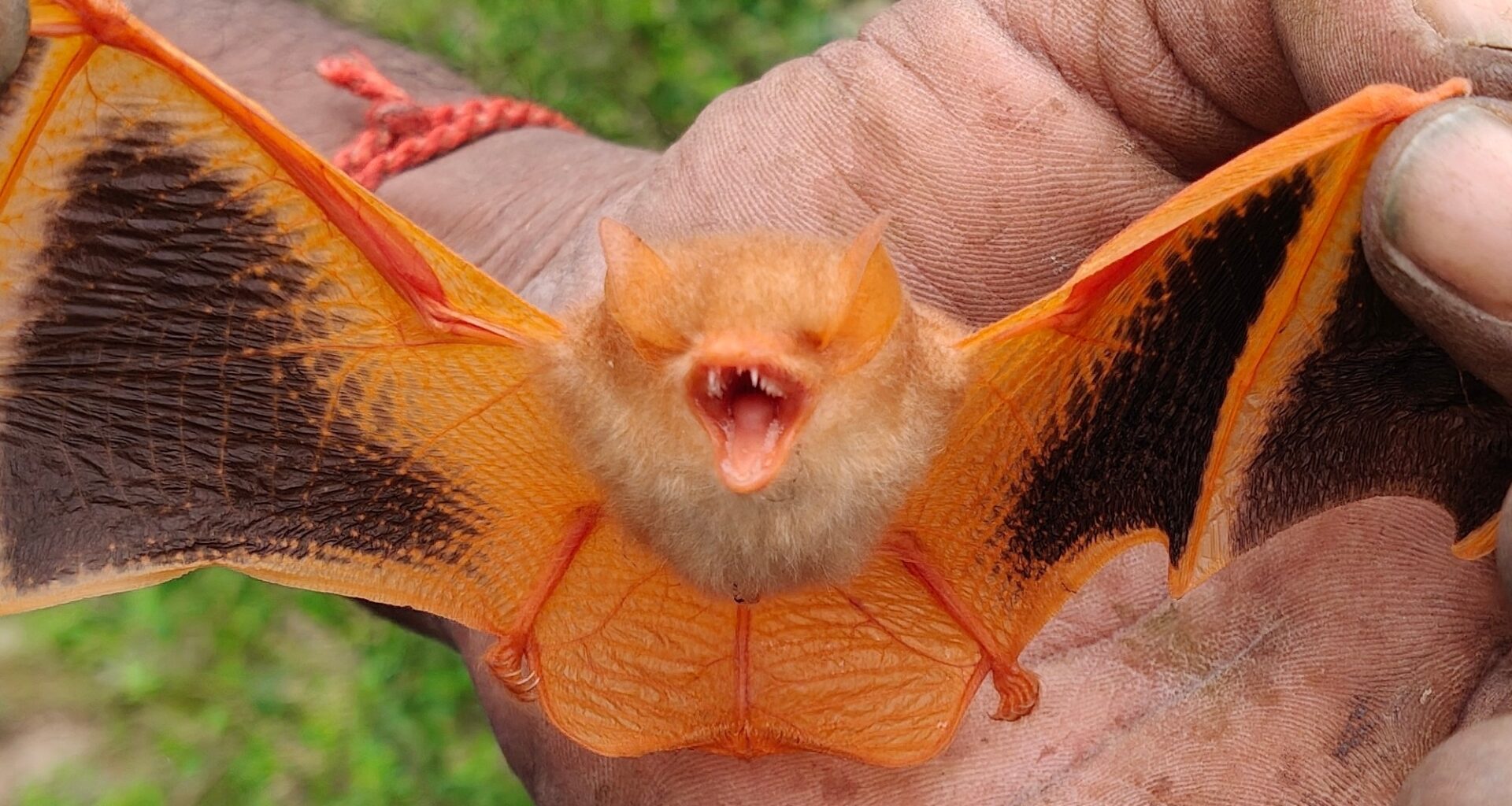
Taxidermied, framed bats are sold as souvenirs in shops across Vietnam’s Ho Chi Minh City that cater to international tourists, according to a new study documenting the trade.Painted woolly bats — one of the world’s most colorful bats, with wings streaked in orange and black — were the top-selling species both in these markets and online, and are in demand as decorations in the U.S.,as well as Europe and Canada.Vendors told researchers that most of the painted woolly bats they sold were pulled from the wild. Evidence suggests these mammals have almost disappeared from the country’s Mekong Delta region, partly because of this intensive trade.Experts urge Vietnam to outlaw harvest and trade of these bats, and ask that all 11 countries where these bats are found protect them under CITES, a global wildlife trade treaty, to regulate and monitor international sales.
See All Key Ideas
With hues of orange and black on its wings and a furry, fluffy face, the painted woolly bat is a stunner. But its beauty has become a deadly liability. People want to hang the bats — dead and stuffed — on their walls, display them as collectibles and even set them in jewelry.
In recent years, taxidermied and framed bats have become popular as Halloween décor and, oddly, as Christmas tree decorations, sold to customers in the U.S., as well as Europe and Canada.
This macabre trade first came to light in 2015 when scientists found dead bats, including painted woolly bats, for sale in Vietnam’s largest metropolis, Ho Chi Minh City. Then, nearly a decade later, scientists realized that it wasn’t just a few stores selling bats: There’s also a huge online market.
In 2024, researchers from the Bat Specialist Group at the IUCN, the global wildlife conservation authority, documented nearly 800 bats for sale on Amazon.com, eBay and Etsy over a three-month period. Their “Dying for décor” study, published in the European Journal of Wildlife Research, suggests that the trade is global. A quarter of the bats sold online were from a single species: painted woolly bats (Kerivoula picta).
After a successful awareness campaign by conservation organizations, eBay and Etsy banned the sale of bat products on their sites in 2025.
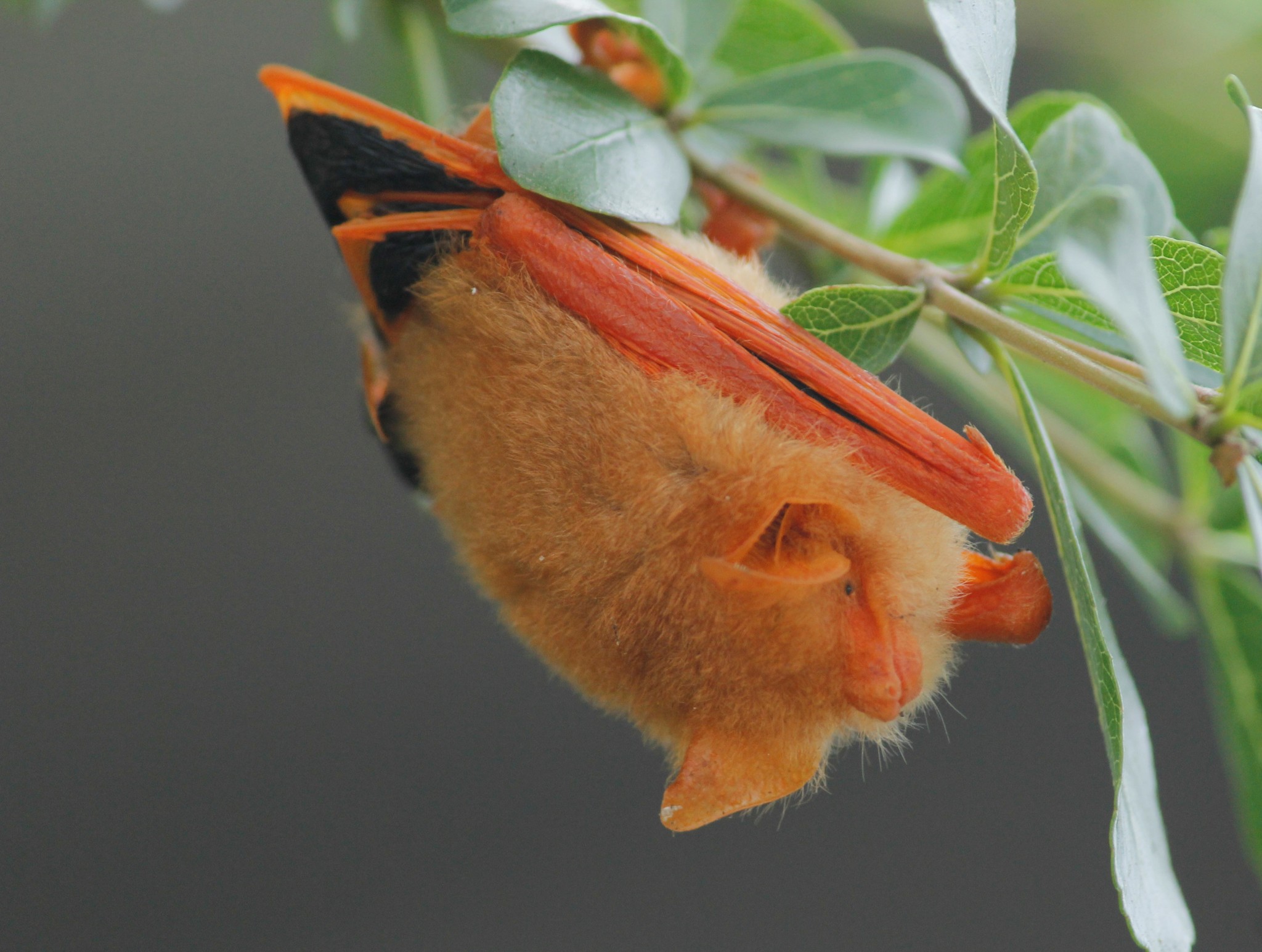 Painted woolly bats are nocturnal and sparsely distributed in the landscape, roosting in small groups. Image by faridmuzaki via iNaturalist (CC BY-NC 4.0).
Now, a new study finds that this ornamental trade continues to thrive in Vietnam. Two surveys conducted in 2024 in Ho Chi Minh City’s tourist markets found more than 50 taxidermied and framed painted woolly bats in souvenir shops, sold alongside other wildlife products.
Painted woolly bats, also known as butterfly bats, “are one of the most beautiful bats there is,” said study author Chris Shepherd, a senior conservation advocate at U.S.-based nonprofit the Center for Biological Diversity. Native to 11 countries in South and Southeast Asia, they’re classified as near threatened, and populations are declining. A 2020 survey found that their numbers had dropped by 25% over the last 15 years, largely because of this trade.
While it’s illegal to hunt them in each of their range countries, commercial cross-border trade isn’t regulated or monitored, as they’re not protected under CITES, the global wildlife trade treaty.
The U.S. is the biggest importer of these colorful bats and other related species, with more than 1,000 dead individuals entering the country yearly. So in 2024, Shepherd and his colleagues petitioned the U.S. Fish and Wildlife Service to protect the painted woolly bat under the Endangered Species Act, which would prohibit its import, export, transport, trade and possession within the U.S. In August 2025, the agency announced it was initiating a review of the species status based on the petition.
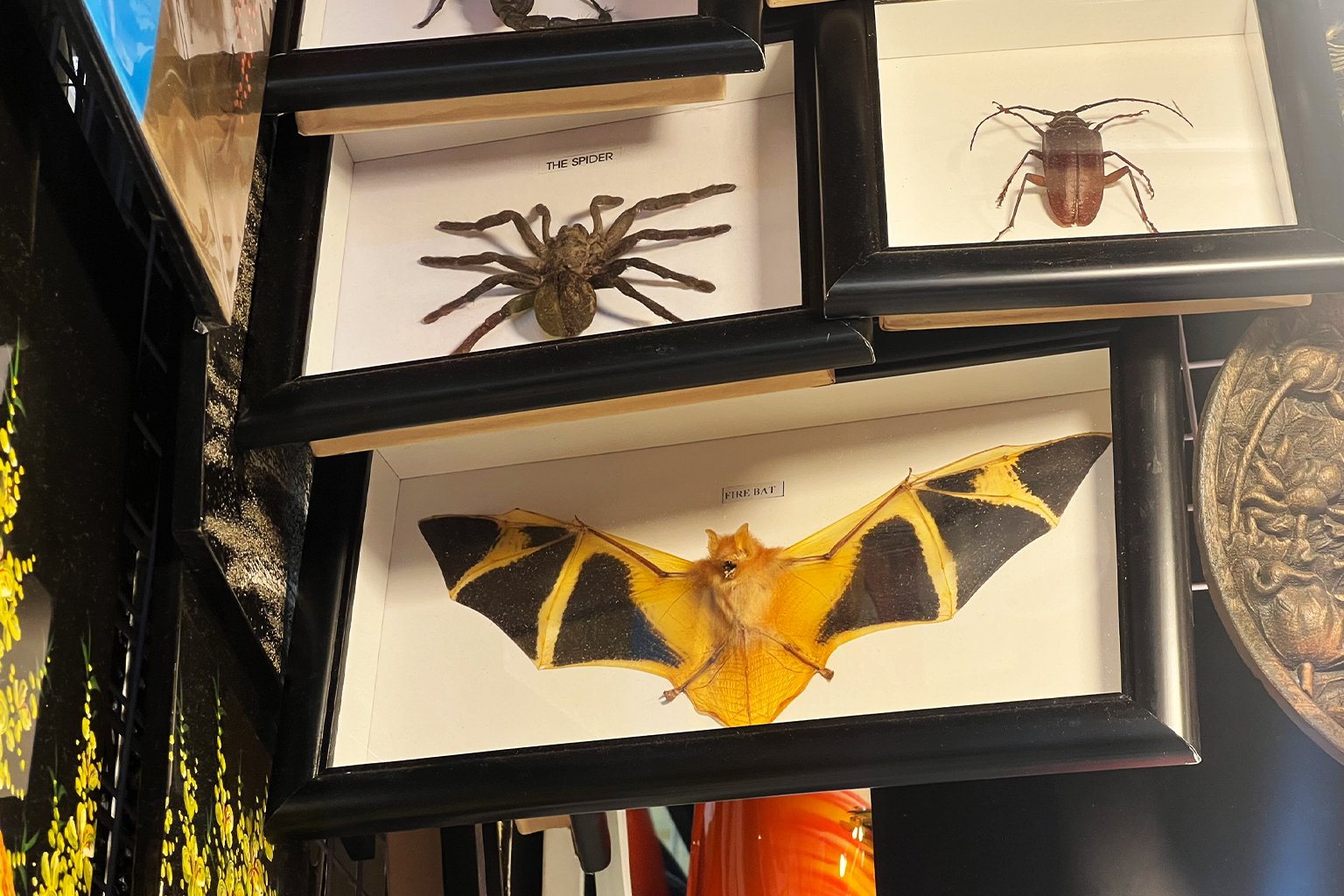 A taxidermied and framed painted woolly bat for sale in a shop in Ho Chi Minh City beside insects, documented as part of research quantifying the scope of the trade in bats. Image by Joanna Coleman.
Thriving trade in Vietnam
In mid-2024, one of the study authors visited Ho Chi Minh City markets to gauge the scale of the trade in the city and the prices that ornamental bats commanded. During an eight-day survey, they visited 85 shops in three different districts: 66 sold souvenirs and 19 others offered traditional medicine. They found 41 painted woolly bats in 13 shops at Ben Thanh Market in the city center, dried and mounted in black shadowbox frames. Shops at other markets had none on display.
The framed bats sold for anywhere between 250,000 and 890,000 Vietnamese dong (about $10-$35) apiece.
The researcher returned to the same market a few months later, in November 2024, and found 18 bat ornaments for sale; six were painted woolly bats, including a pup. “They are mainly marketed to tourists, so this likely amounts to international trade,” said the study’s co-author, Joanna Coleman, a biology professor at the City University of New York in the U.S. and a member of the IUCN Bat Specialist Group.
Since painted woolly bats were extremely popular in Ho Chi Minh City markets — representing a third of all bats sold — she said the demand “must be higher for them than for other bats” because of their striking beauty.
The researchers couldn’t definitively identify the other species for sale, but based on the labels attached, they seemed to belong to the genus, Pipistrellus, a widely distributed group of bats found in Southeast Asia, Europe and Africa. These shops also sold butterflies, beetles, scorpions, moths, lizards, spiders and double-winged true bugs — all dried and framed, just like the bats.
When asked about the origins of the bats they sold, vendors told researchers that painted woolly bats mostly came from the wild. One seller said these shops buy their bats from a wholesale dealer, who hires people to harvest, dry and frame them.
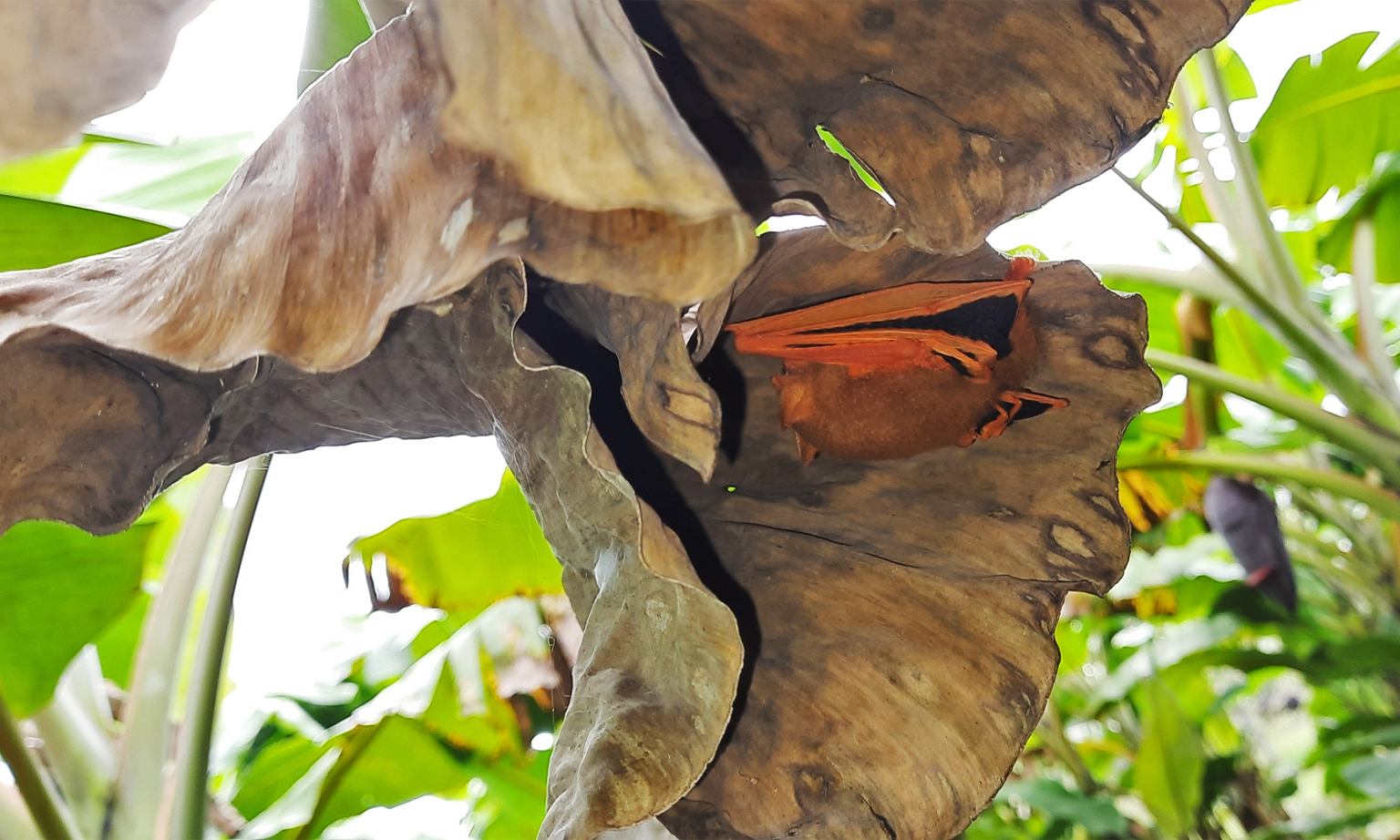 The painted woolly bat is in great demand for the ornamental trade, bought both online and offline for decorations. Image by Vetri Selvan via iNaturalist (CC BY-NC 4.0).
Finding young bats in these markets was of particular concern.
Baby bats cling to their mothers for the first few weeks of their lives and ride along with her when she hunts or forages. Finding young pups for sale indicates that “[h]unters are taking adults and dependent pups,” Coleman said. “When you remove adult females and their young from wild populations, you are even likelier to cause population declines, especially in animals like bats that reproduce very slowly.” Painted woolly bats birth just one pup a year.
Fieldwork revealed the trade’s impact. When one of the researchers visited the Mekong Delta between June and September 2024 — a region where locals said it’s generally easy to see painted woolly bats — they found just one female after an intensive search. This indicates that local populations are nearly extinct, and those for sale in markets either came from a stockpile or from elsewhere.
Bat scientist Dave Waldien called the findings “unfortunate, but not surprising,” since painted woolly bats are the most popular in trade. Waldien, a member of the IUCN Bat Specialist Group who wasn’t involved in the study, emphasized the importance of this research in highlighting that “the level of threat from the ornamental trade of the painted woolly bat is more significant than previously thought, and that robust and immediate attention is needed to eliminate this threat.”
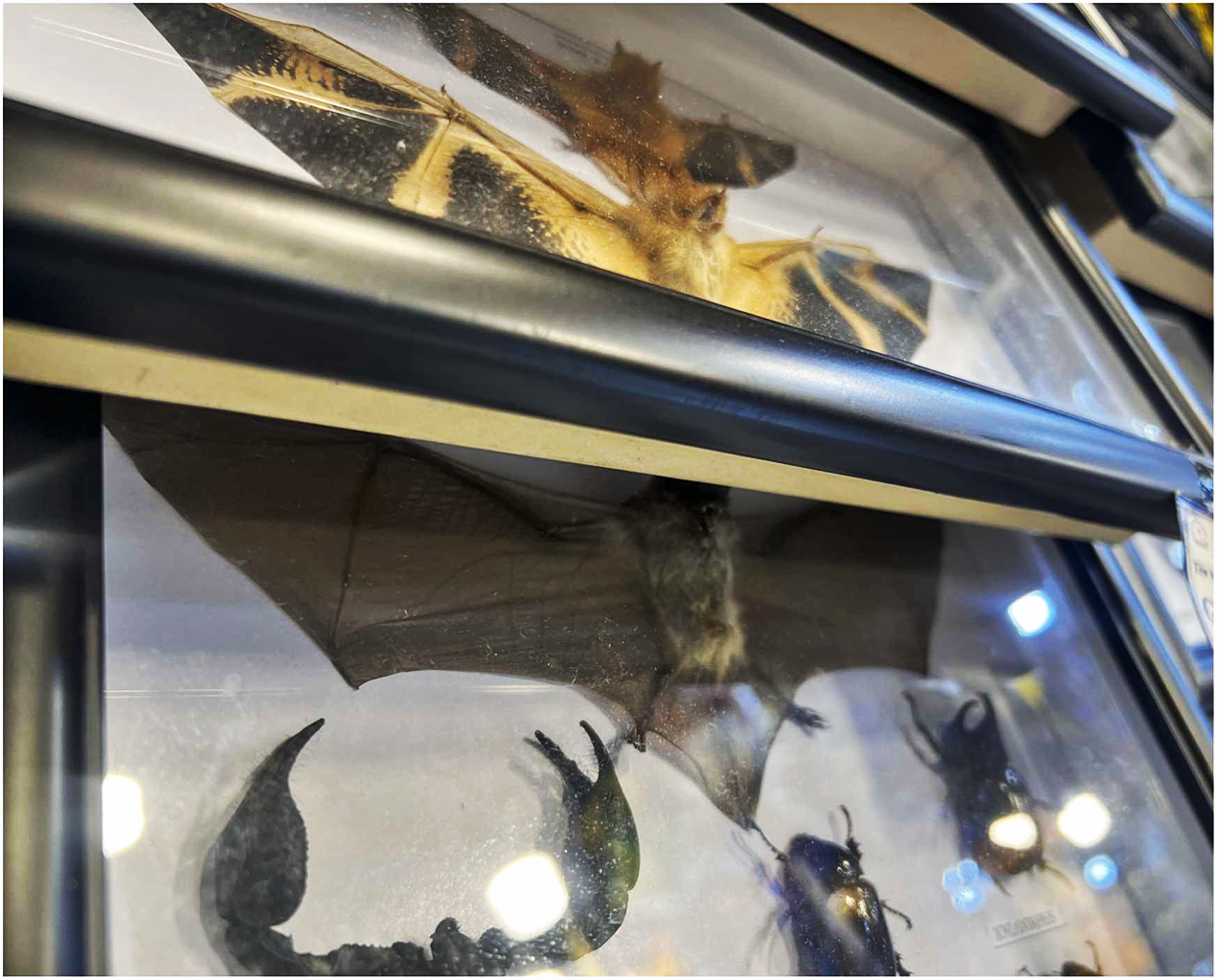 This image documents ornamental wildlife for sale in Ho Chi Minh City, photographed during a recent study. This shop sold both adult bats and pups. Image courtesy of Nguyen et. al (2026).
Better enforcement and trade monitoring needed
Painted woolly bats are solitary and sparsely distributed, and scientists don’t know much about their life cycle, behavior, or even how many of them are in the wild. “Kerivoula picta is especially hard to study,” Coleman said. “That is exactly what makes the trade a likely conservation concern.”
Data on their trade are also patchy; this study is the first to document how many are sold in one of their native countries.
Conservationists say governments of the bat’s range countries should step up to enforce their laws against hunting the species. In Vietnam, those laws come with major loopholes: It’s legal to capture the bats during their nonbreeding season and it’s also legal sell captive-bred bats, with paperwork to prove it. But there are no known captive-breeding facilities for these insectivorous bats anywhere in the world, researchers say. Since pups have also been found in the trade, scientists say illegal capture is common.
The researchers urge the Vietnamese government to add the species to its national list of endangered, precious and rare animals, which would ban hunting year-round and impose stricter fines and prison terms for violators.
Given that the bats are primarily sold to foreign tourists, experts also suggest regulating trade in this species by adding it to Appendix II of CITES. However, the next CITES summit when that might be considered is at least two years away.
In the interim, range countries can add painted wooly bats to CITES Appendix III, to better monitor international trade from within their borders. That would be “a really big first step in helping regulate the trade and helping countries protect the species in the range countries,” said Shepherd from the Center for Biological Diversity. “Without [Appendix III] listing, there’s no mechanism for controlling or regulating international trade.”
But these mammals face additional threats. Logging and conversion of agricultural plantations into human settlements are erasing their homes.
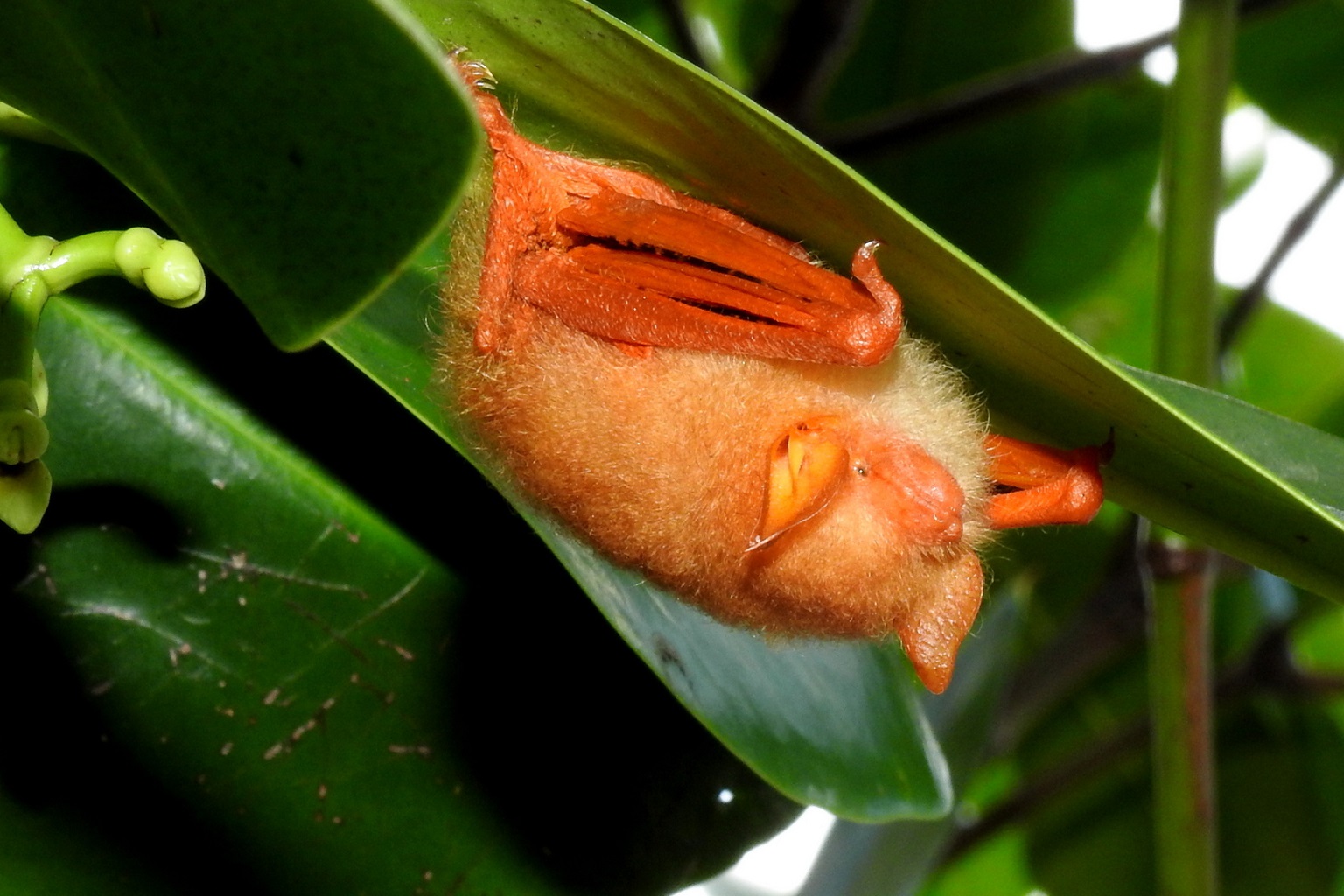 With this species highly sought after as decorations, mostly by foreign tourists, their numbers are dwindling. Image by Abu Hamas via Wikimedia Commons (CC BY-SA 4.0).
Conservation of this species requires collaboration between governments, conservationists and communities, Waldien said. “In addition to national and international legislation, this should include work with local communities to prevent further collection — and the protection and restoration of the species’ habitat.”
Few people realize the services bats provide. Protecting painted woolly bats — and all bat species — benefits human health and helps produce the food we eat. Like all insectivorous bats, they act as nature’s pest control, keeping insect numbers under check, so they don’t devour crops, and also limiting the spread of insect-borne diseases.
Removing this iconic species from the wild, especially for a senseless trinket trade, will hurt the bats and the ecosystem, Shepherd said. “People don’t need to be hanging this bat on the wall or on their Christmas tree or having it on their desk.”
Banner image: With striking orange and black streaks on their wings, painted woolly bats are one of the most colorful bats in the world. Image by stingraysilver via iNaturalist (CC BY-NC 4.0).
Spoorthy Raman is a staff writer at Mongabay, covering all things wild with a special focus on lesser-known wildlife, the wildlife trade, and environmental crime.
‘Senseless’ U.S. trinket trade threatens distinctive Asian bat, study shows
Citations:
Lee, B. P., Struebig, M. J., Rossiter, S. J., & Kingston, T. (2015). Increasing concern over trade in bat souvenirs from South-east Asia. Oryx, 49(2), 204. doi:10.1017/s0030605315000034
Coleman, J. L., Randhawa, N., Huang, J. C., Kingston, T., Lee, B. P., O’Keefe, J. M., … Shepherd, C. R. (2024). Dying for décor: Quantifying the online, ornamental trade in a distinctive bat species, Kerivoula picta. European Journal of Wildlife Research, 70, 75 doi:10.1007/s10344-024-01829-9
Nguyen, M. D., Luong, H. T., Huang, J. C., Shepherd, C. R., Bui, H. T., Thong, V. D., & Coleman, J. L. (2026). The ornamental trade in painted woolly bats (Kerivoula picta) in Ho Chi Minh City, Vietnam. Global Ecology and Conservation, 66, e04098. doi:10.1016/j.gecco.2026.e04098
FEEDBACK: Use this form to send a message to the author of this post. If you want to post a public comment, you can do that at the bottom of the page.
