
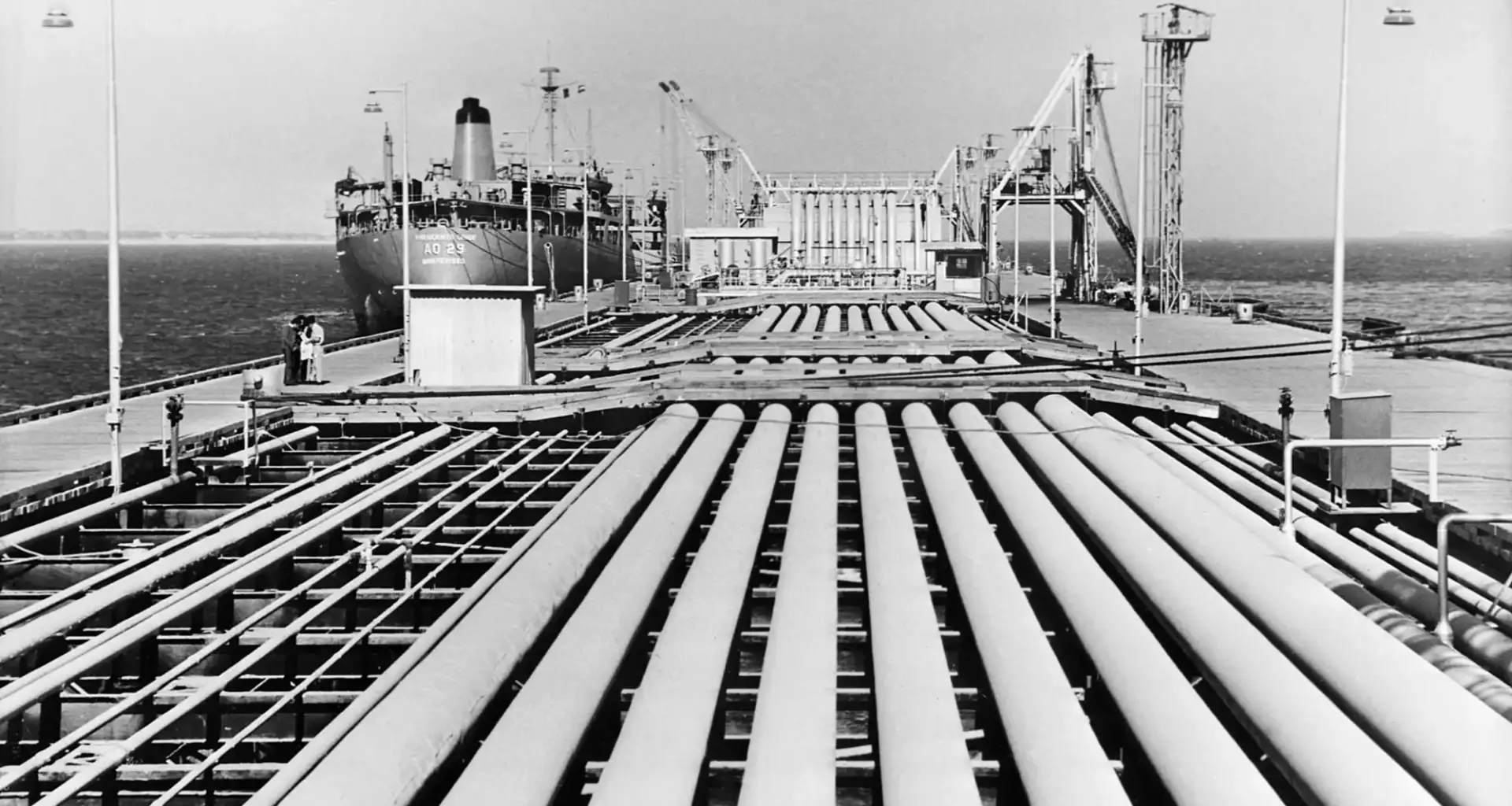
The current situation in the Middle East — a major war involving the U.S., Israel, and Israel’s enemies, spiking global oil prices, spiking domestic gasoline prices — may feel a bit like déjà-vu.
All this happened back in 1973, during the Yom Kippur War. And again in 1979, after the Iranian Revolution.
More than 50 years later, is the situation really analogous? Can lessons be learned?
Let’s roll the clock back to 1973. Richard Nixon is president. The U.S. is far-and-away the biggest economy in the world.
And, said Princeton University historian Julian Zelizer, “This is a culture after World War II built around automobiles, around highways, around driving, new suburban homes which required a lot of heating.”
The heating takes a lot of oil, most of it pumped and shipped from the Middle East. Which suddenly becomes a very big problem when OPEC declares an oil embargo on the U.S. and other allies of Israel.
“This triggers the first round of an oil crisis where Americans face long gas lines and high prices,” Zelizer said.
There’s a second crisis in 1979 when Iranian oil exports crater after the nation’s Islamic Revolution.
“You can only buy gas certain days, people are siphoning off gas from people’s cars. There’s just this air of desperation,” he said.
There’s also resolve to make the U.S. economy less vulnerable, by reducing our dependence on foreign oil. The government encourages more fuel efficiency and more oil exploration.
Fast forward to now.
“The world moved from the U.S. being the biggest oil importer, to the U.S. being the biggest oil exporter,” said climate economist Gernot Wagner at Columbia Business School.
But there’s a catch.
Even with massive new U.S. oil fields, American businesses and consumers still pay the global market price.
“And yeah, those prices just shot up,” Wagner said.
Which means a prolonged war that keeps oil prices high could still create conditions similar to the oil crises of the 1970s: driving higher inflation, and stifling growth.
Related Topics