
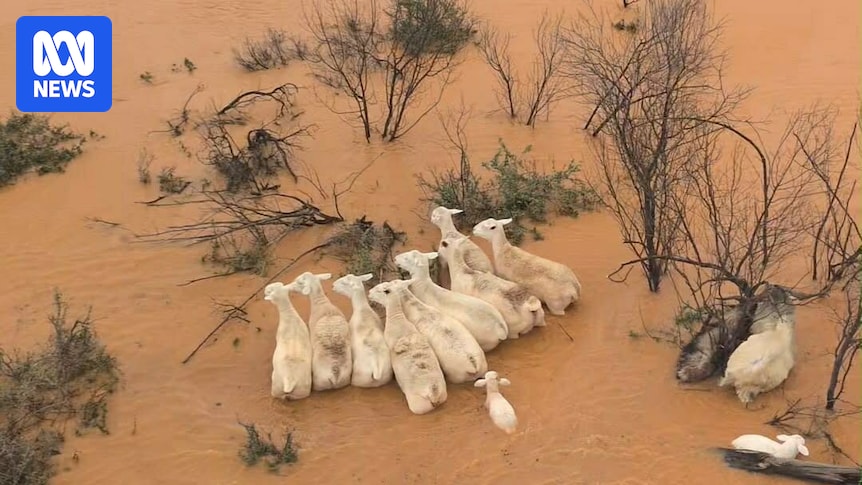
A collective sigh of relief was heard as rain fell on the people and properties of Far West New South Wales.
After waiting months and even years for good rain, graziers watched intently as the land soaked up the much-needed moisture.
The long-term outlook is positive. The grass has begun to grow, dams are full and livestock are fattening up.
Loading…
But as the water and excitement subside, graziers are assessing the damage left behind.
For Sam Beven, president of the Pastoralists’ Association of West Darling, it is a relief to see some rain, but he knows there are ramifications to the deluge.
The grazier owns and manages the 75,271-hectare Sturts Meadows Station, located about 70 kilometres north of Broken Hill.
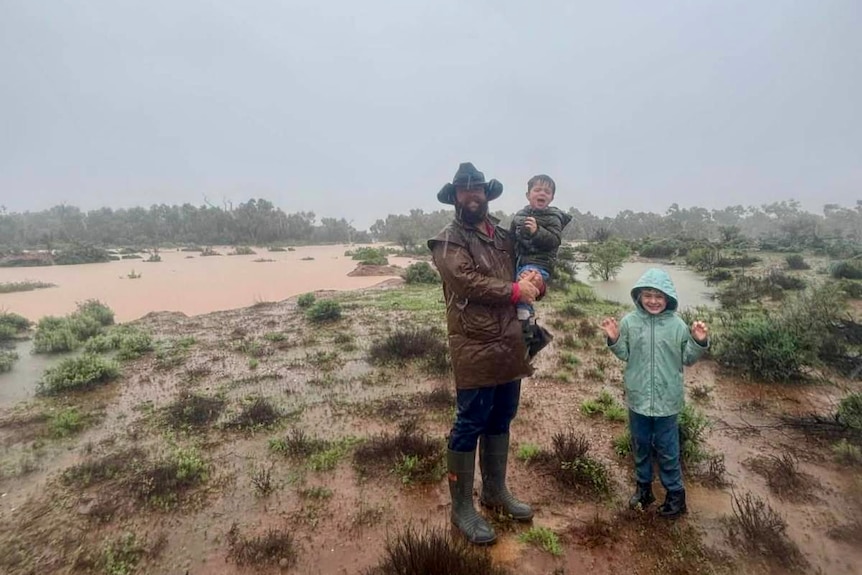
Sam Beven runs sheep and cattle on Sturts Meadows Station, 70km north of Broken Hill. (Supplied: Erin Beven)
Throughout the month of February and then into March, Mr Beven recorded 345 millimetres of rain, a large jump in comparison to the region’s yearly average rainfall of approximately 200 millimetres.
“It’s a welcome sight to see all this greenery and all our dams full, but it obviously comes with its challenges,” Mr Beven said.The clean-up
A number of roads and fences have been washed away on stations across the far west, particularly those in lower-lying areas with creeks and river systems running through them.
Many bituminised roads and unsealed tracks connecting stations to rural towns such as Wilcannia and Tibooburra have been affected.
As graziers look to the coming months, fencing, dams and road repairs will be the first point of call, to allow access for transport, including stock trucks coming in and out.
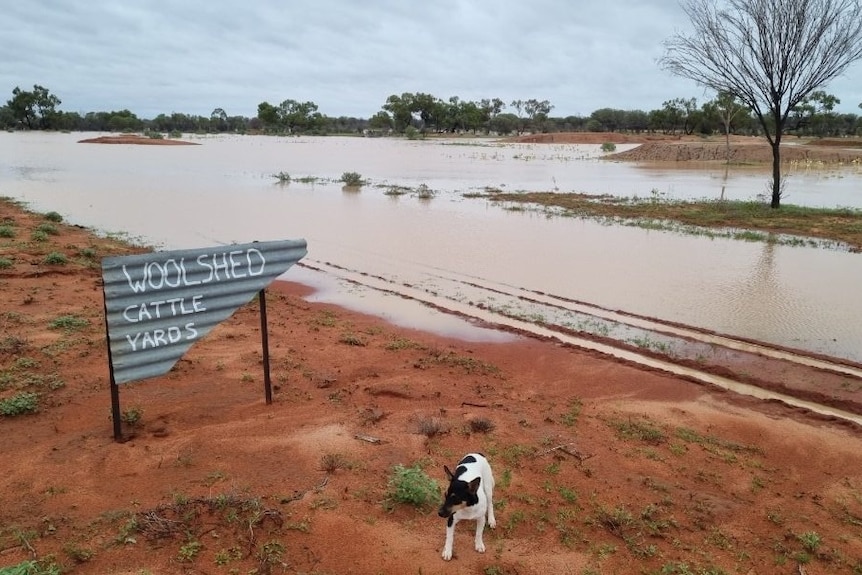
A number of properties are cut off from main roads. (Supplied: Dennis Mannion)
There is also work to be done in locating livestock on these vast outback properties.
Mr Beven says it is hard for him to say whether he has lost any animals to the deluge.
Without being able to access parts of his property due to the water, he is unsure what he will find once the water dries up.
He is hopeful the animals managed to move away from the rising water.
Loading…
“We’re a little bit lucky with the hills and higher country that we’ve got,” he said.
On some of the more flat, open country, landholders were forced to move sheep out of the rising water.
Livestock welfare
Ameliah Scott, owner of The Flying Vet, saw the water spill over the far west from the air.
While Dr Scott was happy to see the rain, the short- and long-term issues surrounding animal welfare were front of mind.
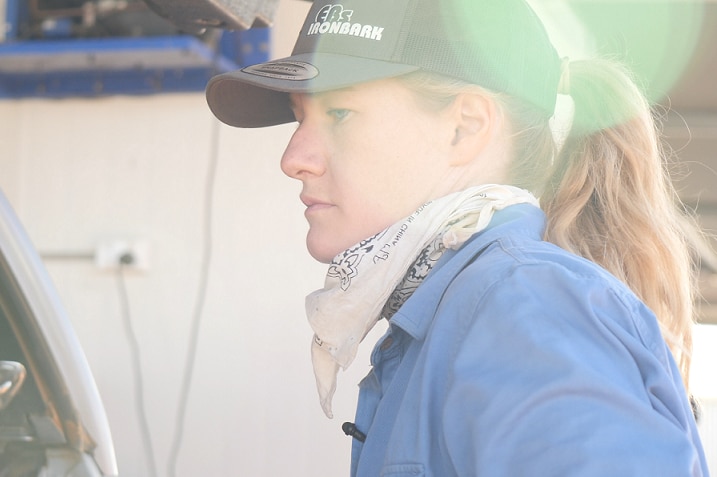
Ameliah Scott says prolonged exposure to moisture can cause a range of serious health issues for livestock. (ABC News: Donal Sheil)
She says when the water first came in, the immediate concerns were livestock standing in the water for too long.
“Hoofed animals, once they’re in water for more than 48 hours … their feet begin to slough off,” Dr Scott said.
“Sloughing off” is when an entire hoof falls off the animal, something that can be fatal.
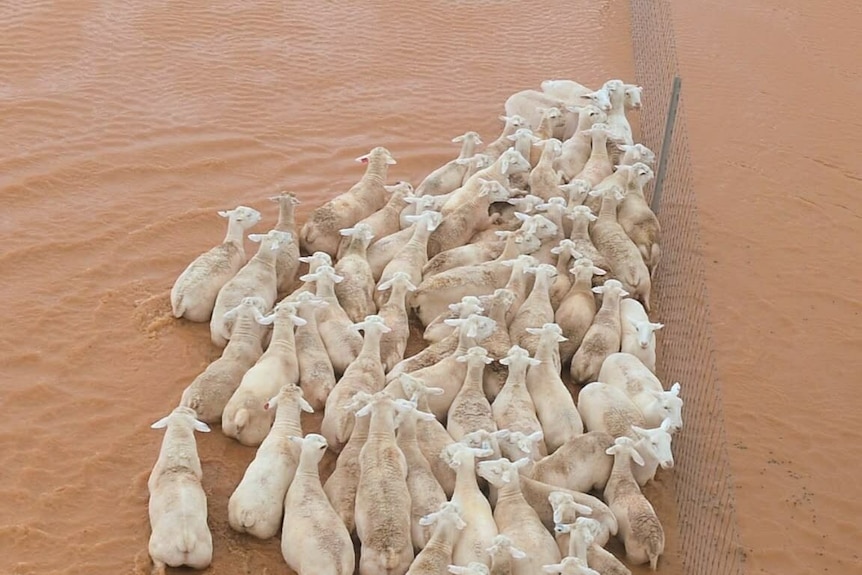
Helicopters have been used to move livestock out of flood water. (Supplied: Carey Contracting Photography)
In the longer term, Dr Scott says there are other issues that can arise from prolonged exposure to moist conditions, such as bacteria build-up, secondary skin infections and abscesses in the feet.
A number of treatments and preventions are available if graziers notice their animals appear “sick and slow-moving”, or if they notice skin infections, in particular.
“If they get onto it early enough, it can have quite a good outcome,” Dr Scott said.
Seasonal whiplash
It was the rain everyone was waiting for, and a stark difference to the barren landscape that existed mere weeks ago.
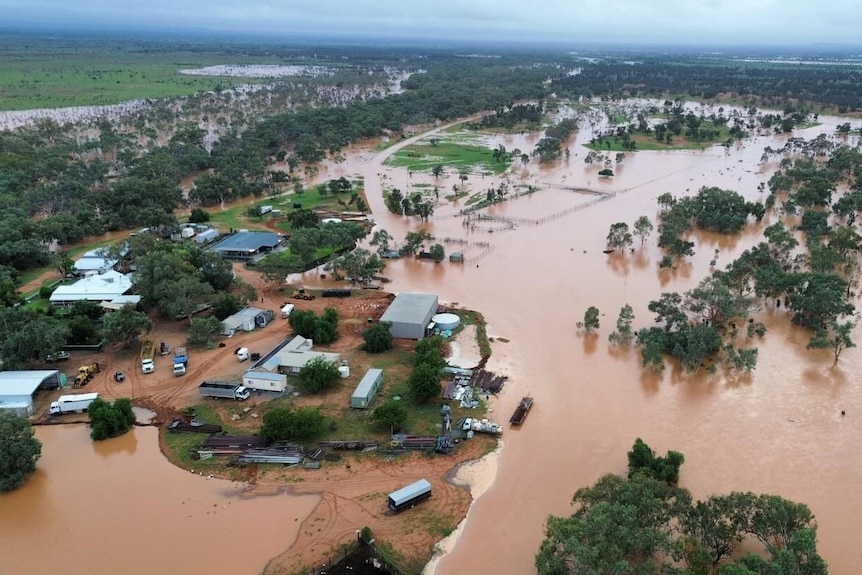
Marrapina Station, 160 kilometres north of Broken Hill, was flooded in by the rain. (Supplied: Jess Pluckrose)
In the second half of February, many parts of far-west NSW received major rainfall tallies, with anywhere between 50 and 400mm recorded across the region.
But it was not long ago that Broken Hill livestock and property agent Troy Hartman was having some tough conversations with producers.
With 2025 being drier than average, dams were running dry, and there was not enough feed to keep livestock on properties at full capacity.
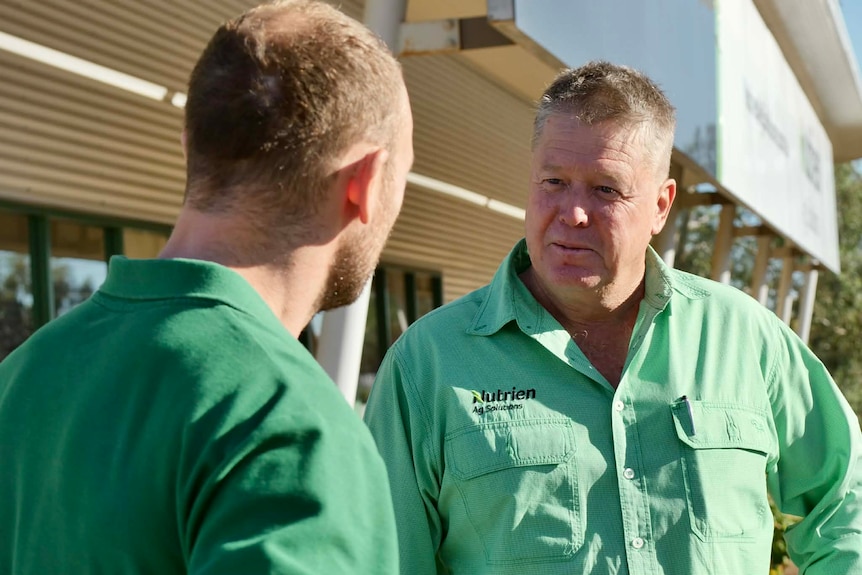
Troy Hartman says the season has turned around completely. (ABC Broken Hill: Lily McCure)
“[We] spent the remaining sort of half of last year destocking, in a pretty big way,” Mr Hartman said.
“There was sort of not many cattle left in the western division after September, October.”
The lack of rainfall was widespread and, up until only a few weeks ago, graziers were preparing for it to continue.
For graziers like Mr Beven, it has been a stark comparison.
“It’s been day and night … everyone was prepared for drought,” he said.
Now the rain has arrived, blanketing much of the far west, refilling dams and triggering grass growth everywhere.
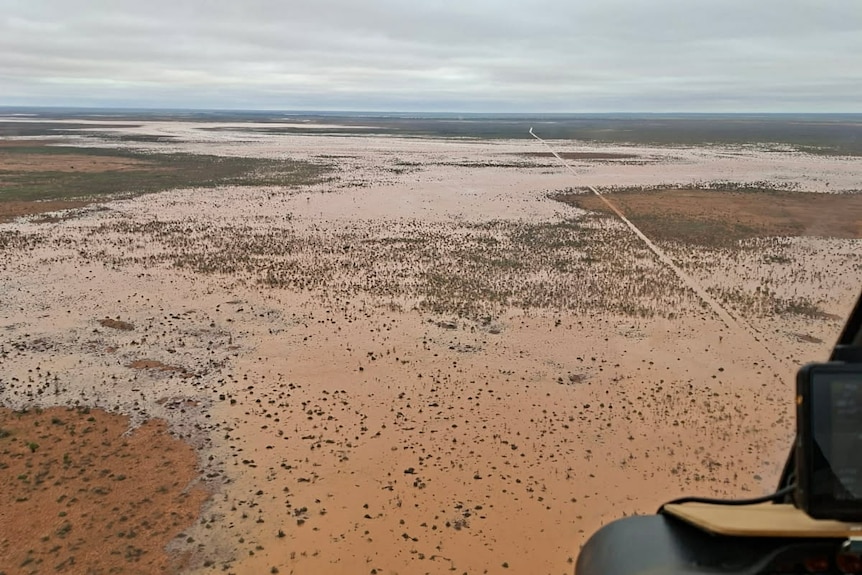
The rain will trigger extensive grass growth in the coming months. (Supplied: Terry Smith)
Mr Hartman says it has changed the outlook for the season completely and has been ideal timing for feed growth.
“As a rule, the majority of people are well out of the woods,” he said.
“There’s still plenty of moisture and heat in the ground. With that combination, it [the grass] will just go berserk.”
‘Rain cheaper than drought?’
As the water subsides and the ground soaks up the moisture, there is a sense of optimism and a boost of energy amongst producers.
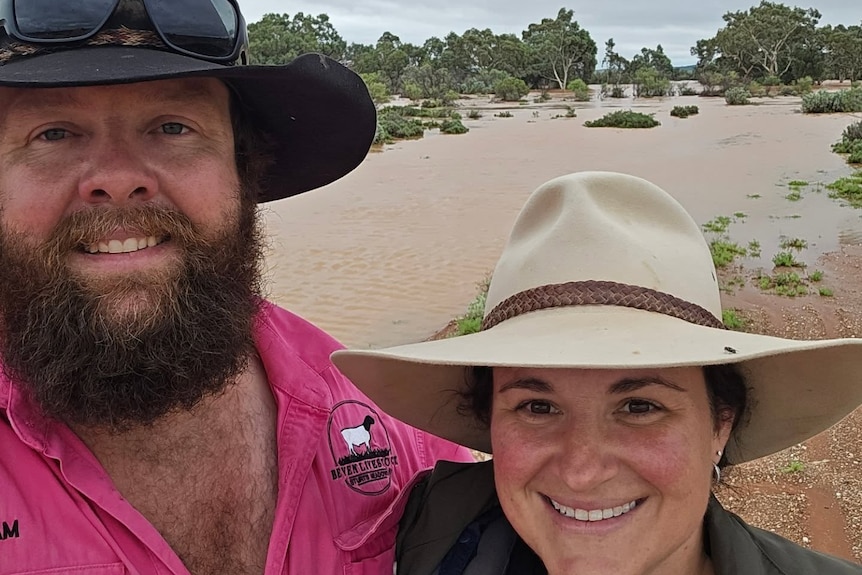
Sam and Erin Beven lost road access in and out of their property. (Supplied: Erin Beven)
Mr Beven says he is hopeful that what he has heard about the cost of damages due to rainfall being cheaper, compared to the costs associated with drought, is true.
“I have heard a few people … [with] more experience with this sort of situation than I do [say that].
“[It] remains to be seen whether it’s [the rain] cheaper than drought — but I hope so.”