
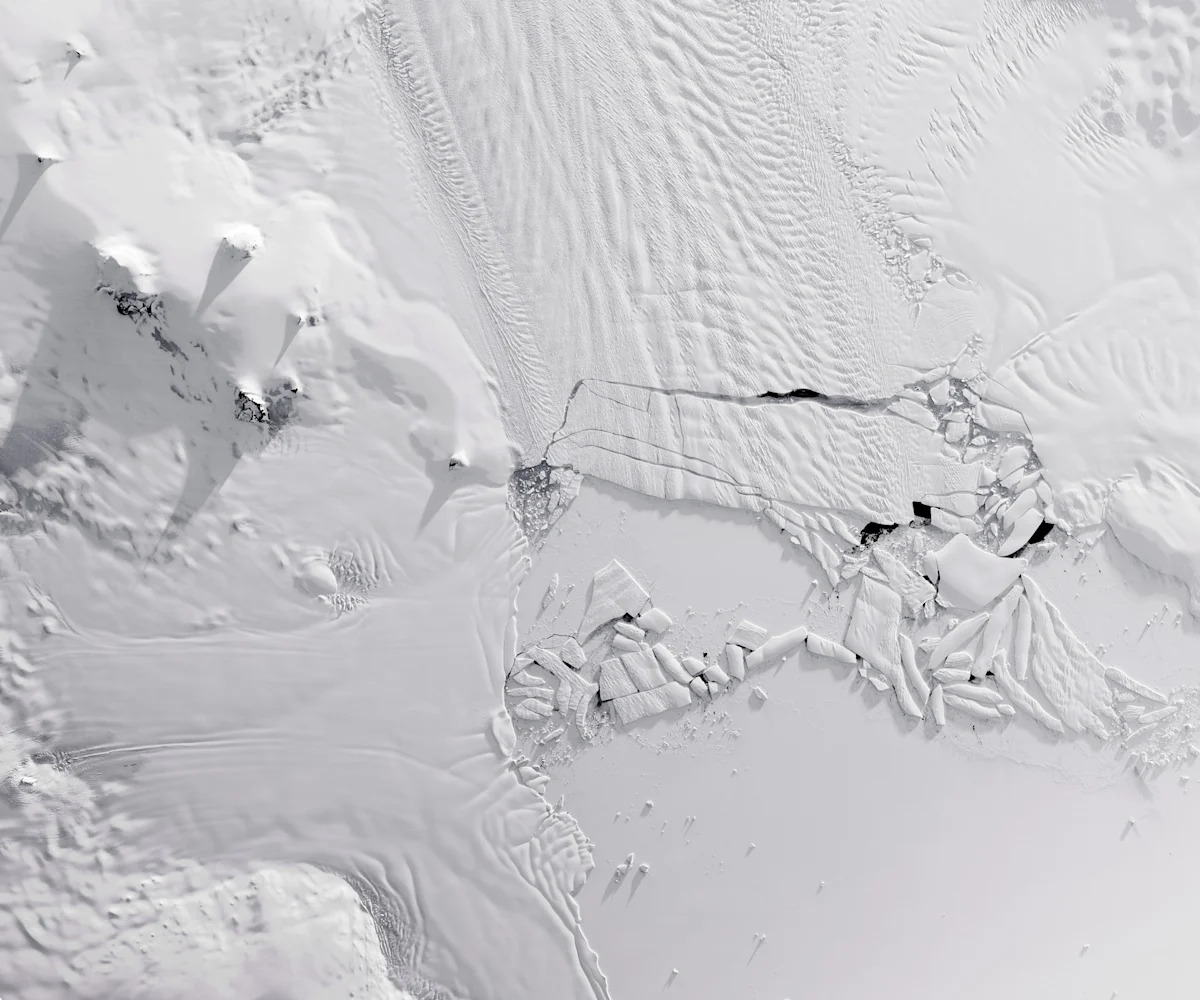
Antarctica has lost enough ice over the last 30 years to cover the City of Los Angeles area 10 times over, according to new research.
Glaciologists at the University of California, Irvine, used satellite images from the last three decades to measure the retreat of ice sheets over the Antarctic continent.
MORE: Antarctic glacier retreating at rate 10 times faster than previously measured: Study
While more than three-quarters of Antarctica were found to be stable, the remainder of the continent has experienced rapid melting over the last 30 years, according to the new study published in the Proceedings of the National Academy of Sciences.
The regions losing ice the fastest are West Antarctica, the Antarctica Peninsula and parts of East Antarctica. Nearly 5,000 square miles of grounded ice have been lost since 1996, the researchers said.
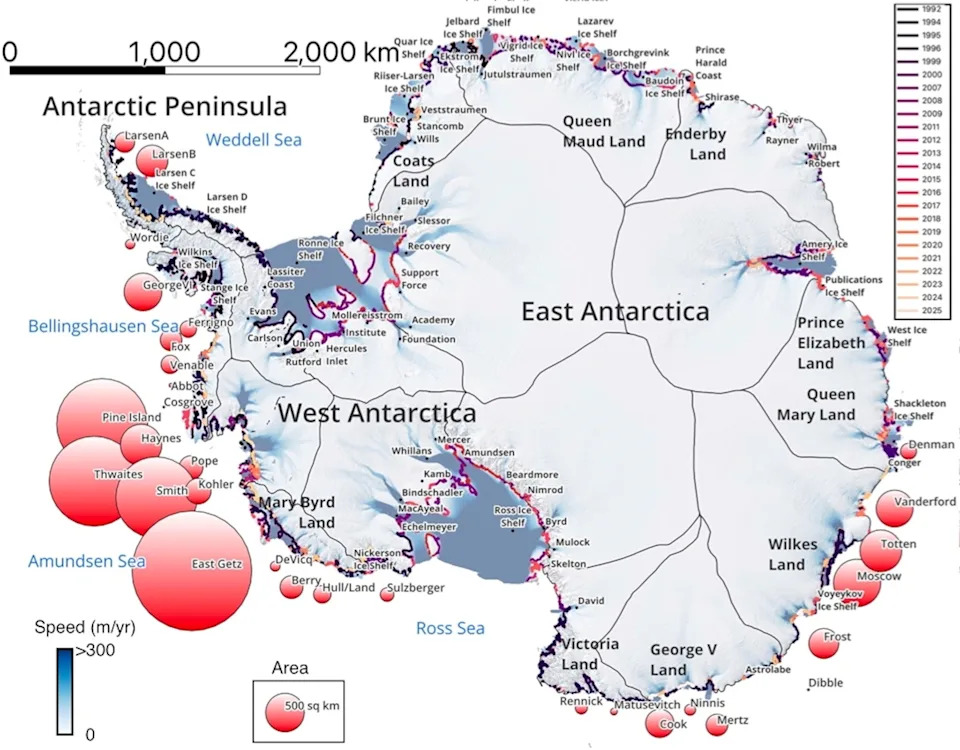
UC Irvine – PHOTO: Satellite data shows that 23% of Antarctica’s ocean-reaching glaciers are undergoing rapid retreat.
The research includes a comprehensive mapping of the grounding line — the boundary where ice sheets separate from the bedrock and begin to float on the ocean — which has been the “gold standard” for documenting ice sheet stability, Eric Rignot, professor of earth system science at UC Irvine and lead author of the paper, said in statement. This is the first time the grounding line in Antarctica has been mapped over such a long time span, Rignot said.
There has been no grounding line migration for 77% of Antarctica’s coastline. However, the ice sheet has been retreating from the grounding line in the most vulnerable regions at a rate of more than 170 square miles per year.
MORE: Researchers find methane leaking out of cracks in Antarctic seabed
The most dramatic changes occurred in the Amundsen Sea and the Getz section in West Antarctica, where glaciers retreated up to 25 miles. Pine Island Glacier retreated more than 20 miles, Thwaites Glacier retreated more than 16 miles, and Smith Glacier retreated 26 miles.
“Where warm ocean water is pushed by winds to reach glaciers, that’s where we see the big wounds in Antarctica,” Rignot said.
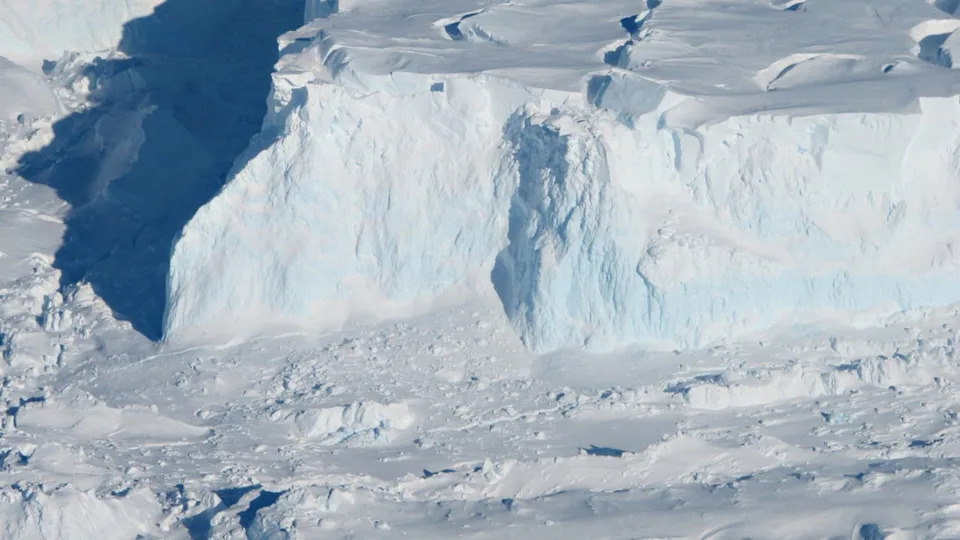
James Youngel/NASA – PHOTO: Thwaites Glacier in West Antartica.
Glaciologists have taken a particular interest in Antarctica’s western shelf due to its potential to cause a severe rise in sea levels. Thwaites Glacier, also known as the “Doomsday Glacier,” already contributes to 4% of overall sea level rise, while Pine Island Glacier is Antarctica’s fastest-melting glacier.
If the West Antarctica Ice Sheet were to collapse in its entirety, it has the potential to contribute up to 9 feet in sea level rise, researchers say.
MORE: Antarctic iceberg the size of Chicago breaks off, reveals thriving undersea ecosystem
The intrusion of warm water below the ice sheets explains most of the retreat patterns in Western Antarctica, but the significant grounding line migration along the Antarctic Peninsula, which sits on the northeast part of the continent, is not as clear, the researchers said. There is no evidence of warm water in that region, Rignot said.
“Something else is acting — it’s still a question mark,” Rignot said.
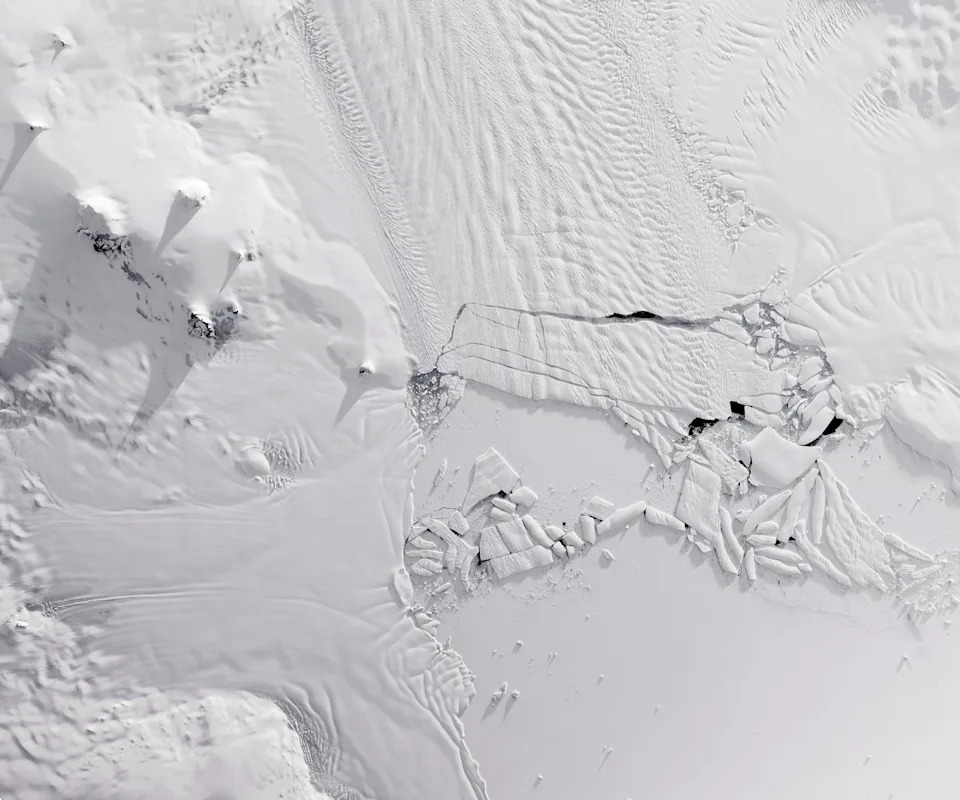
NASA – PHOTO: Pine Island Glacier in 2018.
Every three years, vulnerable regions of Antarctica are losing the grounded ice equivalent to Los Angeles, the researchers said.
“The flip side is that we should perhaps feel fortunate that all of Antarctica isn’t reacting right now, because we would be in far more trouble,” Rignot said. “But that could be the next step.”