
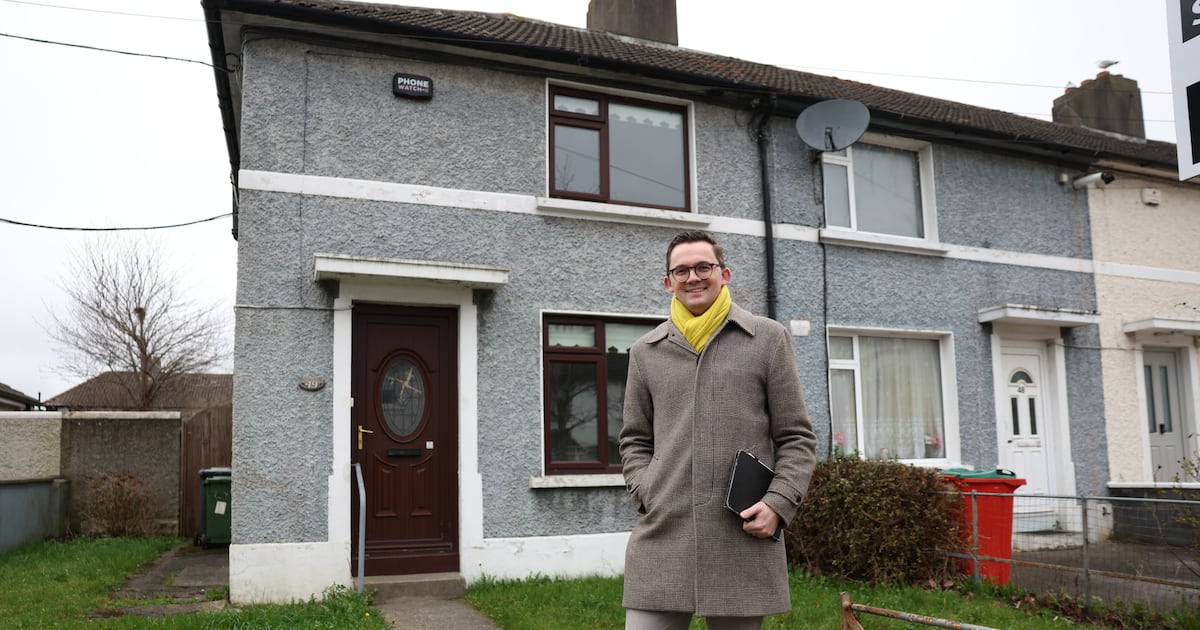
Finding an affordable home within easy reach of Dublin city centre is not an easy feat. However, if you’re open to taking on a big project, you could look at fixer-uppers that have been vacant for more than two years, thus qualifying for the Vacant Property Refurbishment Grant of up to €50,000 (or potentially up to €70,000 if the property is derelict).
Some key things to look out for when assessing a fixer-upper are: does it have a big garden providing space to extend? Is it a corner or end-terrace property, thus providing even more space? Does it have amenities nearby? And, for those working in the city, is it an easy, commutable distance away with accessible public transport?
Number 49 Glentow Road in Whitehall, Dublin 9 – currently on the market with Smith and Butler Estates with an asking price of €375,000 – is a property that ticks all those boxes.
It is a former corporation-built home dating back to 1939/1940, according to Dublin City Council. The council doesn’t have a source to confirm who the architect was, but architect John Dobbin of Dobbin + Company Architects says the home is akin to those designed by Herbert Simms, who was city architect at the time. Such properties were built as part of an initiative to move families from unsuitable, overcrowded accommodation in the inner city.
The layout of 49 Glentow Road is that of a classic two-up two-down home, with two reception rooms and a very small galley kitchen on the ground floor, with two bedrooms and a small shower room upstairs. This home has had very little structural changes made to it over the years and presents very much as it was originally designed. There are old-fashioned hooks on the picture rails, showing they were used for their intended purpose, as well as cast-iron fireplaces in the front room and the bedroom.
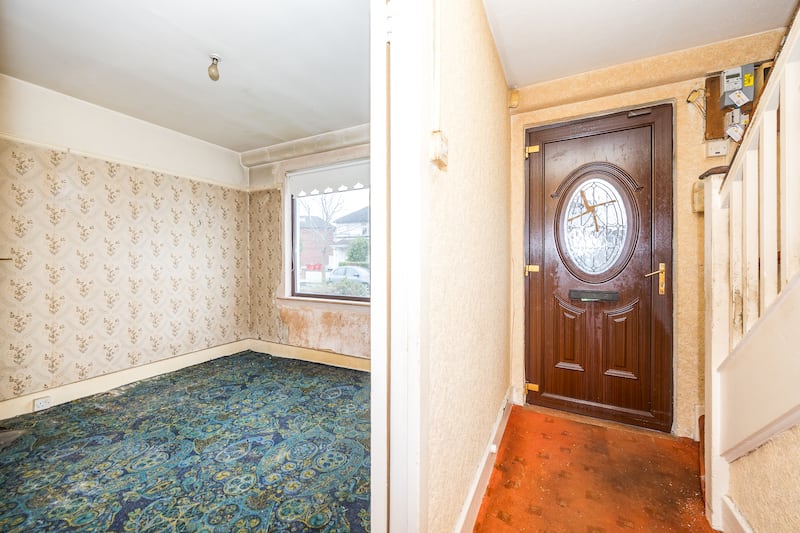 Hallway and front room
 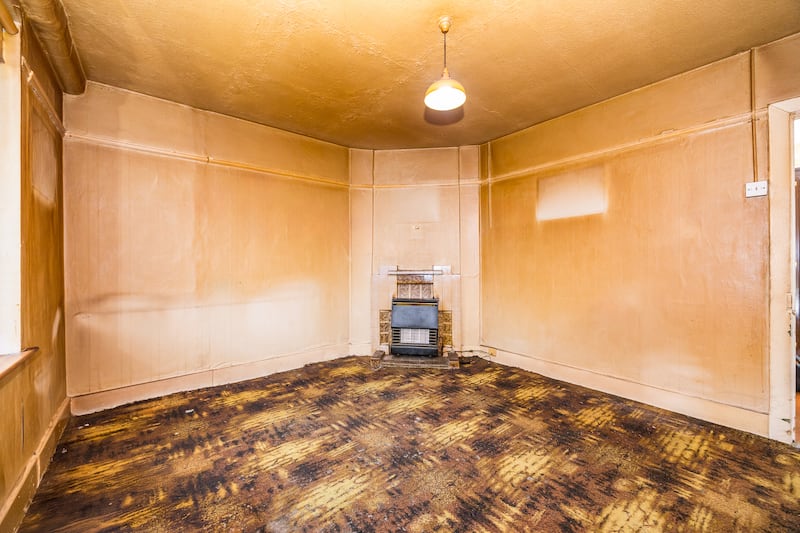 Rear sittingroom
 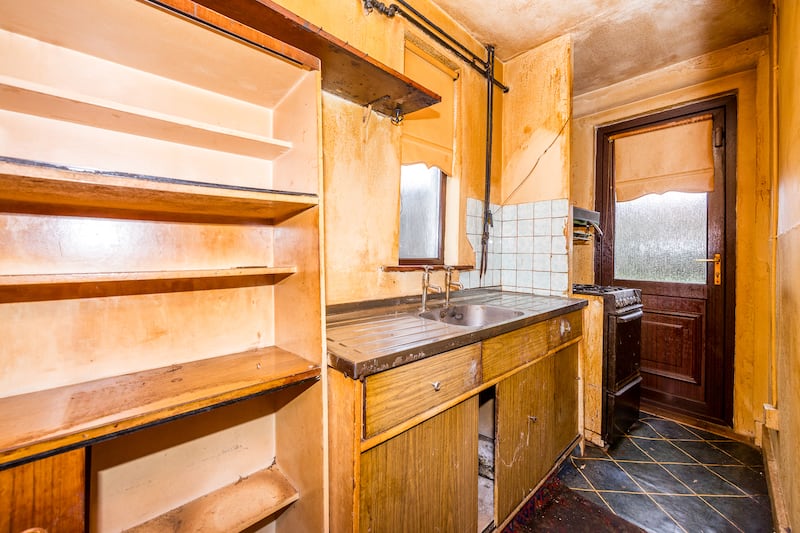 Galley kitchen
 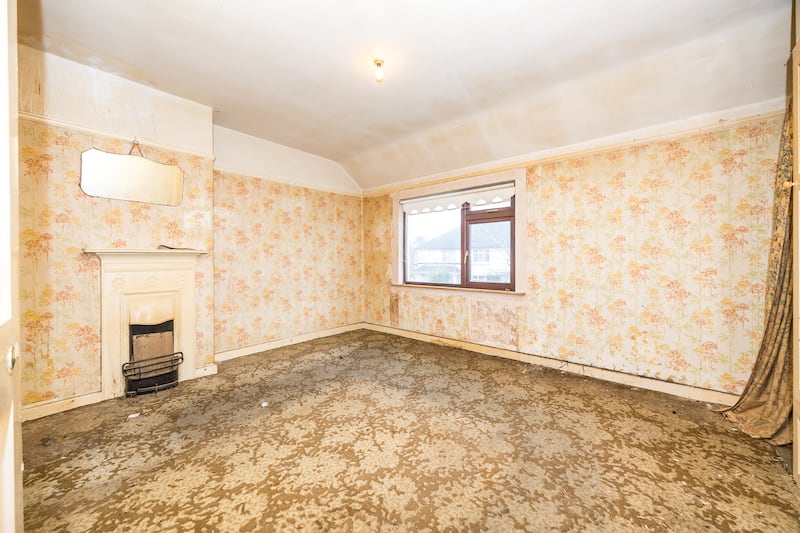 Bedroom
 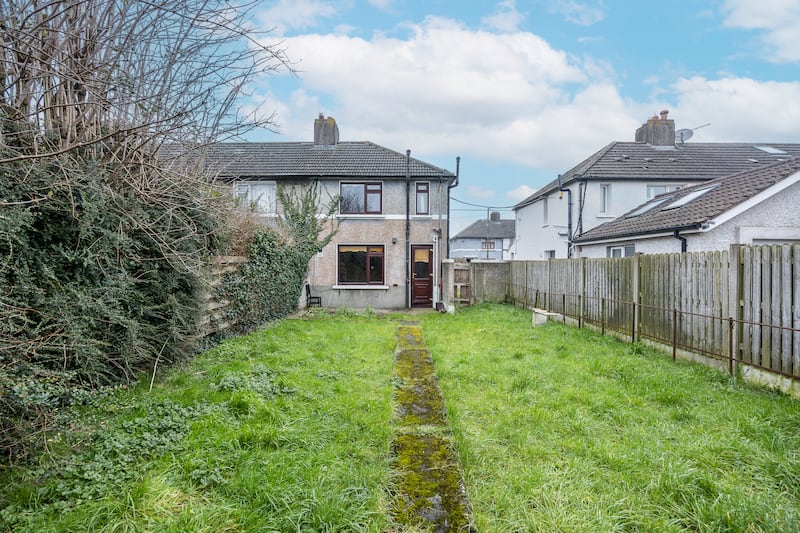 Back garden
It extends to 62sq m (667sq ft) with a G Ber and has a front and side garden space as well as a long back garden of about 20ft.
John Dobbin joined The Irish Times for a walk-through of the property to advise what you could potentially do to upgrade this home.
First steps
The first step would be to get an electrical assessment of the house by an electrician, as it’s likely a full rewire will be needed, which must be certified on completion, Dobbin says.
Secondly, with no existing heating system, the most sensible route for implementing one would be via an air-source heat pump, converting ambient air to hot water with either underfloor heating or traditional radiators. Such systems cost in the region of €12,000 to €16,000.
This would have to be done in conjunction with an energy upgrade, to improve the insulation value of the walls and ceiling/roof space, as efficient space heating requires a fabric-first approach to reducing energy demand and improving performance, he adds. SEAI grants are available for retrofitting works.
In terms of space, if you were to retain the current footprint of the house, you could remove the partition wall between the current galley kitchen and the rear sittingroom to create a kitchen/diningroom.
Ideally, however, if your finances allow, it would be sensible to extend the house before you move in, Dobbin says. This would save you from having to redo the insulation at a later date and would create a spacious three-bedroom home with ample living space.
The plan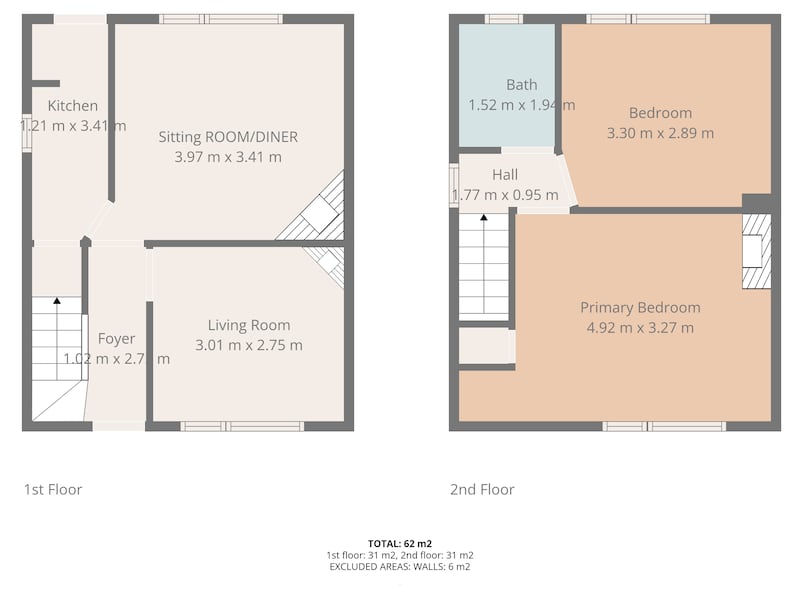 Current floor plan of 49 Glentow Road
“I think we could turn this 62sq m house into a three-bedroom house with a couple of careful moves,” Dobbin says.
Ground floor:
Keep the front room working as it is, keeping it separate from a busier living space to the rear. This would allow you retain the cast-iron fireplace as a feature. “It’s fulfilling its function as a traditional front room,” Dobbin says.Keep the staircase where it is, adding storage space underneath.Add a two-storey extension to the side and rear of the house of about 2m in depth. The floor area of the extension of the ground floor extension would be about 20sq m (215sq ft).This would allow for a downstairs loo to the front of the extension, and a utility room and a cloaks closet beyond that.To the rear, knock the existing partition wall to create a bright open-plan kitchen/living/diningroom with sliding doors that open out to the west-facing garden (the sun’s path moves from the front to the rear of the house, setting over the back garden in the evening.)It would be possible to add a door from the open-plan space into the front room if you wished, or keep it as a separate space to retreat to.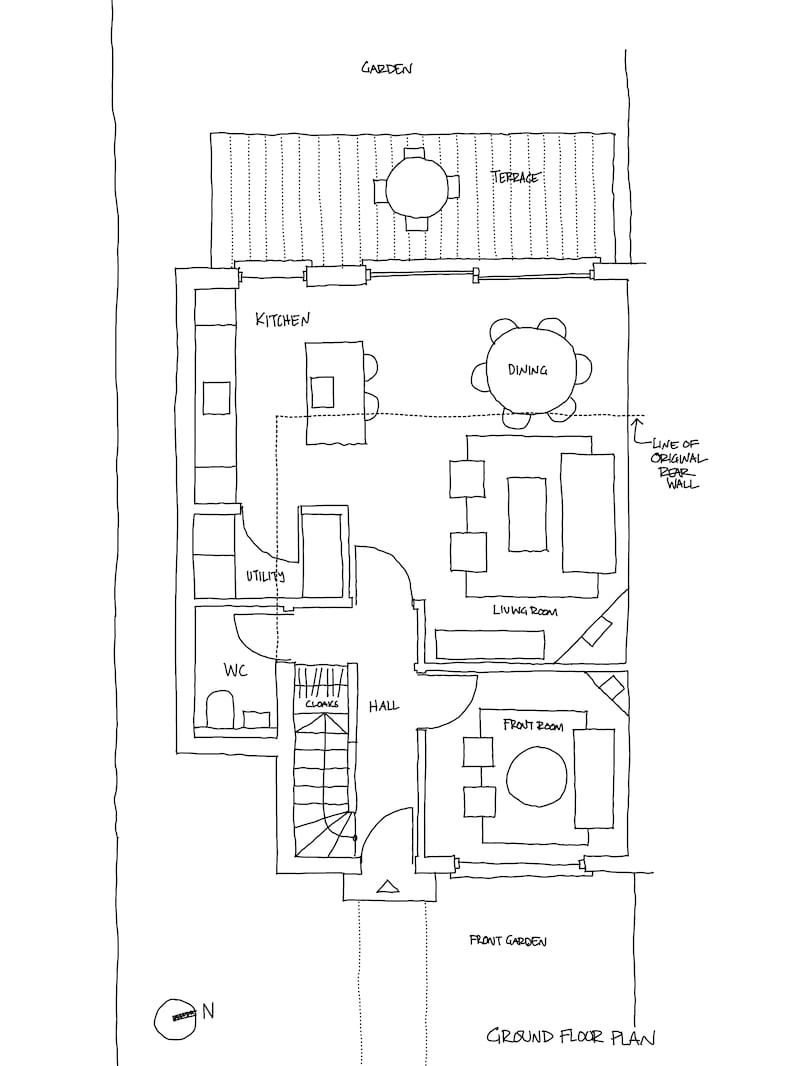 Plan for the ground floor
Upstairs:
Replace built-in storage in the main bedroom to the front of the house.Add a new, larger bathroom to the side extension space.Add a third double bedroom with built-in storage to the rear extension. The extension on the first floor would extend to about 16sq m (172sq ft).Add a sedum room over remainder of the ground-floor extension, for the second bedroom to look out on.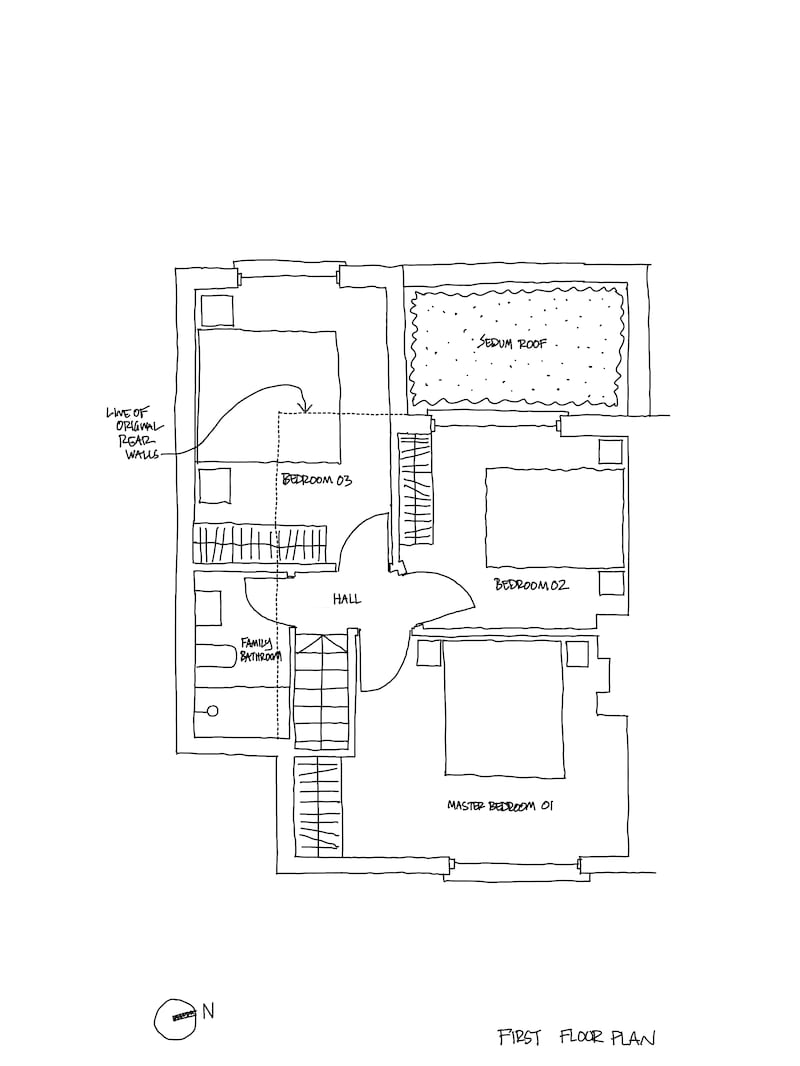 Plan for the first floor
This plan takes it from a two-bed of 62sq m (667sq ft) to a three-bed of 98sq m (1,055sq ft).
For illustrative purposes only, a rough estimate of the cost – using the SEAI’s metric of €2,000 per sq m for the renovation of the existing 62sq m footprint and €3,000 per sq m for the building cost of the 36sq m two-storey extension – would amount to €232,000.
These proposals are preliminary in nature, based on limited site data, and remain subject to detailed design development, technical surveys and statutory planning processes.