
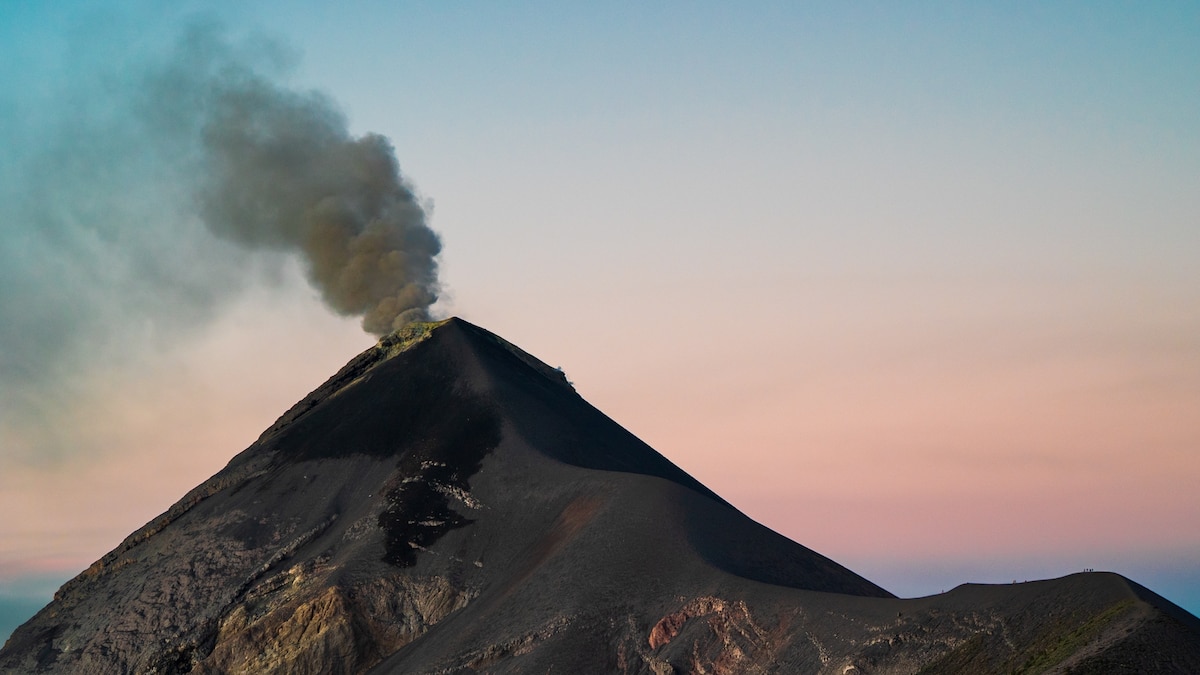
“When lahars are significantly large, the signal can be detected up to 20 minutes before the mudslide reaches the monitoring station,” says Béjar. This all depends on the AI’s ability to correctly distinguish a lahar from another type of volcanic event generated inside the mountain, he cautions. The algorithm was very good at flagging medium and large lahars but struggled to identify smaller ones.
(Volcano forecasts could soon be a reality.)
Lahars pose threats beyond Guatemala
KNN is user-friendly, requires minimal processing power, and can be deployed on inexpensive computers employing existing seismic monitoring networks. This makes it an ideal solution for resource-constrained regions like Guatemala. Béjar says that INSIVUMEH is planning to incorporate the algorithm into their monitoring system this year. “The idea is that the work we do in Guatemala can directly benefit them as project partners.”
But its implications extend far beyond the slopes of Fuego. Candidate volcanoes to work on with AI include Mount Rainier, close to Seattle, and Cotopaxi, next to Quito, Ecuador, because they share the same potential for dangerous mudflows to form. Béjar hopes to one day collaborate with other geologists and test his AI-based system on those, and other volcanoes.
And Béjar, who is currently a visiting professor at Albion College in Michigan, is not the only one working with artificial intelligence in volcanology, though he believes he is the first person to do it with Volcán de Fuego’s lahars.