

Listen to this article
Estimated 4 minutes
The audio version of this article is generated by AI-based technology. Mispronunciations can occur. We are working with our partners to continually review and improve the results.
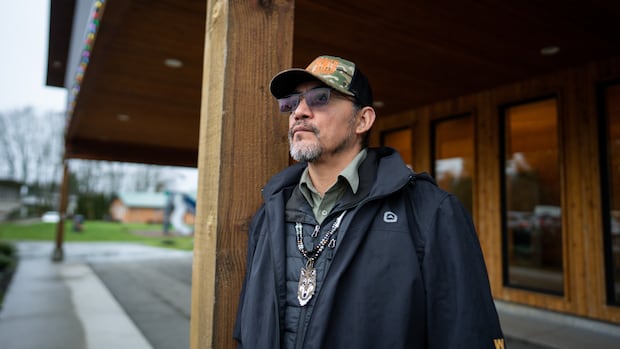
When visitors come to Skwah First Nation near Chilliwack, community energy champion Slade Williams says the nation’s mission to shrink its carbon footprint is easily seen — because you can see it from the rooftops.
“It is great that everybody who drives into our community or even near our community, they can see the solar,” said Williams.
The band recently finished installing solar panel arrays on its community hall, an administration building and its preschool.
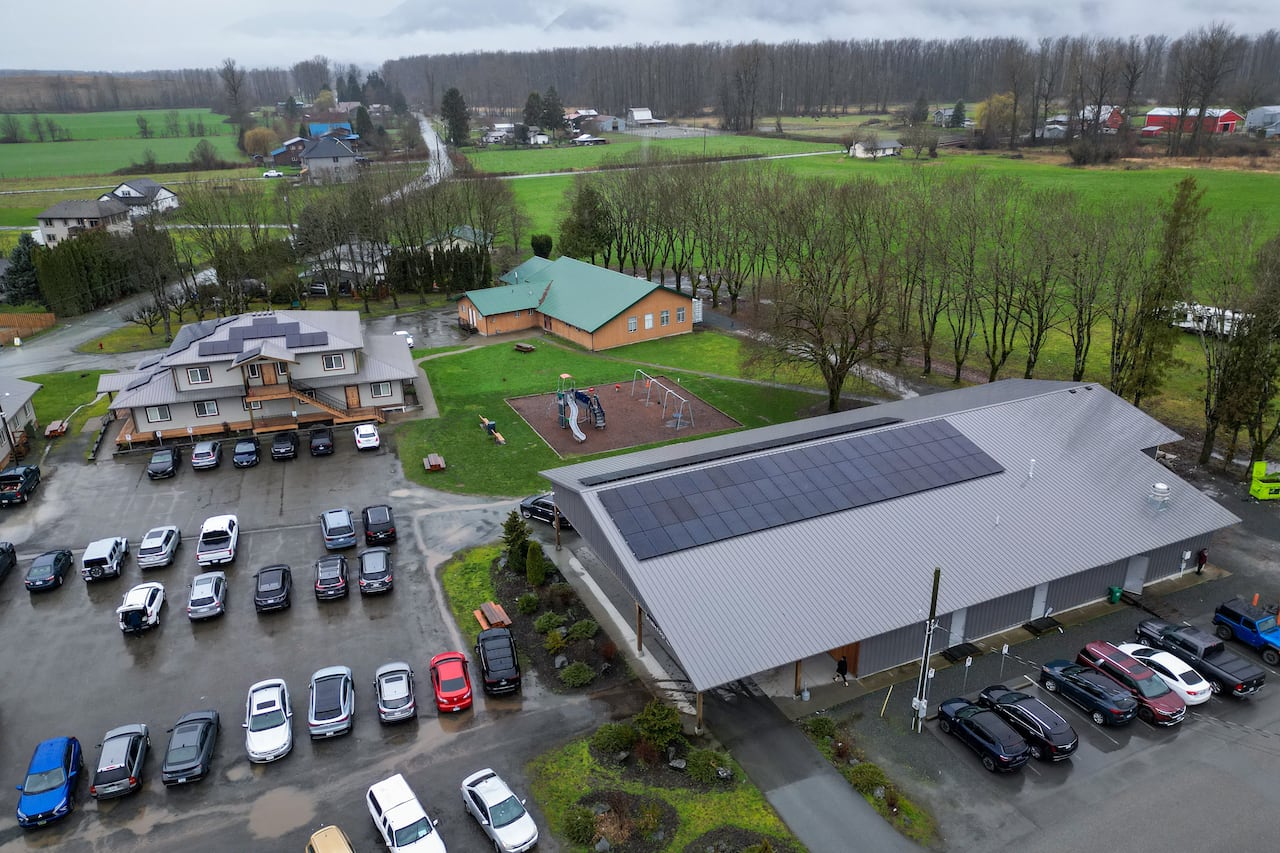 Solar panels are pictured on buildings at the Skwah First Nation near Chilliwack, B.C., on Wednesday, Mar. 4, 2026. (Ben Nelms/CBC)
Williams said the project, three years in the making, will help reduce the community’s carbon emissions and save money on its B.C. Hydro bills.
“We want to show others in the Fraser Valley and the Stó:lō territory that this is the way to be,” he said.
A B.C. Hydro spokesperson said a July 2024 rebate program for solar panels in Indigenous communities was so popular the utility paused it by December that year.
“We received hundreds of applications in the first six months from nations all across the province,” said Susie Rieder.
“And because of that high demand, the Indigenous offer is currently paused, just while we work on reintroducing an updated version.”
In lieu of that program, Rieder said communities can still apply to the utility’s mainstream solar and battery programs.
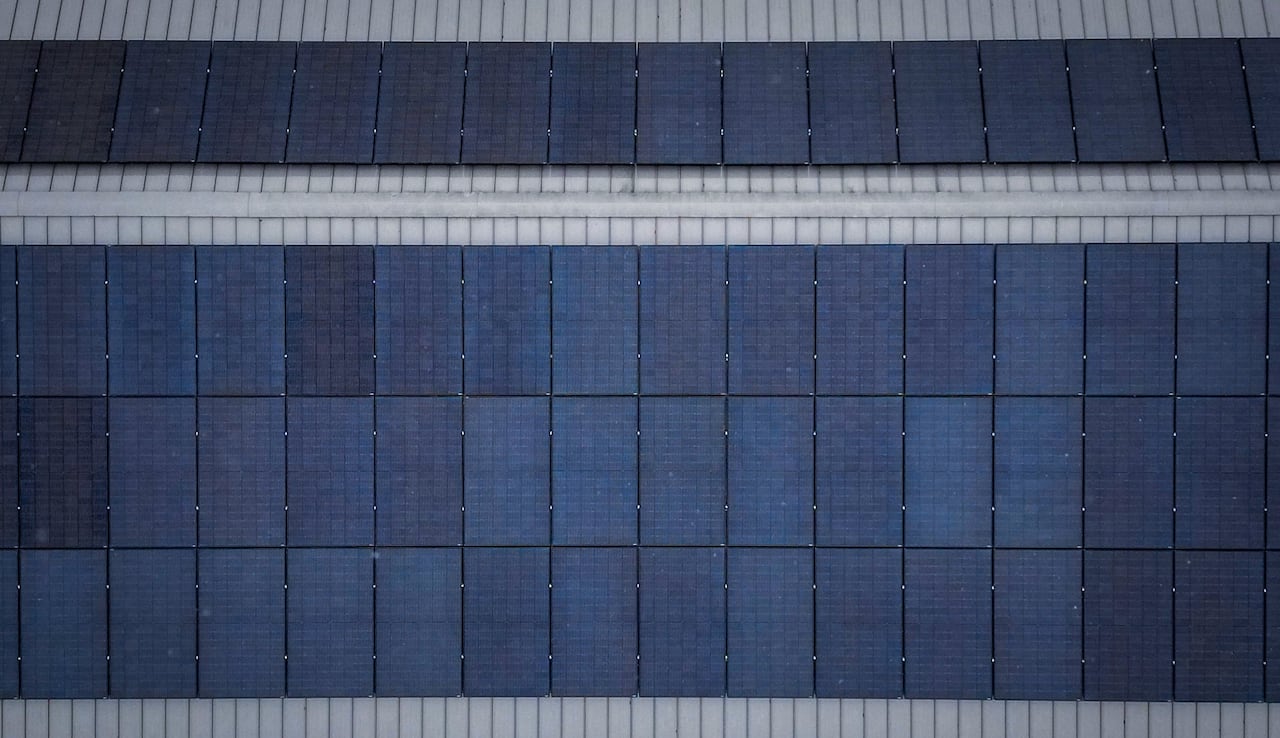 Hundreds of applications were received by B.C. Hydro for its solar program. (Ben Nelms/CBC)Most remote communities still reliant on diesel
Skwah First Nation is on the B.C. Hydro grid and can take advantage of “self-generation.”
“The amount of power that we use will be offset with the amount of power that we generate,” said Williams.
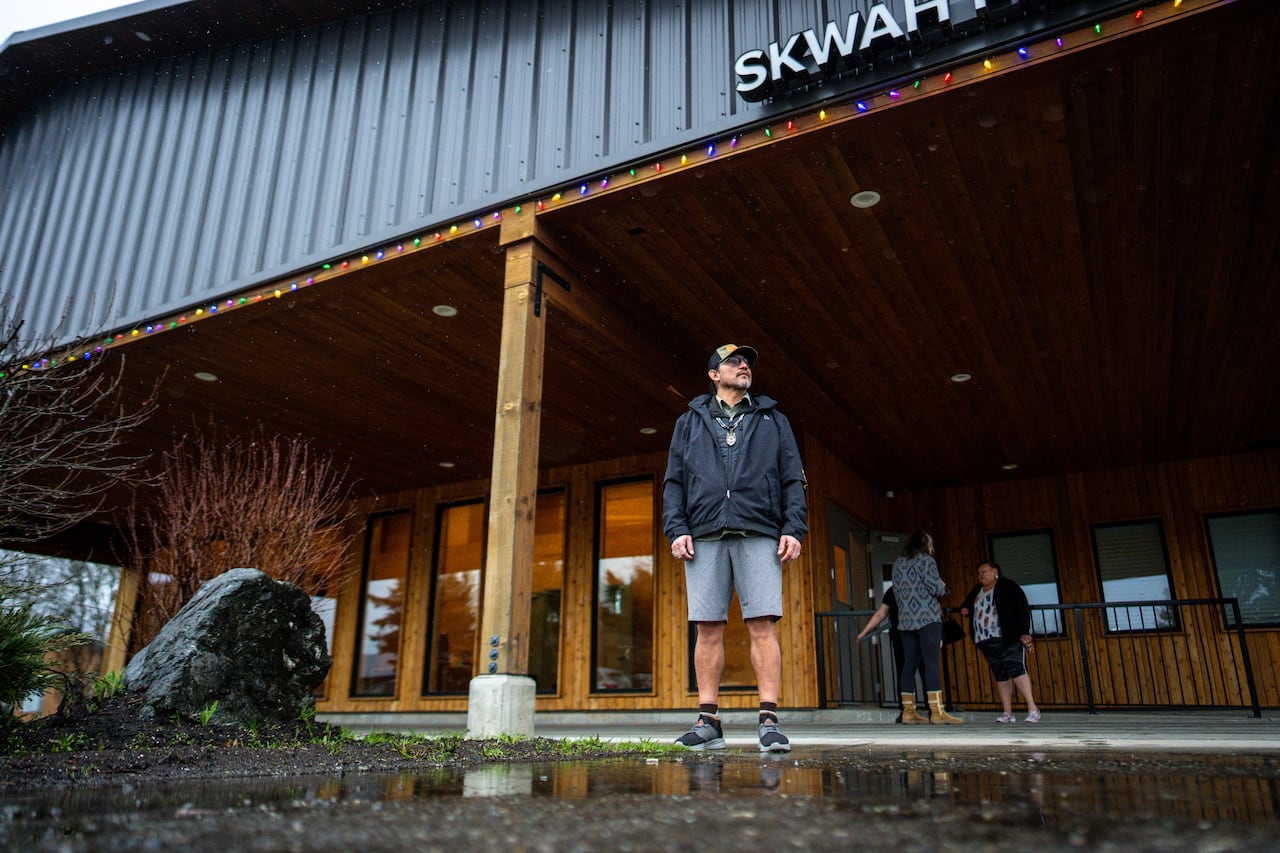 Slade Williams says the project is years in the making. (Ben Nelms/CBC)
Meanwhile, many off-grid reserves and communities are still reliant on diesel, which remains to be a fuel with numerous uses.
“It’s quite a remarkable energy source, but it can be very expensive and it can be dirty and also noisy,” said Heather Exner-Pirot, director of energy, natural resources and environment, Macdonald-Laurier Institute.
“And so there’s always a desire to reduce dependence on diesel. But again, having all those qualities in another energy source has been difficult to find.”
Williams said cost is often the biggest hurdle to pivoting from diesel in remote communities.
“I think that some of the barriers might be … having them financed,” he said.
“Remote locations tend to be dependent either on diesel, or if they have electricity access but no natural gas access will be dependent on propane, or even wood burning,” said Exner-Pirot.
“It’s a matter of trying to, you know, maintain that mix of reliability and sustainability, but also affordability, which is obviously a huge challenge for most remote communities.”
Future energy solutions in B.C.
UBC chemical engineering professor Naoko Ellis has been mapping out renewable energy options for B.C. communities with Accelerating Community Energy Transformation (ACET), a team based at the University of Victoria.
The team aims to scale up clean energy technology.
“There’s solar, wind, as we know, and biomass — a lot of biomass in B.C. — as well as geothermal,” said Ellis. “Coastal communities can look at tidal or hydropower in other areas. And because it’s place-based, it kind of comes to really community-specific solutions.”
Exner-Pirot said burgeoning nuclear technology could also be a possibility for remote Indigenous communities one day.
“The new one that’s kind of coming on board … is small modular reactors, or normally in this case, it’ll be a microreactor as small as five megawatts,” she said.
Ellis sees growing potential for more Indigenous-owned and operated energy projects.
“It’s leading to some of the ways in which we can think about what does ownership look like, and what are the new forms that we need to think about in terms of energy systems,” she said.