
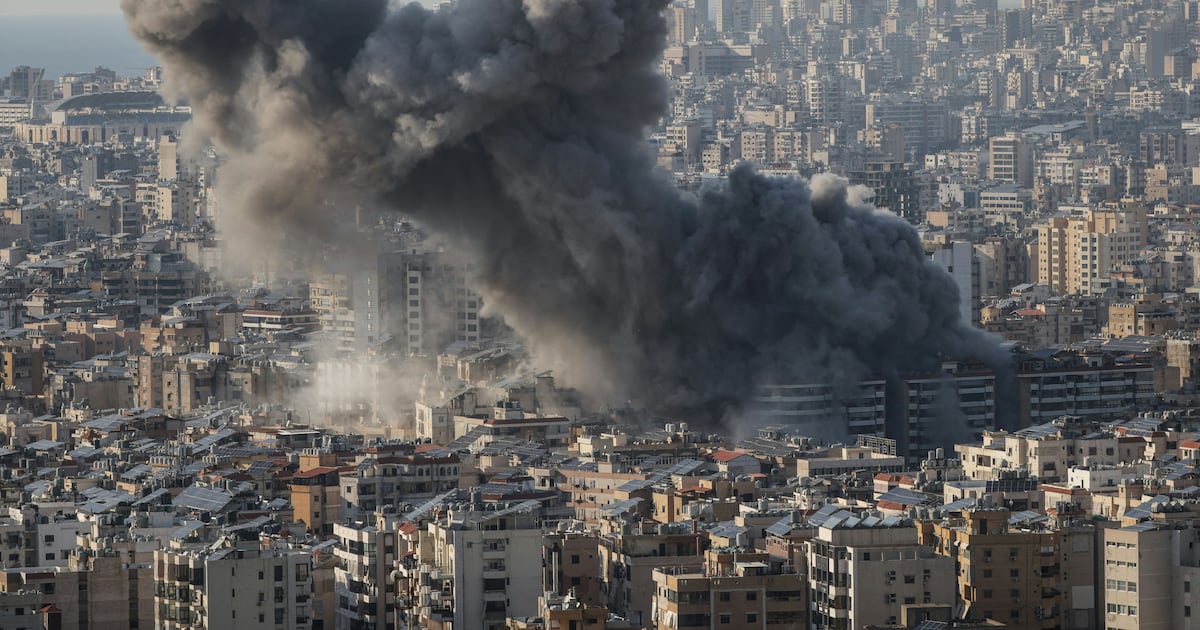
The United States and Israel attacked Iran on Tuesday with what the Pentagon and Iranians on the ground said were the most intense air strikes of the war, despite global markets betting that US president Donald Trump will end the conflict soon.
Raising the stakes for the global economy, Iran’s Islamic Revolutionary Guard Corps said it would block oil shipments from the Gulf unless US and Israeli attacks cease.
But the White House reiterated Trump’s threat to hit Iran hard if it tries to stop the flow of energy supplies through the Strait of Hormuz, where the war has effectively halted one-fifth of the world’s oil and liquefied natural gas shipments, and repeated his offer for the US navy to safely escort tankers.
The US military “eliminated” 16 Iranian mine-laying vessels near the Strait of Hormuz on Tuesday, the US central command said in a statement.
Trump is also considering easing oil sanctions on Russia and releasing emergency crude stockpiles as part of a package of options aimed at lowering global oil prices, according to multiple sources who spoke to Reuters.
Easing sanctions on Russia would potentially boost world supplies of oil but it could also complicate US efforts to deprive Moscow of revenue for its war in Ukraine.
“Today will be yet again, our most intense day of strikes inside Iran,” US defence secretary Pete Hegseth told a Pentagon briefing.
Tehran residents also described the war’s most intense night of bombardment. “It was like hell. They were bombing everywhere, every part of Tehran,” a resident said by phone, speaking on condition of anonymity for security reasons.
Yet with Trump having described the war on Monday as “very complete, pretty much”, investors appeared convinced he would end it soon. A historic surge in crude oil prices on Monday was mostly reversed.
[ Iran now knows Trump’s price point: soaring energy pricesOpens in new window ]
White House press secretary Karoline Leavitt told reporters: “The president and his energy team are closely watching the markets, speaking with industry leaders, and the US military is drawing up additional options following the president’s directive to continue keeping the Strait of Hormuz open.”
Israel intends to continue striking regime targets in Iran to cause as much damage as possible in case Washington brings an early end to the conflict. A source said Israel understands the war is not expected to lead to regime change, but the hope is that a weakened regime will trigger a process that could lead to its downfall.
Iran has refused to bow to Trump’s demand that it let the US choose its new leadership, naming hardliner Mojtaba Khamenei as supreme leader to replace his father, who was killed on the war’s first day. Iran’s foreign minister Abbas Araghchi said his country would keep fighting as long as necessary.
At least 1,270 people have been killed since the US and Israeli air strikes began on February 28th, according to Iranian state media reports.
[ The more Donald Trump spoke, the less his Iran plan seemed clearOpens in new window ]
Israel said it also attacked Iranian-backed Hizbullah targets in south Lebanon, including Beirut’s Dahiyah quarter and the Bekaa valley. Lebanese authorities say 570 people have been killed since last Monday and more than 759,000 have been displaced.
The World Health Organisation said 43 medical centres and five hospitals have closed because of Israeli evacuation orders, which cover 8 per cent of Lebanese territory. Lebanese president Joseph Aoun called for a new ceasefire with Israel.
In Israel, rocket strikes and drones sent millions to bomb shelters as plans to reopen schools were put on hold.
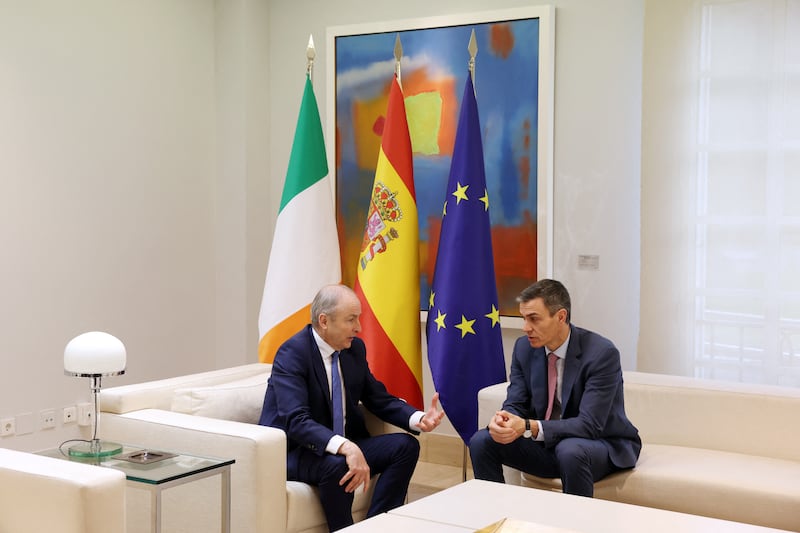 Taoiseach Micheál Martin and Spanish prime minister Pedro Sánchez meeting in Madrid on Tuesday. Photograph: Pierre-Philippe Marcou/ AFP via Getty Images
Taoiseach Michaél Martin has said he will advocate de-escalation in his upcoming meeting with Trump, and that he expects “a good exchange of views” on the Middle East.
Speaking after meeting Spanish prime minister Pedro Sánchez in Madrid, Martin said that when he travels to Washington this week he will convey “our desire that we would have a de-escalation and […] a cessation of hostilities, and that we can get a resolution to the outstanding issues”. – Additional reporting: Reuters