
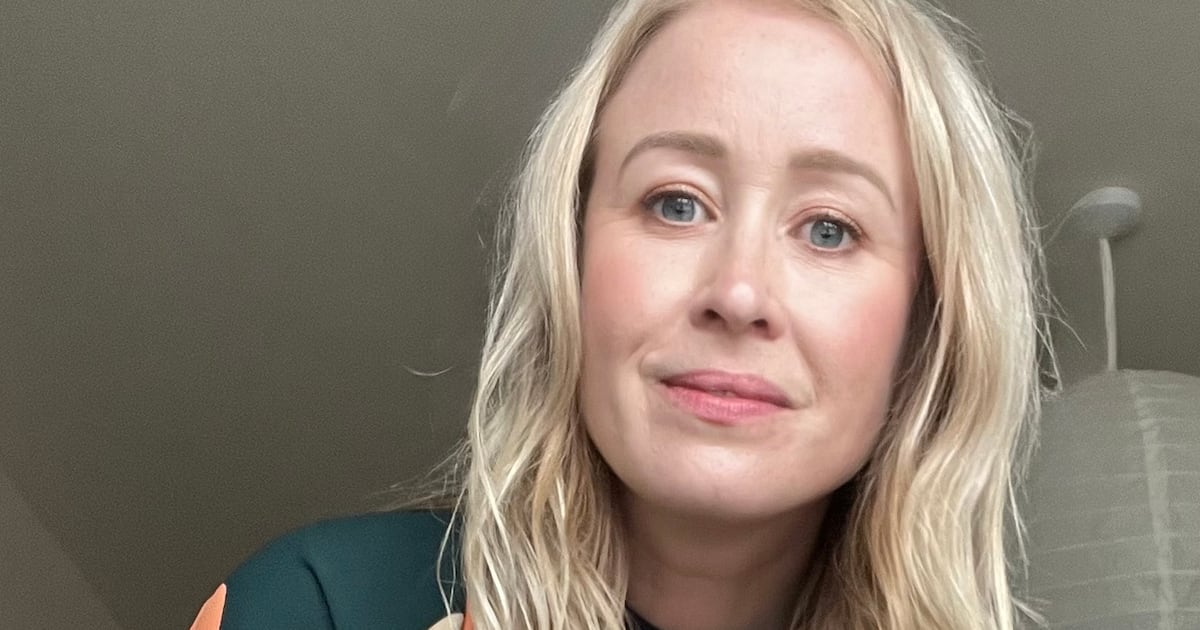
A bit of McDonagh family lore: I wasn’t meant to be called Laura. I was supposed to be called Éilis. I’ve often imagined what happened after my mother announced her intentions in the delivery suite at Sunderland General Hospital: a “that’s nice” from the midwife followed by frowns at the mention of fadas. Elsewhere, the reaction was similarly lukewarm. It generally went something like “oh, lovely”, followed by queries about how the name is actually pronounced. “Ay-lish,” Mam would say, keeping the opening vowel light and open.
Except the long “a” sound in northeast England is flat and deep, foghorn-like and the spelling made it doubly confusing. Over the next three weeks, my poor mam endured every possible interpretation of the name she’d chosen for me, including “Ellis”, “Ee-i-lis”, “Eye-lis” and “Ee-lish”. Despite the best efforts of their teachers, my parents left school with only a handful of Irish phrases. Uncertain in England, their resolve began to slip.
Almost a full month after my birth, they settled on Laura instead. I can imagine their reasoning. They would have thought it was better to go with something straightforward. This was 1983, after all, a less-individualist era. Out of 150 girls in my school year group, I was one of 10 Lauras.
Despite attending schools where Irish surnames were common, I didn’t meet anyone English-born with an Irish first name until I was well into my teens. I can still recall the moment I was introduced to her – Róisín – on a diocesan pilgrimage in Lourdes. I remember being astounded by her broad Geordie accent and the conflicting fact of her unapologetically Irish name.
Decades later, Irishness is having a bit of a global moment. There’s the green wave of actors and musicians dominating screens, radio waves and awards lists. Then there’s the hipster obsession with stout – or ‘Guinnaissance’ – a satisfying portmanteau if ever there was one. Irish baby names are also on the rise – perhaps symptomatic of revived interest in the language. In Ireland, parents are going gaga for Gaeilge, with Rían knocking long-held favourite Jack off the top spot last year.
There are signs of a shift here in Britain, with Irish names scattered across these lists. In 2024, Maeve was the 26th most popular girl’s name in England and Wales – a meteoric rise from 891st place three decades ago for the mythological Irish warrior queen. For me, a would-be Éilis in England, it gives me pride but also a strange feeling somewhere between envy and regret.
I’m coming across more parents in Britain choosing obviously Irish names for their children, including third-generation Irish.
One friend told me about her determination to call her son Paddy, despite an English family member’s misgivings it “sounded like a drunken sailor”. It honoured her Mayo grandparents, who faced enormous prejudice after arriving in England. Another friend with Muslim heritage and her Kerry-born husband gave their children Irish first names and Asian middle names. “I love their names,” she told me. “But I won’t lie – I also think their paths through the world will be easier with Irish names.”
Because, as my friend rightly points out, names can be political as well as personal. Almost exactly a year to the day before my birth, two IRA bombs exploded in London parks. Four months after my parents rejected Éilis in favour of Laura, an IRA car bomb exploded outside Harrods on one of the busiest Christmas shopping days of the year. Perhaps on that awful day, Mam and Dad breathed a sigh of relief about my name change.
[ We left Ireland for a rambling palazzo in Italy and a life of simple pleasuresOpens in new window ]
When I met English-born Róisín, I didn’t consider the politics of her parents’ decision; mainly, I was struck by how pretty it sounded. I certainly wasn’t thinking about the challenges I’d have been likely to face moving through monocultural northeast England as an Éilis in the 1980s and ’90s.
In 2026, things have changed. When Megan, a London-based Irish writer I know, called her firstborn Méabh, she considered it a privilege to give her child an Irish first name – one denied to previous generations in Britain.
Despite knowing it would lead to a lifetime of repeating herself, she also opted for the modern Irish spelling – inspired, she says, by The Birth Name, a poem by Warsan Shire which urges readers to “give your daughters difficult names”.
I’m reminded of the scene in The Wind That Shakes the Barley where Mícheál Ó Súilleabháin is executed after a hurling match. “Mícheál was killed because he wouldn’t say his name in English,” says Damien, the young doctor played by Cillian Murphy – who, like my friend, gave his London-born children Irish names, Malachy and Aran.
[ ‘I’m the most Irish person you will meet with an English accent’Opens in new window ]
Raised by Irish parents in Britain, I sometimes feel like an impostor in my second generation-ness. Would a Laura by any other name feel more sure of herself? Possibly. However, context is powerful. For now, I’m taking heart in the fact that, whatever the reasons – honouring a complex heritage, perhaps, or because Fontaines DC’s Skinty Fia is a banger – today’s Irish in Britain feel increasingly able to opt for “difficult” Irish names. More power to us.
Laura McDonagh is a second-generation Irish writer living in northeast England. Her first book, Commonplace – a memoir about growing up Irish in Britain, memory and belonging – will be published by New Island Books in spring 2027