
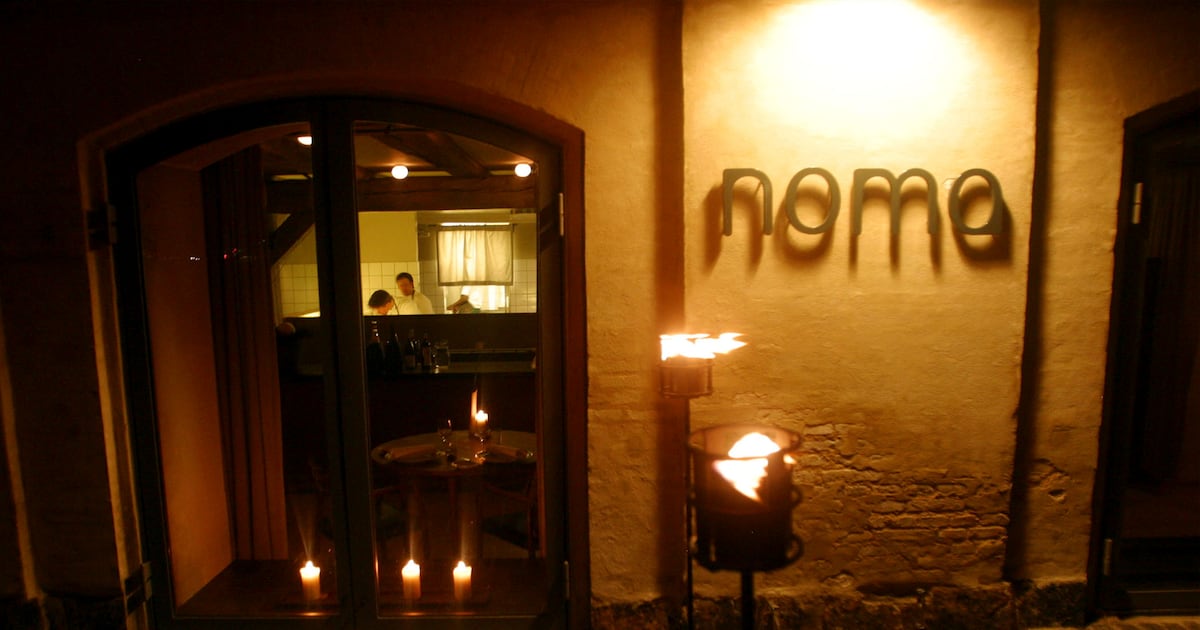
On a February night in 2014, in the middle of a busy dinner at the acclaimed Copenhagen restaurant Noma, the founding chef, René Redzepi, ordered the entire kitchen staff to follow him outside into the cold.
He was shoving a sous-chef in front of him, a young man who had put on techno music, a genre that Redzepi disliked, in the production kitchen. Far from the diningroom, this was where unpaid interns worked 16-hour days, performing tasks such as picking herbs and cleaning pine cones to adorn Redzepi’s celebrated New Nordic dishes.
Redzepi taunted the chef over and over as about 40 cooks, in short sleeves and aprons, formed the usual circle around the two men. It was not the first time they had been forced to participate in a public shaming, according to two chefs who were present.
Redzepi escalated the attack, punching his employee in the ribs and screaming that no one would go back inside until the chef said, loudly enough for all to hear, that he liked giving DJs oral sex. His co-workers stood in silence until he breathlessly complied. Then they filed back into the kitchen and returned to work.
The episode was not mentioned again. Dozens of former employees described other violent punishments and said silence among the staff was customary afterwards.
“Going to work felt like going to war,” said Alessia, now a chef in London, who was in that circle, and asked that her surname not be used because she feared retaliation. “You had to force yourself to be strong, to show no fear.”
While Redzepi and those who now work with him say the abuse is in the past, the former employees contend that he has never been held truly accountable.
Since 2004, Redzepi has been rewriting the rules of fine dining, preaching sustainable eating and creating jewel-like plates that earned Noma three Michelin stars and landed it five times at No 1 on the World’s 50 Best Restaurants List. For effectively transforming the nation into a culinary destination, Redzepi was knighted by the queen of Denmark. In 2013, Anthony Bourdain called him “without a doubt, the most influential, provocative, and important chef in the world”.
At the peak of his fame, in 2023, Redzepi announced that he would close Noma as a restaurant to devote attention to its empire of innovations: its test kitchen, biotech collaborations and global pop-ups, which have become bucket-list destinations for wealthy diners from around the world.
But in recent weeks, Noma’s upcoming pop-up in Los Angeles, a $1,500-per person dinner series beginning today, has sparked a public conversation about Redzepi’s past behaviour. Yesterday, two major sponsors of the series pulled out.
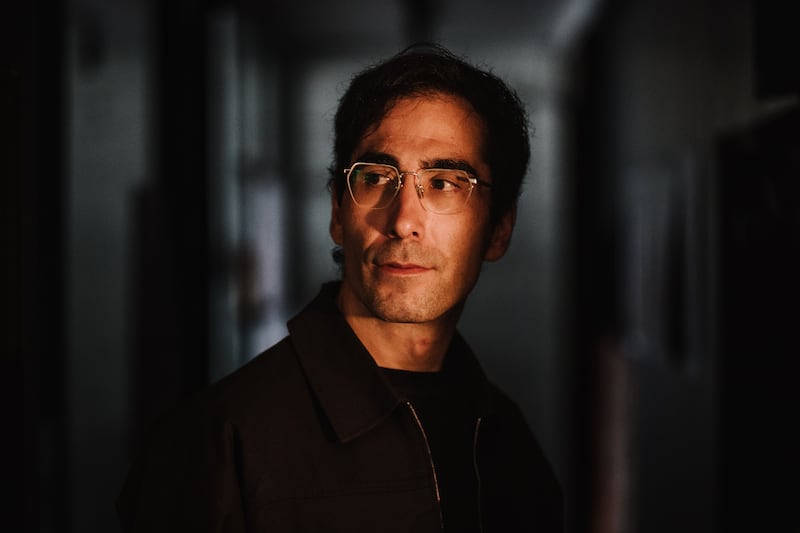 Jason Ignacio White, former director of fermentation at Noma and a whistleblower over chef René Redzepi’s abuses, photographed in Seoul, South Korea, this month. Photograph: Jun Michael Park/The New York Times
Jason Ignacio White, a former head of Noma’s fermentation lab, began posting on Instagram last month, saying he had witnessed physical and psychological abuse during three years with the organisation. He posted allegations sent to him by many other Noma alumni; those posts have been viewed more than 14 million times.
The New York Times independently interviewed 35 former employees, whose accounts trace a pattern of physical punishment Redzepi allegedly inflicted on his staff. Between 2009 and 2017, they said, he punched employees in the face, jabbed them with kitchen implements and slammed them against walls. They described lasting trauma from layers of psychological abuse, including intimidation, body shaming and public ridicule. Redzepi, they said, threatened to use his influence to get them blacklisted from restaurants around the world, to have their families deported or to get their wives fired from their jobs at other businesses.
Since Redzepi was first captured on camera screaming at cooks in the 2008 documentary Noma at Boiling Point, he has made several public apologies. In a 2015 essay, he acknowledged that he had been a “beast” who pushed and bullied his subordinates. In a 2022 interview with The Times of London, he expressed regret about his past, saying that he “never hit anyone” but “probably bumped into people”.
In a statement to The New York Times on Friday, March 6th, he said: “Although I don’t recognise all details in these stories, I can see enough of my past behaviour reflected in them to understand that my actions were harmful to people who worked with me. To those who have suffered under my leadership, my bad judgment, or my anger, I am deeply sorry and I have worked to change.”
He said he stepped away from leading day-to-day service years ago and has undergone therapy and “found better ways to manage my anger”.
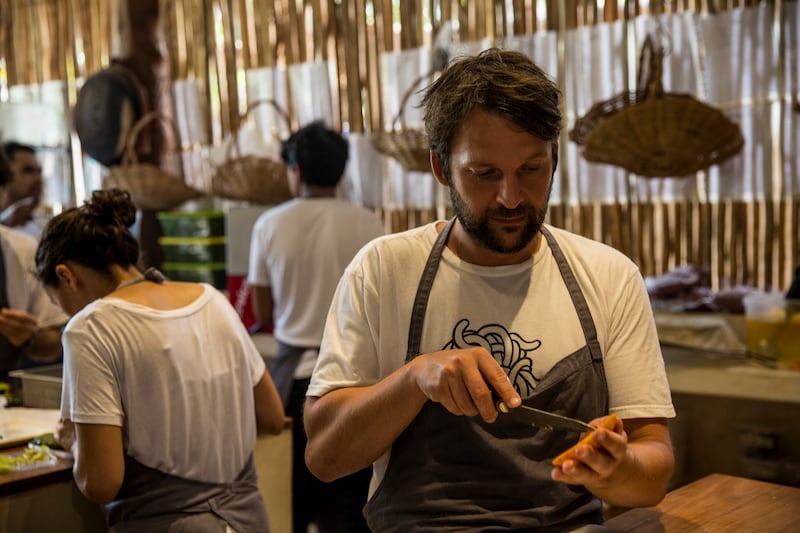 René Redzepi cuts a mango at a Noma pop-up in Tulum, Mexico, April 19th, 2017. Photograph: Adriana Zehbrauskas/The New York Times
Many former employees said that working at Noma, while never easy, was worthwhile because of how Redzepi had opened up fine dining to practices such as foraging and fermentation. “We got to be outside studying the progression of ramsons, then in the shipping container lab learning about koji,” said Julian Fortu, an intern in 2015. Like many others, he said that after his time at Noma, doors opened to him that he would otherwise never have been able to walk through.
Restaurant kitchens have long been punishing workplaces, as reflected in popular entertainment such as TV’s The Bear and the film The Menu, and many chefs have admitted to bullying workers. But the former Noma employees said Redzepi has not acknowledged the extent of the violence they say he inflicted for years.
[ How fine-dining restaurants are embracing no-alcohol trendsOpens in new window ]
That, several people said, is why they are speaking out now. Redzepi’s Los Angeles pop-up, and the high price it is commanding, they say, is a reminder that his empire was built on their work – and their pain.
Ben, a chef in Australia, who worked at Noma in 2012, said that punishing all the employees for one person’s mistake was routine. “He just went down the line and punched us in the chest” while yelling expletives into everyone’s faces, said the chef, who asked that his surname not be used because he feared retaliation – “even the interns who had been upstairs picking elderflowers”.
When Redzepi wanted to discipline them while there were customers in the diningroom, several employees said, he would crouch under the counters in the open kitchen and jab them in the legs with his fingers or a nearby utensil, like a barbecue fork.
One former cook, who requested anonymity because he feared retaliation, said Redzepi had physically attacked him more times than he could remember during his time at Noma. He recalled that one night in 2011, Redzepi noticed that he had left a tiny tweezer mark on a flower petal as he placed it on to a dish. Redzepi, he said, grabbed the straps of his apron and slammed him against the wall, then punched him twice in the stomach.
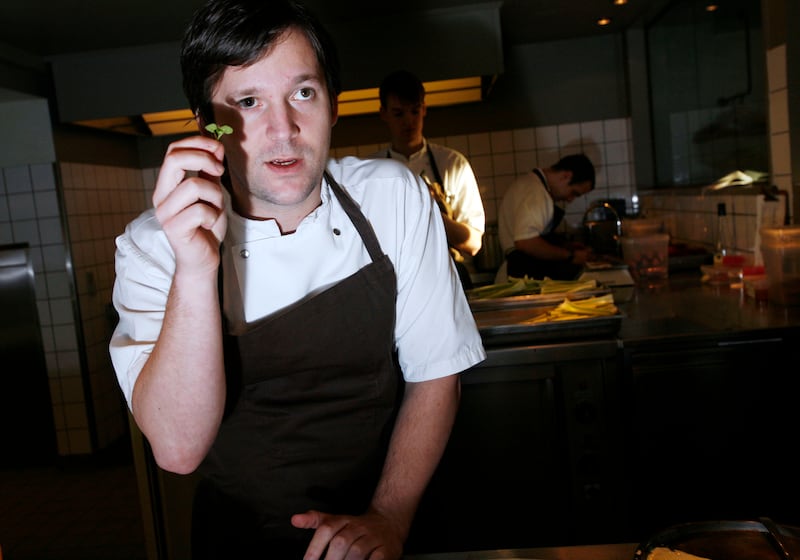 René Redzepi at Noma in Copenhagen in 2008. Photograph: John McConnico/The New York Times
Some 30 former employees said that being hit by Redzepi, and by the senior cooks who ran the kitchen, was routine.
Many dishes at Noma and its pop-ups include 20 or more components, and its signature style includes complex, fragile items such as insect-shaped morsels made of fruit leather and tiny plums wrapped in kelp. The work was broken down according to a hierarchy that began with the interns, who reported to chefs de partie, who reported to the sous-chefs who ran the kitchen during service and often remained in their roles for years. To produce enough for each dinner, many of the cooks at every level started early in the morning and worked until the kitchen was clean, at 1am.
That workload, plus the perfectionism that Redzepi enforced from the top, they said, generated constant, frantic urgency. “It felt like we were working in an ER or a submarine that was going down,” said Ben, the Australian chef. “It was hell, but I learned so much that I can’t say I regret it.”
One chef in London, who had worked at several Michelin-starred restaurants in Europe, saved for a year and sold her car so she could afford to take a job at Noma in 2013. She said she couldn’t stop working long enough to eat, and lost 40 pounds during the first year. (She requested anonymity, saying she did not want to face public discussion of a traumatic event.)
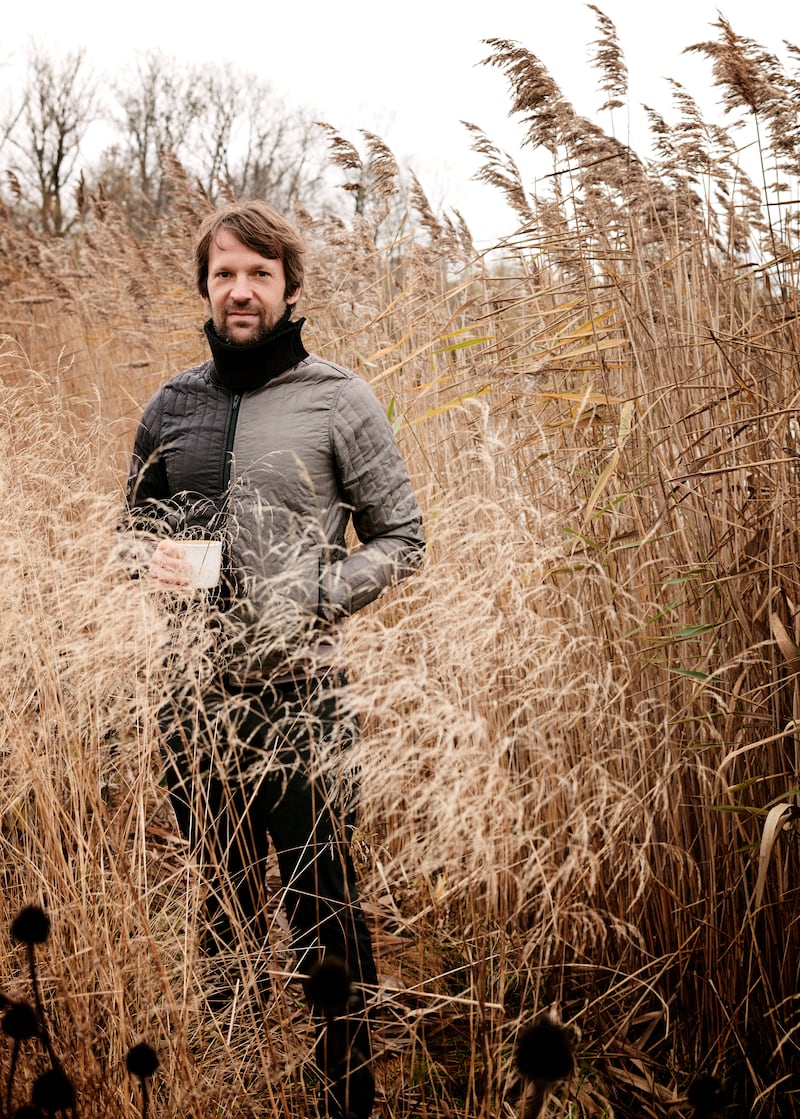 René Redzepi’s creativity remains unmatched. Photograph: Ditte Isager/The New York Times
One night, she said, Redzepi spotted her using a phone, which was strictly forbidden during service. (She recalled that she was using it to turn down the volume of the music in the diningroom at a guest’s request.) Without a word, she said, he punched her in the ribs hard enough that she fell against a metal counter and cut her hip on its sharp corner.
She was left on the floor, bleeding and in tears, she recalled, but no one said a word as she fled to the dressing room. When a sous-chef eventually came to find her, she said, he asked only whether she was okay to return to work. She went back to her station and finished her shift. (An email exchange with her parents confirms that she told them of the incident at the time.)
She said she worked the remaining months of her contract because she felt it was a privilege, especially as a Latina, to work at the best restaurant in the world. Co-workers, she said, seemed to regard the violence as normal.
[ Irish chef aids reinvention of former best restaurant, NomaOpens in new window ]
A spokesperson for Noma said the organisation takes her claim seriously and has looked into it but could not verify the chef’s account.
Even after 2017, as Redzepi gradually reined himself in, many former employees say senior chefs maintained the abusive culture in the kitchen, with his tacit approval. “René raised a generation of bullies, and they bullied us,” said Mehmet Çekirge, who worked as a Noma intern in 2018.
Because he came from Turkey, Çekirge said, supervisors made gobbling sounds when he passed their stations. He was mocked for his accent, called a donkey, and told he wasn’t Noma material. “I swallowed it all because I wanted to prove I was a team player, that I could take it,” he said. When he finished his three-month stint, he said, it was with a crushing weight of shame and failure. “It took me years to recover.”
One former intern, Redzepi’s American protege Blaine Wetzel, left in 2010 after two years at Noma to open a similar restaurant in the Pacific Northwest, the Willows Inn. It closed in 2022 after Wetzel was accused of physical and verbal abuse.
At Noma, each of three annual “seasons” brought a new group of 30 to 40 interns who had competed with thousands of others for the privilege of working unpaid for three months while living in one of the most expensive cities in the world. Many walked out in tears midshift or disappeared after a few days.
The person assigned to support the interns, Bente Svendsen, was the one-woman human resources department, and happened to be Redzepi’s mother-in-law. Many former employees said she and other senior managers – including Redzepi’s wife, Nadine, and the long-time chief executive, Peter Kreiner – were told about the violence in the kitchen but failed to put a stop to it.
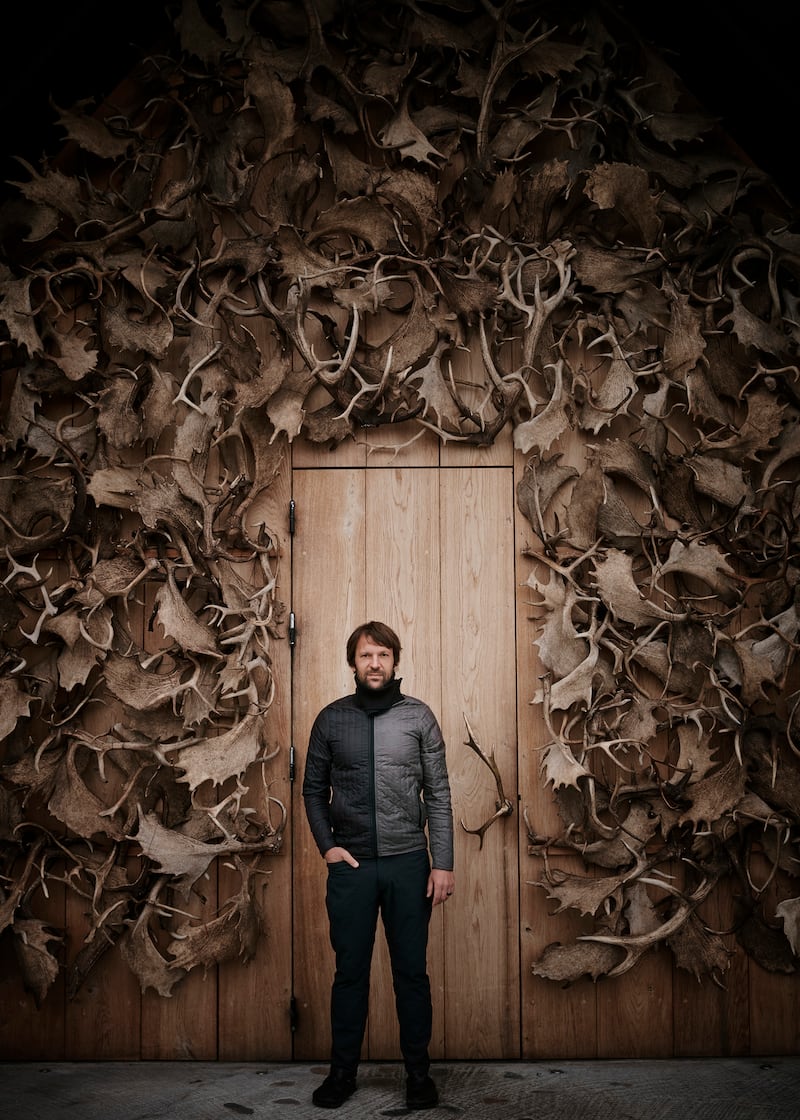 Noma became one of the world’s most famous restaurants under René Redzepi. Photograph: Ditte Isager/The New York Times
Conditions at many restaurants have improved since the #MeToo and social justice movements changed what workers are willing to accept on the job. A Noma spokesperson said the company was overhauled and now has formal HR systems, management training and improved work hours.
In 2022, after media outlets in Denmark and around the world began documenting Noma’s reliance on – and exploitation of – free labour, Redzepi announced that future interns would be paid. Soon afterwards, he said the entire system of fine dining had become “unsustainable” and that the restaurant would close.
In theory, Noma is now a mobile hospitality venture anchored by Noma Projects, a line of products including rose vinegar and fish sauce that consumers can buy (or subscribe to, for $790 per year). This new model depends more than ever on Redzepi’s personal brand as a creative pioneer.
But the Los Angeles pop-up has already made some cracks in his polished image. Some local chefs have posted that they find it offensive that Noma is swooping in and drawing deep-pocketed diners when Los Angeles restaurants are facing existential threats from climate change, inflation and immigration enforcement.
And with its $1,500 price tag, “Noma has become so exclusive that it’s no longer a restaurant; it’s performance art,” said Marco Cerruti, a chef in Los Angeles who worked at the Copenhagen restaurant in 2015.
He said that while Redzepi’s creativity remains unmatched, his status as a global leader is no longer deserved, and his legacy is diminished. “What is René modelling for the industry now?” he said. “Feeding rich people and exploiting young aspirational chefs.” – This article originally appeared in The New York Times